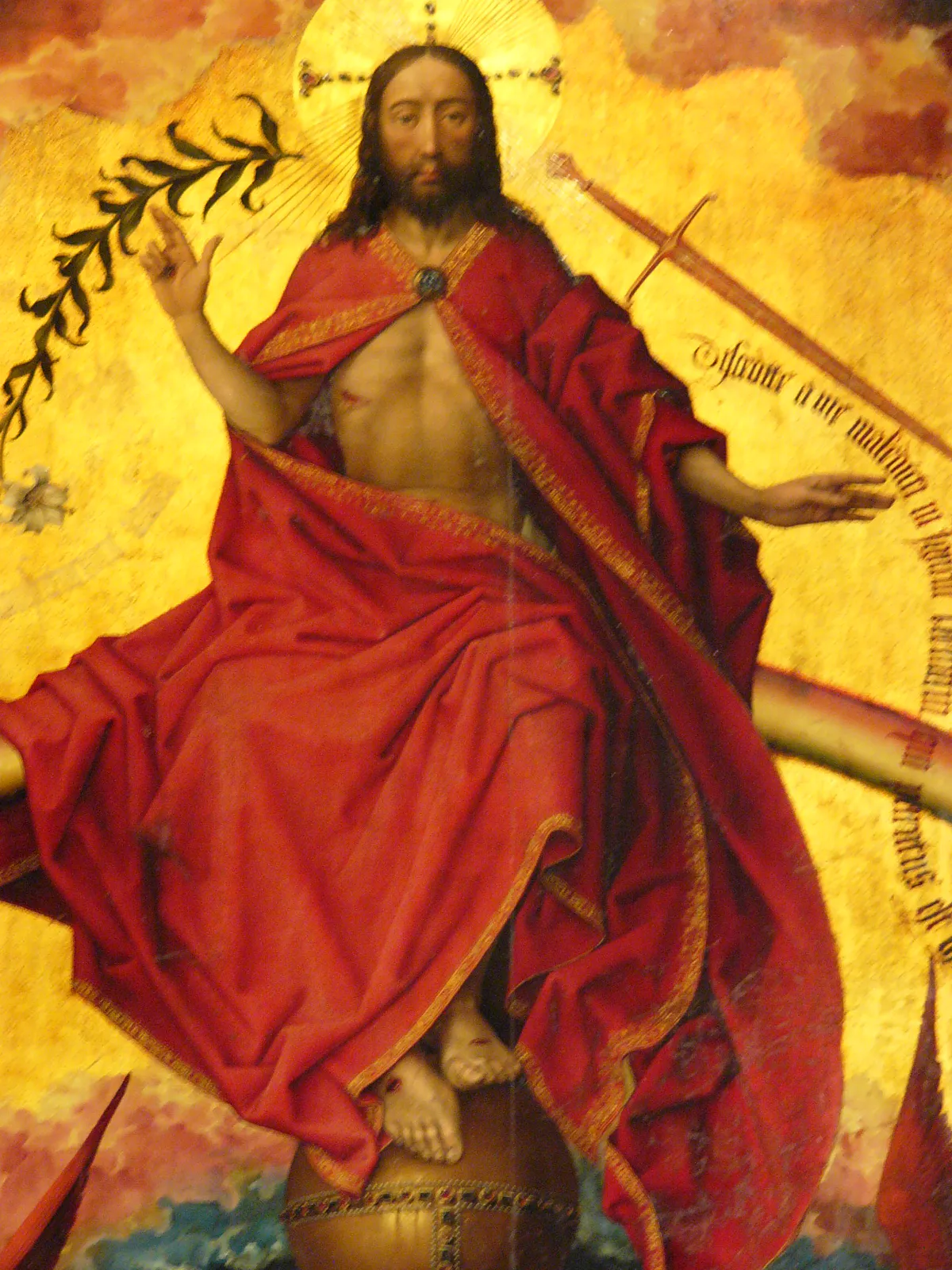
Christ the Judge
Rogier van der Weyden
At the summit of the Last Judgment Altarpiece (1445–50), Christ sits enthroned on a rainbow, resting his feet on a golden globe that symbolizes dominion over the world. He raises his right hand in blessing, while his left gestures toward judgment. The sword and lily flanking him signify justice and mercy, balancing wrath with compassion. Draped in vivid red, Christ embodies divine authority, anchoring the entire altarpiece in the promise of eternal judgment and salvation.
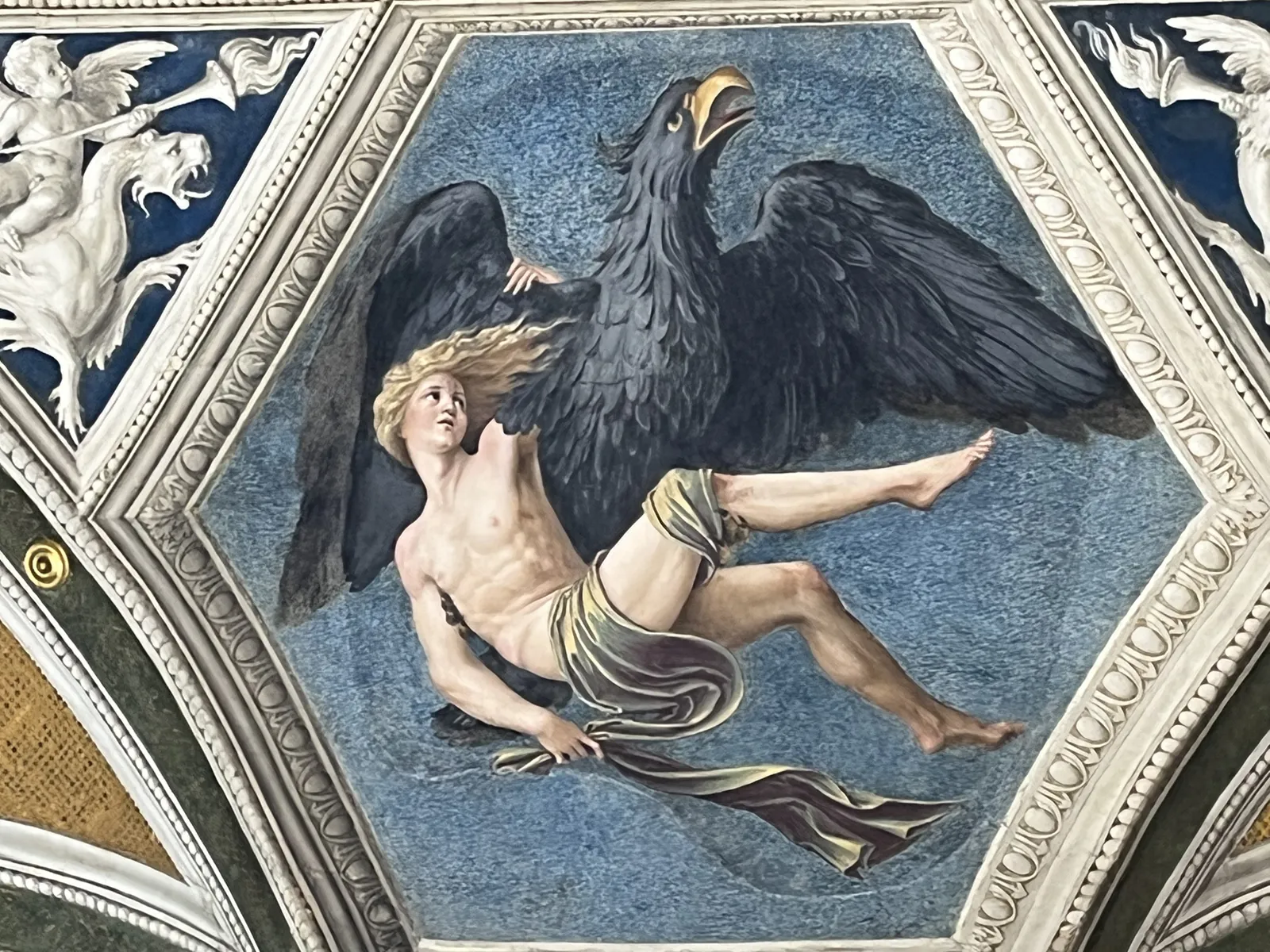
The Rape of Ganymede
Baldassarre Peruzzi
This Renaissance ceiling panel (1509–14) shows Zeus, in the form of an eagle, abducting the beautiful youth Ganymede to Olympus. The myth frames the act as a moment of divine erotic desire, with Ganymede raised to immortal companionship as Zeus’s beloved. The term rape follows the Latin raptus, meaning abduction, not its modern sense.
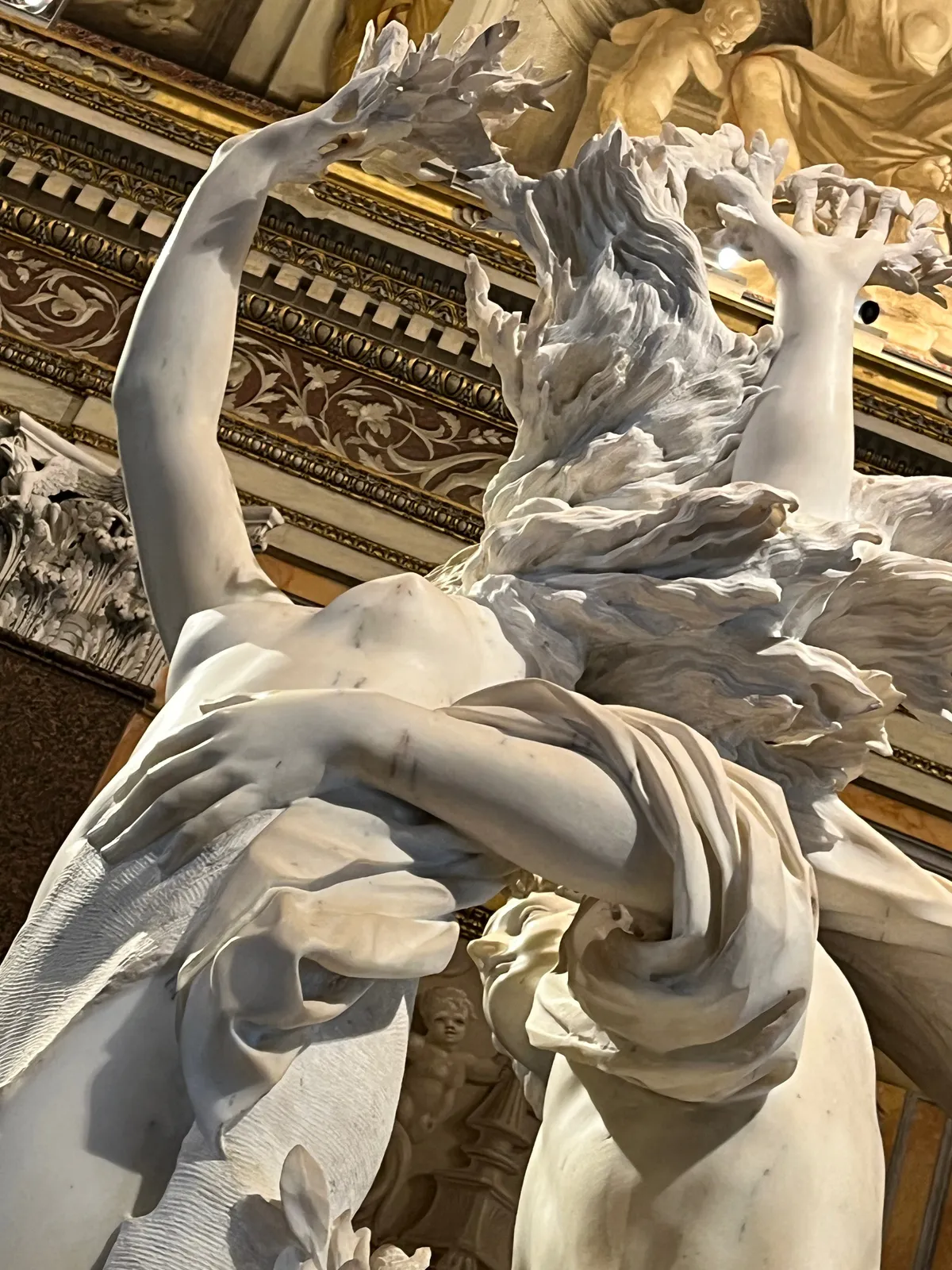
Apollo and Daphne (detail)
Gian Lorenzo Bernini
In this electrifying detail from Apollo and Daphne (1622–25), Daphne’s transformation peaks: her fingers stretch skyward as they fracture into laurel branches. Bernini’s carving achieves an uncanny fluidity—Apollo’s embrace contrasts her fleeing limbs, while bark and hair blur into motion, embodying divine metamorphosis and tragic escape.
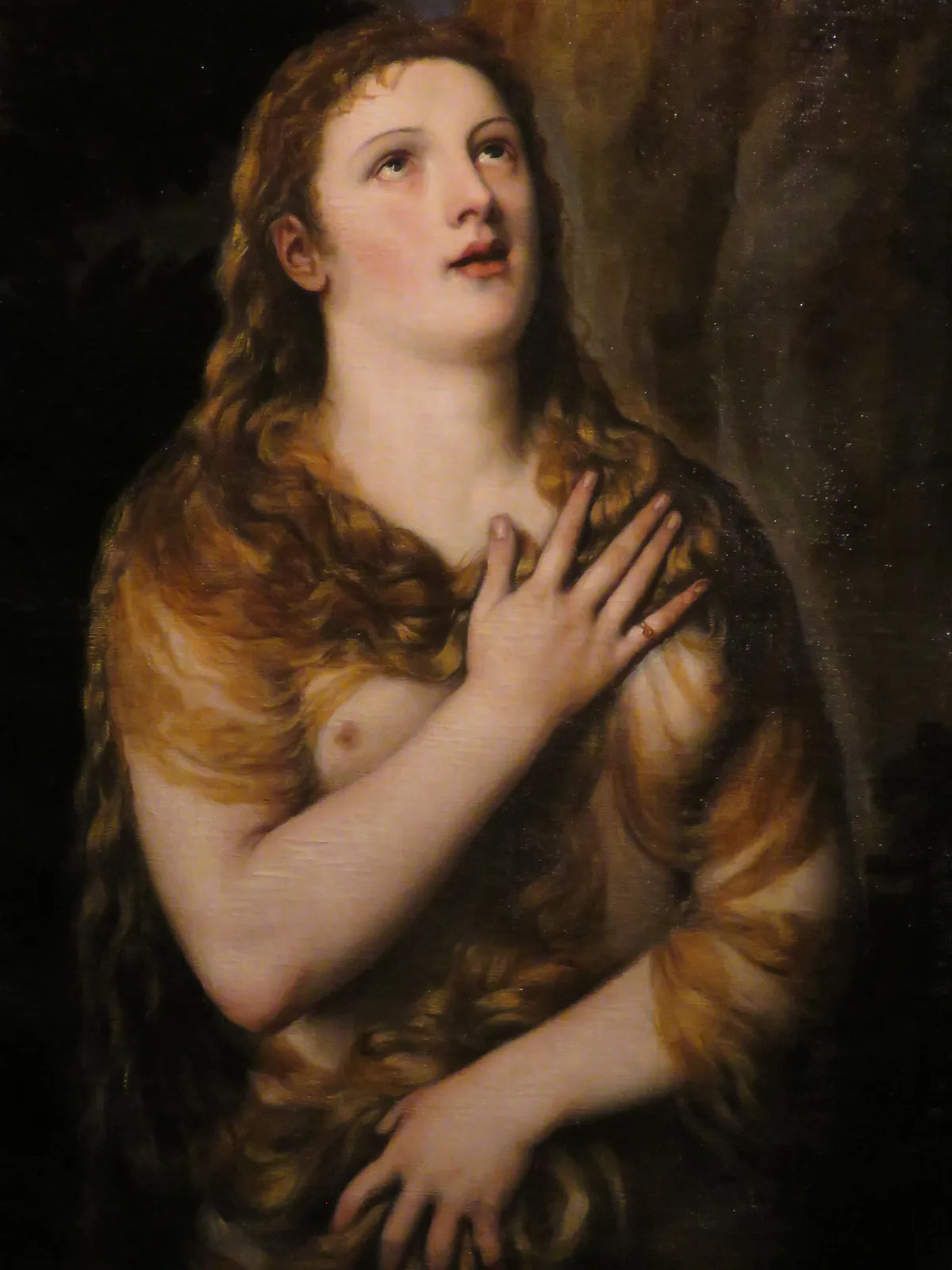
Mary Magdalene
Titian
This intimate portrayal of Mary Magdalene (c. 1560) captures the saint in a moment of spiritual ecstasy. Covered by cascading hair, her body becomes a vessel of penitence and divine grace. Titian’s sensual rendering reflects the Renaissance ideal of redemptive beauty and the transformative power of divine love.
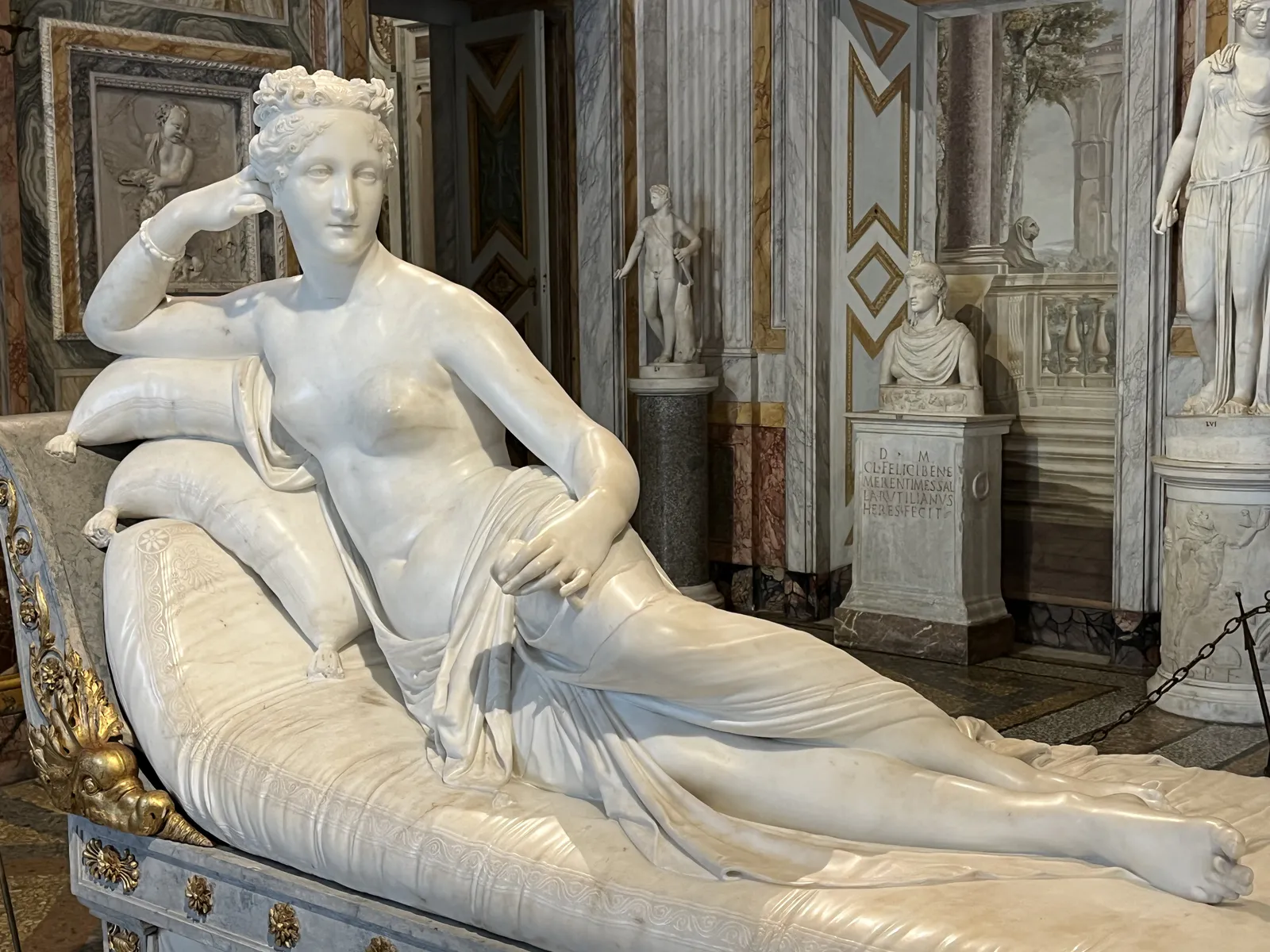
Pauline Bonaparte as Venus Victrix
Antonio Canova
This statue (1805–08) presents Pauline Bonaparte, sister of Napoleon, as Venus, reclining semi-nude and holding the golden apple of victory. Commissioned by her husband Camillo Borghese, the statue blends neoclassical elegance with sensual myth. Its rotating base once allowed viewers to admire it from every angle.
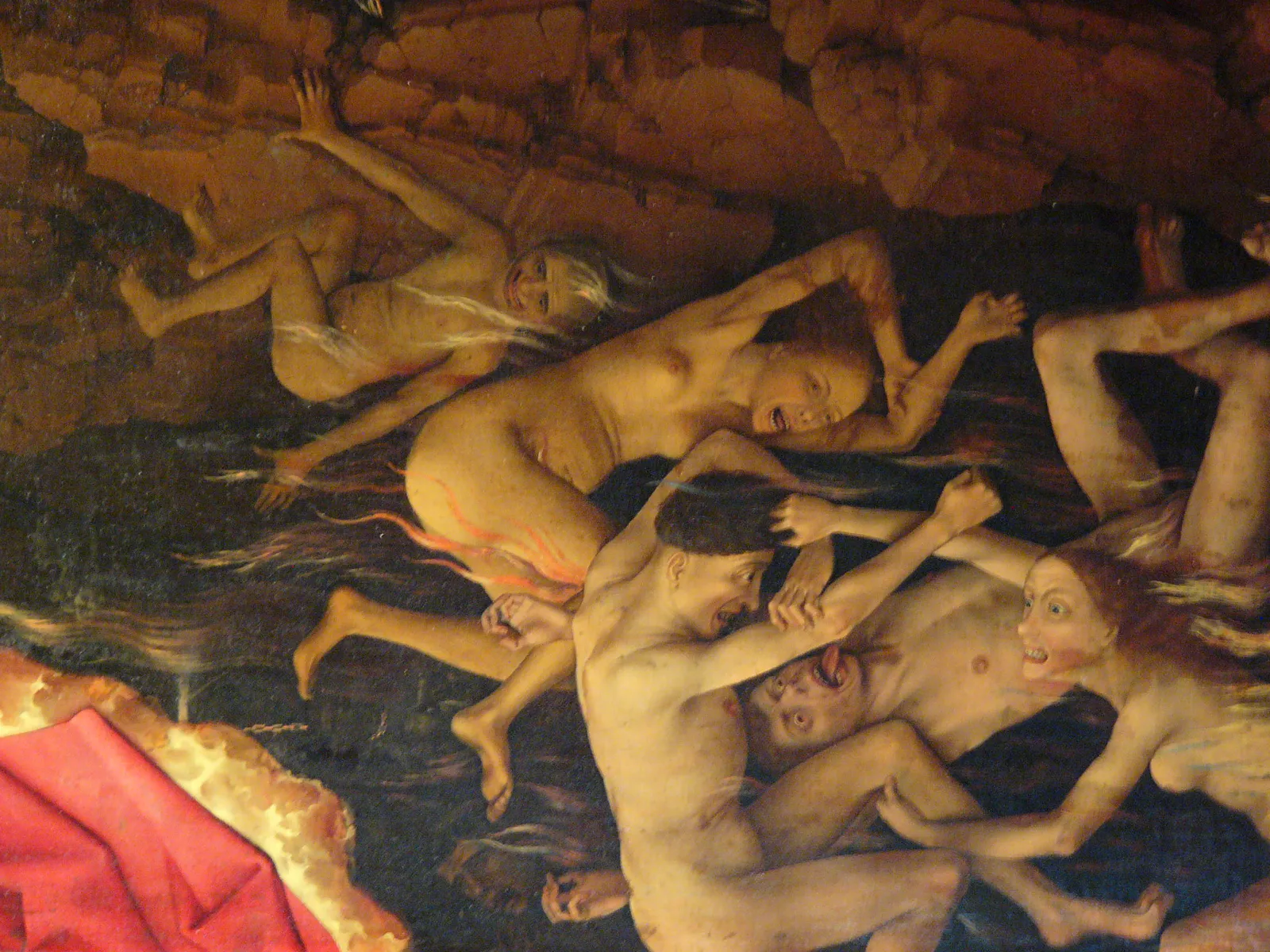
The Damned in Torment
Rogier van der Weyden
This detail from the Last Judgment Altarpiece (1445–50) intensifies the vision of damnation. Naked figures twist and collide as they plunge into dark flames, their limbs tangled in chaotic knots. Strained muscles and distorted faces display a studied range of terror and despair. For patients and caregivers at the Hôtel-Dieu, such visceral imagery sharpened awareness of sin, repentance, and the uncertainty of salvation.
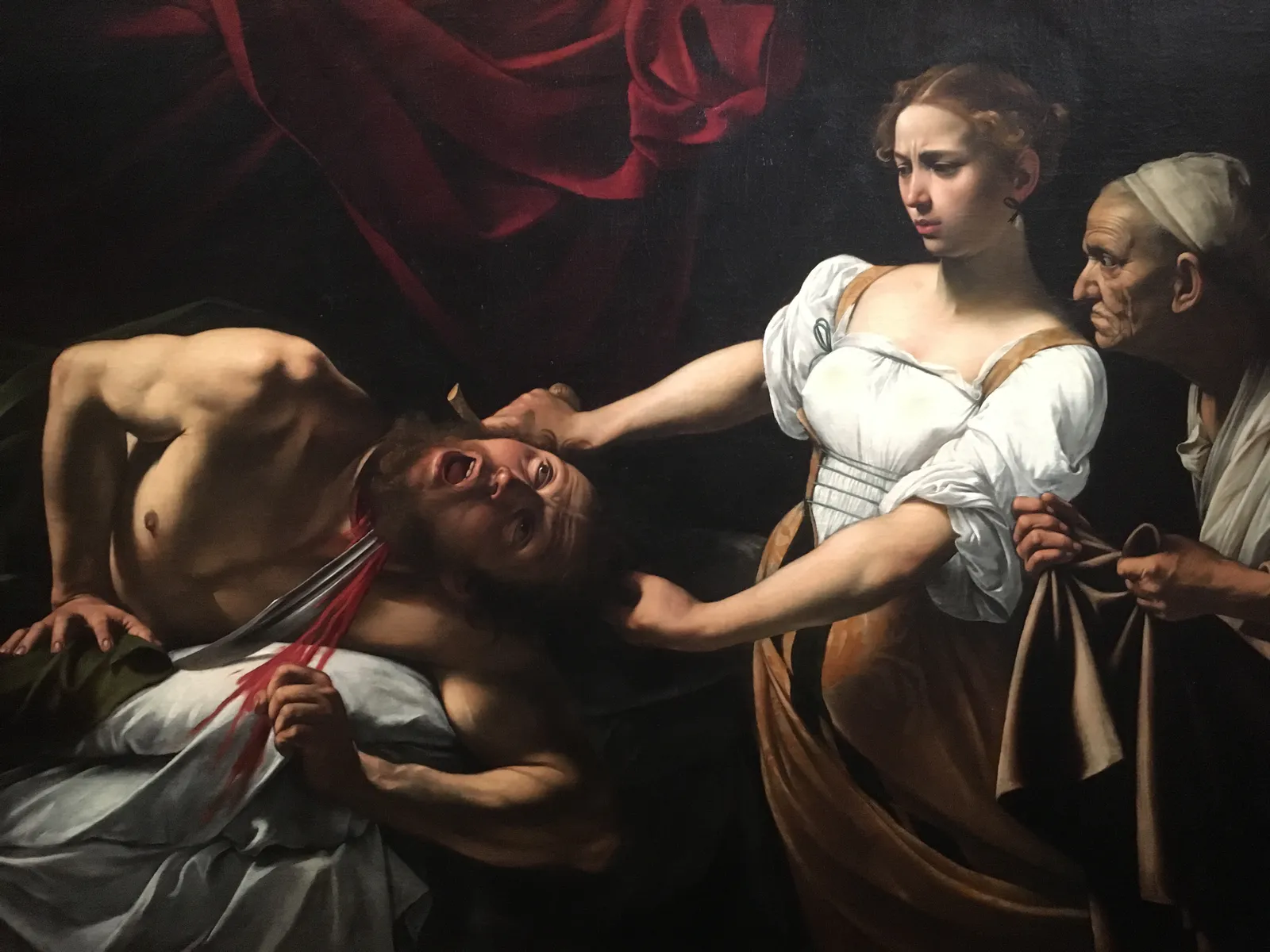
Judith Beheading Holofernes
Caravaggio
This canvas (c. 1599) painted in Rome embodies Caravaggio’s radical realism and theatrical chiaroscuro. Judith, a young widow, slays the Assyrian general Holofernes to save her people. Her calm determination contrasts with his violent death and the maid’s aged pragmatism. By staging sacred violence with unflinching naturalism, Caravaggio redefined biblical painting as a drama of human courage and divine justice.
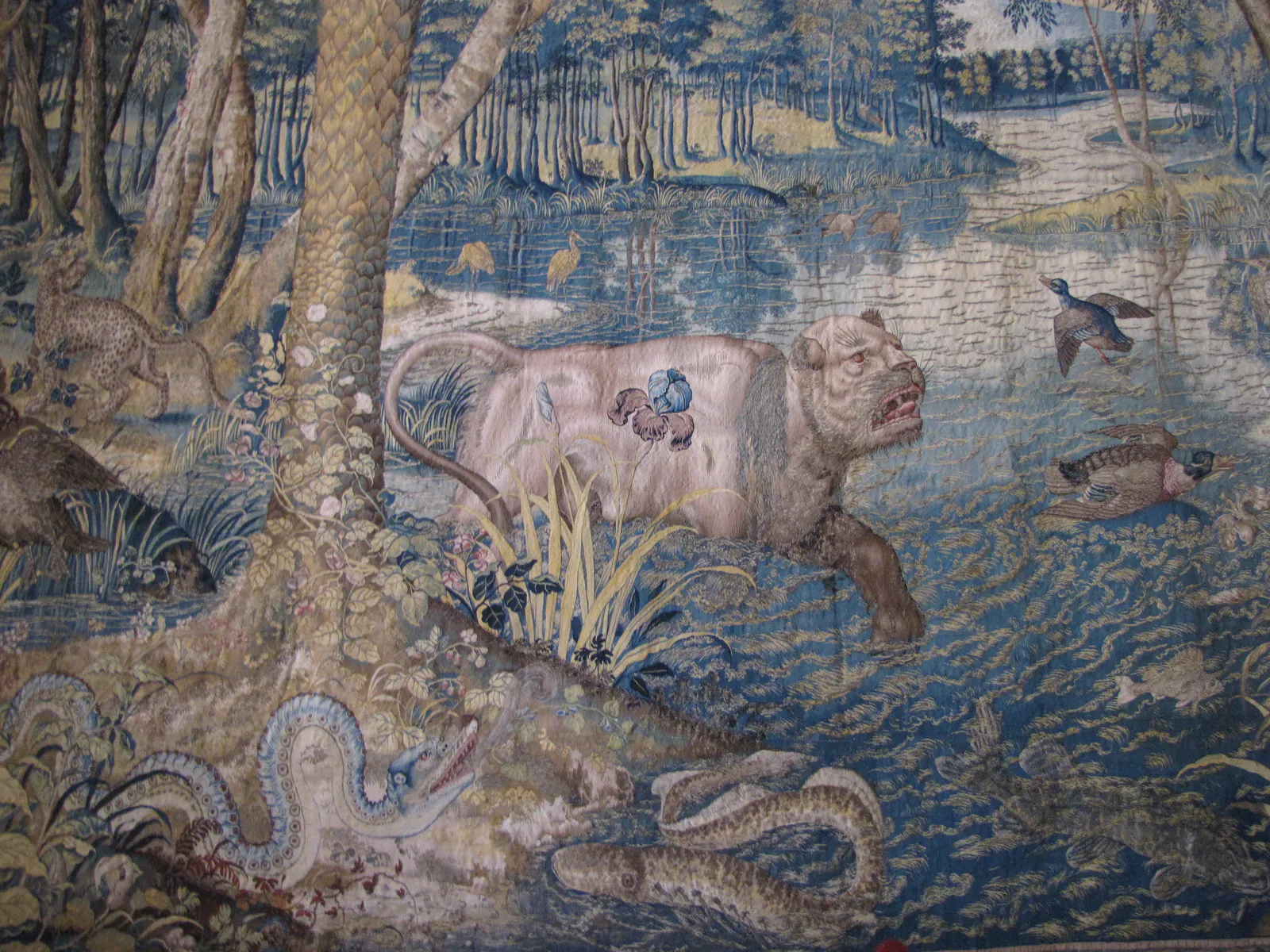
Tapestry of Fantastical Beasts in a River
Michael Coxcie
Woven in Brussels (c.1565) in a Flemish workshop according to Coxcie's design, this tapestry depicts hybrid beasts and serpents in a dense river landscape reflecting Renaissance fascination with nature’s wildness and moral allegory, symbolizing sin and chaos before divine order.
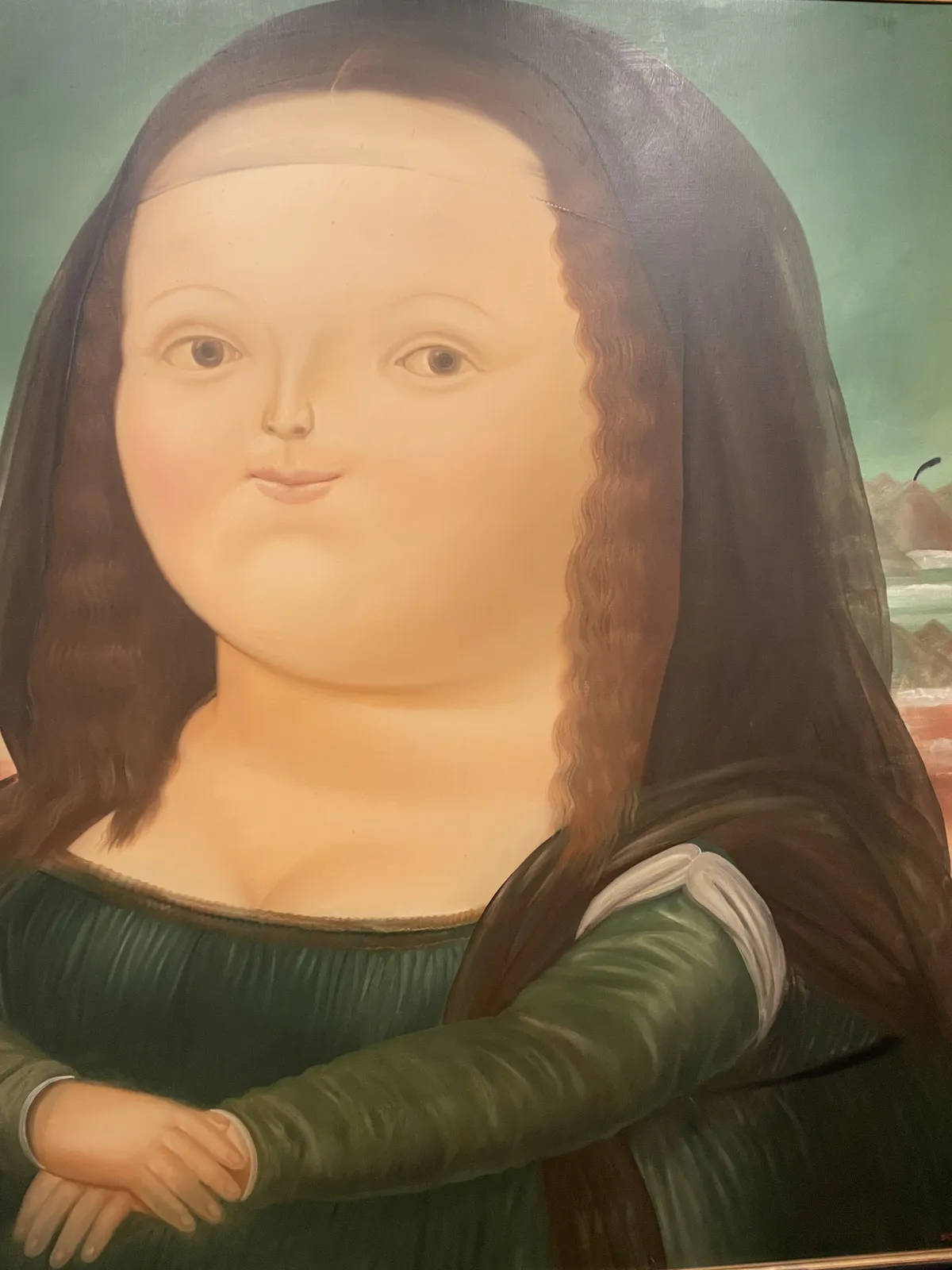
Mona Lisa, Age Twelve
Fernando Botero
In this whimsical reimagining (1959), Botero transforms da Vinci’s iconic subject into a voluminous child. Created in his signature Boterismo style, the painting blends parody with homage. Born from a cleaning lady’s remark, the work helped launch Botero’s career, celebrating exaggerated form as a tool for both humor and artistic identity.
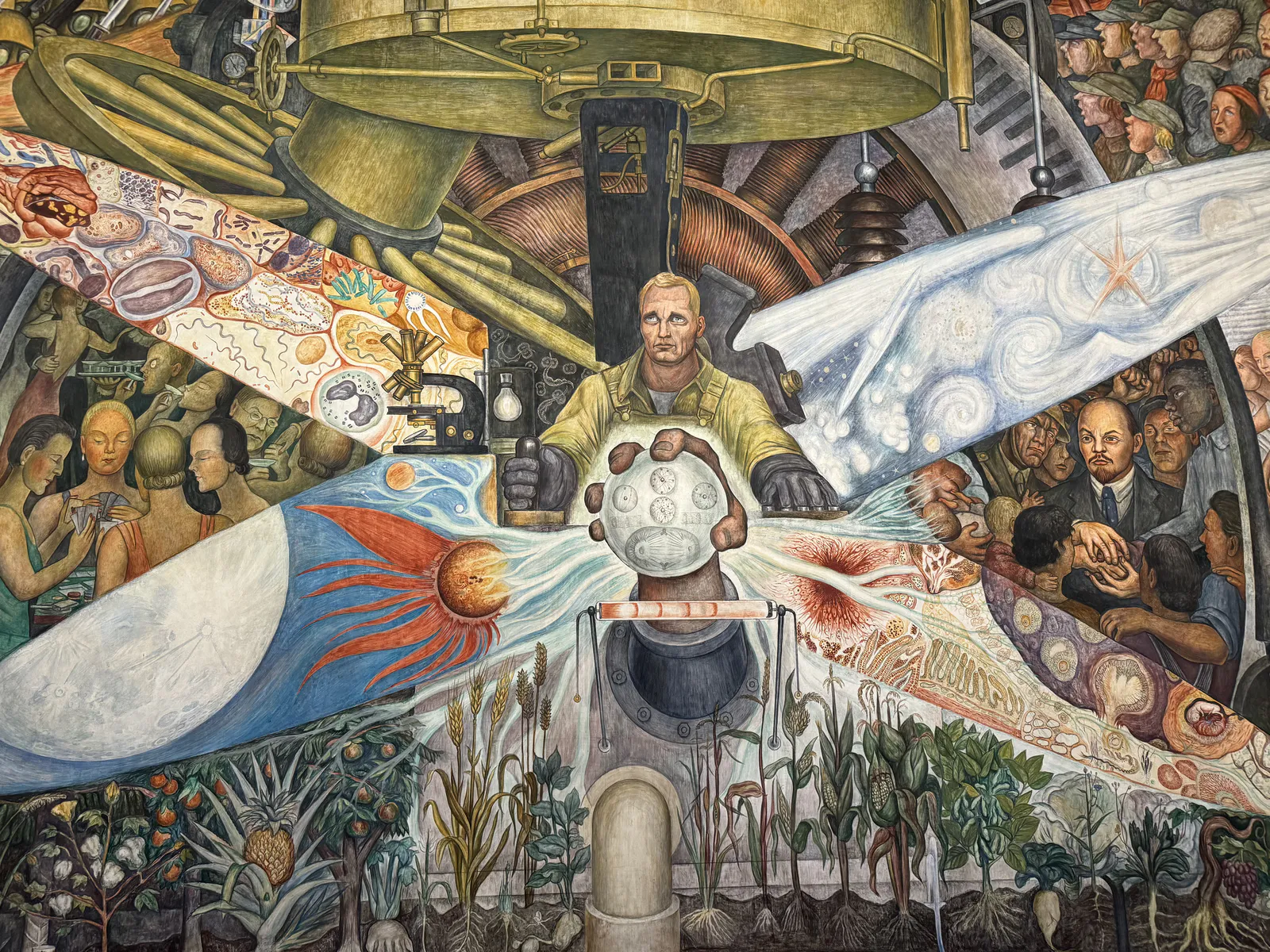
Man, Controller of the Universe
Diego Rivera
This mural (1934), a replica of Rivera’s censored Rockefeller Center fresco, places a worker at the symbolic axis of modernity. He guides cosmic, scientific, and political forces—flanked by socialism on the left and capitalism on the right. Lenin’s presence affirms Rivera’s Marxist ideals, asserting art’s power to envision revolutionary futures.
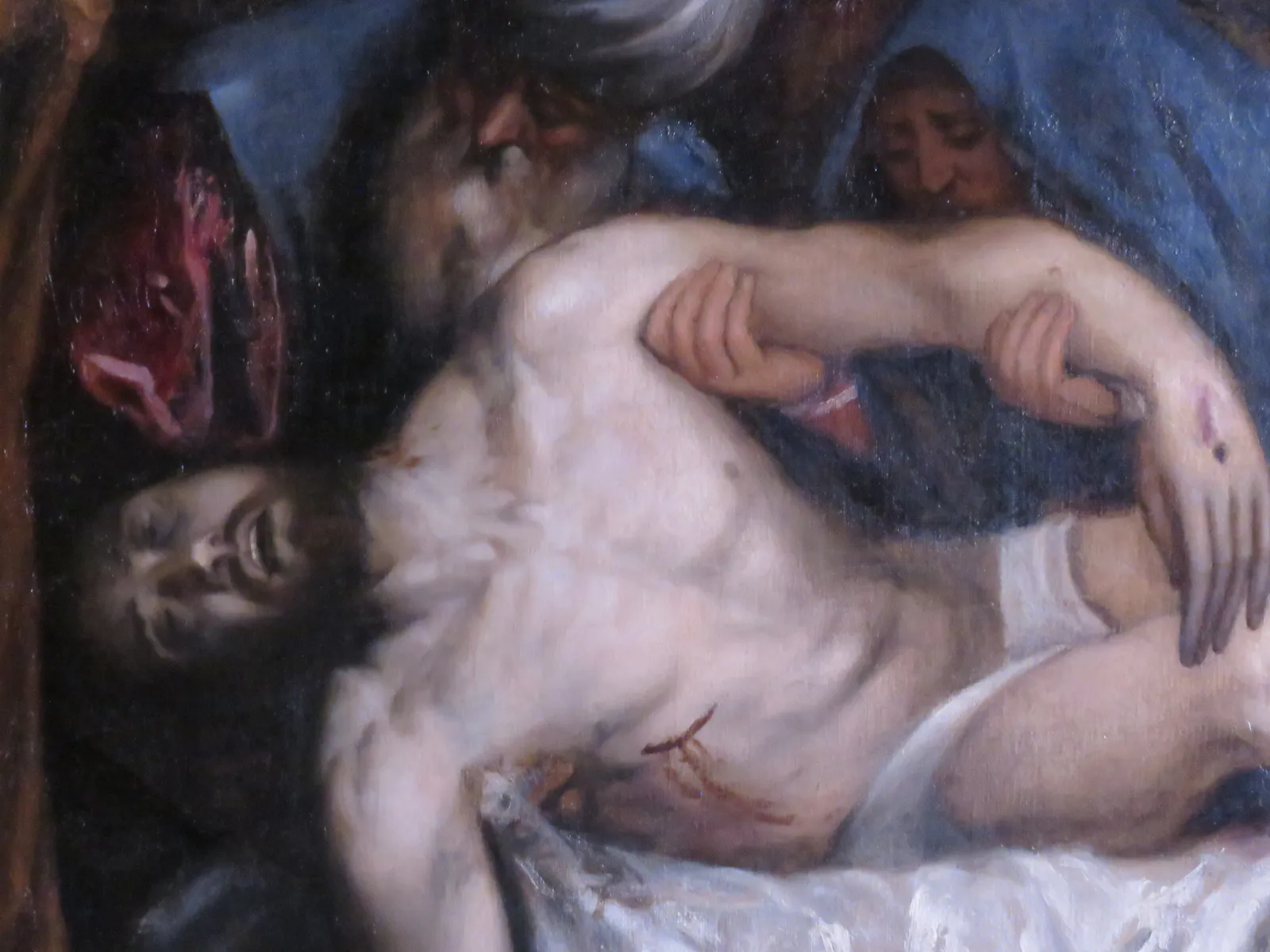
The Entombment of Christ (detail)
Titian and Palma the Younger
This fragment (1618) reveals Christ’s lifeless body marked by crucifixion wounds, cradled with reverence by mourning figures. The interplay of flesh, fabric, and sorrow exemplifies Titian’s emotive realism, while Palma the Younger completes the drama with expressive gestures—honoring human grief and divine sacrifice in one timeless moment.
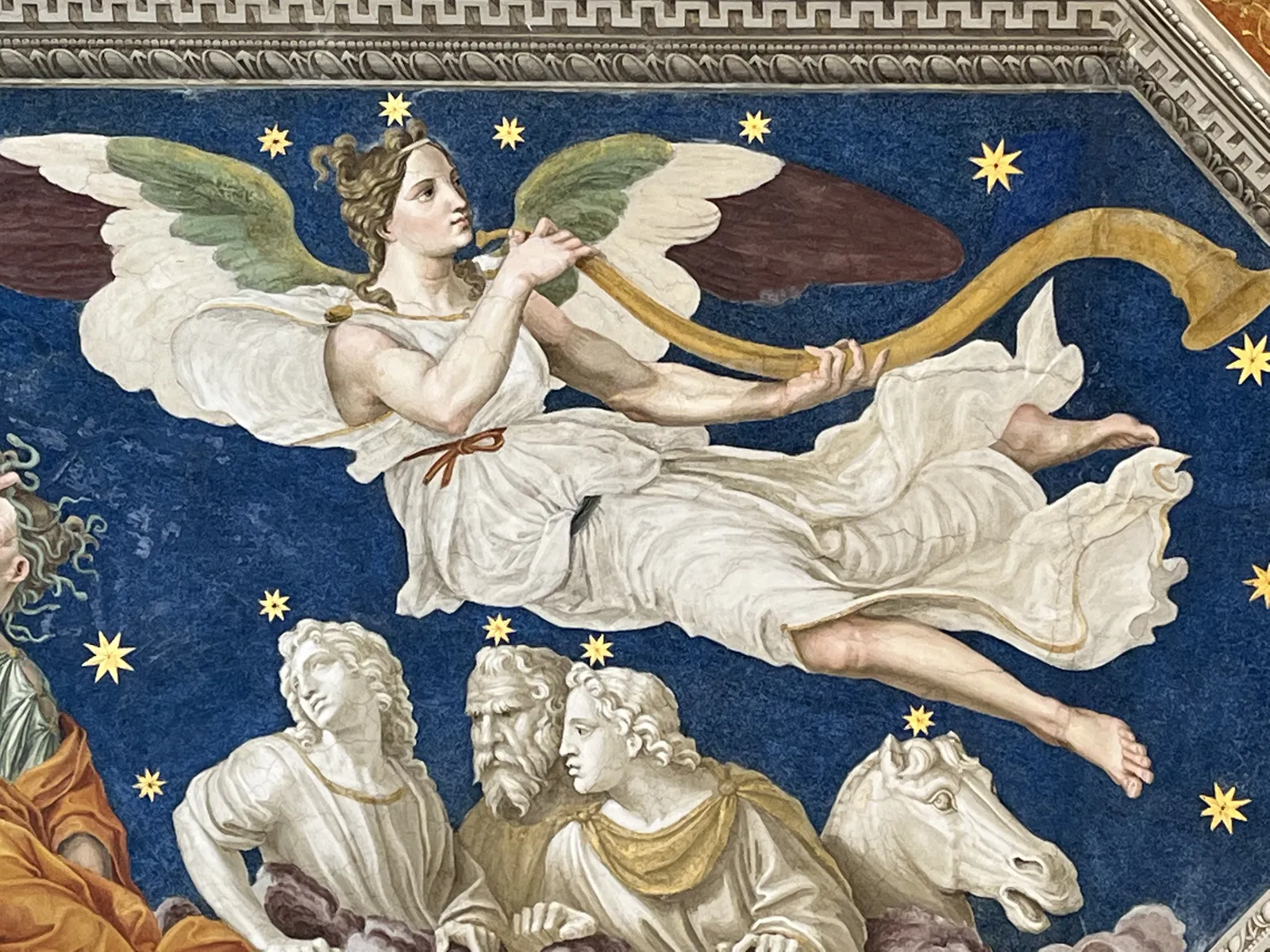
Fame and Medusa's Victims
Baldassarre Peruzzi
This fresco (1511) shows Fame soaring through the sky, announcing glory with her trumpet. Below, three men and a horse emerge from the clouds, their pallor and stiffness indicating they are victims turned to stone by Medusa's gaze. The composition reflects Renaissance interest in mythology, illustrating the power of reputation and the consequences of divine encounters.
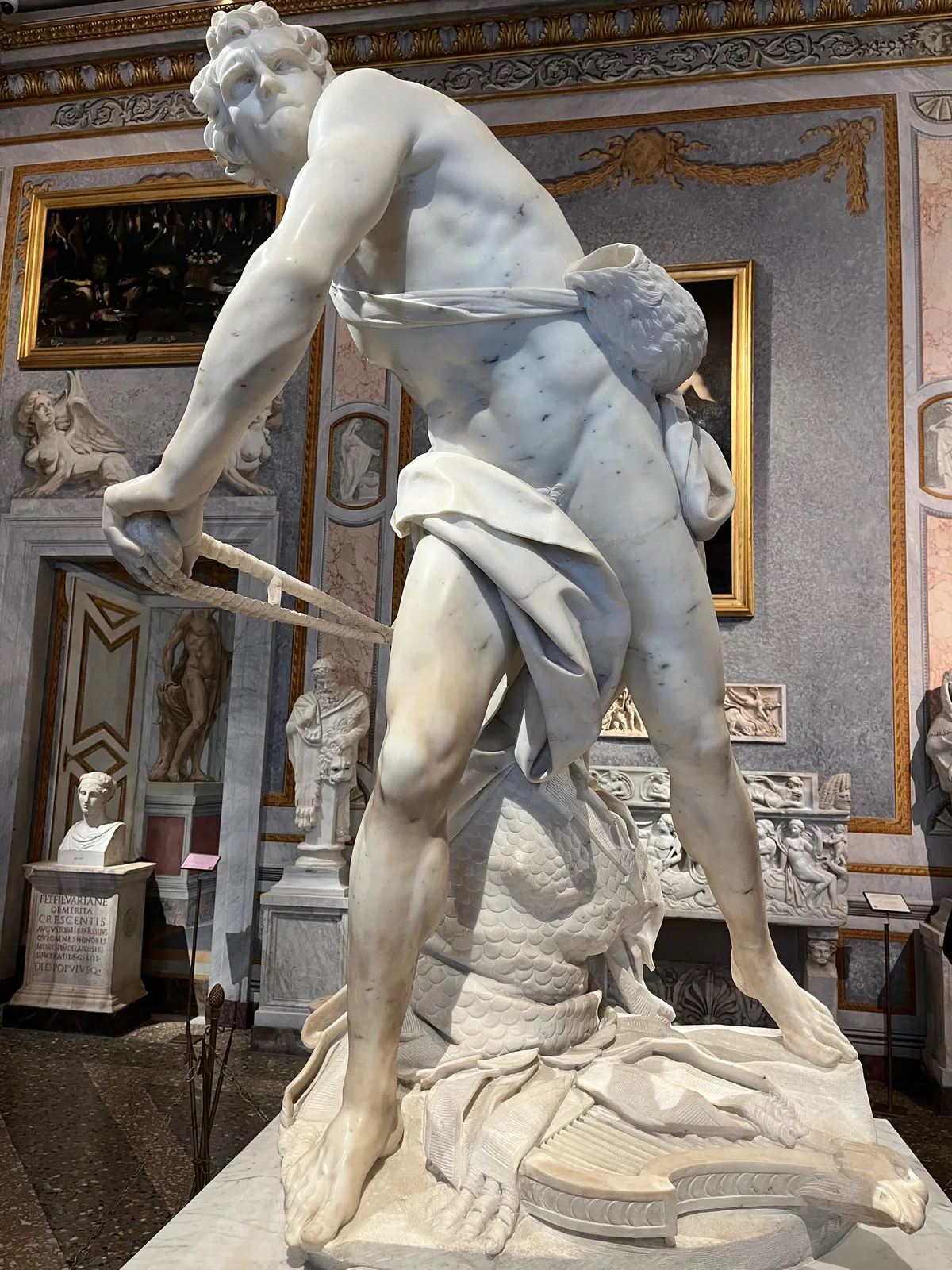
David
Gian Lorenzo Bernini
This electrifying sculpture (1623–24) captures David mid-swing as he prepares to strike Goliath. Commissioned by Cardinal Scipione Borghese, it breaks from static Renaissance models by freezing a moment of intense motion and psychological resolve. Bernini’s vivid realism and spiraling pose typify the Baroque celebration of drama and energy.
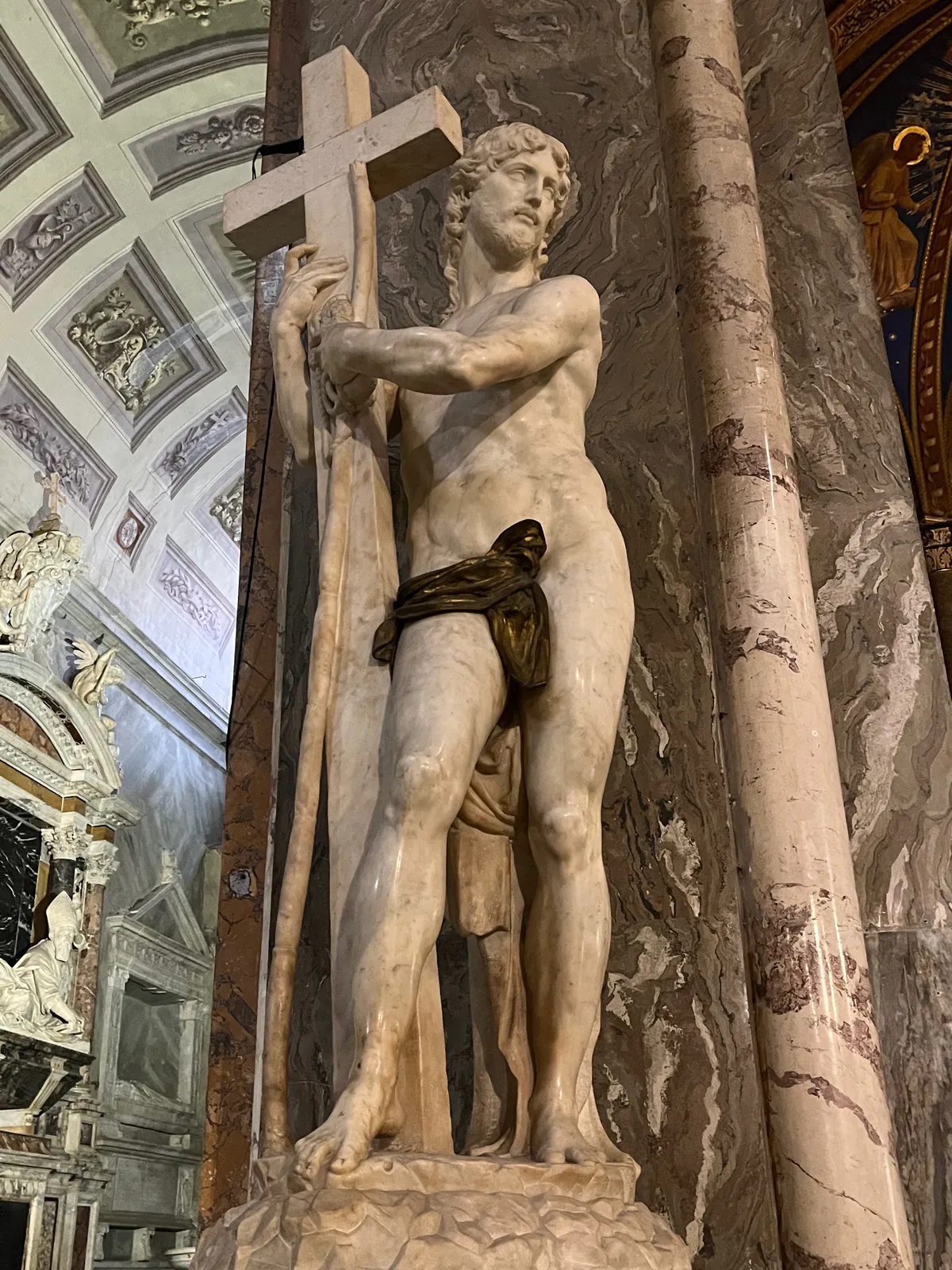
The Risen Christ
Michelangelo
Michelangelo's The Risen Christ (1521) depicts the resurrected Christ holding a cross, symbolizing triumph over death. This marble statue embodies Renaissance humanism, blending classical beauty with spiritual dignity. The idealized nude form reflects the fusion of divine suffering and victory, showcasing Michelangelo's mastery in capturing both physical perfection and profound spiritual themes.
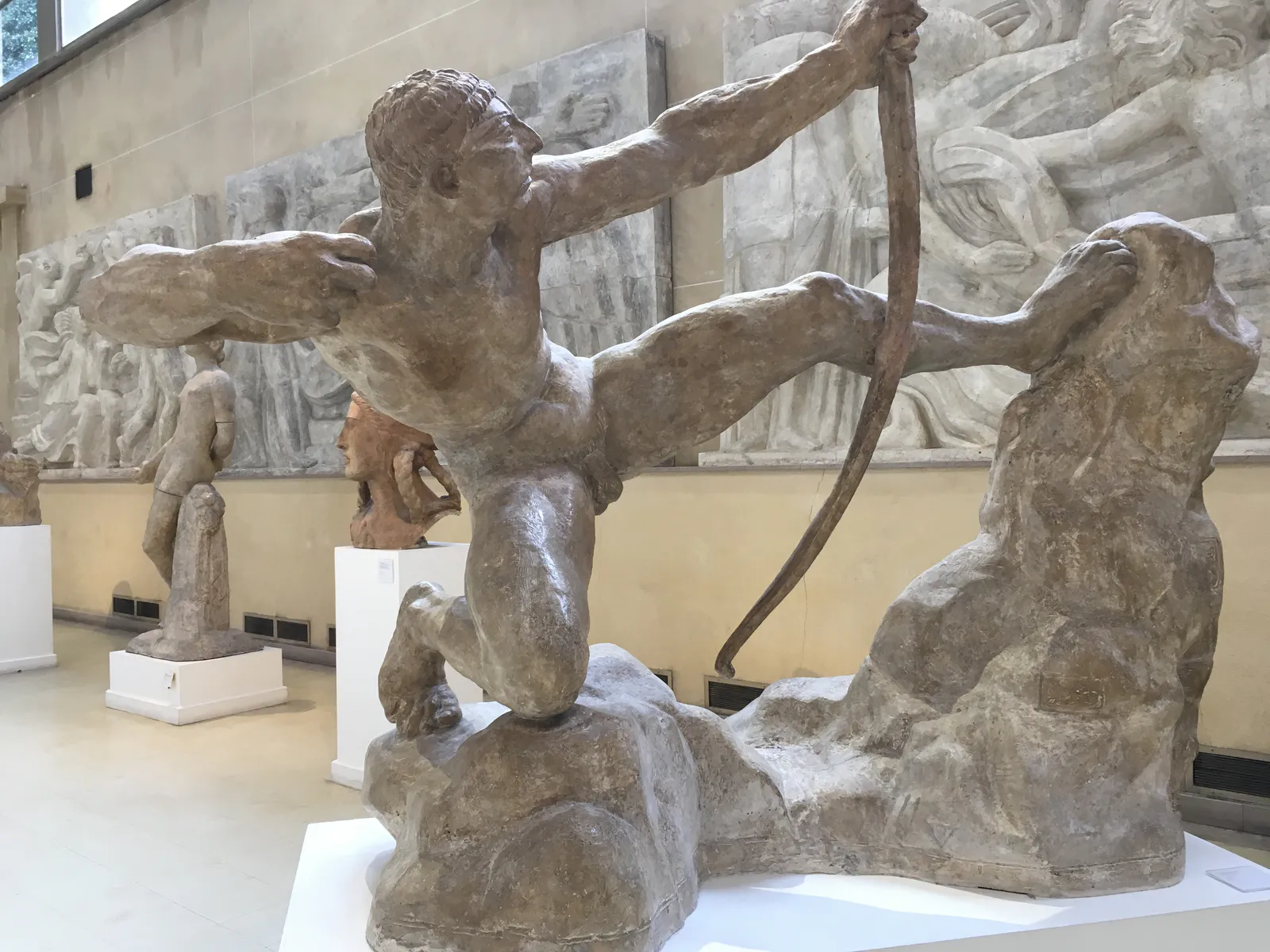
Hercules the Archer
Antoine Bourdelle
This plaster sculpture (1906–09) shows Hercules, the Greek hero, drawing his bow with taut energy. Bourdelle captures both physical strain and mythic power, fusing classical subject with modern dynamism. The work marks a turning point in early 20th-c. sculpture, bridging academic tradition with expressive innovation.
“When the path is beautiful, do not ask where it leads.” — Zen proverb
Welcome to my travel photography!
“When the path is beautiful, do not ask where it leads.” — Zen proverb
Welcome to my travel photography!
For as long as I can remember, my path has been one of discovery—seeking beauty, timelessness, and connection in every corner of the world. It has also been a journey of deep learning and understanding. I’ve been an avid traveler (or perhaps a travel addict?) for most of my life. My love for travel began long before I ever left home: as a child, I drew a fantasy map of my grandparents’ apartment and “traveled” through it with my cousin Sonya, imagining adventures in every corner. Nearly 90 countries and countless moments of awe later, I’m excited to share this journey with you.
Thanks to the tireless and ingenious programming of Diagilev, we’re now able to present about fifteen percent of the images I’ve accumulated over the years. More will be released in small batches depending on your interest. While the first release leans toward museum photography, later ones will include more nature, architecture, culture, and general travel experiences. If you’d like to receive email notifications about new releases, feel free to reach out—no commercial use, ever.
Throughout my travels, I’ve been drawn to two intertwined kinds of discovery. One is intellectual: learning why the world is the way it is. History became my guide, shaping my perspective and filling my camera roll with museums and old buildings. To me, history is not the past—it is the key to understanding the present and how the world became what it is. The other is emotional: seeking moments of elevation—spirituality, beauty, harmony—often found in nature, monasteries, and ancient sacred spaces. Together, these impulses shape my photography. It invites you to learn, admire, and soar—to rise above the mundane and see the world through a lens of curiosity and wonder.
Much of my later travel became possible thanks to my job with Delta Air Lines, but the wanderlust began years earlier. By the time I joined the industry, I had already visited over 35 countries and lived in several—largely thanks to a backpacking journey around the world with Luis León, whose face appears in many early photos. I grew up in Ufa in the USSR, and since leaving it I have lived, studied, and worked in Latvia, the United States, France, South Korea, Canada, Spain, Italy, Brazil, Japan, and Colombia.
A life of near-constant movement may seem a little crazy, but it has deepened my understanding of the world and produced the photography you are about to see. Over the years, my style has evolved—more intentional, more refined—yet its core remains the same: a search for understanding, timeless beauty, and a connection to those who walked this earth long before us.
I hope these photos stir something in your soul, just as they did in mine. I’d love to hear from you—whether reactions, suggestions, corrections, or a request to be added to the email list for new releases (no commercial use, I promise). You can learn more about my travels here, and my academic life here.
Enjoy our shared journey!