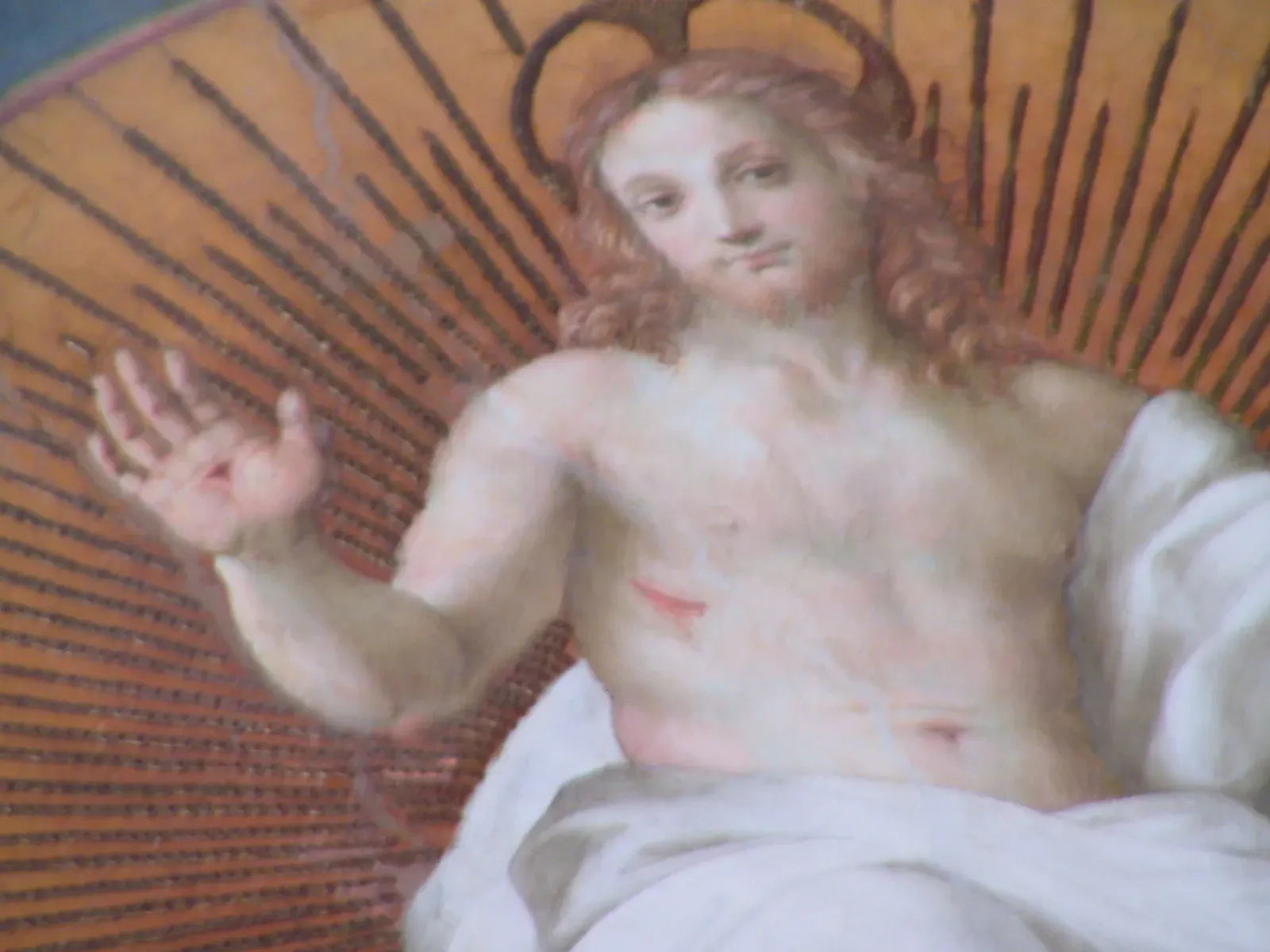
Christ in Glory (detail)
Raphael
The radiant figure of the risen Christ (1508–10) crowns the celestial register of The Disputation of the Sacrament. His raised hand and visible wounds recall both his Passion and his role as judge at the end of time. Encircled by golden rays, he visually affirms the doctrine of the Eucharist as the enduring, real presence of Christ.
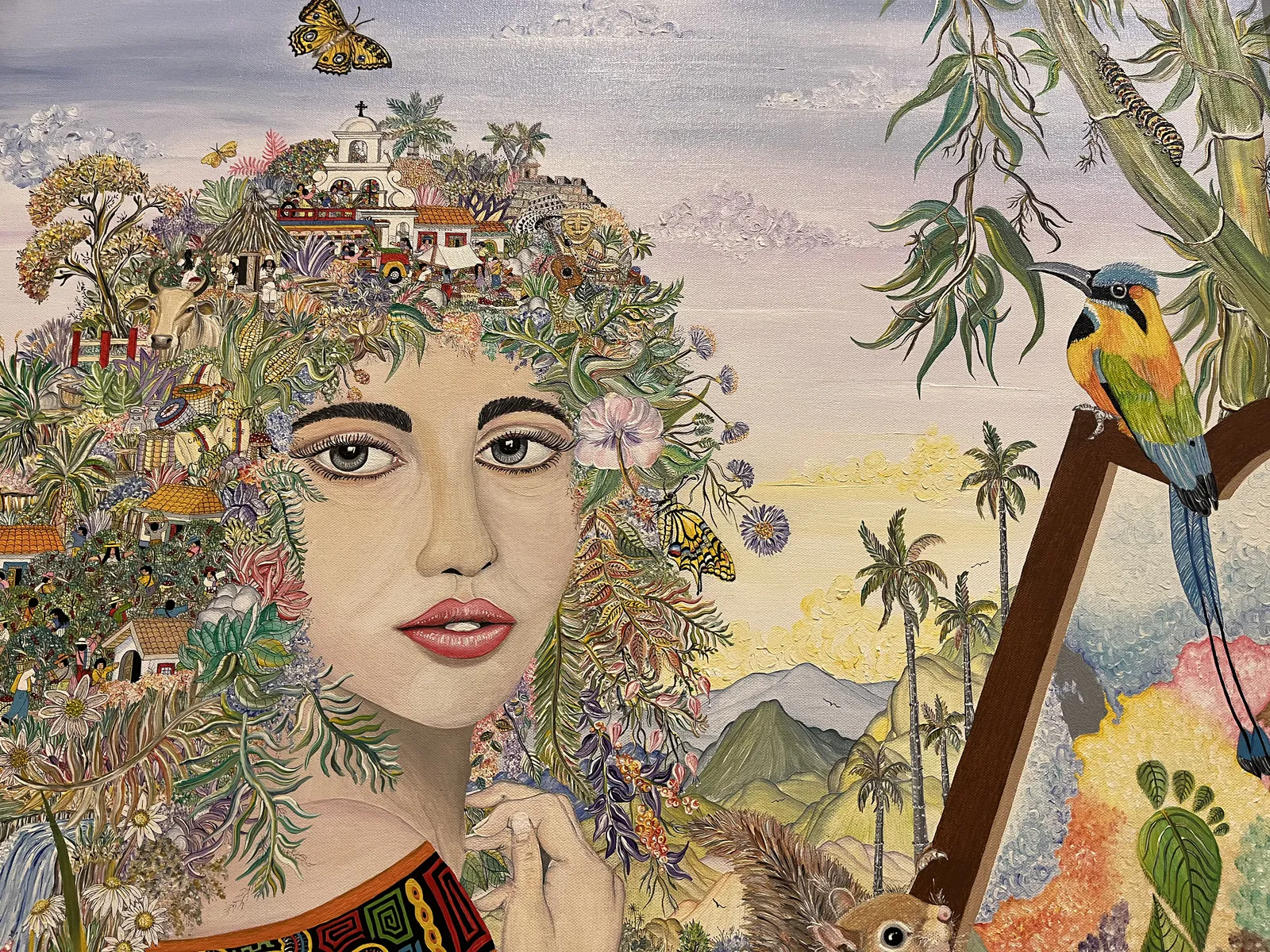
Aún Hay Tiempo
Julio César Ojeda Ariza
This 2021 work blends oil and ink to portray a woman whose hair becomes a lush tapestry of biodiversity and rural life. Symbolizing Colombia’s natural and cultural abundance, it warns of its fragility. The title, There’s Still Time, urges collective action to preserve the environment and ancestral wisdom.
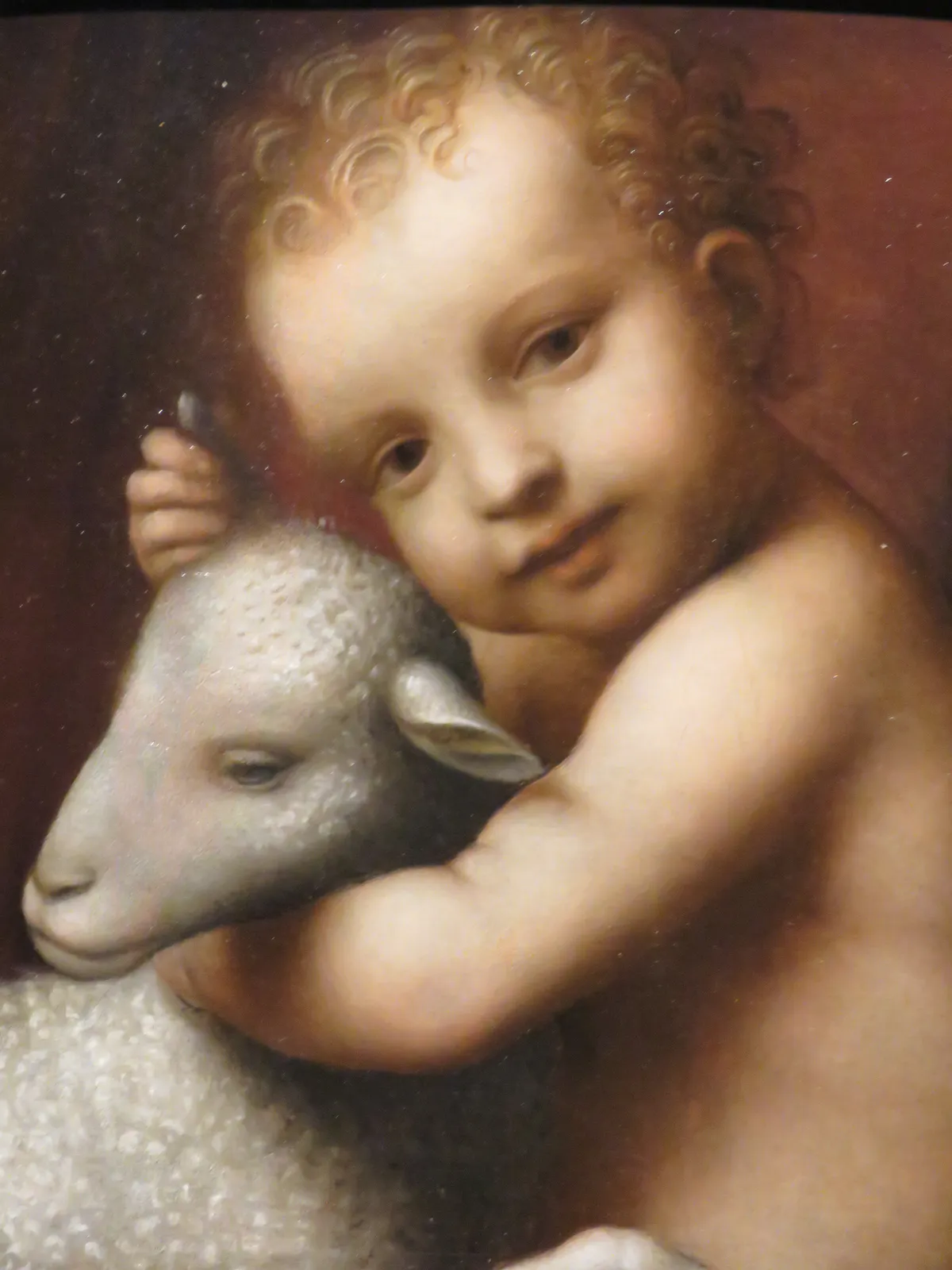
The Infant Jesus with a Lamb
Bernardino Luini
This oil and tempera on panel (c. 1525) captures the tenderness of the Infant Jesus, or Gesu Bambino, embracing a lamb—a symbol of his future sacrifice as the Lamb of God. Luini’s High Renaissance style blends divine purity and human innocence, creating a serene image of spiritual love and redemptive foreshadowing.
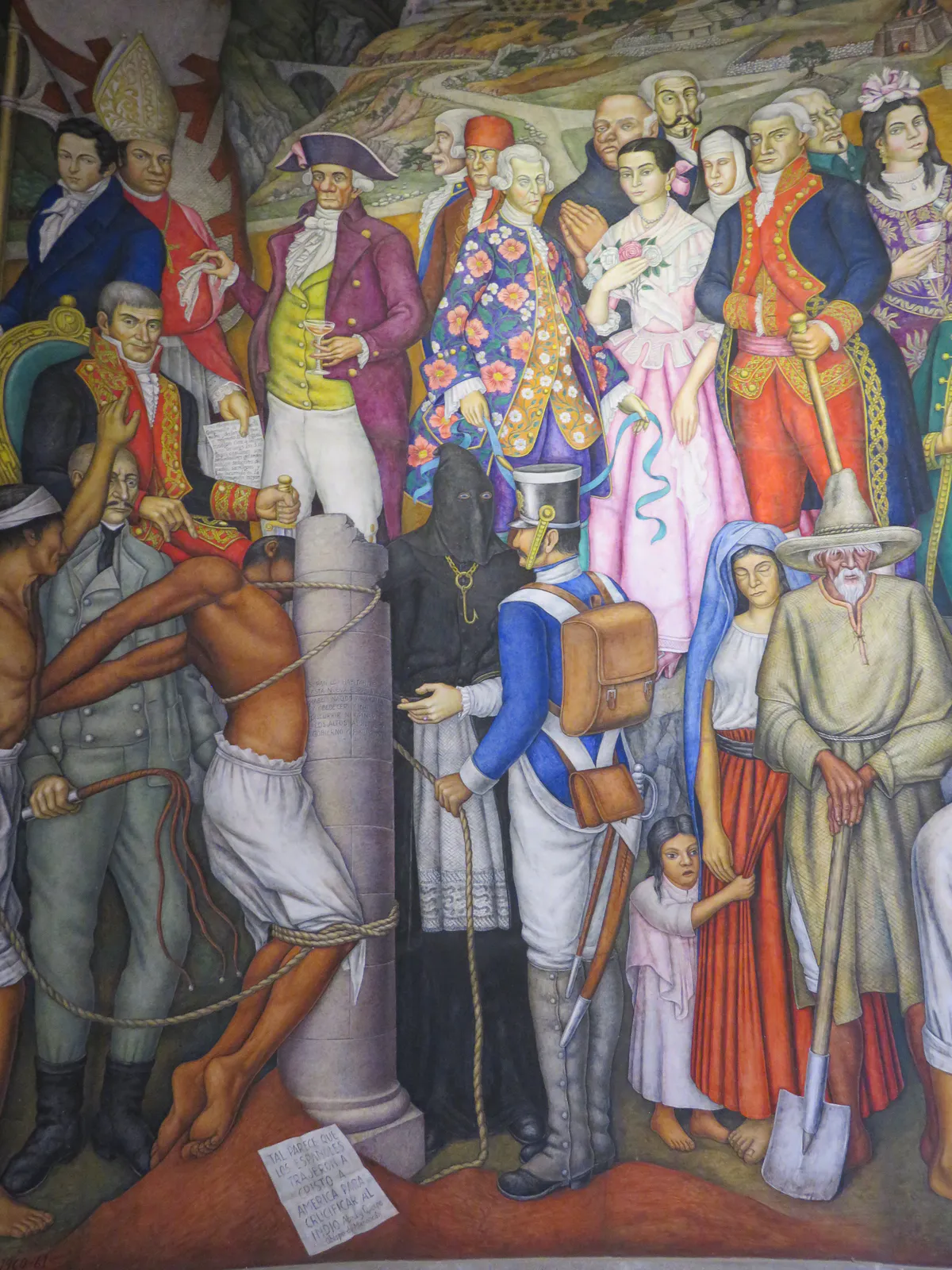
Detail from Retablo de la Independencia
Juan O'Gorman
This mural detail (1960–61) dramatizes colonial brutality during Mexico’s struggle for independence (1810–1821). A near-nude man is tortured before Spanish troops and clergy, symbolizing oppression. At left appear insurgent leaders Miguel Hidalgo and José María Morelos, while nobles and clerics in bright dress embody privilege. The peasants and child at right embody the pueblo whose suffering and resilience fueled the revolt for freedom.
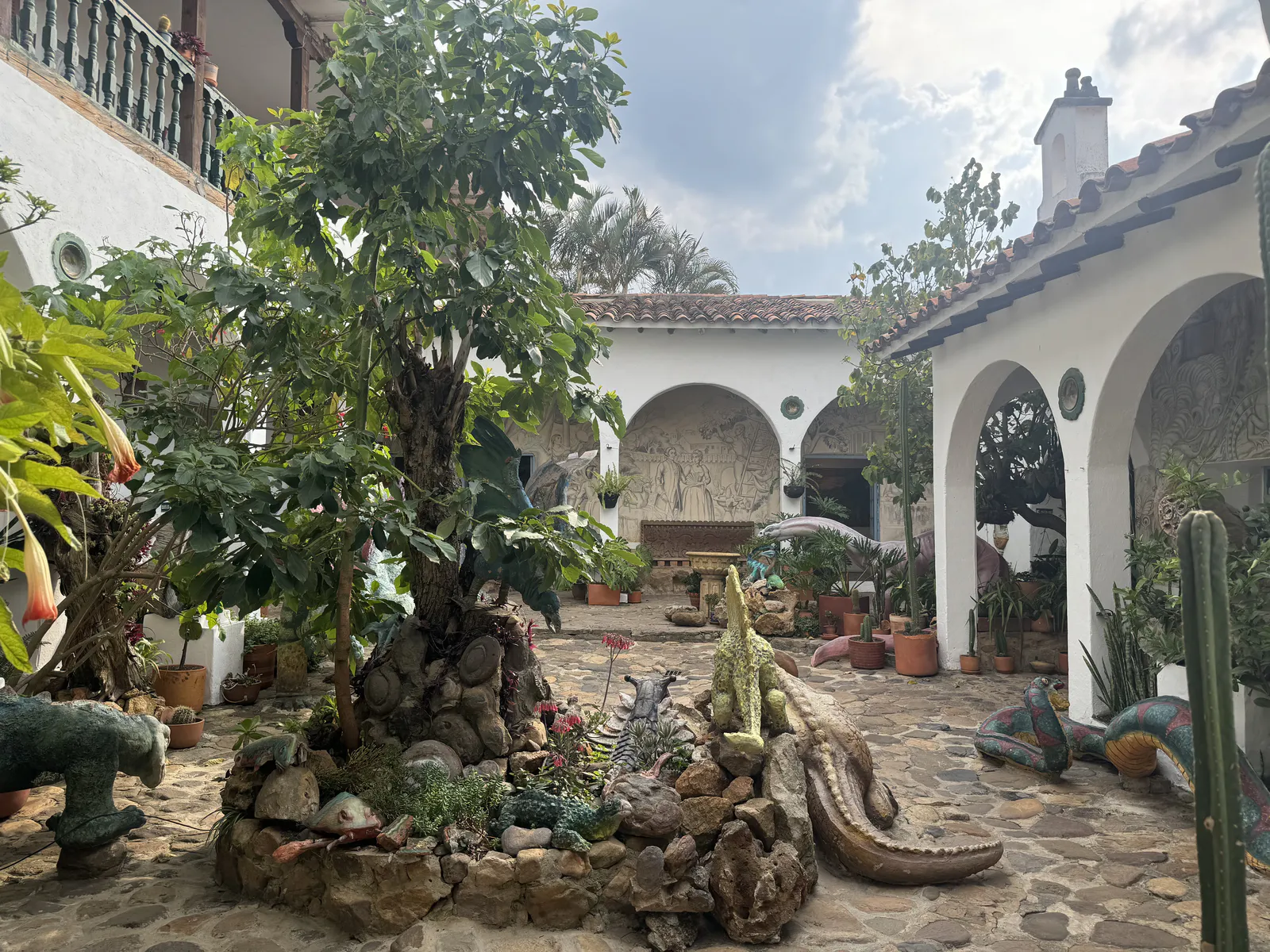
Museum Courtyard
Luis Alberto Acuña
This eclectic courtyard blends colonial architecture with fantastical sculptures and lush vegetation. Dinosaurs, jaguars, and snakes emerge from the stone paths, reflecting Acuña’s imaginative fusion of pre-Columbian, mythological, and surrealist influences.
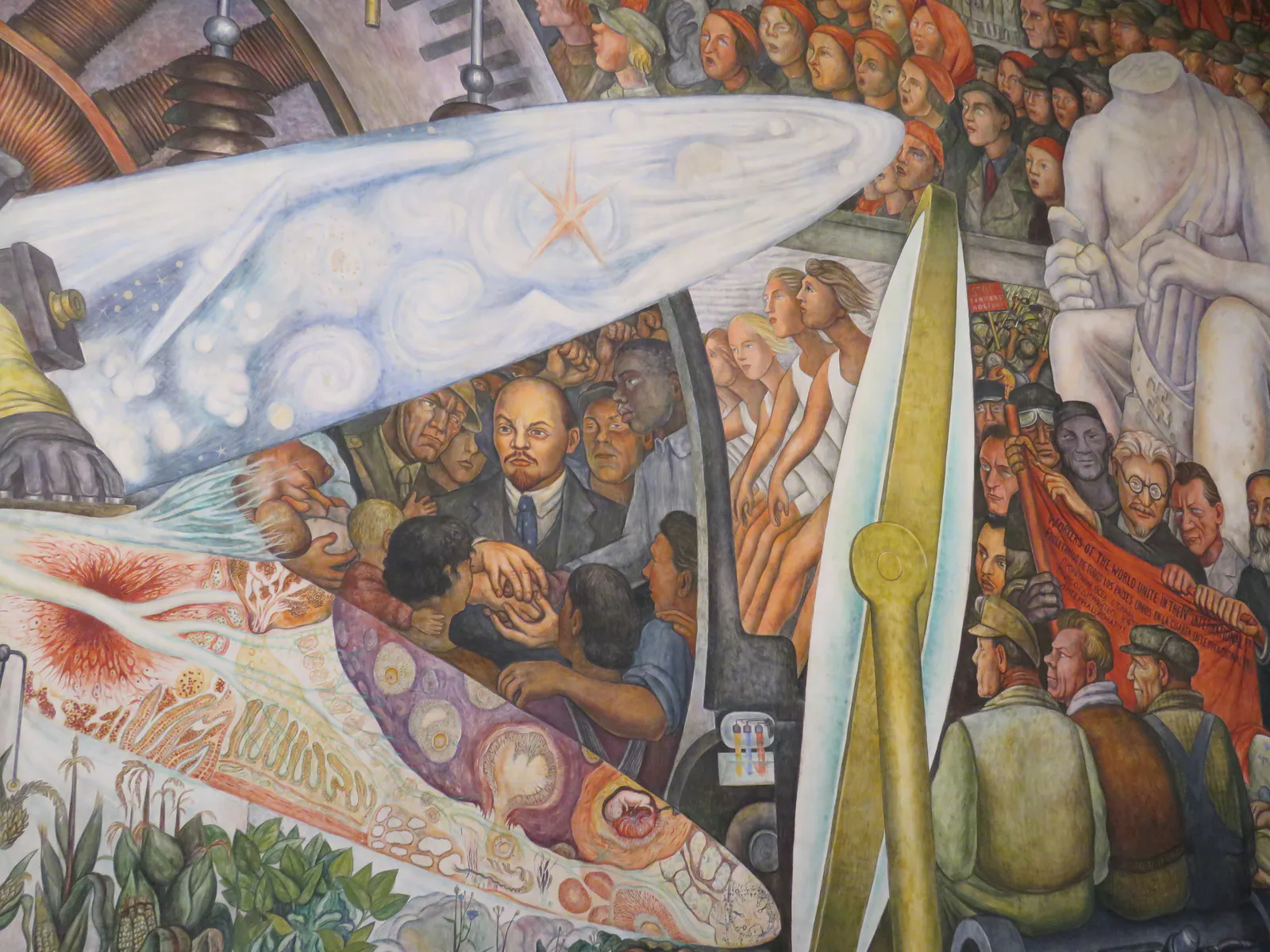
Man, Controller of the Universe (detail)
Diego Rivera
This section of Rivera’s 1934 recreated mural shows Lenin uniting workers of different races and nations, flanked by scientific, agricultural, and cosmic imagery. It contrasts socialism’s collective promise with capitalist individualism. The original was destroyed at Rockefeller Center.
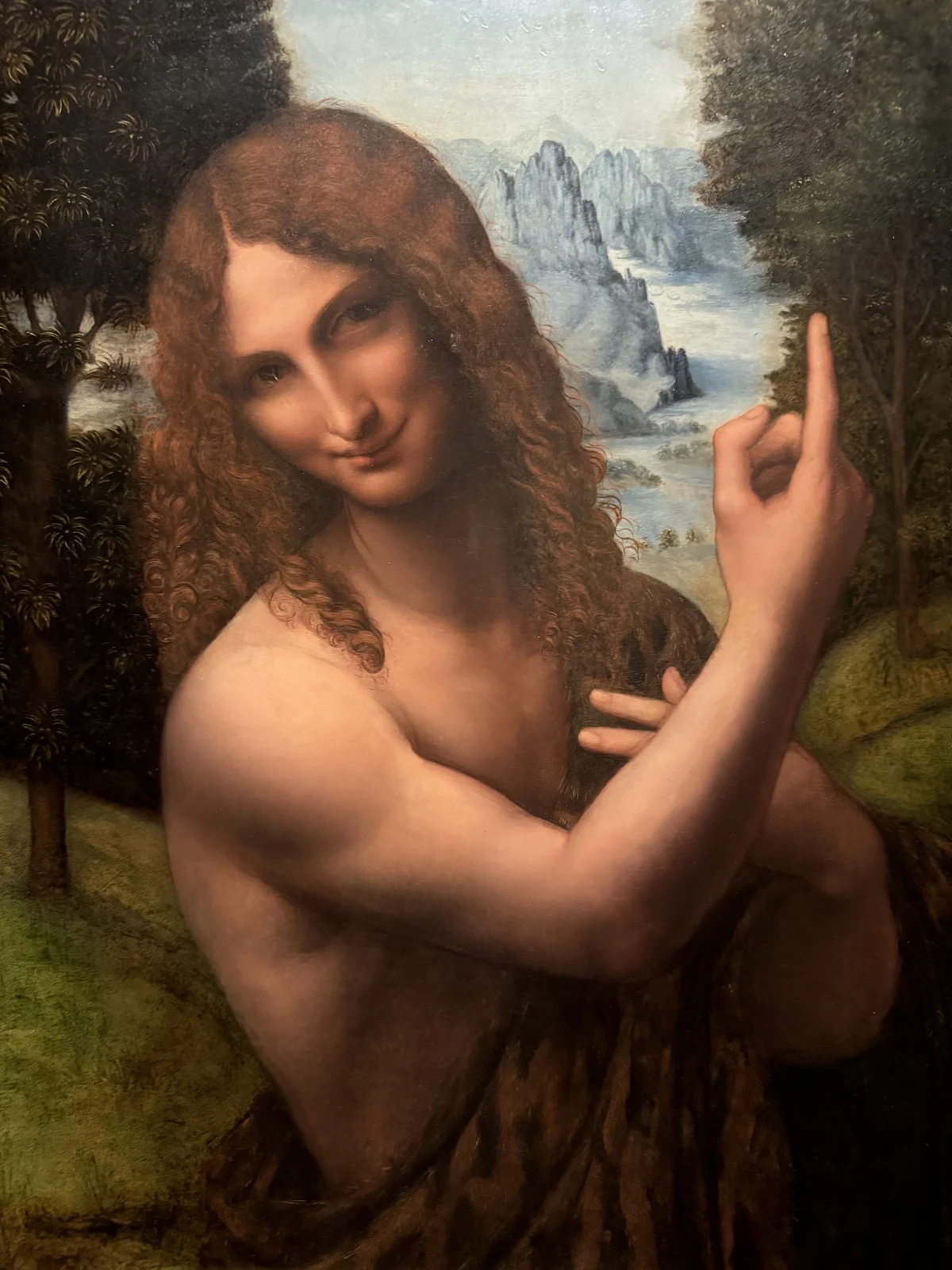
St John the Baptist
Salaino
This sensuous portrayal of John the Baptist (early 16th c.) blends spiritual solemnity with ambiguous allure. Influenced by Leonardo da Vinci, the figure’s delicate features and mysterious smile reflect a complex merging of divine grace and human beauty, inviting contemplation beyond doctrine.
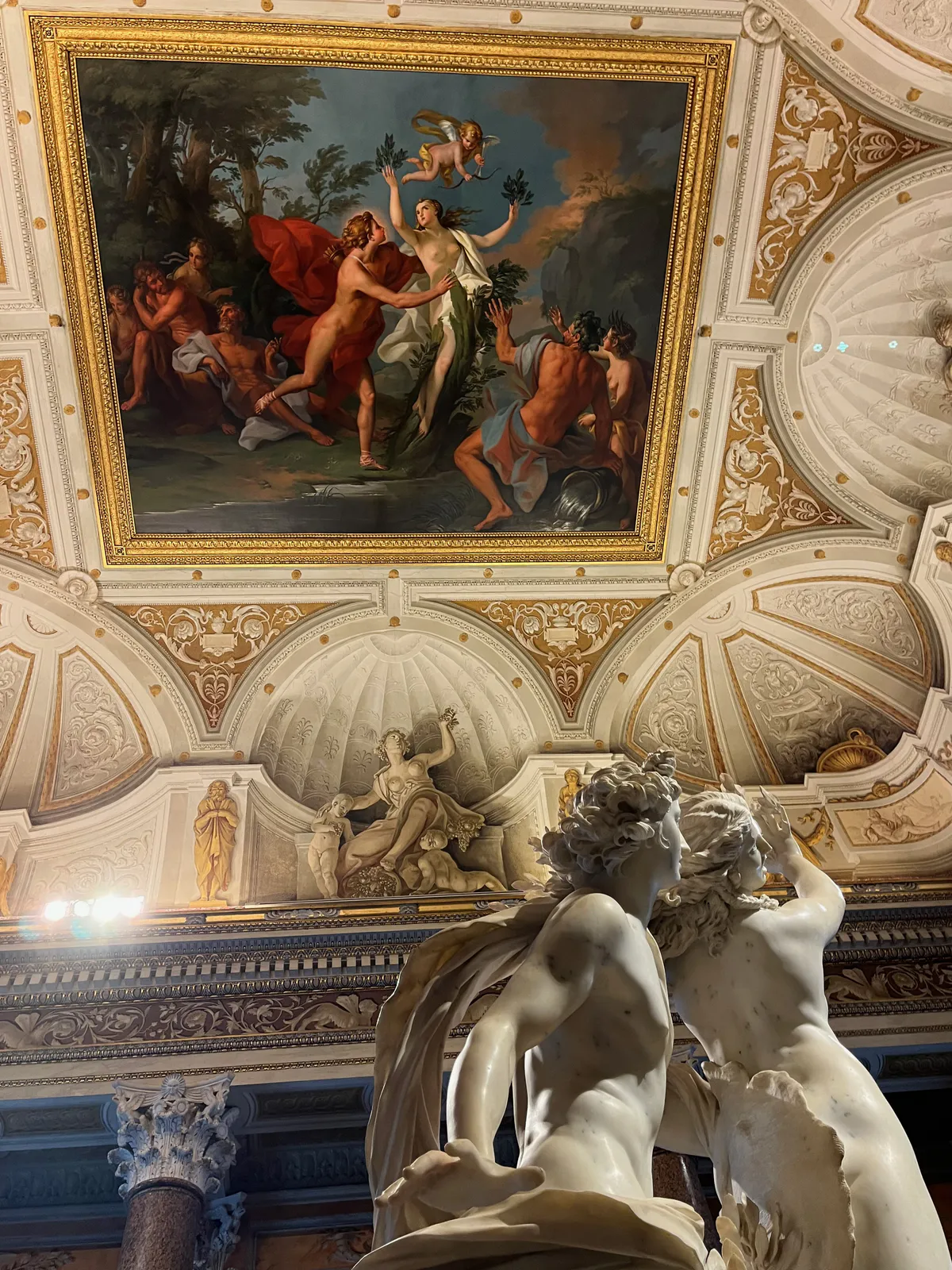
Apollo and Daphne with The Apotheosis of Romulus
Gian Lorenzo Bernini, Mariano Rossi
Bernini’s sculpture (1622–25) captures the climactic moment in Ovid’s Metamorphoses when the nymph Daphne, fleeing Apollo’s desire, transforms into a laurel tree. Above, Rossi’s Apotheosis of Romulus celebrates Rome’s divine origins. Romulus ascends, clutching Roma—helmeted symbol of the eternal city—while Fame, winged and bearing a trumpet, heralds his glory with laurel crowns. Together, sculpture and fresco exalt mythic transformation and Rome’s enduring legacy.
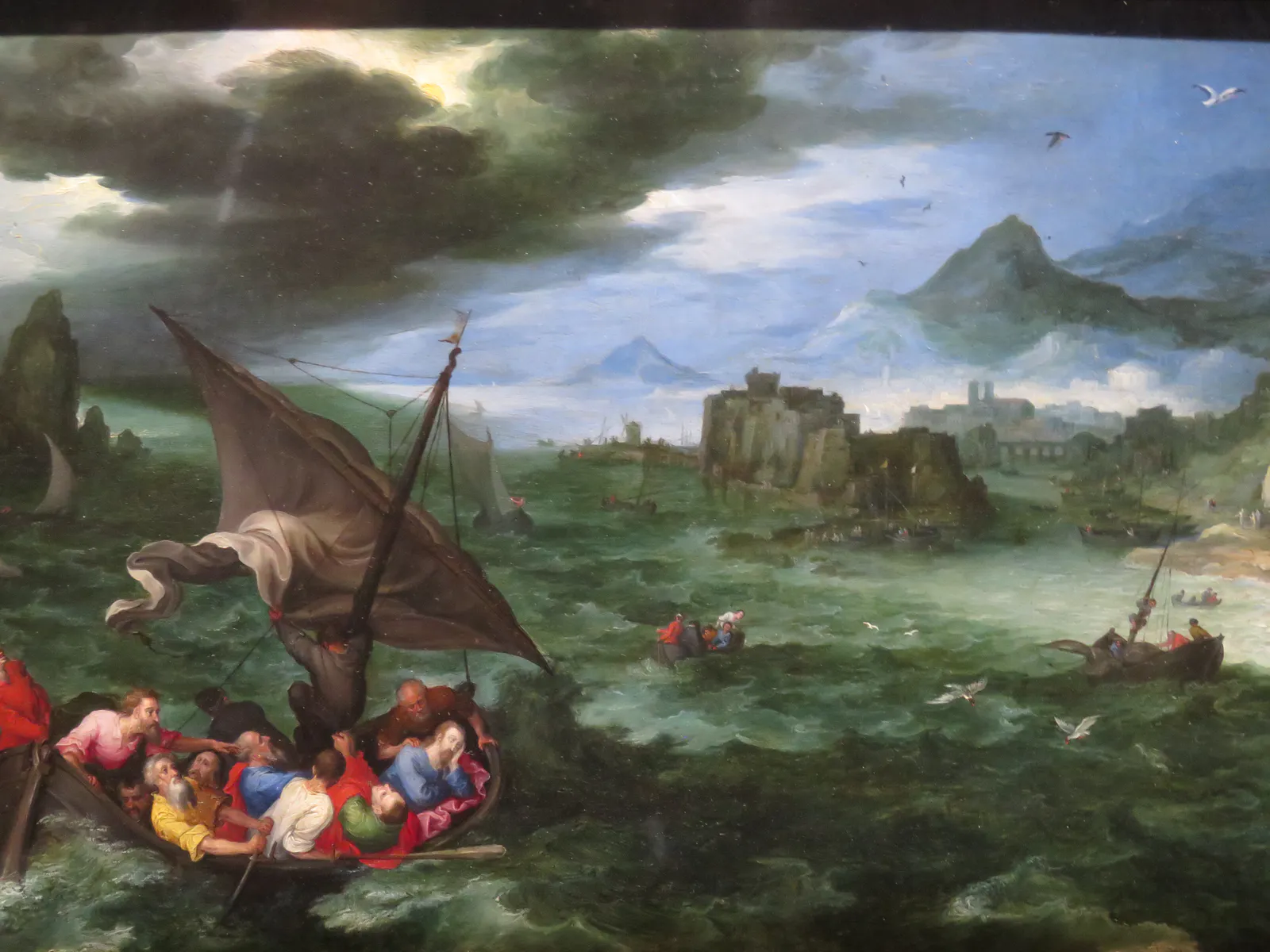
Christ in the Storm on the Sea of Galilee
Jan Brueghel
This oil on copper (1596) shows Christ asleep during a storm as an apostle wakes him amid violent waves on the Sea of Galilee. The heeling boat and twisted sail convey imminent peril, while the darkened sky dramatizes the disciples’ fear. Brueghel’s vivid rendering turns natural turbulence into a meditation on faith and divine control.
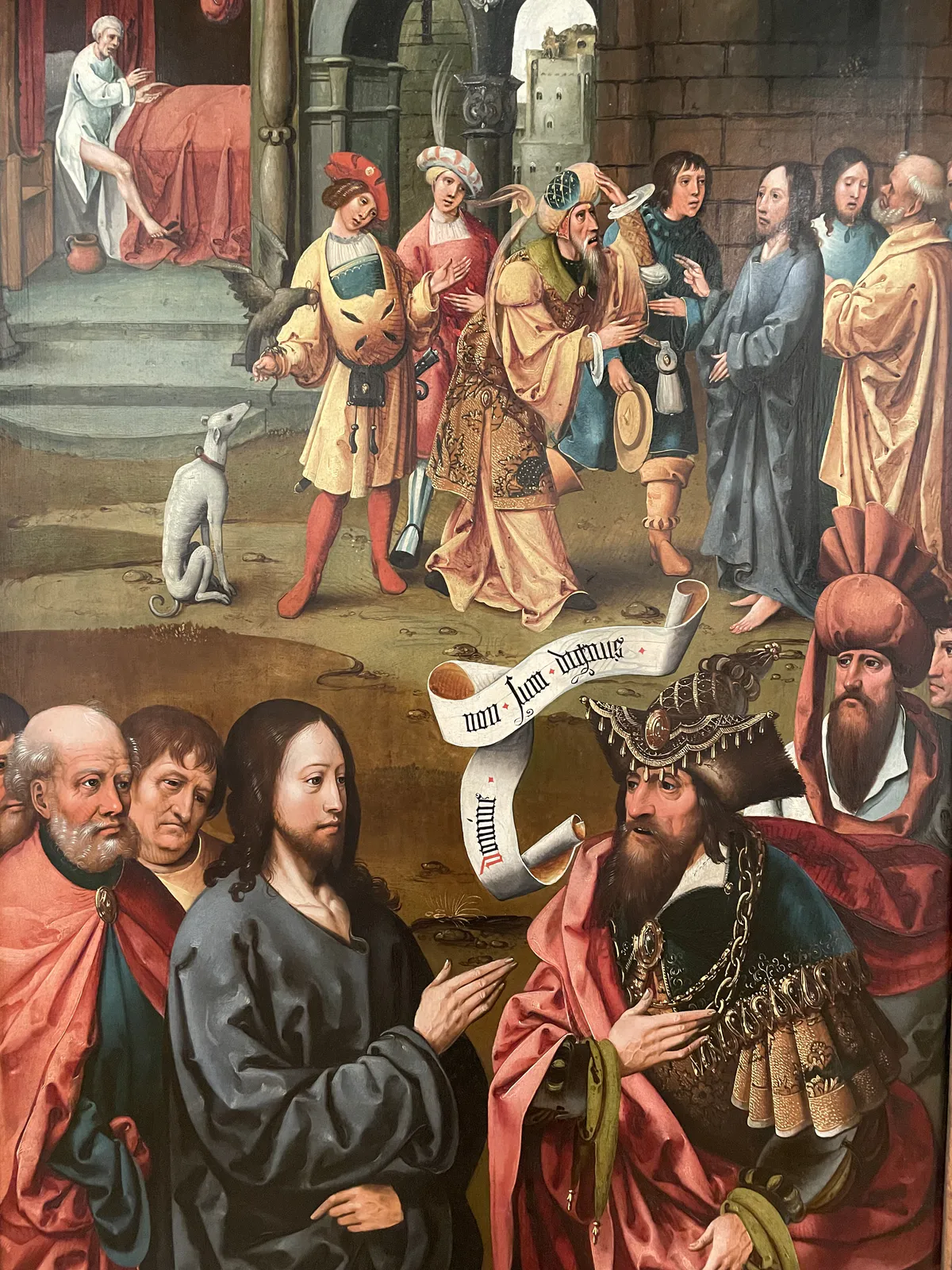
Christ and the Centurion of Capernaum
Master of Adoration of Amberes
This Northern Renaissance panel (1520–30) captures the moment a Roman centurion asks Christ to heal his servant, saying Lord, I am not worthy. The scene blends biblical narrative with contemporary Flemish attire, highlighting faith over status. The expressive gestures and rich details emphasize humility and the universal appeal of compassion, reflecting the era's fusion of religious and cultural elements.
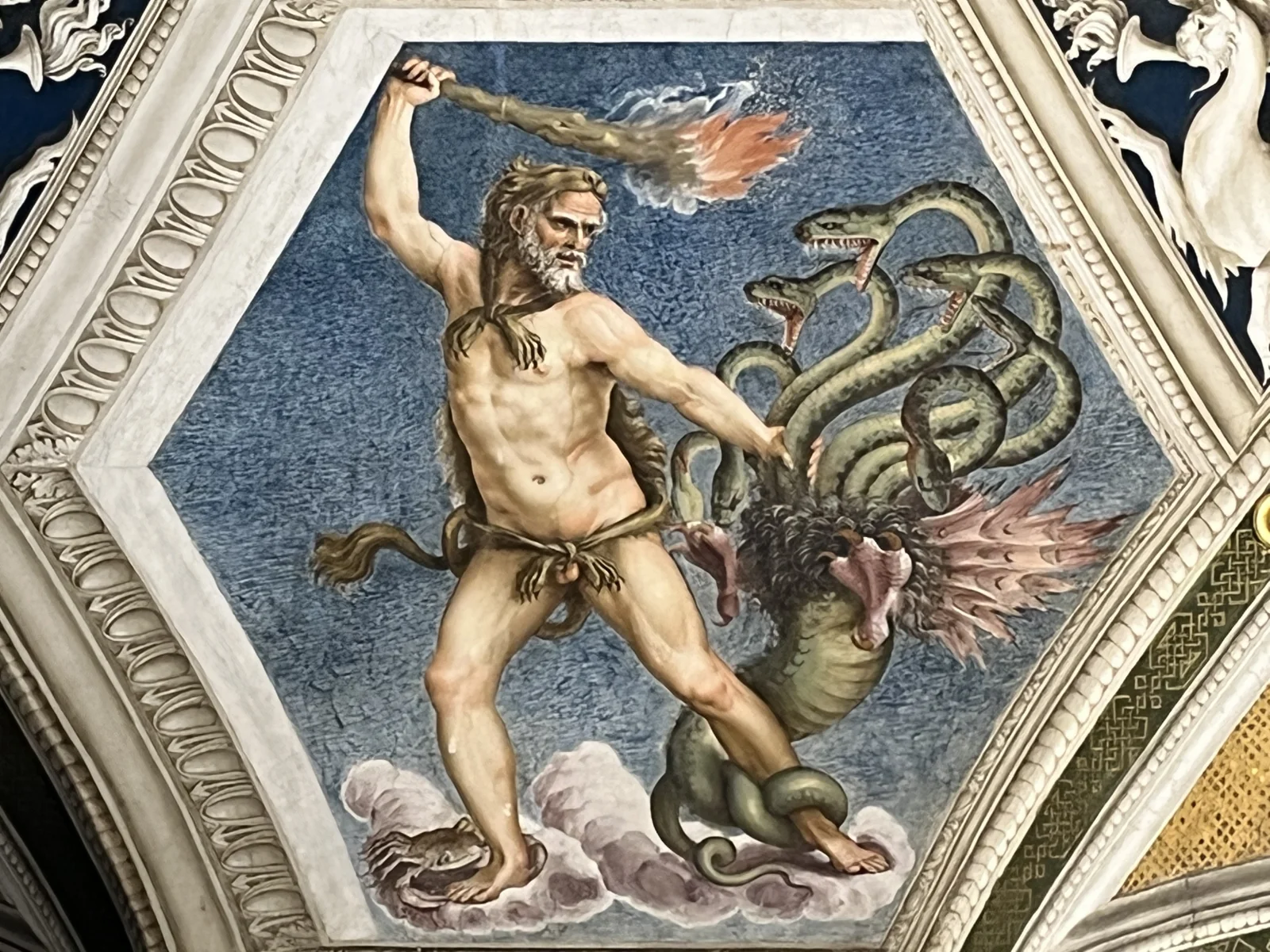
Hercules and the Hydra
Baldassarre Peruzzi
This ceiling fresco (c. 1510) in the Hall of the Perspectives shows Hercules battling the multi-headed Hydra. The creature symbolizes the zodiac sign Cancer, aligning with the room’s astrological theme. Peruzzi demonstrates heroic virtue triumphing over chaos and earthly temptation, reflecting Renaissance ideals of order and moral strength.
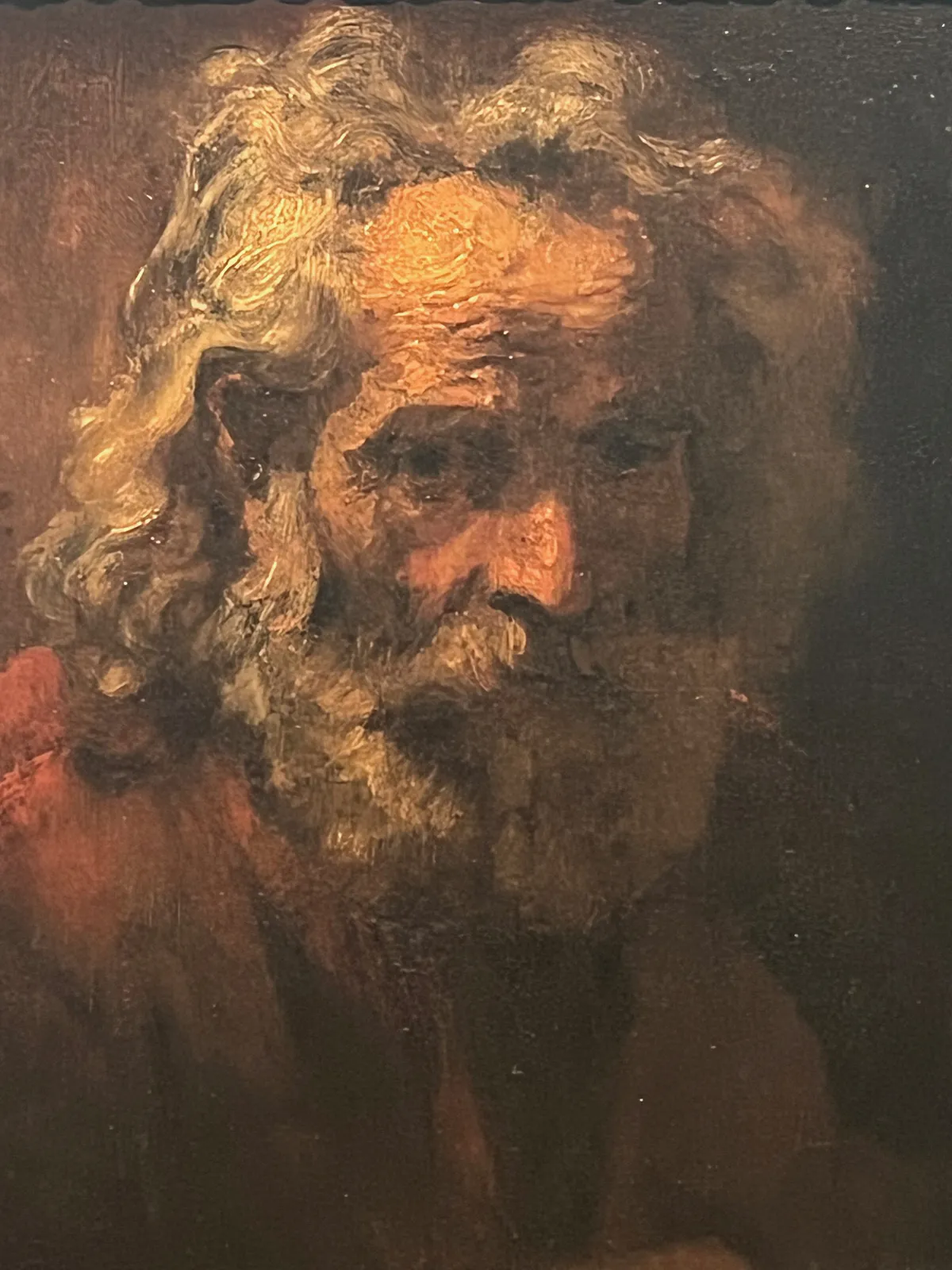
Bust of a Bearded Old Man
Rembrandt
This painting (c. 1630) by Rembrandt van Rijn exemplifies the tronie genre, focusing on character over identity. The expressive face of the elderly man, rendered in oil on panel, showcases Rembrandt’s mastery of light and shadow. As one of his smallest works, it explores themes of old age, capturing the nuances of human expression and emotion, marking an early exploration of the artist’s fascination with the human condition.
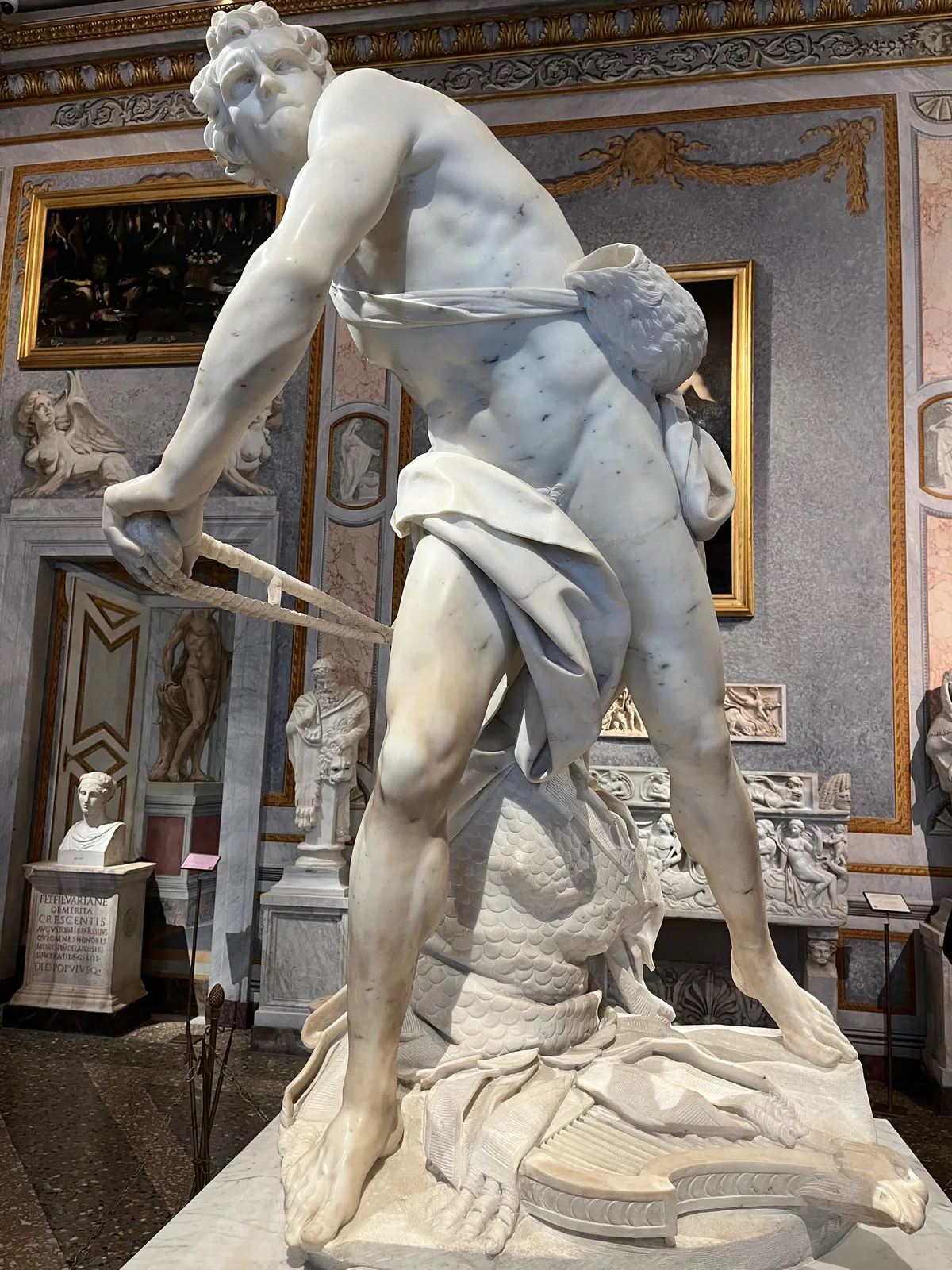
David
Gian Lorenzo Bernini
This electrifying sculpture (1623–24) captures David mid-swing as he prepares to strike Goliath. Commissioned by Cardinal Scipione Borghese, it breaks from static Renaissance models by freezing a moment of intense motion and psychological resolve. Bernini’s vivid realism and spiraling pose typify the Baroque celebration of drama and energy.
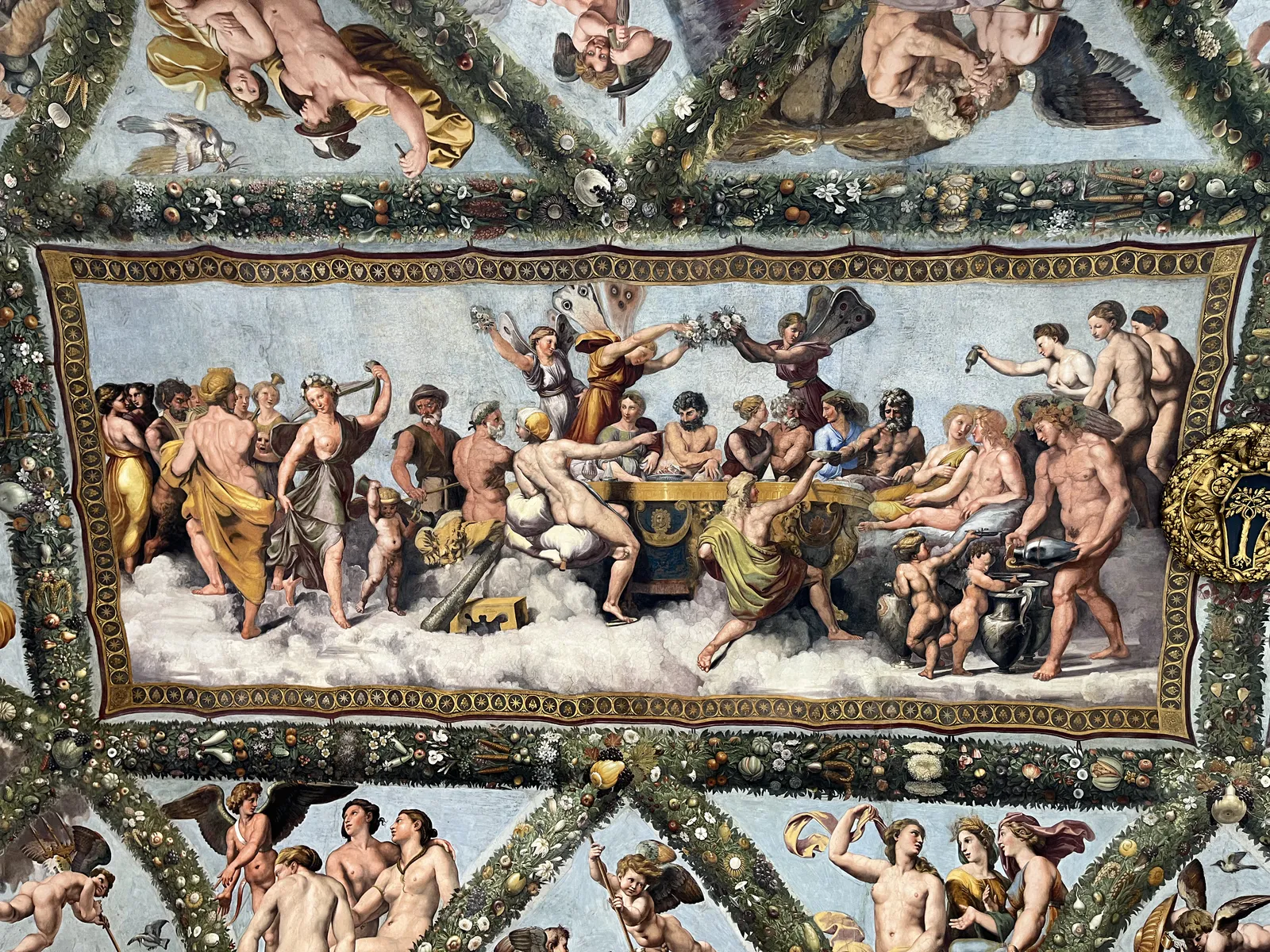
The Wedding Banquet of Cupid and Psyche
Raphael
In this grand fresco (1518), Raphael depicts the divine banquet celebrating the marriage of Cupid and Psyche. At the center, Jupiter and Juno preside; beside them sit Pluto, Persephone, Neptune, and Venus. Ganymede offers wine to Jupiter, while Bacchus (Dionysus), assisted by putti, pours wine at the right. The scene embodies divine harmony, joy, and the union of soul and love.
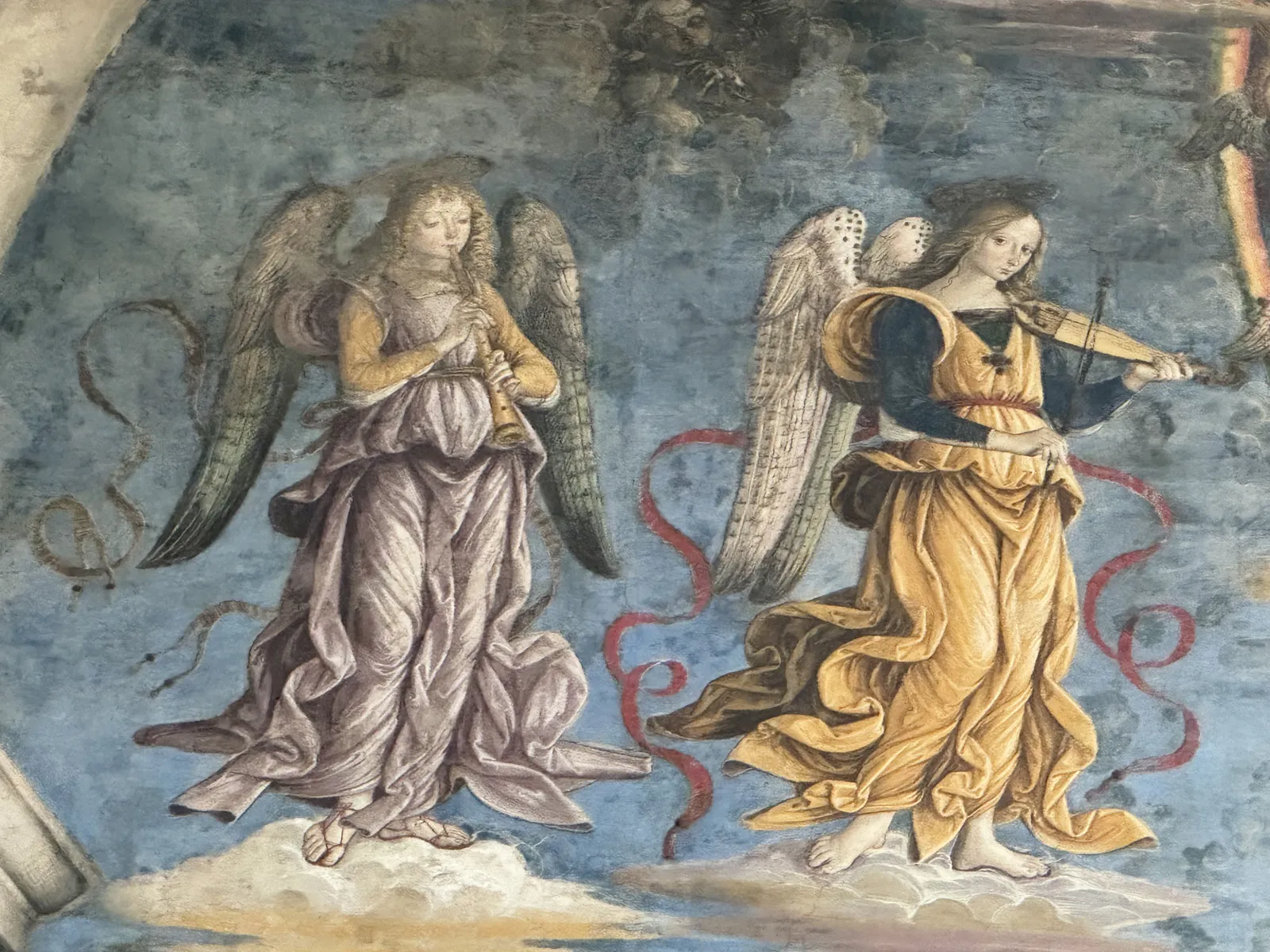
Musical Angels (detail)
Pinturicchio
In this detail (1484–86), Pinturicchio paints two angelic musicians, one playing a violin and the other a wind instrument. Floating on clouds, they contribute to the celestial harmony surrounding Christ in Majesty. The graceful movement of their garments reflects Pinturicchio’s refined sense of rhythm, light, and divine celebration.
“When the path is beautiful, do not ask where it leads.” — Zen proverb
Welcome to my travel photography!
“When the path is beautiful, do not ask where it leads.” — Zen proverb
Welcome to my travel photography!
For as long as I can remember, my path has been one of discovery—seeking beauty, timelessness, and connection in every corner of the world. It has also been a journey of deep learning and understanding. I’ve been an avid traveler (or perhaps a travel addict?) for most of my life. My love for travel began long before I ever left home: as a child, I drew a fantasy map of my grandparents’ apartment and “traveled” through it with my cousin Sonya, imagining adventures in every corner. Nearly 90 countries and countless moments of awe later, I’m excited to share this journey with you.
Thanks to the tireless and ingenious programming of Diagilev, we’re now able to present about fifteen percent of the images I’ve accumulated over the years. More will be released in small batches depending on your interest. While the first release leans toward museum photography, later ones will include more nature, architecture, culture, and general travel experiences. If you’d like to receive email notifications about new releases, feel free to reach out—no commercial use, ever.
Throughout my travels, I’ve been drawn to two intertwined kinds of discovery. One is intellectual: learning why the world is the way it is. History became my guide, shaping my perspective and filling my camera roll with museums and old buildings. To me, history is not the past—it is the key to understanding the present and how the world became what it is. The other is emotional: seeking moments of elevation—spirituality, beauty, harmony—often found in nature, monasteries, and ancient sacred spaces. Together, these impulses shape my photography. It invites you to learn, admire, and soar—to rise above the mundane and see the world through a lens of curiosity and wonder.
Much of my later travel became possible thanks to my job with Delta Air Lines, but the wanderlust began years earlier. By the time I joined the industry, I had already visited over 35 countries and lived in several—largely thanks to a backpacking journey around the world with Luis León, whose face appears in many early photos. I grew up in Ufa in the USSR, and since leaving it I have lived, studied, and worked in Latvia, the United States, France, South Korea, Canada, Spain, Italy, Brazil, Japan, and Colombia.
A life of near-constant movement may seem a little crazy, but it has deepened my understanding of the world and produced the photography you are about to see. Over the years, my style has evolved—more intentional, more refined—yet its core remains the same: a search for understanding, timeless beauty, and a connection to those who walked this earth long before us.
I hope these photos stir something in your soul, just as they did in mine. I’d love to hear from you—whether reactions, suggestions, corrections, or a request to be added to the email list for new releases (no commercial use, I promise). You can learn more about my travels here, and my academic life here.
Enjoy our shared journey!