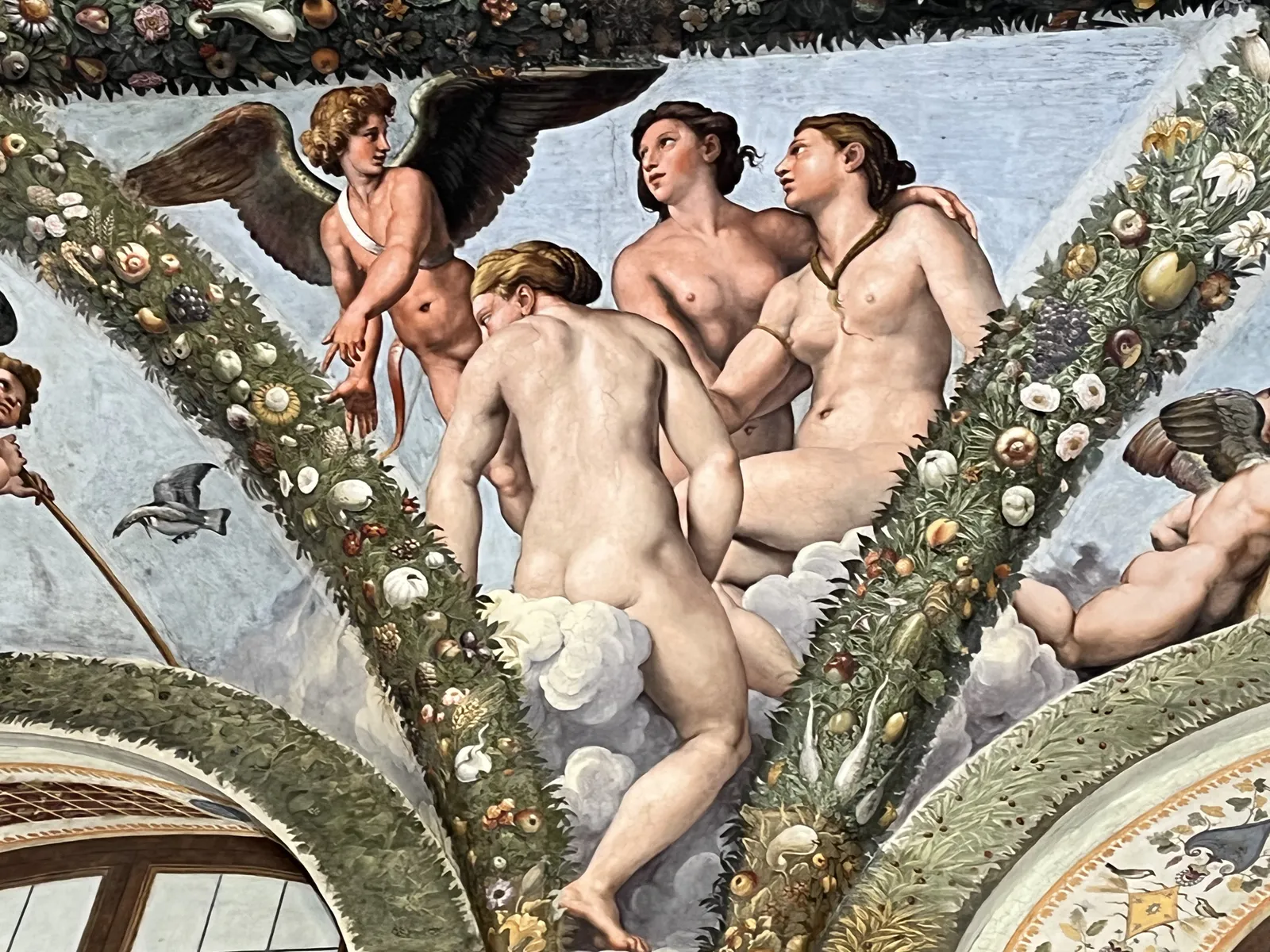
Cupid and the Three Graces
Raphael
In this fresco (1518), Raphael portrays Cupid with the Three Graces, who embody beauty, charm, and joy. The scene reflects the harmony of love and divine favor, integral to Psyche’s myth. Framed by Giovanni da Udine’s botanical festoons, it blends mythology with Renaissance ideals of grace and abundance.
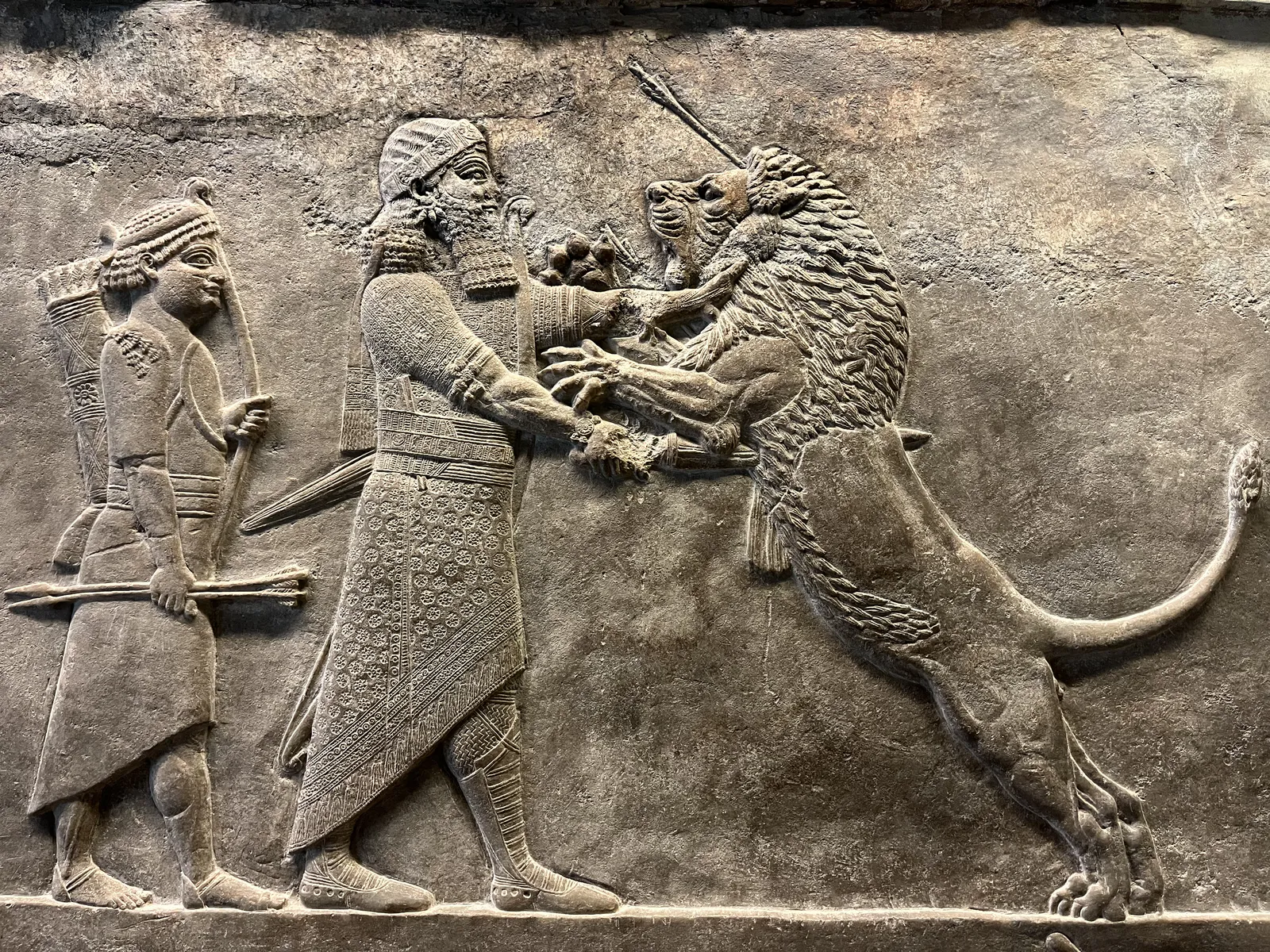
Hand-to-Hand Combat
This Assyrian relief (c. 645 BC) depicts King Ashurbanipal in hand-to-hand combat with a lion, symbolizing royal valor and divine favor. Despite its wounds, the lion charges fiercely. The unarmored king embodies the ultimate warrior, confronting nature and asserting supremacy over chaos and fate. Such scenes reinforced his image as protector and ruler, highlighting the Assyrian empire’s power and the monarch’s divine right to rule.
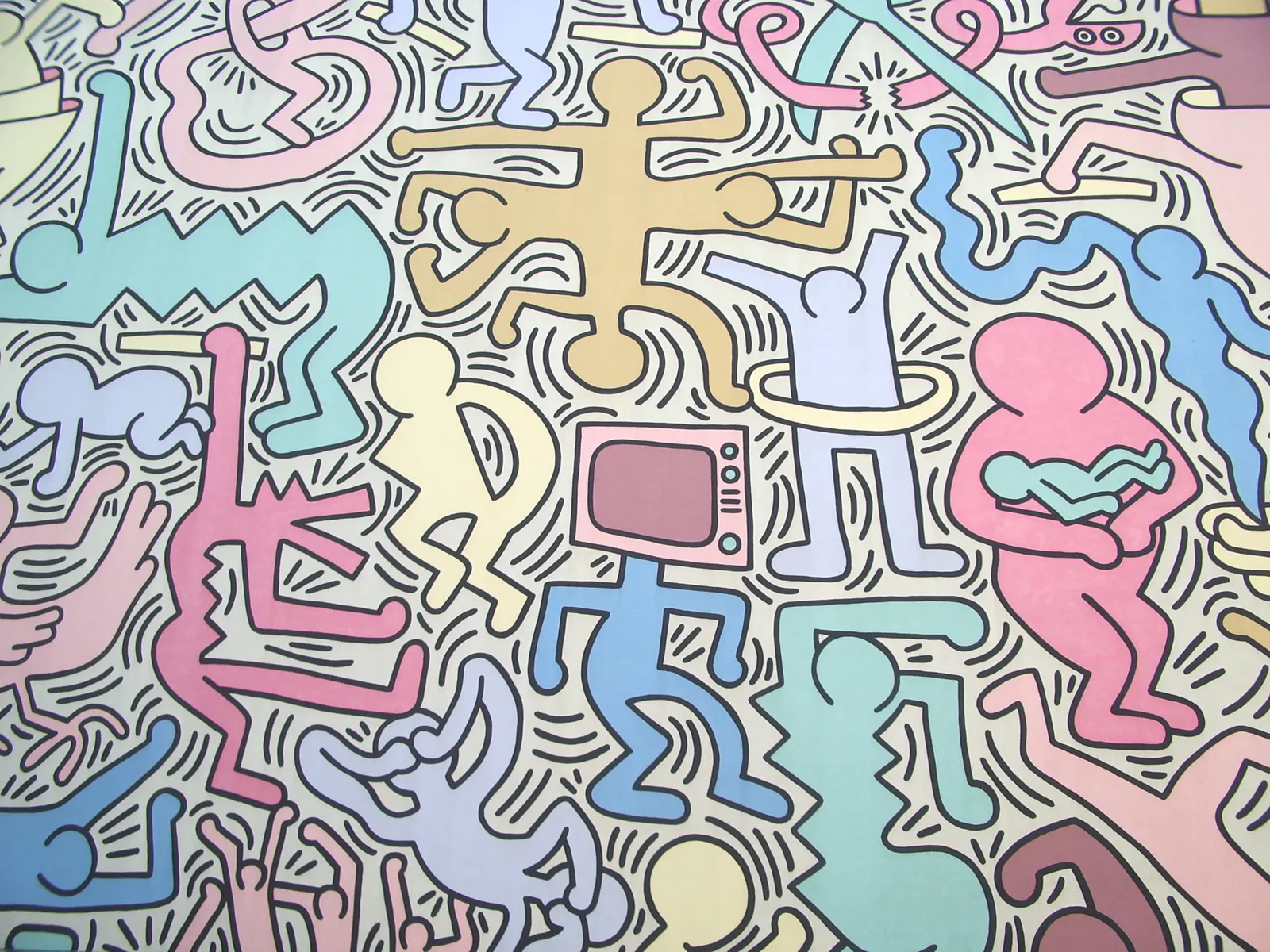
Tuttomondo
Keith Haring
This section of Tuttomondo (1989) showcases Keith Haring’s vibrant visual language with simplified human forms, radiant lines, and vivid colors in rhythmic harmony. The mural, painted in Pisa, celebrates peace and collective action, with each figure symbolizing a social or spiritual force working toward global unity. Haring’s work demonstrates the power of art to convey universal themes of cooperation and harmony.
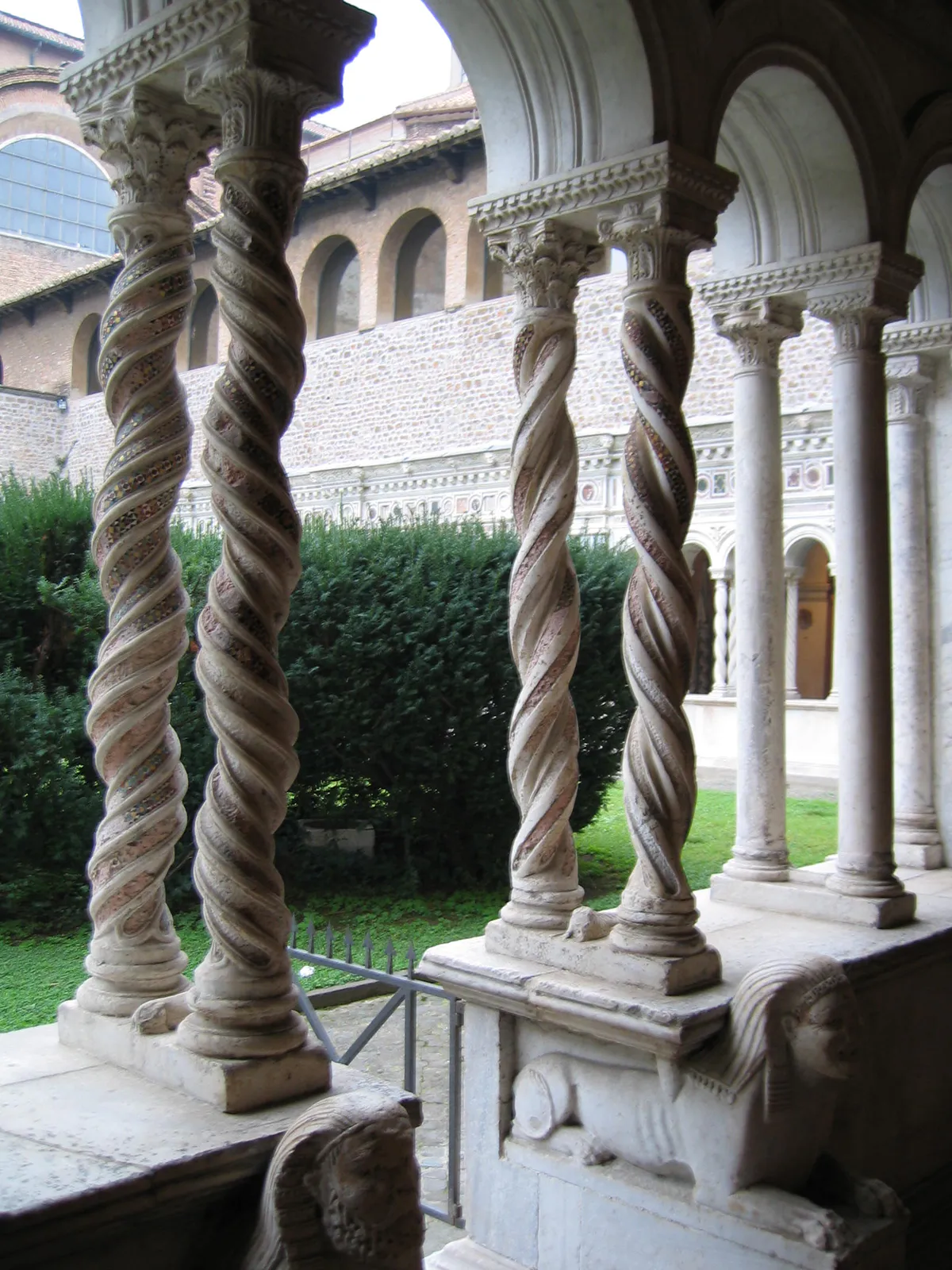
Cosmatesque Columns with Lions and Sphinxes
Vassalletto Workshop
These cloister columns (c.1215), with spiraled shafts and vivid mosaic inlays in the cosmatesque style—a Roman art blending colored marble, glass, and porphyry into geometric patterns—rest on sculpted lions and sphinxes. Crafted by the Vassalletto masters, they unite classical form and Christian meaning, embodying medieval Rome’s vision of divine order through ancient craft.

Streetwear Stall
This vibrant clothing stall captures the energy of West African street markets. A vendor rests amid colorful garments while a mother and children browse the display. Informal, entrepreneurial, and dynamic, such markets are central to daily life—providing affordable fashion, social interaction, and economic survival for many.
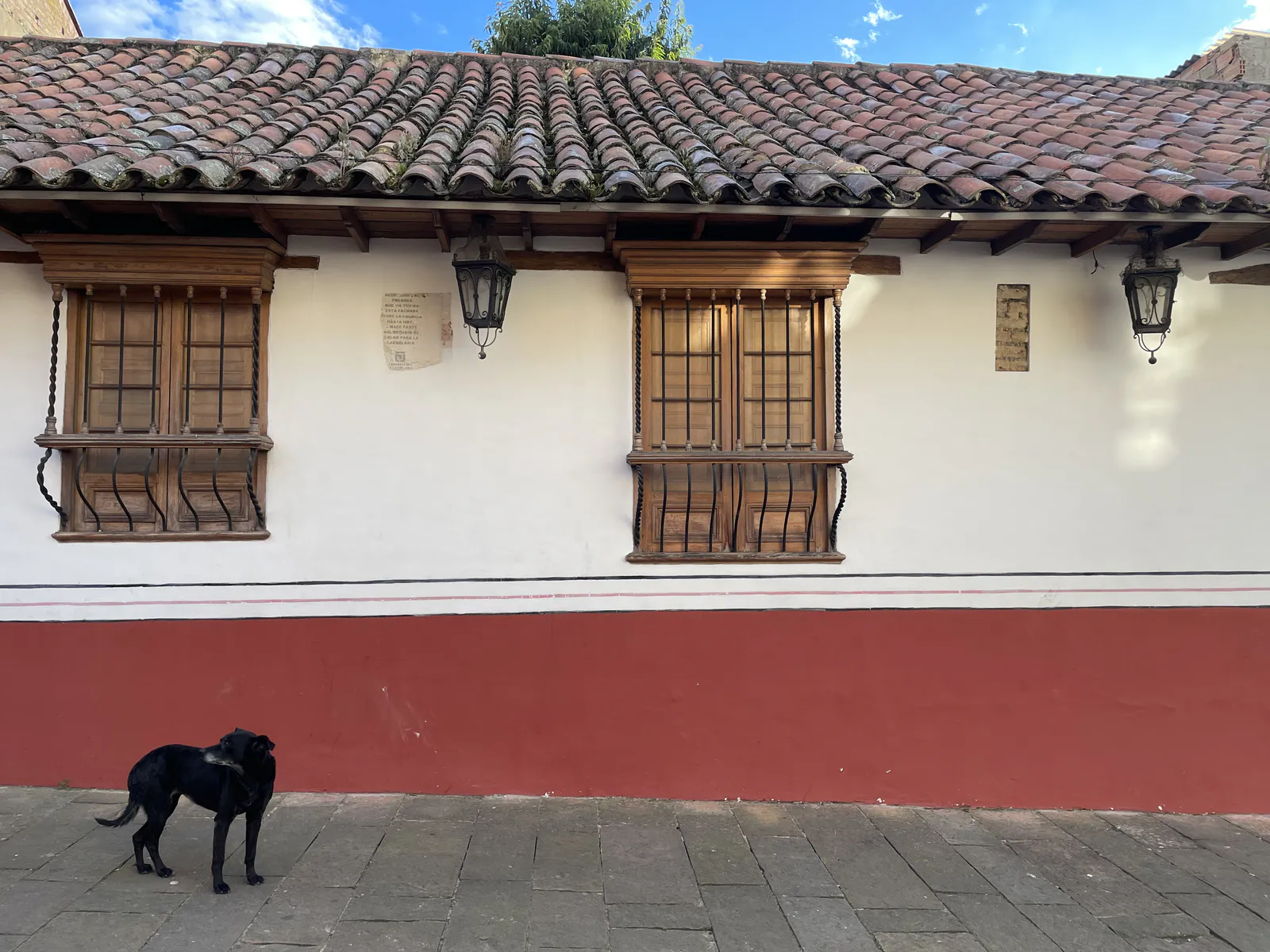
Colonial House with Lanterns and Dog
This single-story home in La Candelaria exemplifies classic Andean colonial style, featuring wooden rejas (decorative window bars), hanging lanterns, and a clay-tile roof. The red base, a practical design, protected walls from street dust in this bustling pedestrian zone. Dating back to the 16th century, this style reflects a blend of Spanish and indigenous influences.
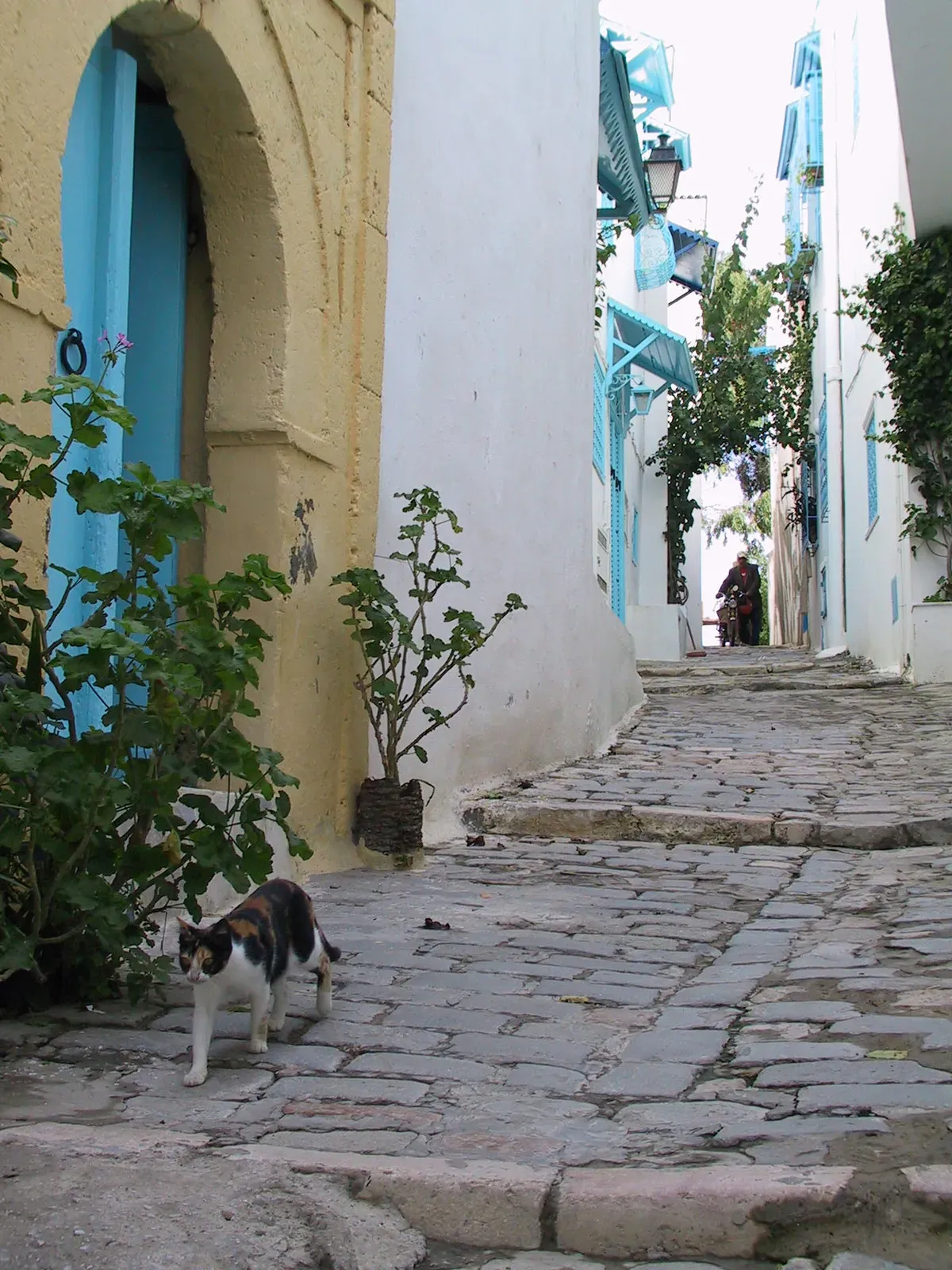
Cat Strolling Through the Alley
A calico cat walks confidently along a cobbled path in Sidi Bou Said, framed by soft yellow walls, trailing vines, and bright blue woodwork. The scene captures the village’s quiet poetry, where cats are not just companions but iconic inhabitants—moving freely through a maze of Mediterranean light and architectural grace.
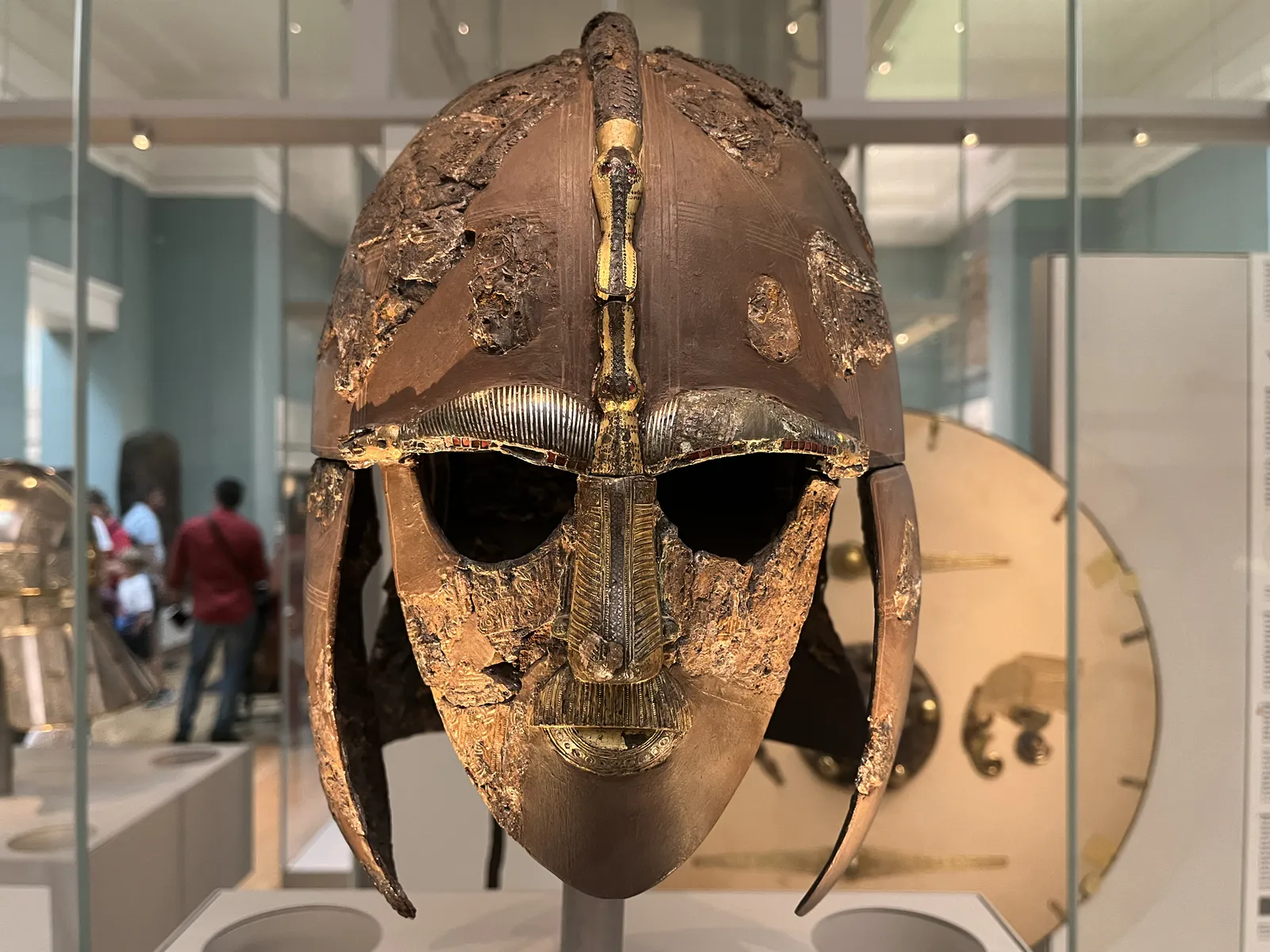
Anglo-Saxon Sutton Hoo Helmet
Crafted from iron and tinned copper, the Sutton Hoo Helmet was buried around 600 AD and likely belonged to an East Anglian king. Reconstructed from fragments, its beast-like face and warrior imagery link it to Woden cults and Eastern Sweden. The helmet symbolizes elite status and early English power, reflecting the cultural and political landscape of its time, and showcases the craftsmanship and beliefs of the Anglo-Saxon elite.
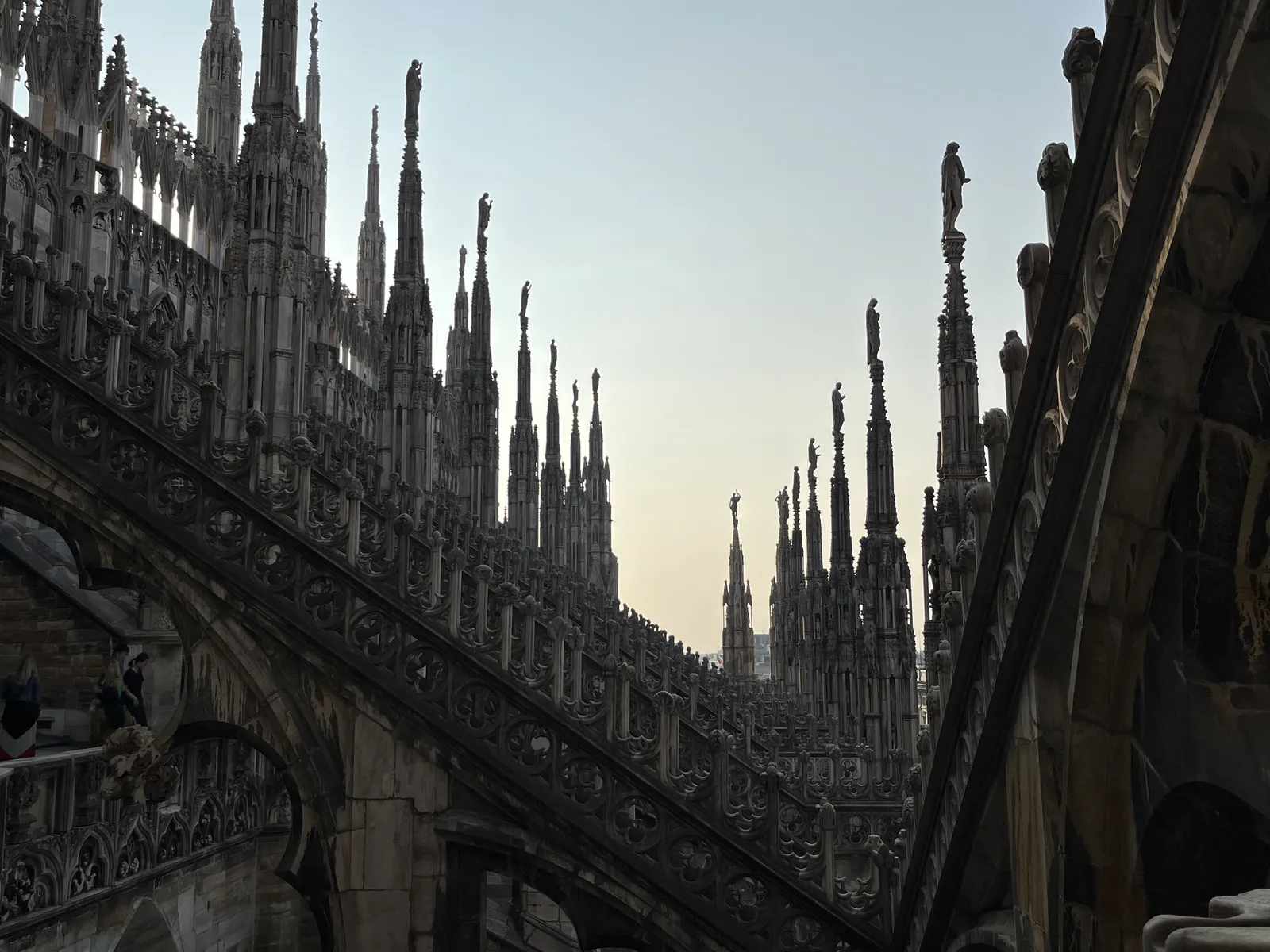
Gothic Spires of the Duomo
The rooftop of Milan’s cathedral (from the late 14th c.) is a marvel of verticality. Forests of spires topped with saints rise above ornate flying buttresses, transforming structural necessity into a sculptural landscape. Here, Gothic architecture becomes an ascension—not just of stone, but of the spirit.
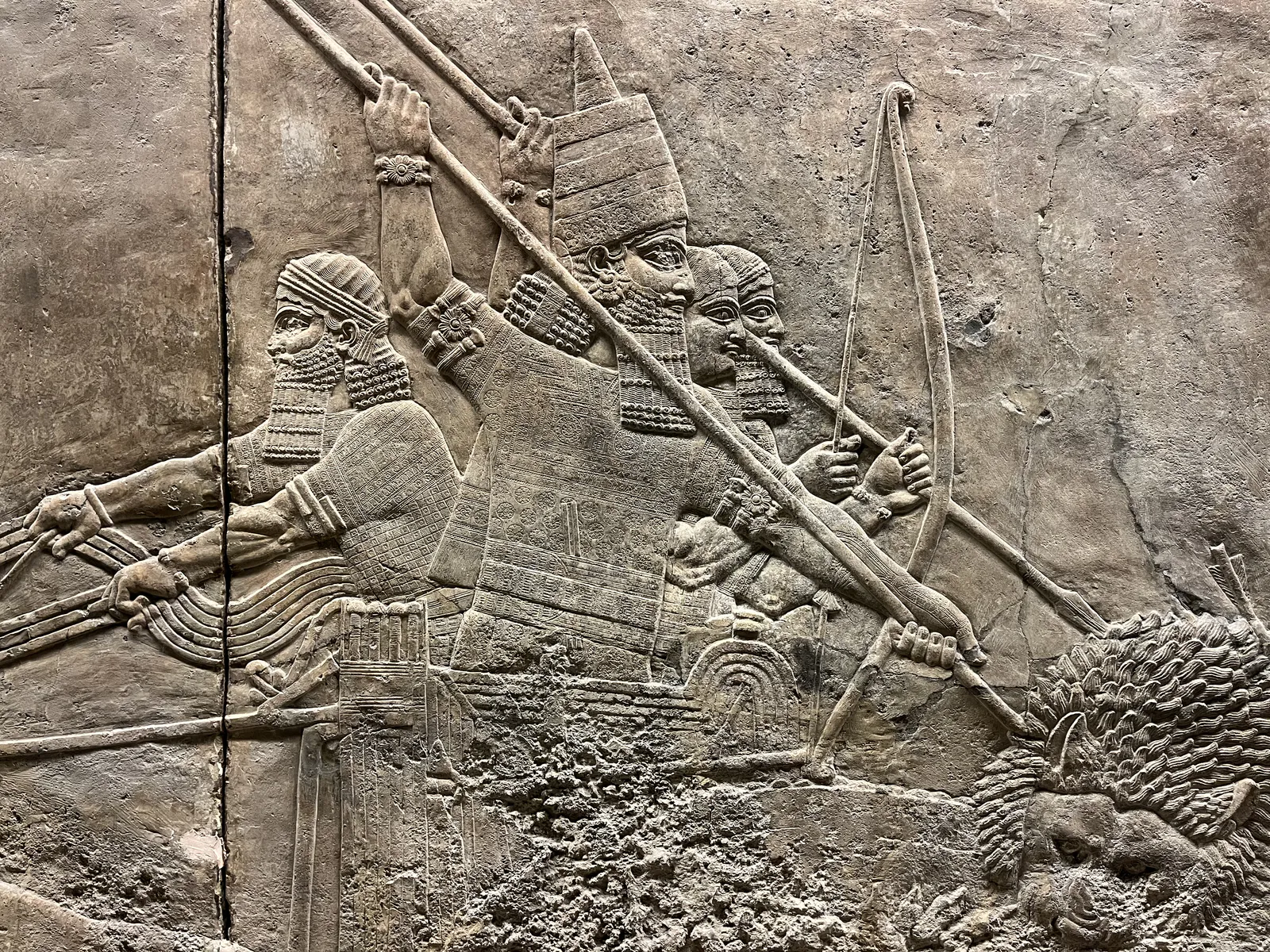
Ashurbanipal Strikes
This 7th-c. BC relief from Nineveh depicts King Ashurbanipal in a chariot, spearing a lion. The dynamic carving symbolizes royal power and valor. The lion’s defiant stance, even in defeat, highlights the king’s dominance over nature’s mightiest creature. Such scenes reinforced the king’s divine right to rule, portraying him as a protector and conqueror of chaos, a central theme in Assyrian royal ideology.
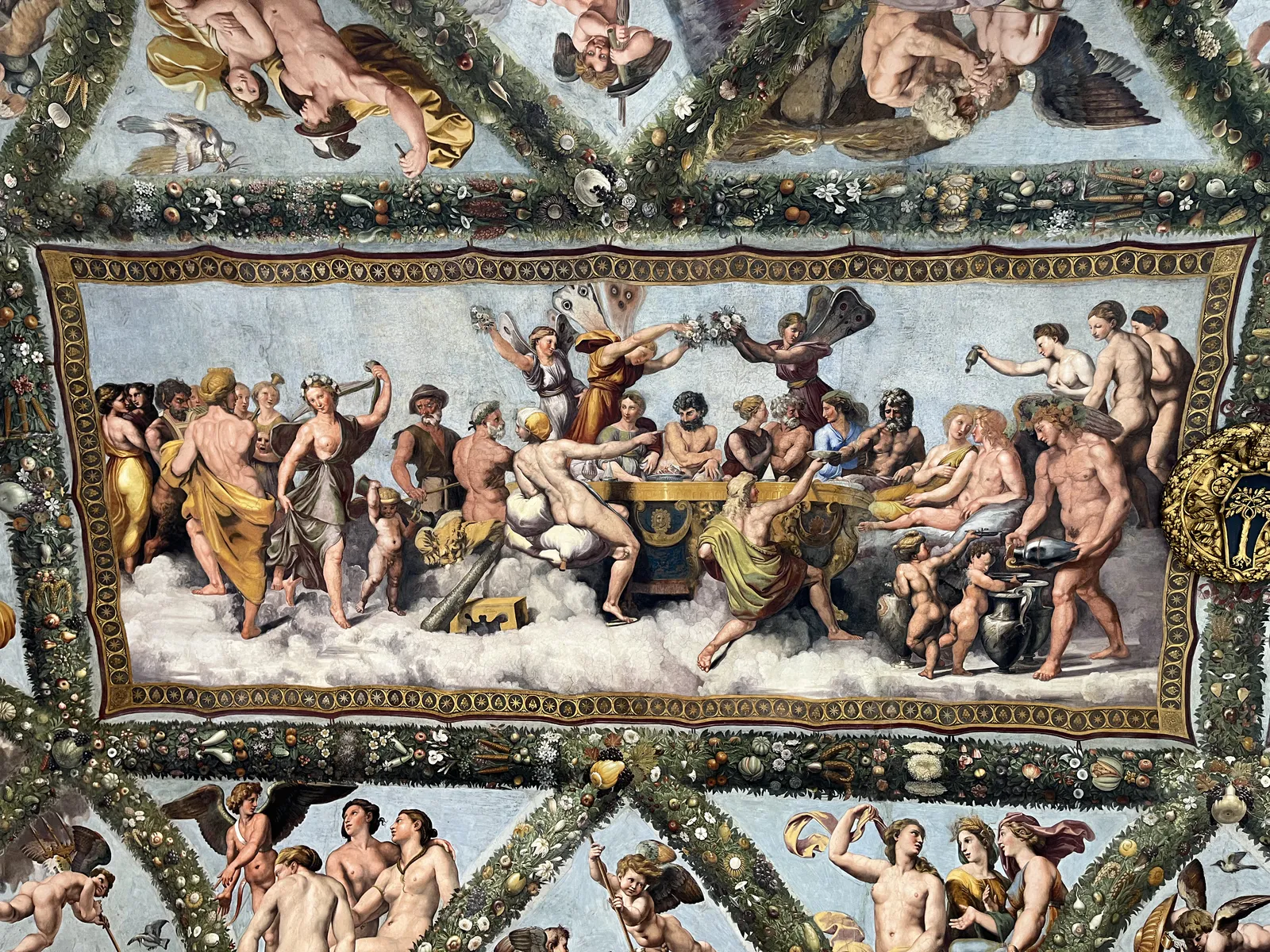
The Wedding Banquet of Cupid and Psyche
Raphael
In this grand fresco (1518), Raphael depicts the divine banquet celebrating the marriage of Cupid and Psyche. At the center, Jupiter and Juno preside; beside them sit Pluto, Persephone, Neptune, and Venus. Ganymede offers wine to Jupiter, while Bacchus (Dionysus), assisted by putti, pours wine at the right. The scene embodies divine harmony, joy, and the union of soul and love.
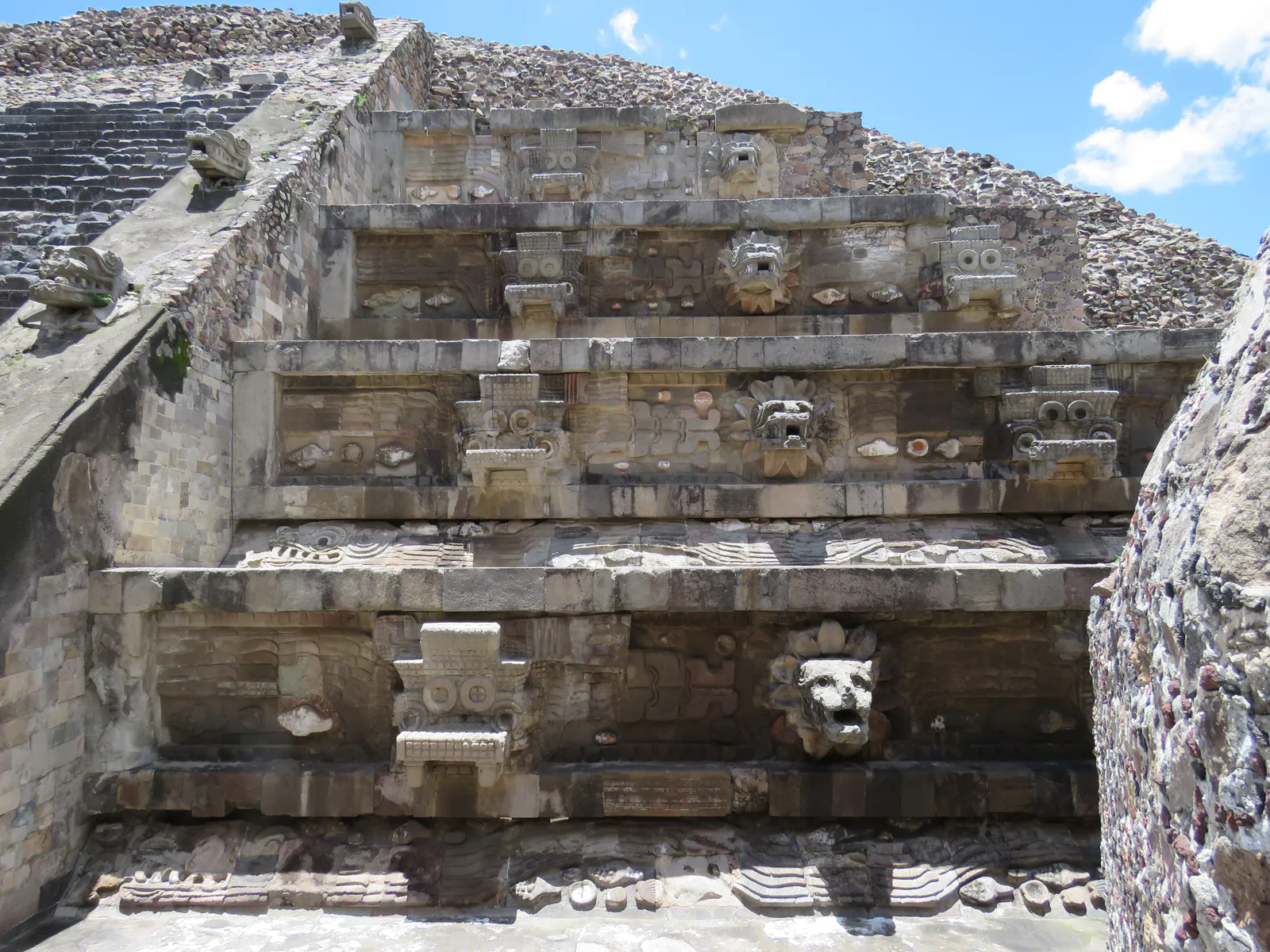
Façade of the Temple of the Feathered Serpent
This stepped façade (c. 250 AD) from Teotihuacán’s Temple of the Feathered Serpent displays rows of sculpted heads representing the Feathered Serpent and War Serpent. Their rhythmically alternating forms express sacred dualities—life and death, creation and sacrifice—projecting Teotihuacán’s spiritual power through monumental stone iconography.
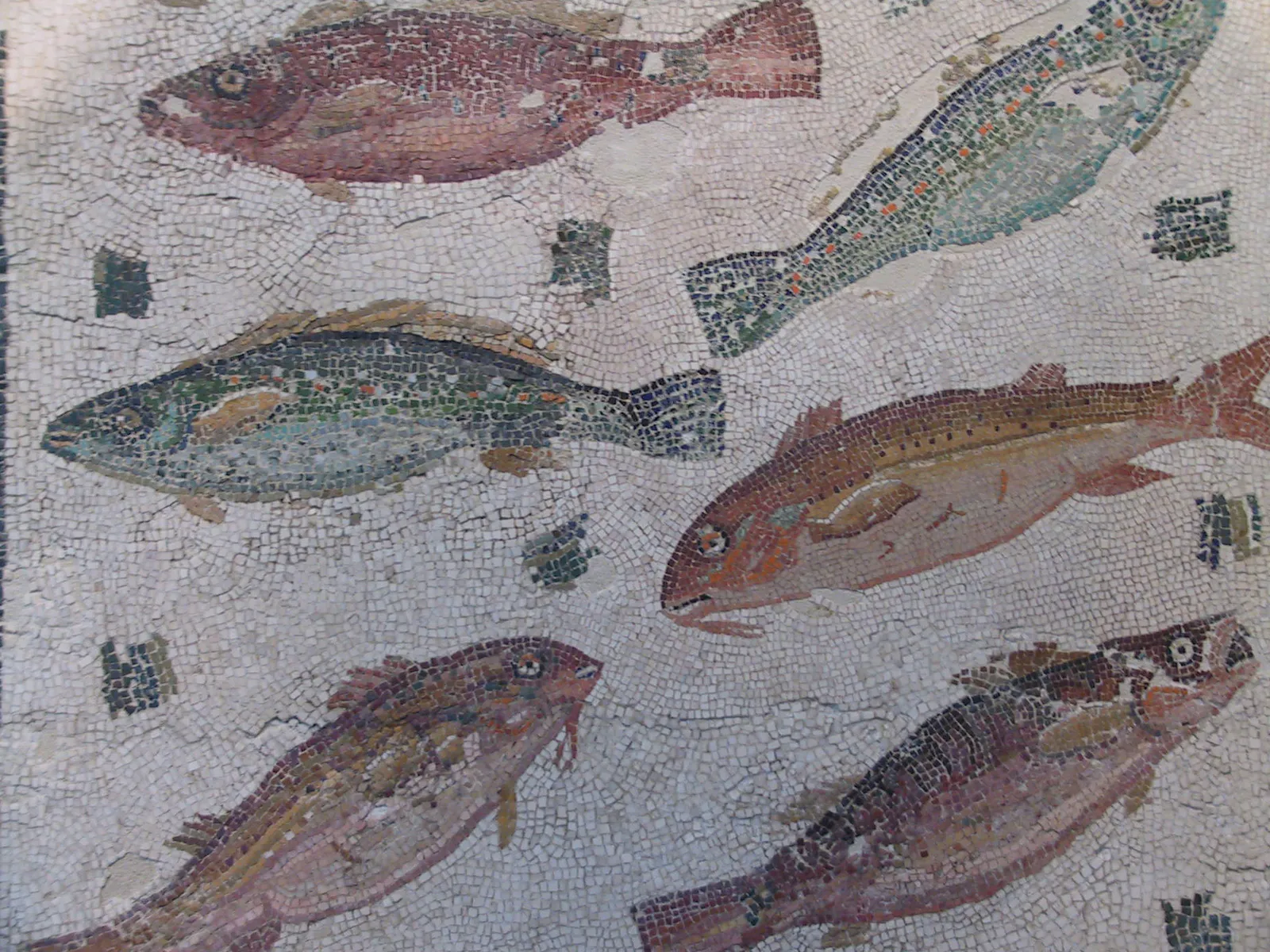
Fish
This mosaic (2nd–3rd cc.) depicts a vivid array of Mediterranean fish rendered with striking naturalism. Such panels commonly adorned dining rooms or bathhouses, where marine imagery symbolized abundance, freshness, and the pleasures of banqueting. The detailed species and lively movement reflect Roman fascination with the sea as both a resource and a marker of cultivated taste.
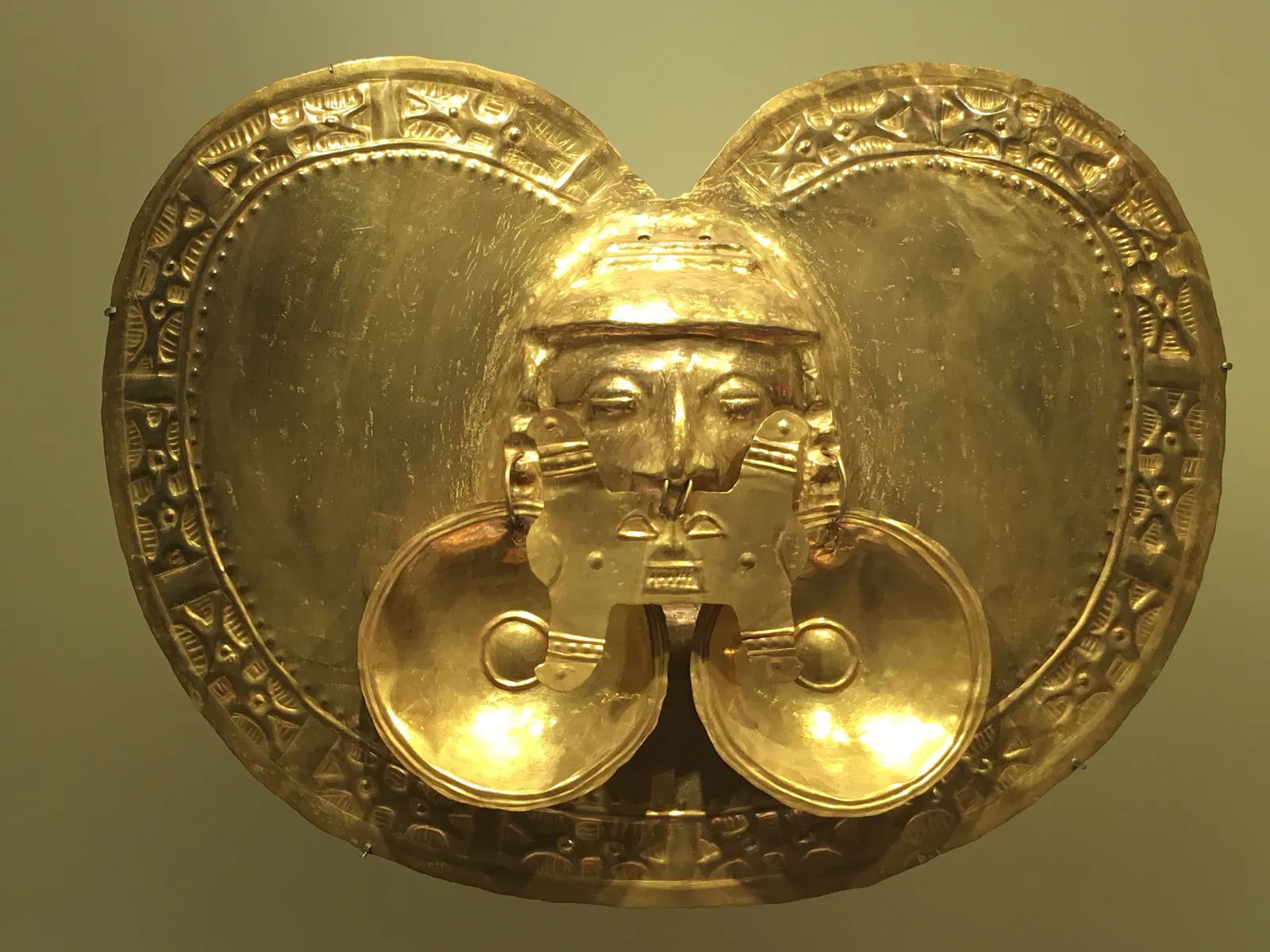
Ceremonial Pectoral with Face and Earspools
This gold pectoral from the Tairona culture (900–1600) shows a human face with massive earspools and a complex nose ornament. Heart-shaped wings frame the figure, edged with finely incised geometric patterns. Such regalia likely belonged to high-ranking ritual specialists, turning the wearer into a visible axis between ancestors, deities, and the community.
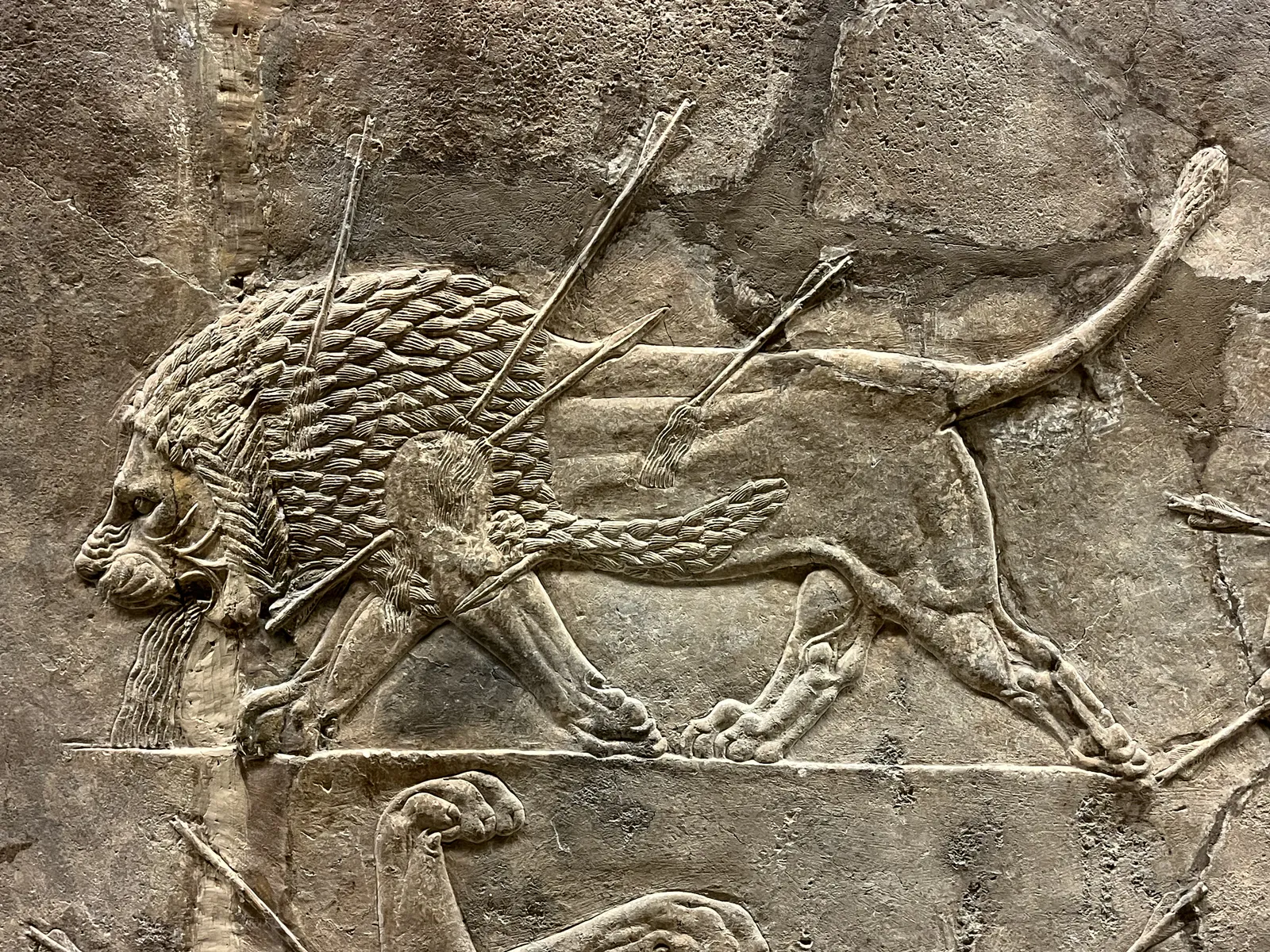
The Dying Lion
This Assyrian relief panel (645–635 BC) from Nineveh shows a dying lion, pierced by arrows yet still struggling forward. Such scenes formed part of the famed Lion Hunt cycle that glorified the king—likely Ashurbanipal—as a divinely sanctioned warrior. The hunts were staged within palace arenas, turning controlled violence into a political spectacle. The lion’s heroic resistance heightens the drama, underscoring Assyrian ideals of royal power, cosmic order, and the king’s duty to conquer chaos.
Explore the world through my eyes: begin with the image below, the map, the dropdowns above, or the search button. Every photo includes a thoughtful caption.
Explore the world through my eyes: begin with the image below, the map, the dropdowns above, or the search button. Every photo includes a thoughtful caption.
When the path is beautiful, do not ask where it leads.
My travels have always been shaped by two intertwined forms of discovery. One is intellectual: learning why the world is the way it is. History became my guide, drawing me toward museums, old cities, architecture, and the layers of meaning carried by places. The other is emotional: the search for beauty, harmony, and moments of elevation, often found in nature, monasteries, and sacred spaces.
Together, these impulses shape how I travel, what I photograph, and how I interpret what I see. This site is my way of sharing that lifelong learning in visual form—one image at a time, with enough context to deepen curiosity and understanding. I hope these photographs leave you with a sense of wonder and a deeper feeling for the world.
Now let’s explore together.