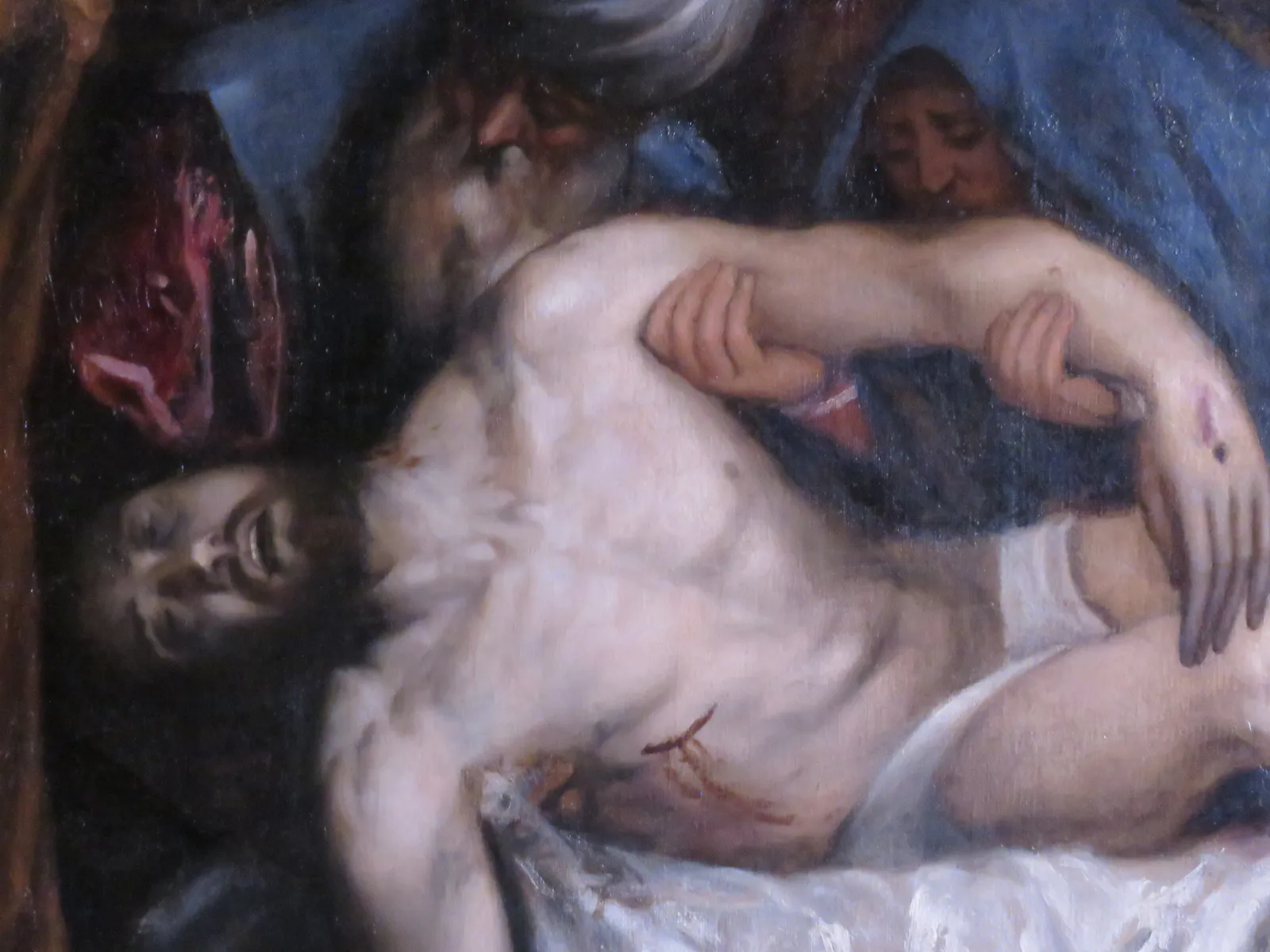
The Entombment of Christ (detail)
Titian and Palma the Younger
This fragment (1618) reveals Christ’s lifeless body marked by crucifixion wounds, cradled with reverence by mourning figures. The interplay of flesh, fabric, and sorrow exemplifies Titian’s emotive realism, while Palma the Younger completes the drama with expressive gestures—honoring human grief and divine sacrifice in one timeless moment.
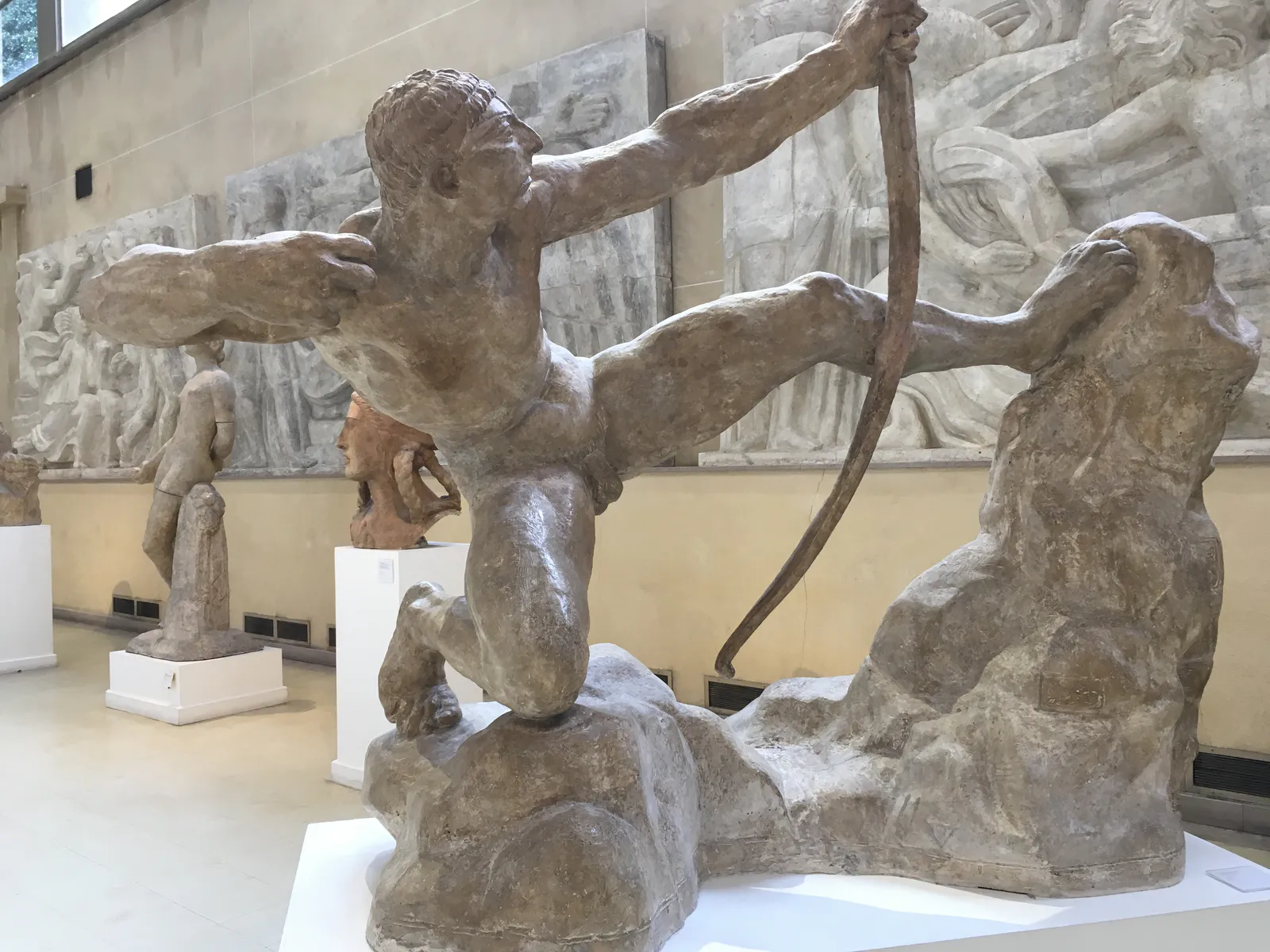
Hercules the Archer
Antoine Bourdelle
This plaster sculpture (1906–09) shows Hercules, the Greek hero, drawing his bow with taut energy. Bourdelle captures both physical strain and mythic power, fusing classical subject with modern dynamism. The work marks a turning point in early 20th-c. sculpture, bridging academic tradition with expressive innovation.
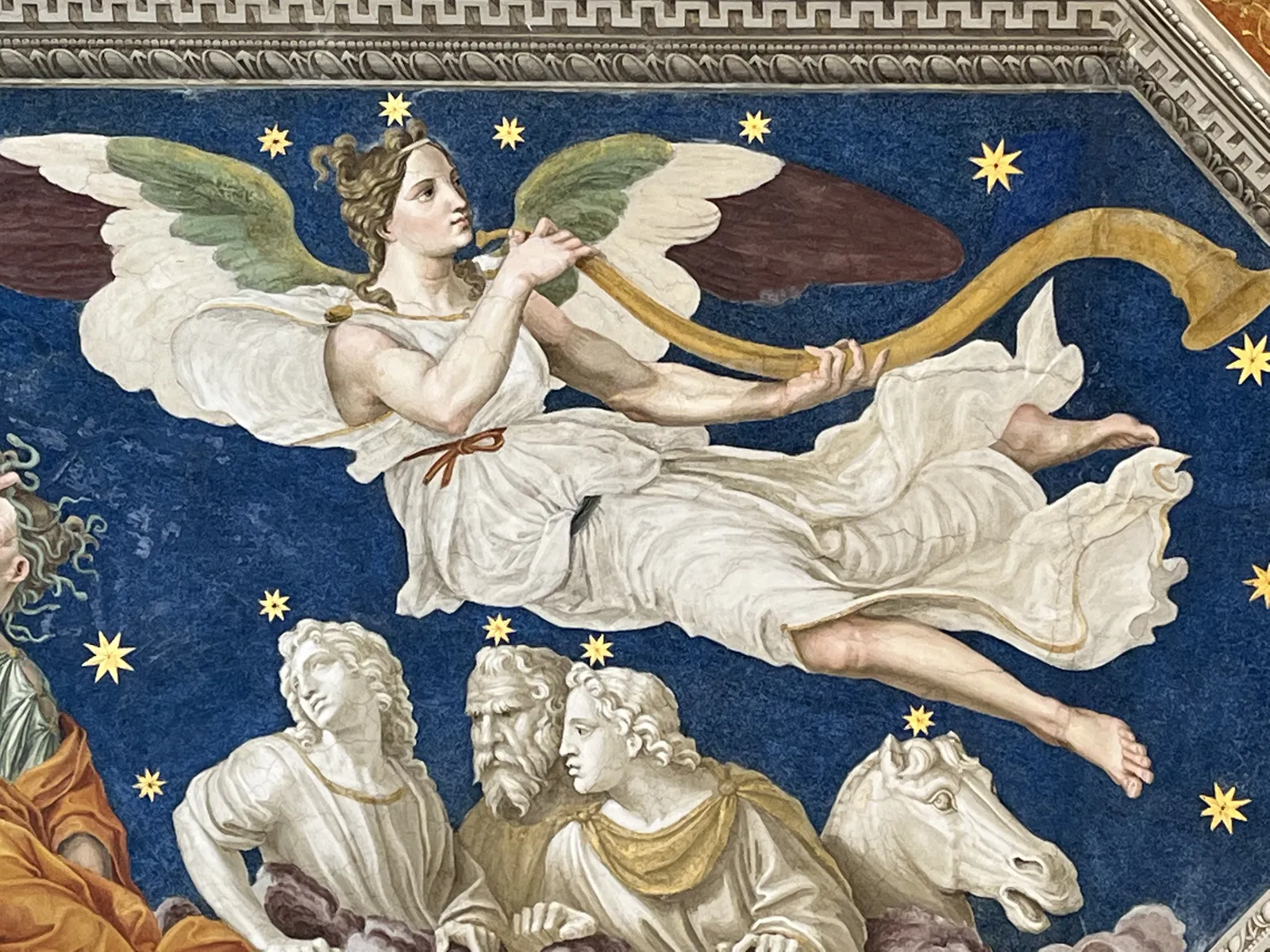
Fame and Medusa's Victims
Baldassarre Peruzzi
This fresco (1511) shows Fame soaring through the sky, announcing glory with her trumpet. Below, three men and a horse emerge from the clouds, their pallor and stiffness indicating they are victims turned to stone by Medusa's gaze. The composition reflects Renaissance interest in mythology, illustrating the power of reputation and the consequences of divine encounters.
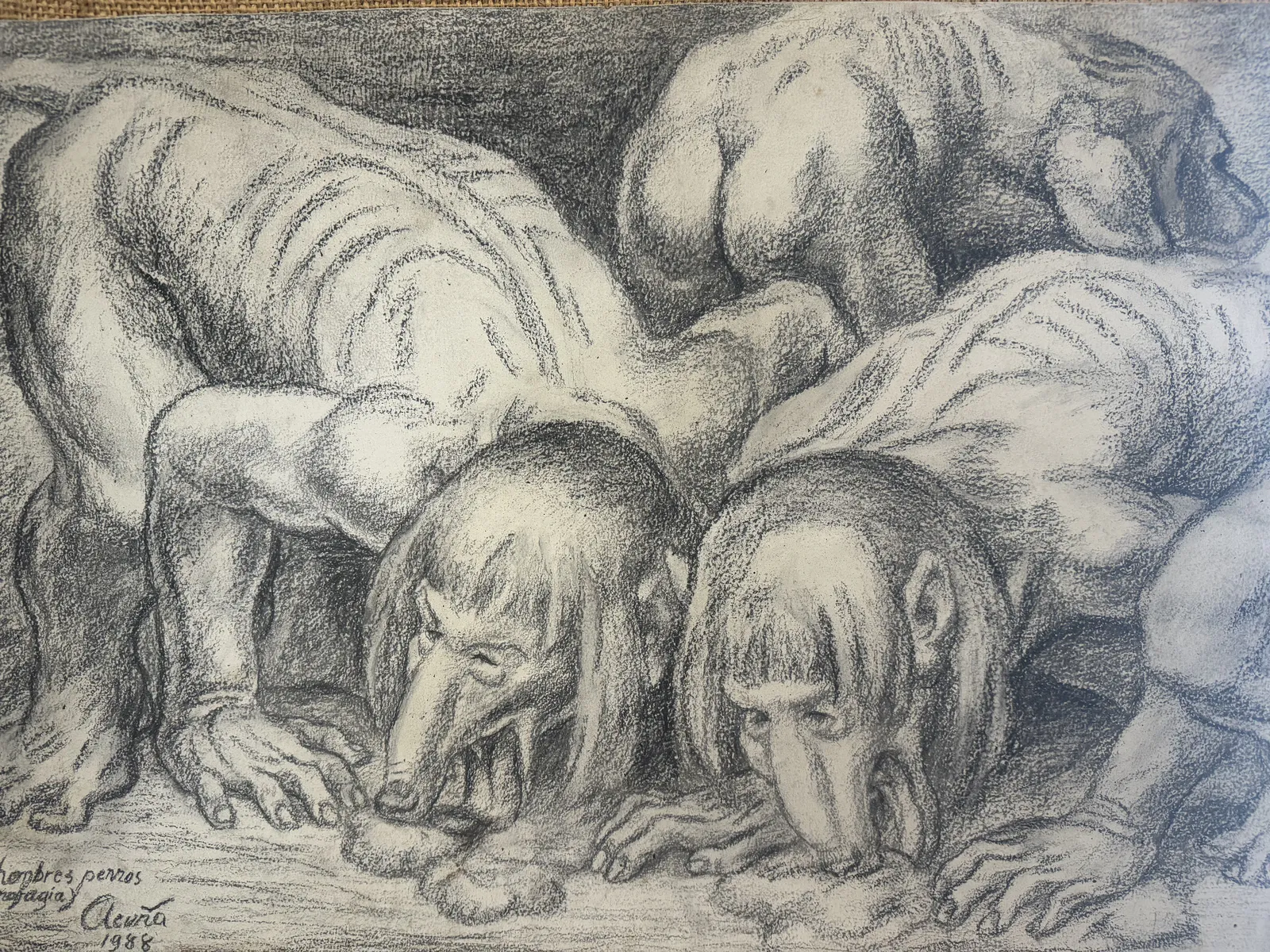
The Dog Men (Coprophagia)
Luis Alberto Acuña
This disturbing drawing (1988) shows three gaunt hybrid figures with human torsos and doglike heads crouched on all fours. Part of Acuña’s late series on distorted bodies, it examines the boundary between human and animal. The title refers to coprophagia (the consumption of excrement), which Acuña uses to articulate a vision of moral collapse and social dehumanization.
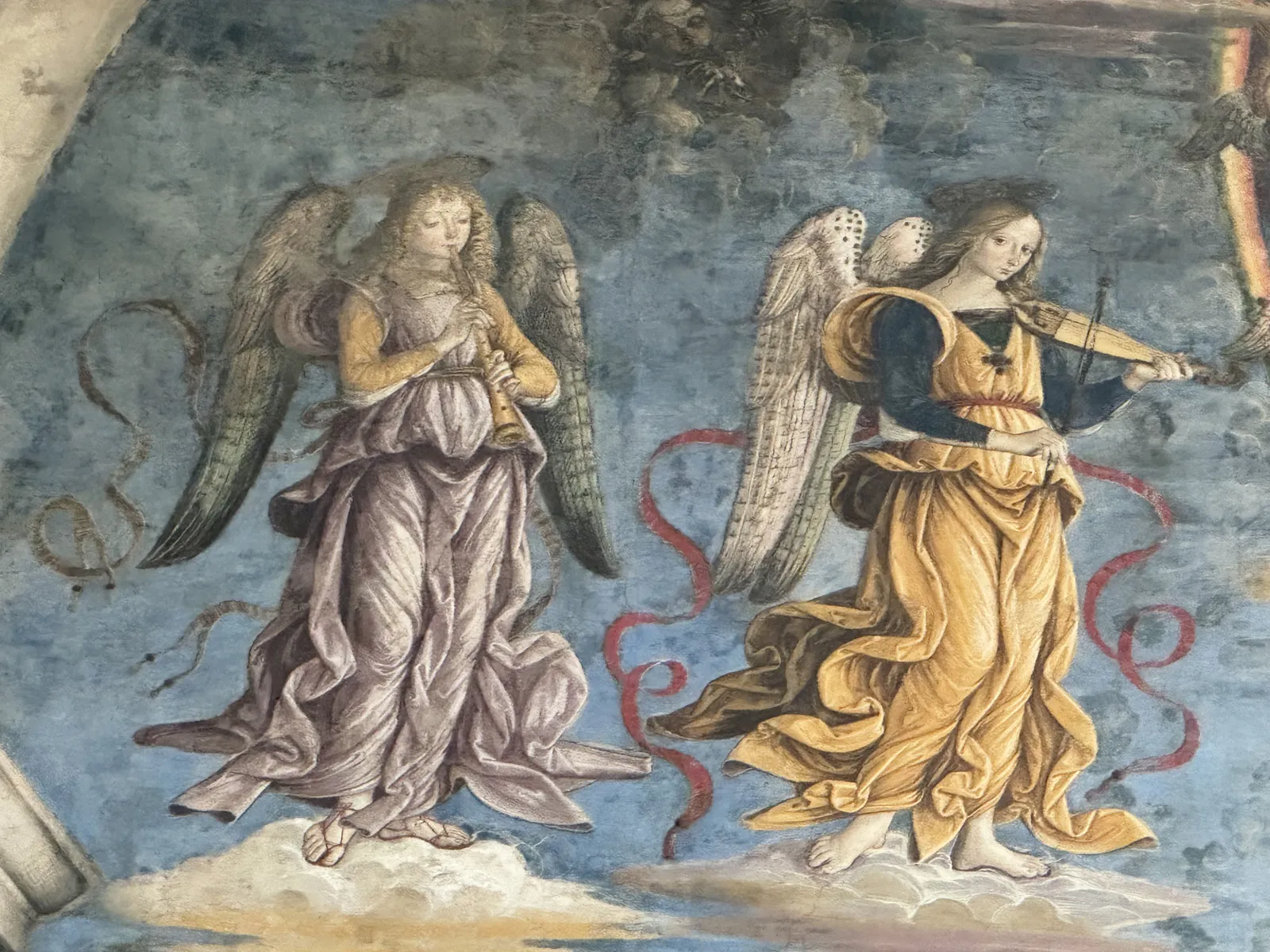
Musical Angels (detail)
Pinturicchio
In this detail (1484–86), Pinturicchio paints two angelic musicians, one playing a violin and the other a wind instrument. Floating on clouds, they contribute to the celestial harmony surrounding Christ in Majesty. The graceful movement of their garments reflects Pinturicchio’s refined sense of rhythm, light, and divine celebration.
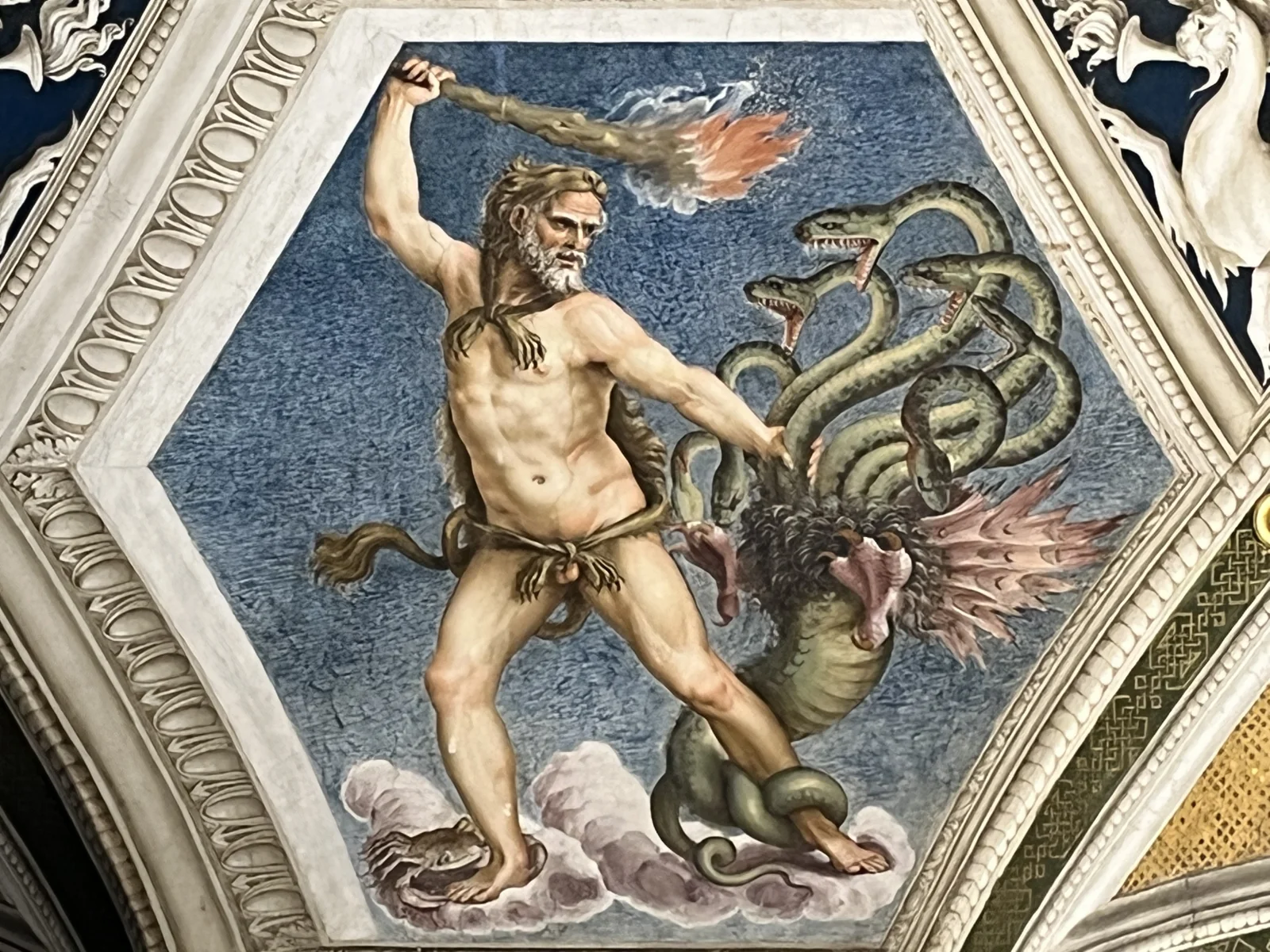
Hercules and the Hydra
Baldassarre Peruzzi
This ceiling fresco (c. 1510) in the Hall of the Perspectives shows Hercules battling the multi-headed Hydra. The creature symbolizes the zodiac sign Cancer, aligning with the room’s astrological theme. Peruzzi demonstrates heroic virtue triumphing over chaos and earthly temptation, reflecting Renaissance ideals of order and moral strength.
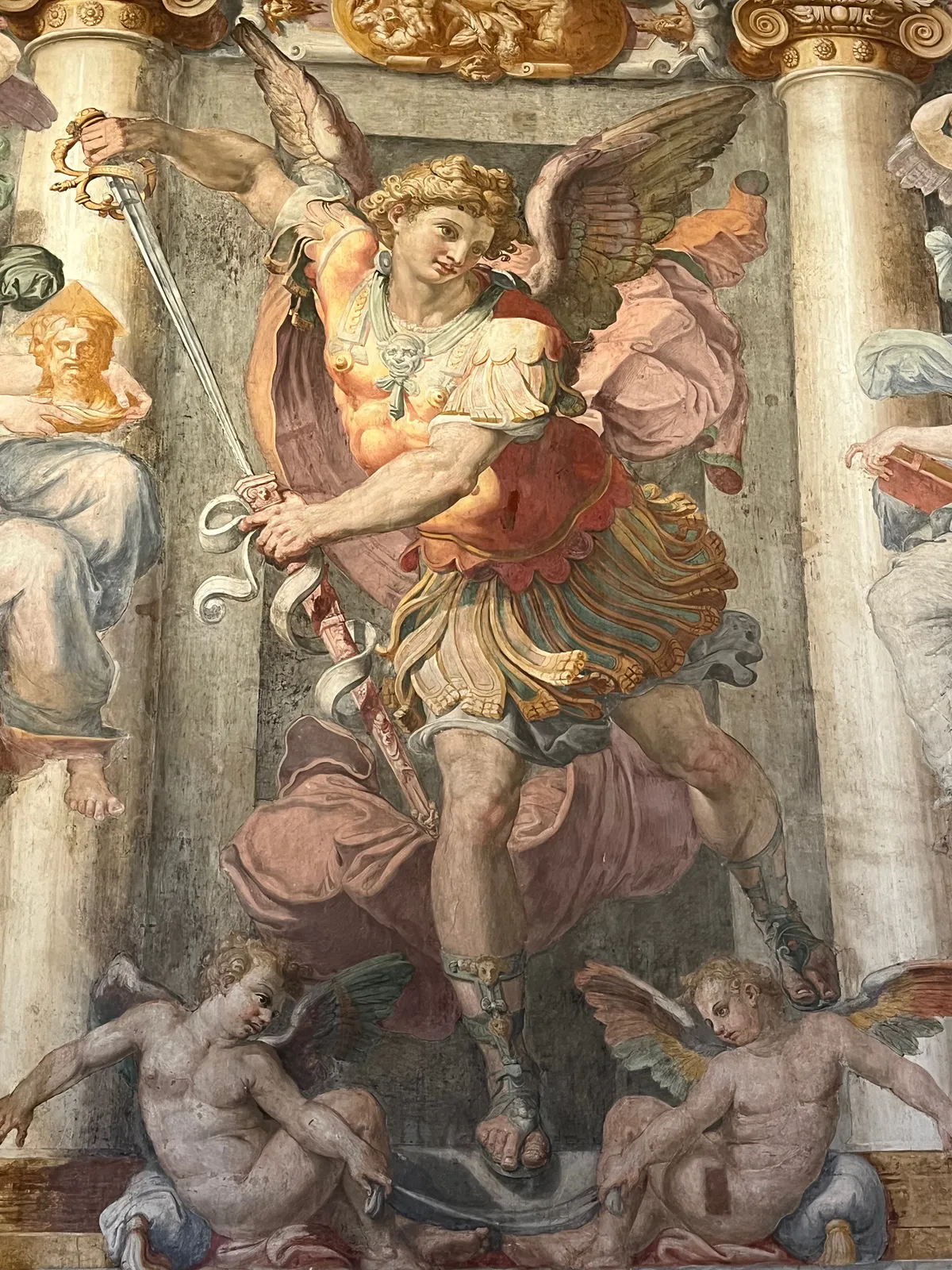
Saint Michael the Archangel
Pellegrino Tibaldi
This fresco (1545–46) in the Sala Paolina at Castel Sant'Angelo depicts the Archangel Michael sheathing his sword, symbolizing the end of the plague in 590. His muscular form and gilded armor convey divine justice and Roman salvation, highlighting the spiritual and civic authority of angelic intervention.
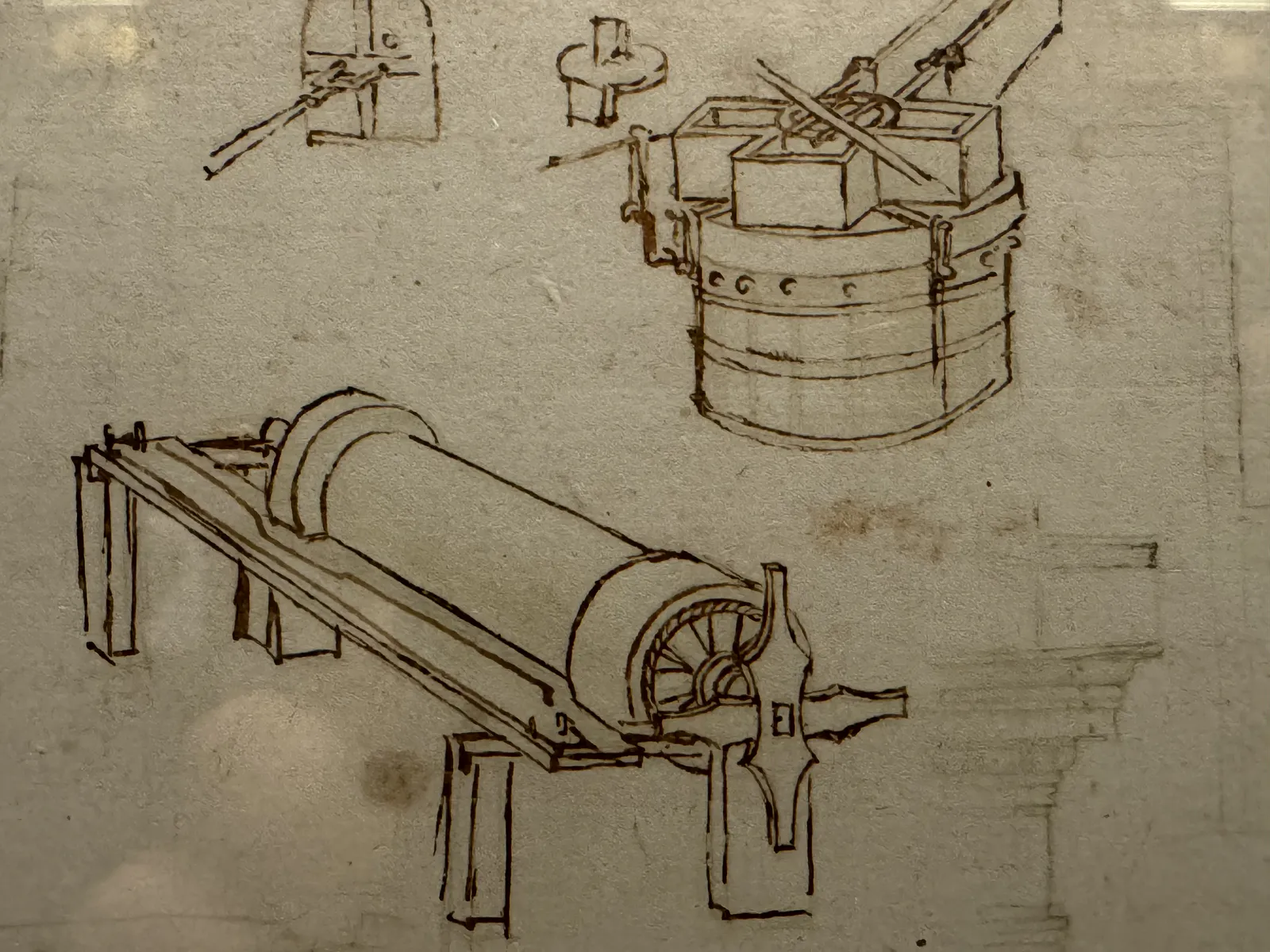
Machine for Polishing Mirrors
Leonardo da Vinci
This technical drawing (c. 1490) shows Leonardo’s device for polishing concave mirrors, likely used in optical or experimental studies. Its mechanism demonstrates advanced knowledge of geometry, motion, and material tension. The design reflects his pursuit of instruments that could extend human perception through mechanical precision.
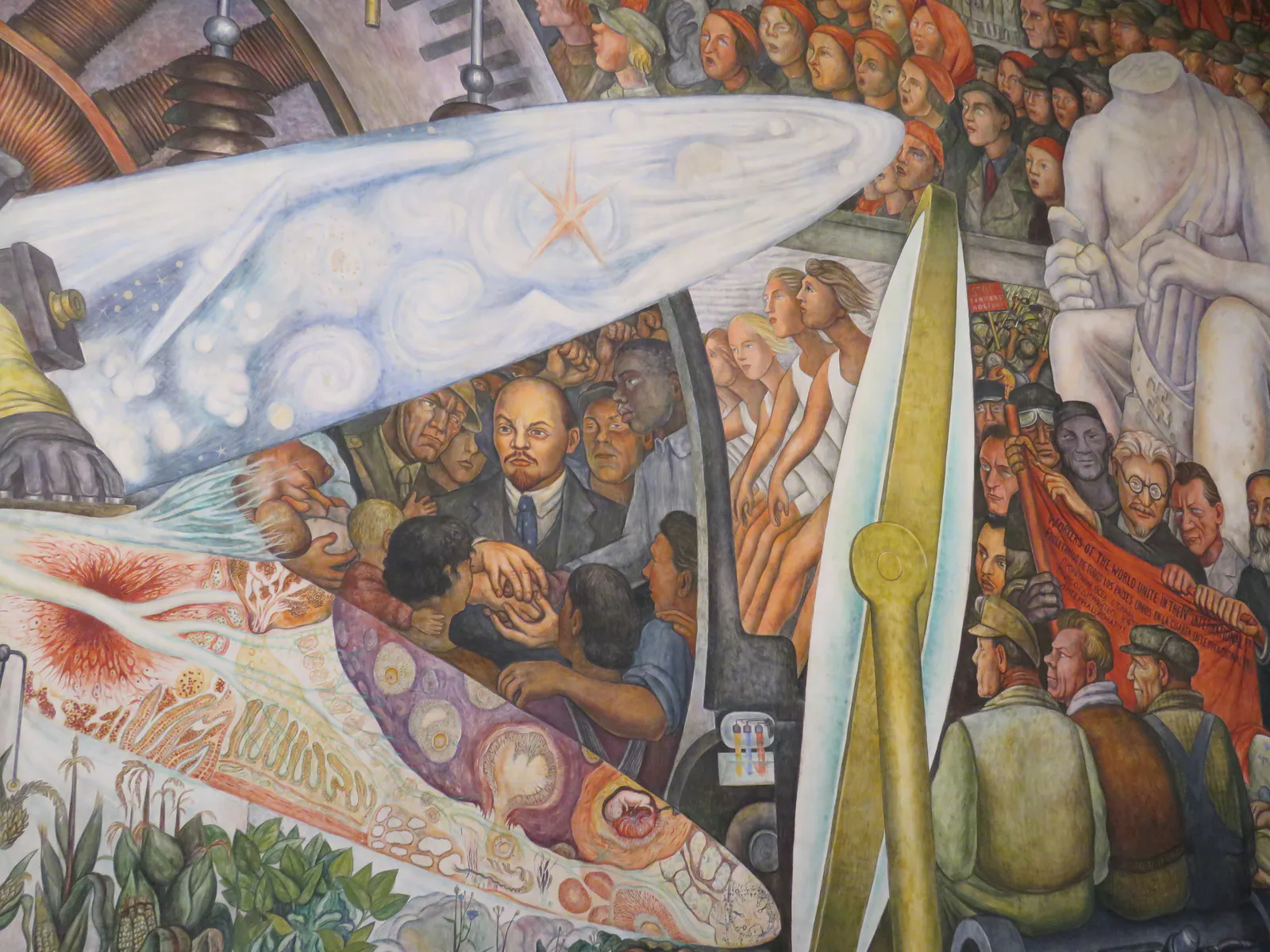
Man, Controller of the Universe (detail)
Diego Rivera
This section of Rivera’s 1934 recreated mural shows Lenin uniting workers of different races and nations, flanked by scientific, agricultural, and cosmic imagery. It contrasts socialism’s collective promise with capitalist individualism. The original was destroyed at Rockefeller Center.
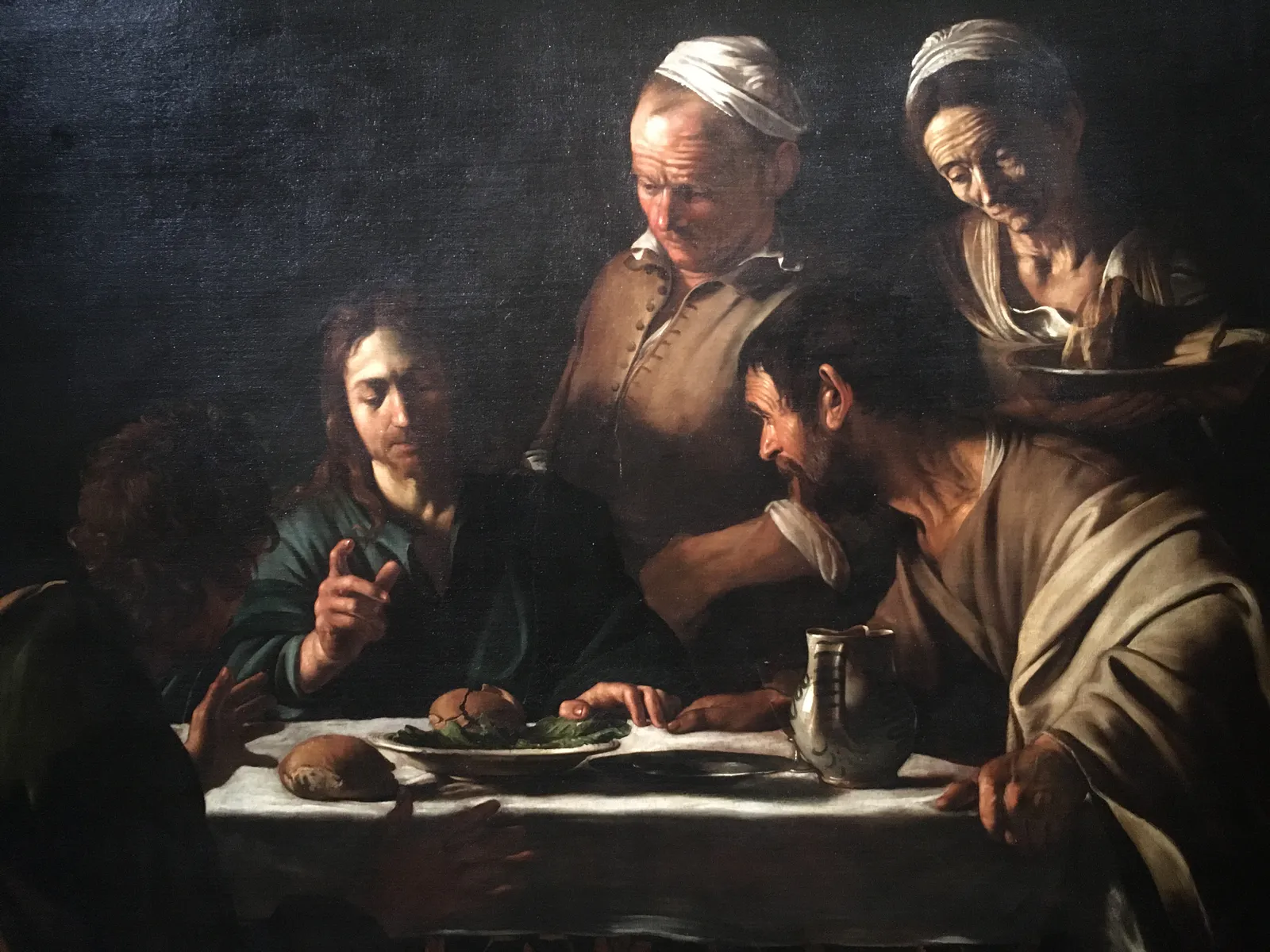
The Supper at Emmaus
Caravaggio
This painting (c.1606) focuses on Christ’s quiet gesture and the attentive figures around him. Subtle expressions replace dramatic shock, emphasizing intimacy over display. Caravaggio draws revelation into the realm of the ordinary, showing faith as recognition that dawns quietly amid human fragility.
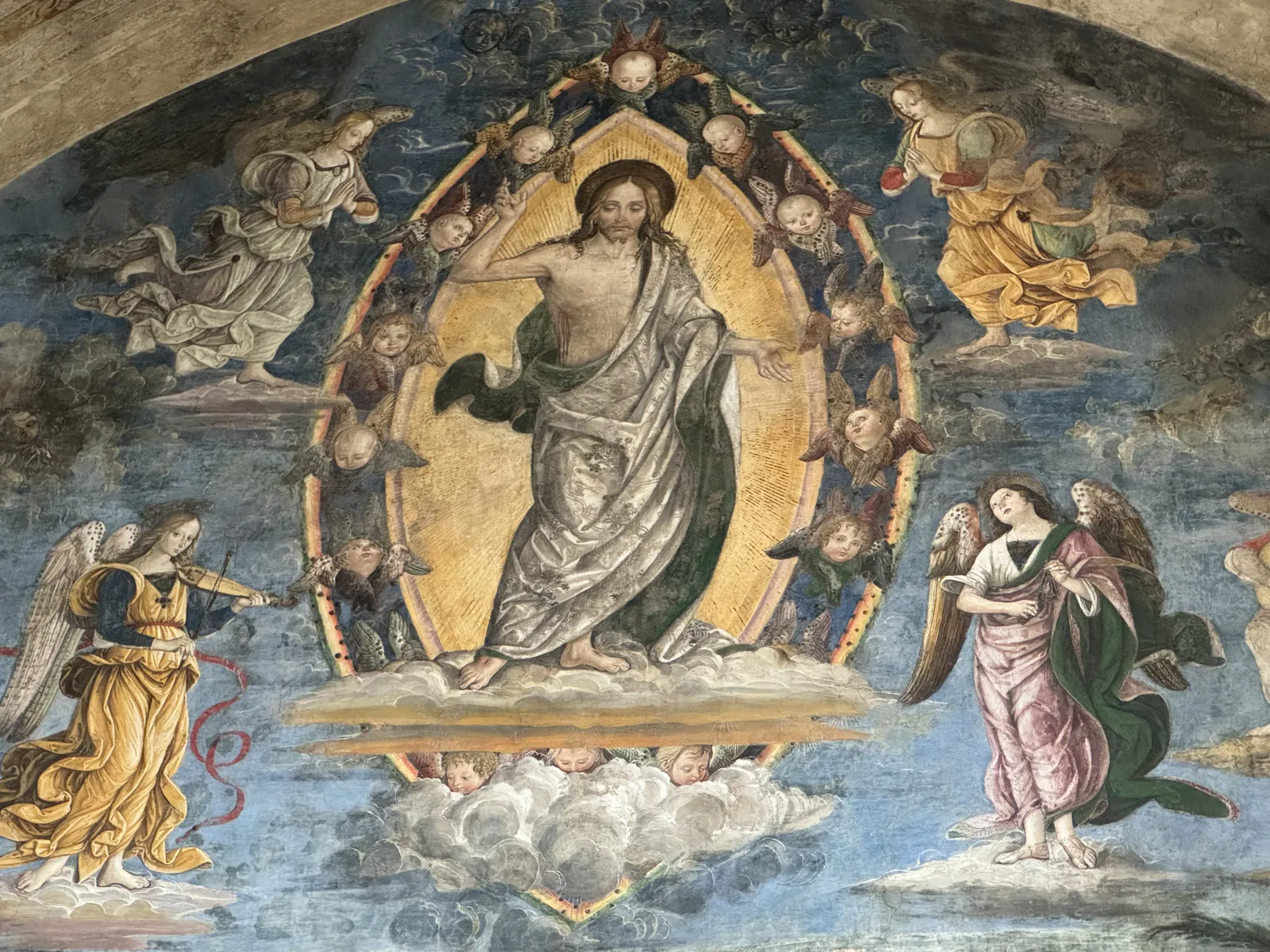
Christ in Majesty
Pinturicchio
Nikolo-Dvorishchensky Cathedral (1113) rises in compact tiers with clustered domes and narrow slit windows. Its pale plaster, often pink in daylight, stands in Yaroslav’s Court, the precinct founded by Yaroslav the Wise. Commissioned by Prince Mstislav to honor St Nicholas, it shaped the civic core of the Novgorod Republic and adapted Byzantine forms locally. The white building behind is part of the 17th-c. Merchant Court complex.
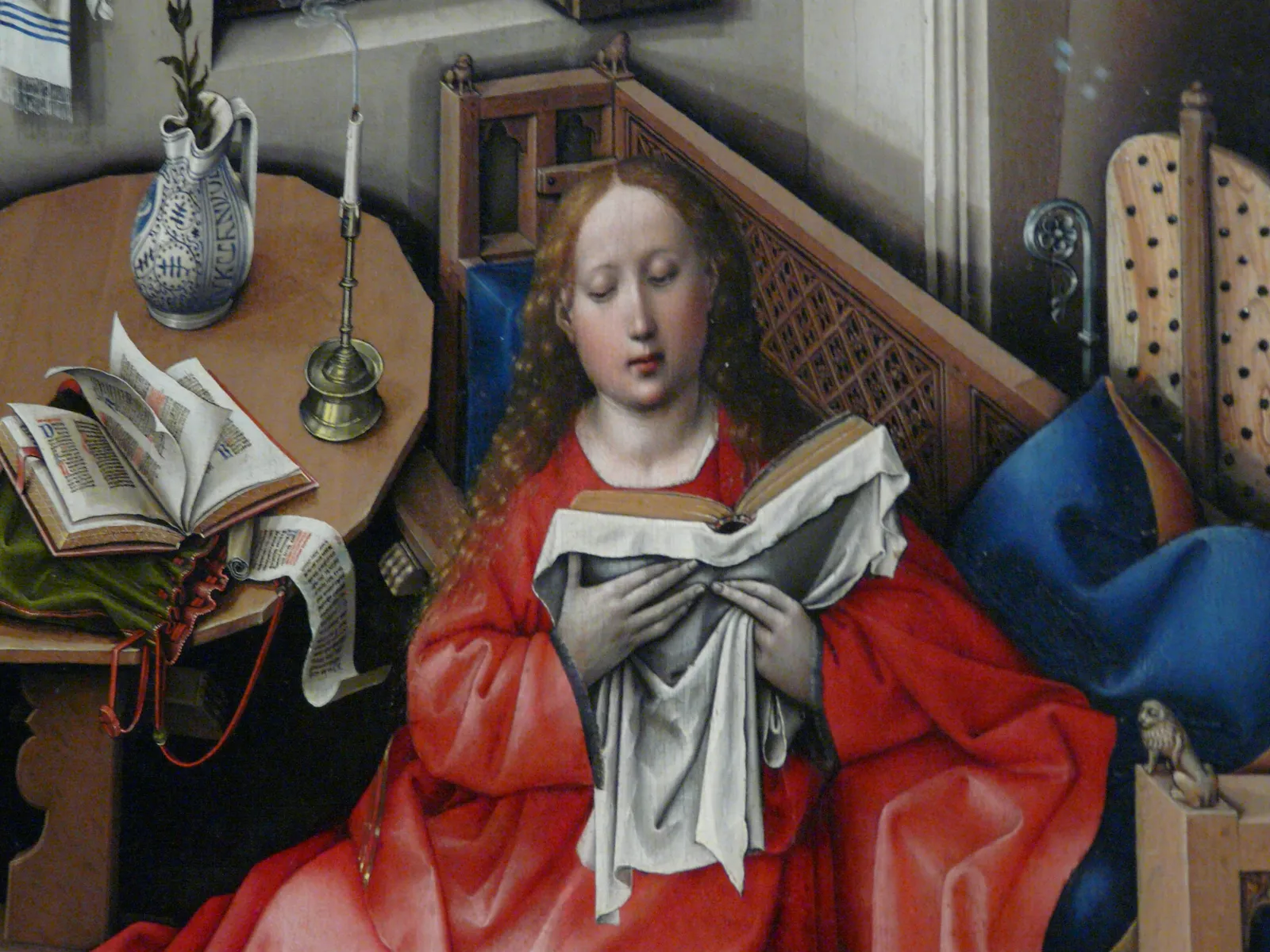
Mérode Altarpiece Central Panel
Robert Campin
This panel (c.1425–1428) shows Mary reading as Gabriel arrives. Domestic details carry layered meaning: the open book signals devotion, the lily purity, and the candle the Incarnation. The water jug with a white cloth evokes Mary’s virginity, while the enclosed garden glimpsed outside recalls her chastity. Named after later owners, the Mérode family, the work unites divine mystery with Flemish household realism.
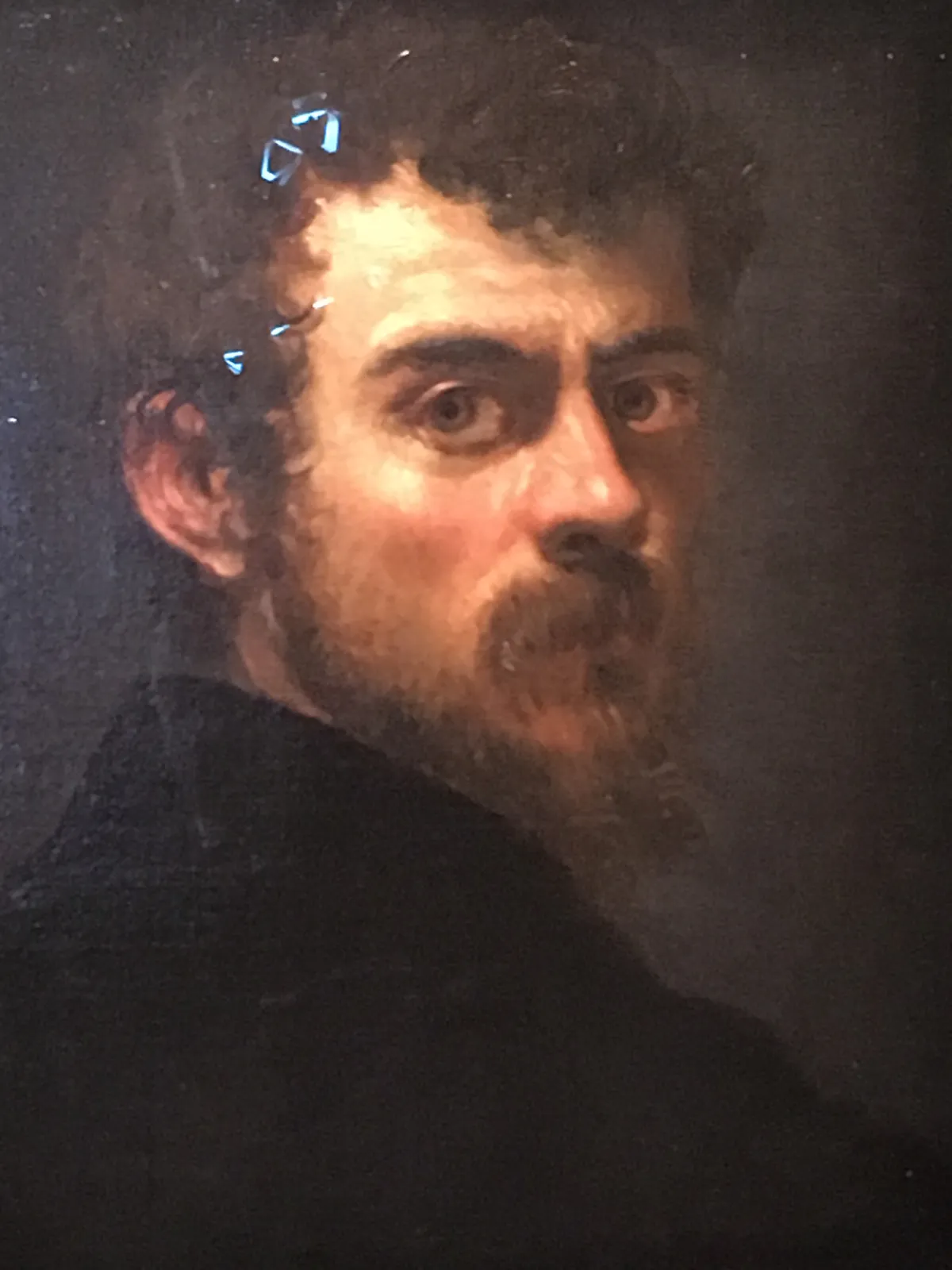
Self-Portrait
Tintoretto
This self-portrait (1546–48) by Tintoretto, a leading figure of the Venetian Renaissance, presents the artist with an intense, direct gaze that suggests introspection and resolve. The subdued palette and earthy tones create a solemn mood, yet the brisk, energetic handling of paint hints at the dramatic style that defined his larger works. Emphasizing inner character over setting, the portrait later entered the Orleans Collection and was acquired for Marie Antoinette in 1785.
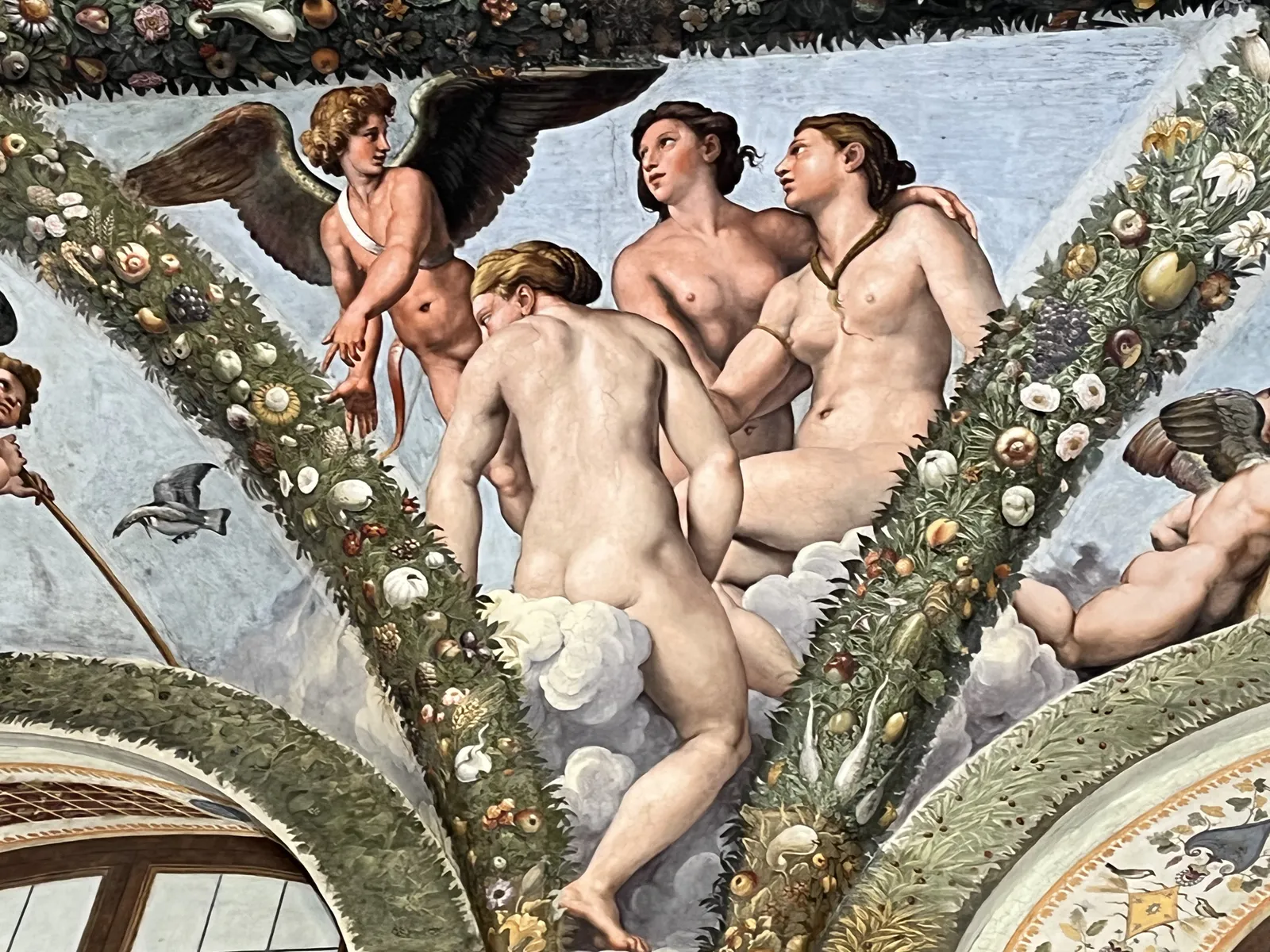
Cupid and the Three Graces
Raphael
In this fresco (1518), Raphael portrays Cupid with the Three Graces, who embody beauty, charm, and joy. The scene reflects the harmony of love and divine favor, integral to Psyche’s myth. Framed by Giovanni da Udine’s botanical festoons, it blends mythology with Renaissance ideals of grace and abundance.
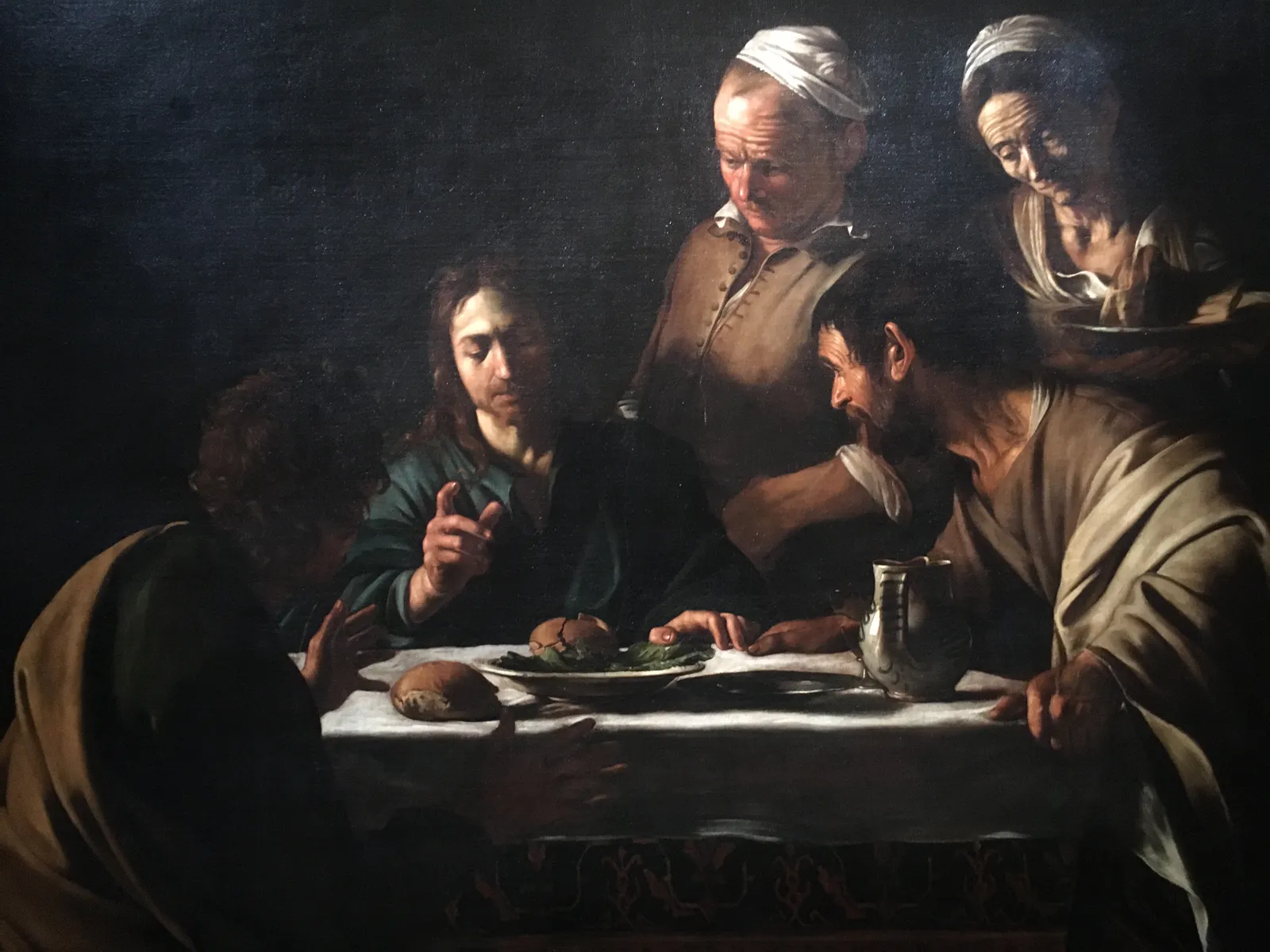
The Supper at Emmaus
Caravaggio
This painting (c.1606) was created after Caravaggio fled Rome for Naples. It depicts Christ revealing himself in Emmaus at the blessing of bread. Unlike Caravaggio’s earlier 1601 version, gestures are subdued and the table almost bare. In this darker vision, the recognition of the divine comes not in spectacle but in shadow and silence.
“When the path is beautiful, do not ask where it leads.” — Zen proverb
Welcome to my travel photography!
“When the path is beautiful, do not ask where it leads.” — Zen proverb
Welcome to my travel photography!
For as long as I can remember, my path has been one of discovery—seeking beauty, timelessness, and connection in every corner of the world. It has also been a journey of deep learning and understanding. I’ve been an avid traveler (or perhaps a travel addict?) for most of my life. My love for travel began long before I ever left home: as a child, I drew a fantasy map of my grandparents’ apartment and “traveled” through it with my cousin Sonya, imagining adventures in every corner. Nearly 90 countries and countless moments of awe later, I’m excited to share this journey with you.
Thanks to the tireless and ingenious programming of Diagilev, we’re now able to present about fifteen percent of the images I’ve accumulated over the years. More will be released in small batches depending on your interest. While the first release leans toward museum photography, later ones will include more nature, architecture, culture, and general travel experiences. If you’d like to receive email notifications about new releases, feel free to reach out—no commercial use, ever.
Throughout my travels, I’ve been drawn to two intertwined kinds of discovery. One is intellectual: learning why the world is the way it is. History became my guide, shaping my perspective and filling my camera roll with museums and old buildings. To me, history is not the past—it is the key to understanding the present and how the world became what it is. The other is emotional: seeking moments of elevation—spirituality, beauty, harmony—often found in nature, monasteries, and ancient sacred spaces. Together, these impulses shape my photography. It invites you to learn, admire, and soar—to rise above the mundane and see the world through a lens of curiosity and wonder.
Much of my later travel became possible thanks to my job with Delta Air Lines, but the wanderlust began years earlier. By the time I joined the industry, I had already visited over 35 countries and lived in several—largely thanks to a backpacking journey around the world with Luis León, whose face appears in many early photos. I grew up in Ufa in the USSR, and since leaving it I have lived, studied, and worked in Latvia, the United States, France, South Korea, Canada, Spain, Italy, Brazil, Japan, and Colombia.
A life of near-constant movement may seem a little crazy, but it has deepened my understanding of the world and produced the photography you are about to see. Over the years, my style has evolved—more intentional, more refined—yet its core remains the same: a search for understanding, timeless beauty, and a connection to those who walked this earth long before us.
I hope these photos stir something in your soul, just as they did in mine. I’d love to hear from you—whether reactions, suggestions, corrections, or a request to be added to the email list for new releases (no commercial use, I promise). You can learn more about my travels here, and my academic life here.
Enjoy our shared journey!