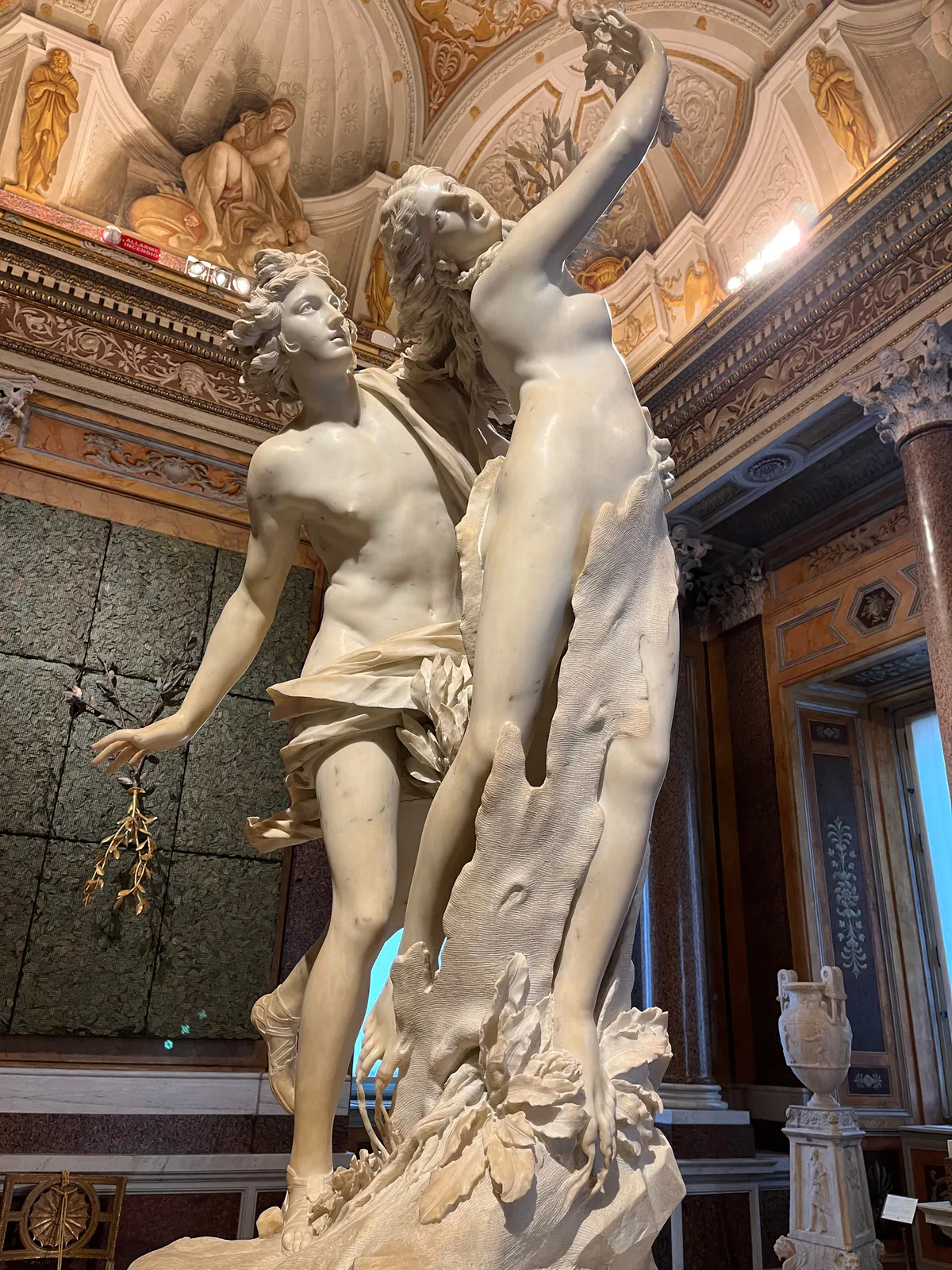
Apollo and Daphne
Bernini
This electrifying marble group (1622–25) freezes the climax of Ovid’s tale as Daphne begins to turn into a laurel tree to escape Apollo’s grasp. Her fingers sprout leaves, her torso hardens into bark. Bernini renders transformation with astonishing fluidity, embodying Baroque ideals of movement, emotion, and divine drama.
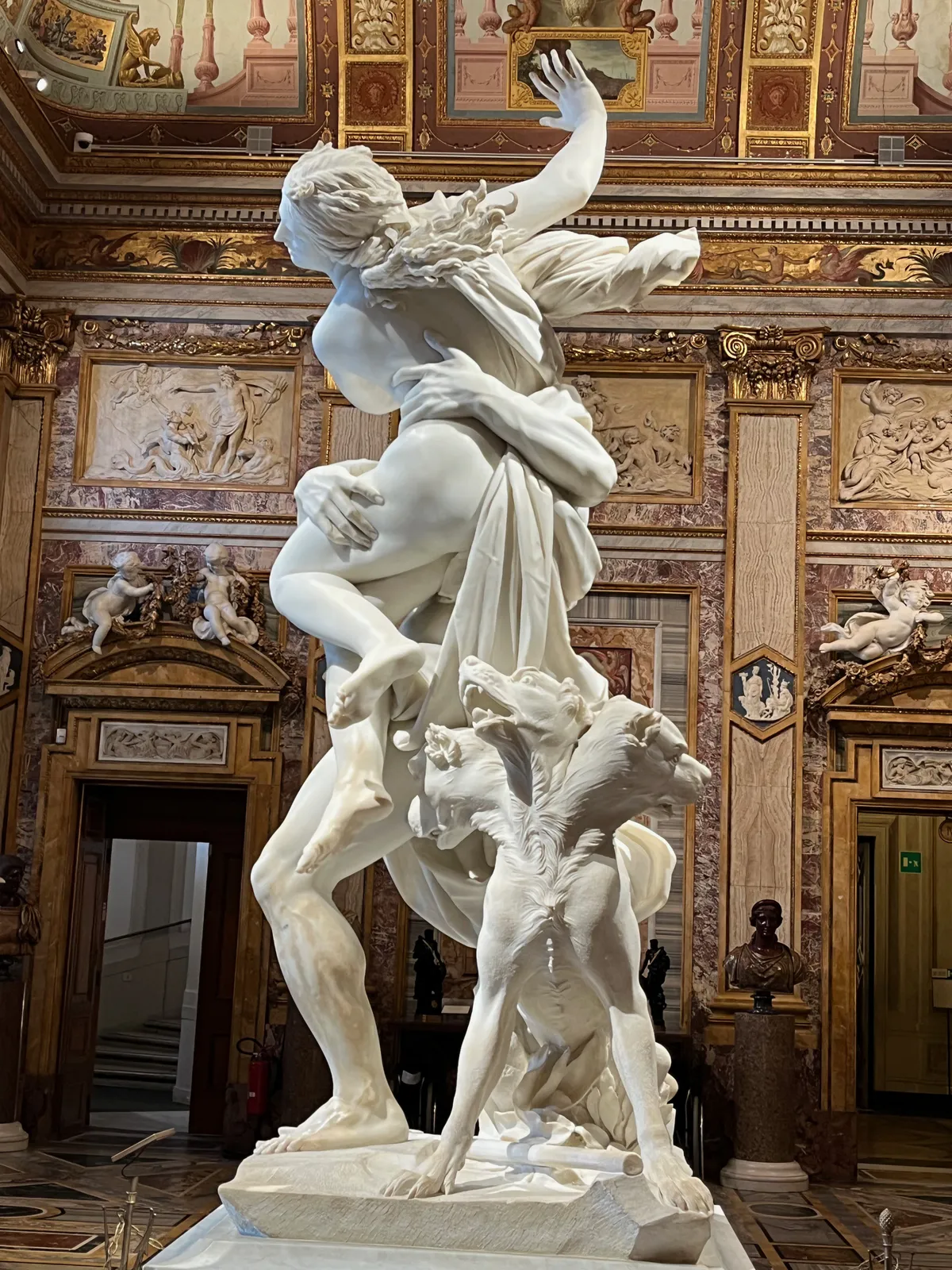
The Rape of Proserpina
Bernini
This angle captures the emotional arc of Proserpina’s resistance as she twists away from Pluto’s grasp. Her outstretched arm and flowing hair dramatize the violence of the abduction. Cerberus, the infernal hound, reinforces the mythological setting, while the composition’s spiral motion showcases Bernini’s virtuosity in carving living flesh from marble.
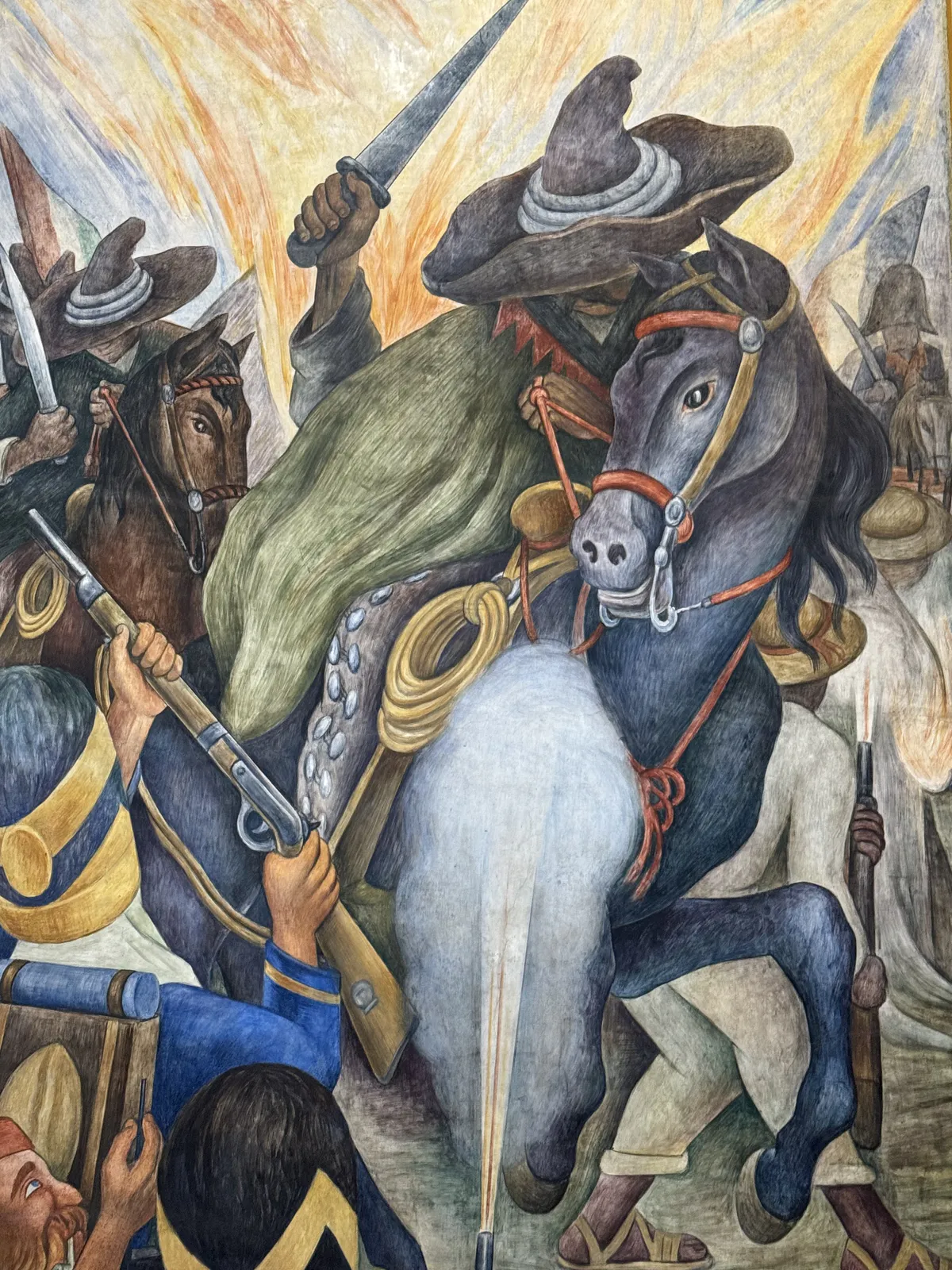
The Legend of Agustín Lorenzo (detail)
Diego Rivera
This 1936 fresco dramatizes the legendary outlaw Agustín Lorenzo as a symbol of resistance. Armed revolutionaries clash with government forces, their horses rearing amid smoke and flames. Rivera fuses myth and history, casting Lorenzo as a Mexican Robin Hood whose defiant struggle against injustice became folklore in the national imagination.
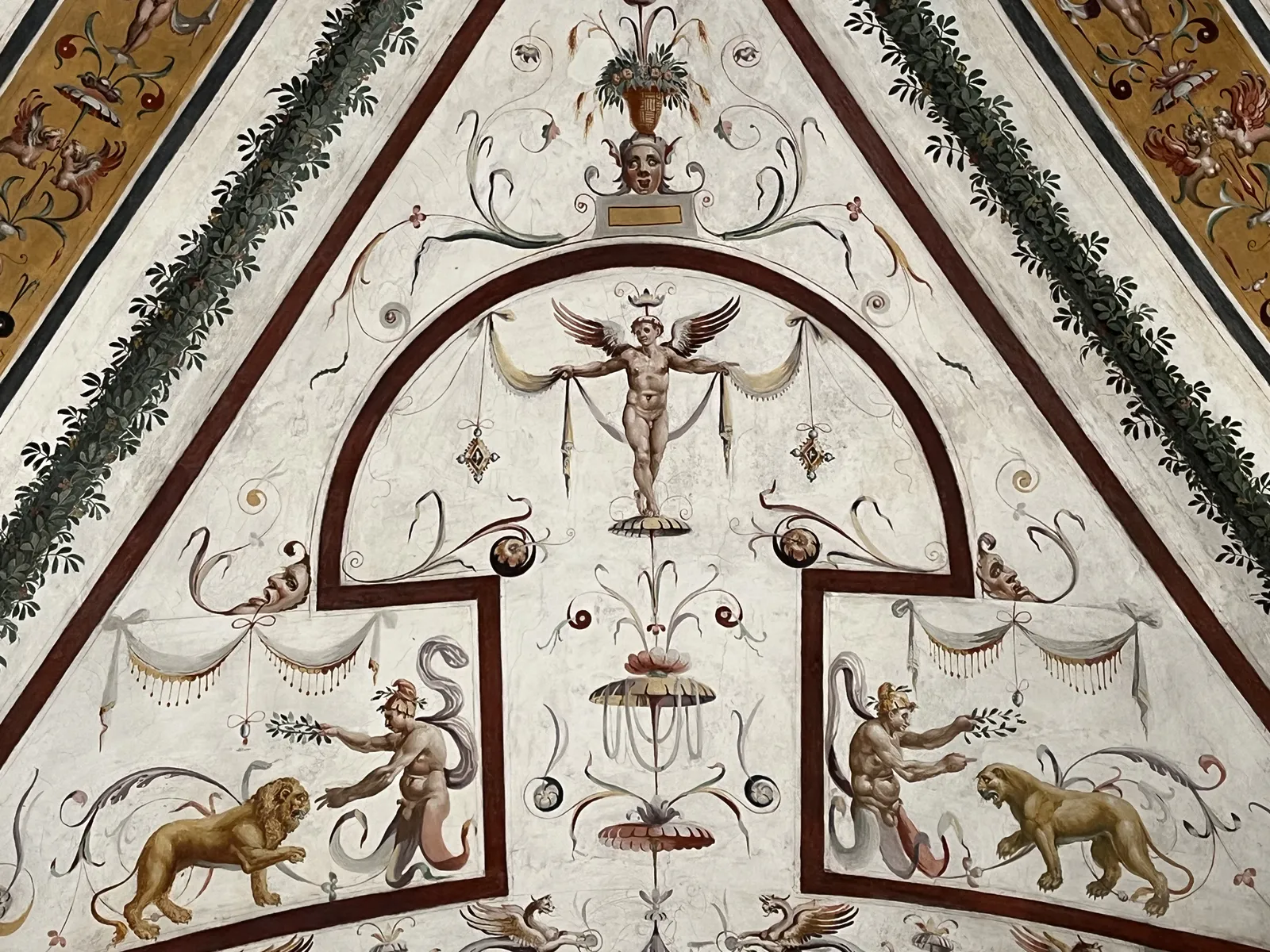
Grotesque Ceiling Decoration
Bonaccorsi Pietro (Perin del Vaga) and Rietti Domenico
This fresco (c. 16th c.) blends Renaissance whimsy with ancient Roman influence, reviving the grotesque style unearthed in Nero’s Domus Aurea. Figures with human and animal features balance symmetrical vines, mythical beasts, and theatrical masks. The composition celebrates harmony through fantasy, playfully bridging antiquity and imagination.
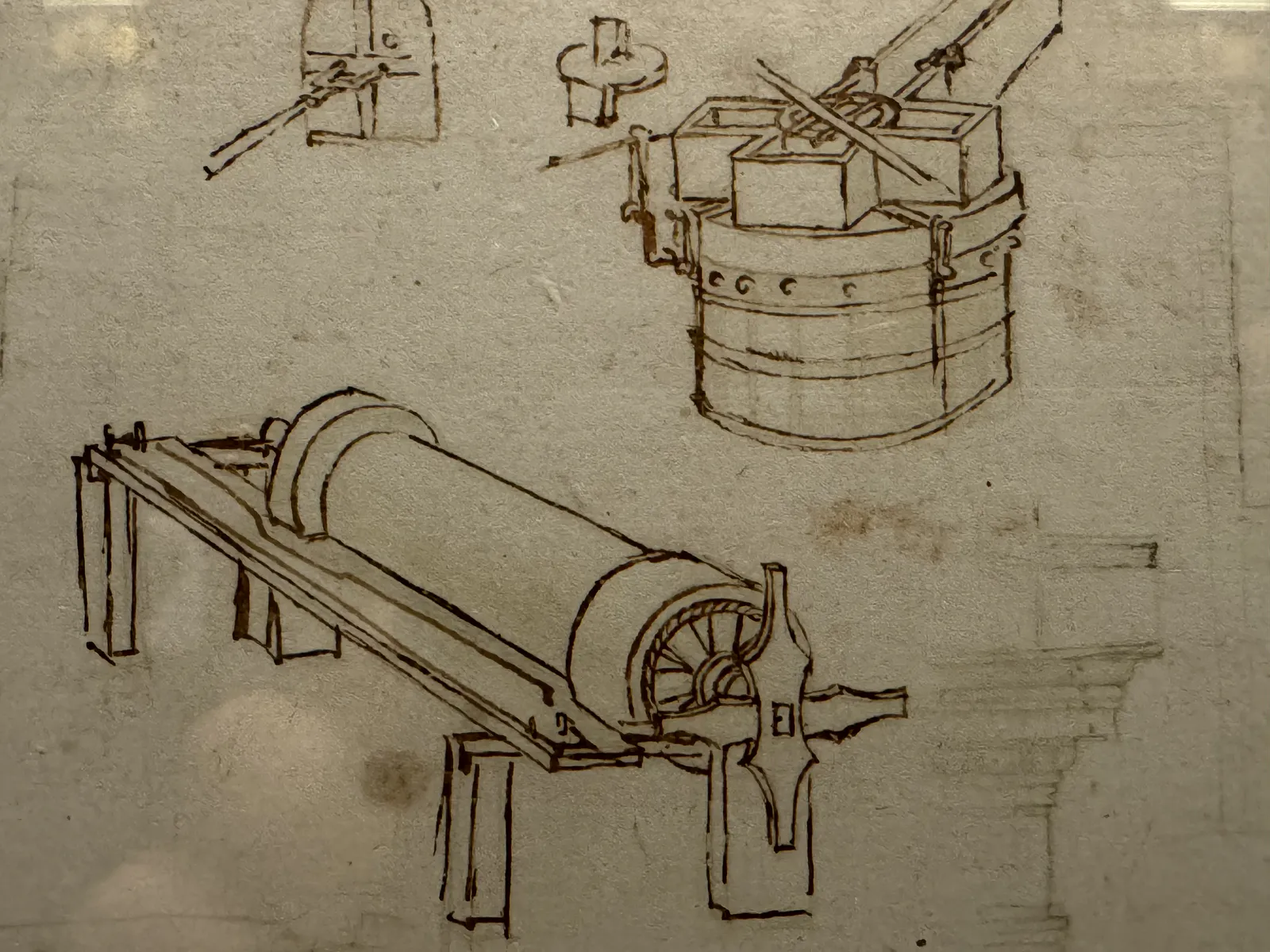
Machine for Polishing Mirrors
Leonardo da Vinci
This technical drawing (c. 1490) shows Leonardo’s device for polishing concave mirrors, likely used in optical or experimental studies. Its mechanism demonstrates advanced knowledge of geometry, motion, and material tension. The design reflects his pursuit of instruments that could extend human perception through mechanical precision.
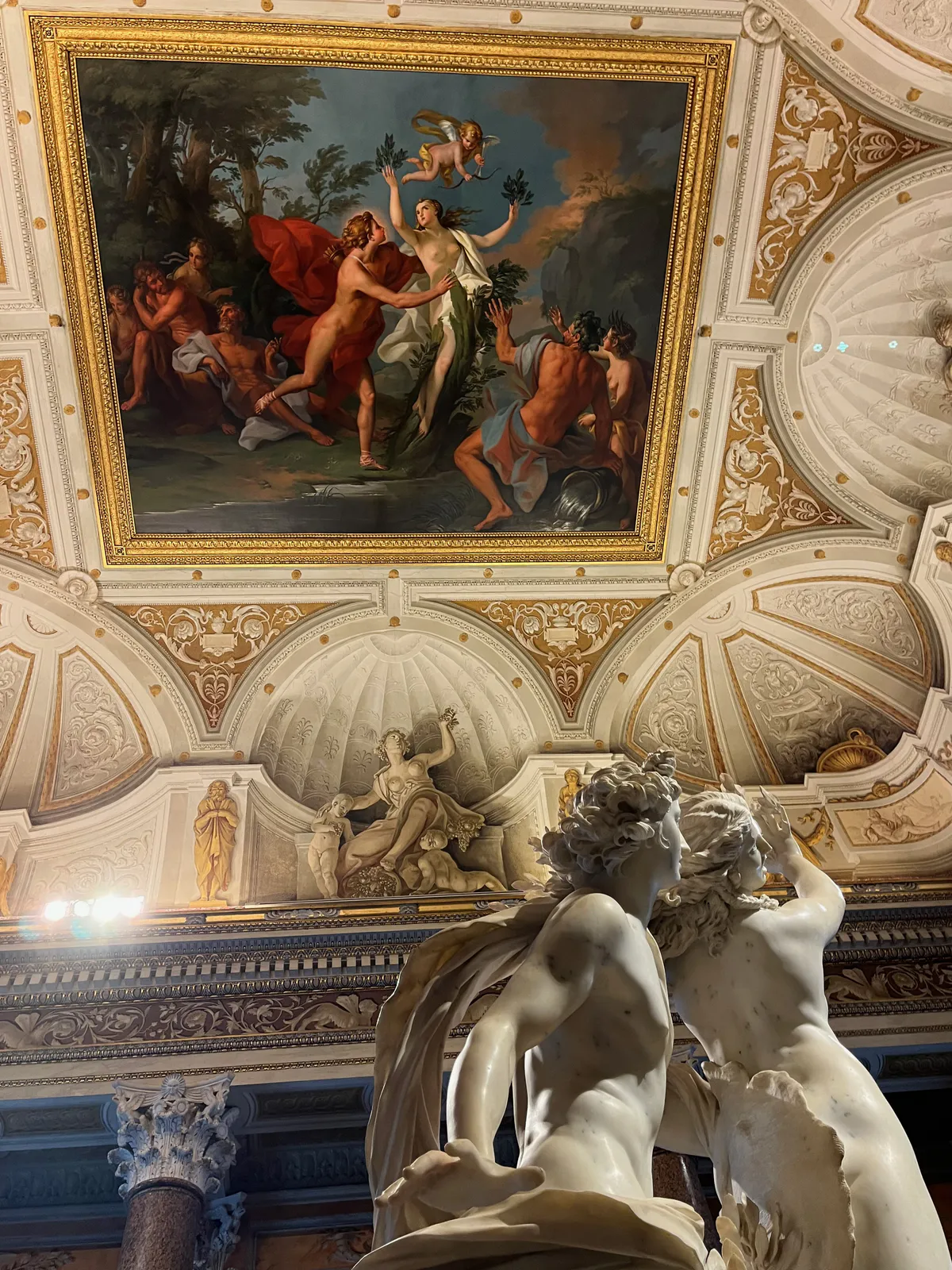
Apollo and Daphne with The Apotheosis of Romulus
Gian Lorenzo Bernini, Mariano Rossi
Bernini’s sculpture (1622–25) captures the climactic moment in Ovid’s Metamorphoses when the nymph Daphne, fleeing Apollo’s desire, transforms into a laurel tree. Above, Rossi’s Apotheosis of Romulus celebrates Rome’s divine origins. Romulus ascends, clutching Roma—helmeted symbol of the eternal city—while Fame, winged and bearing a trumpet, heralds his glory with laurel crowns. Together, sculpture and fresco exalt mythic transformation and Rome’s enduring legacy.
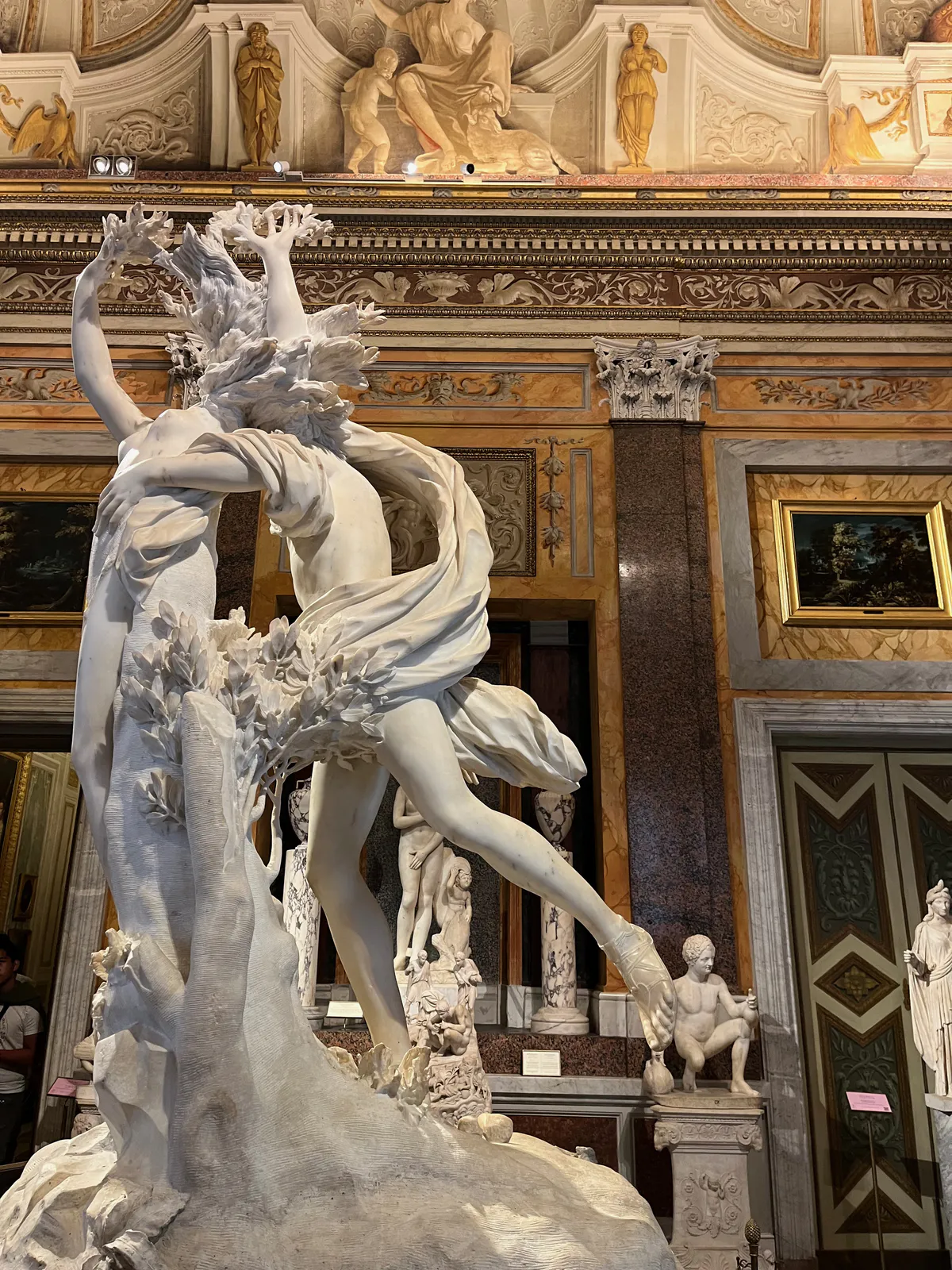
Apollo and Daphne
Bernini
Seen from behind, Bernini’s Apollo and Daphne (1622–25) reveals the spiraling tension of flight and pursuit. Daphne’s transformation accelerates—branches burst from her hair as Apollo strains forward, barely grounded. This angle heightens the illusion of motion, capturing the myth’s fleeting climax with lyrical virtuosity.
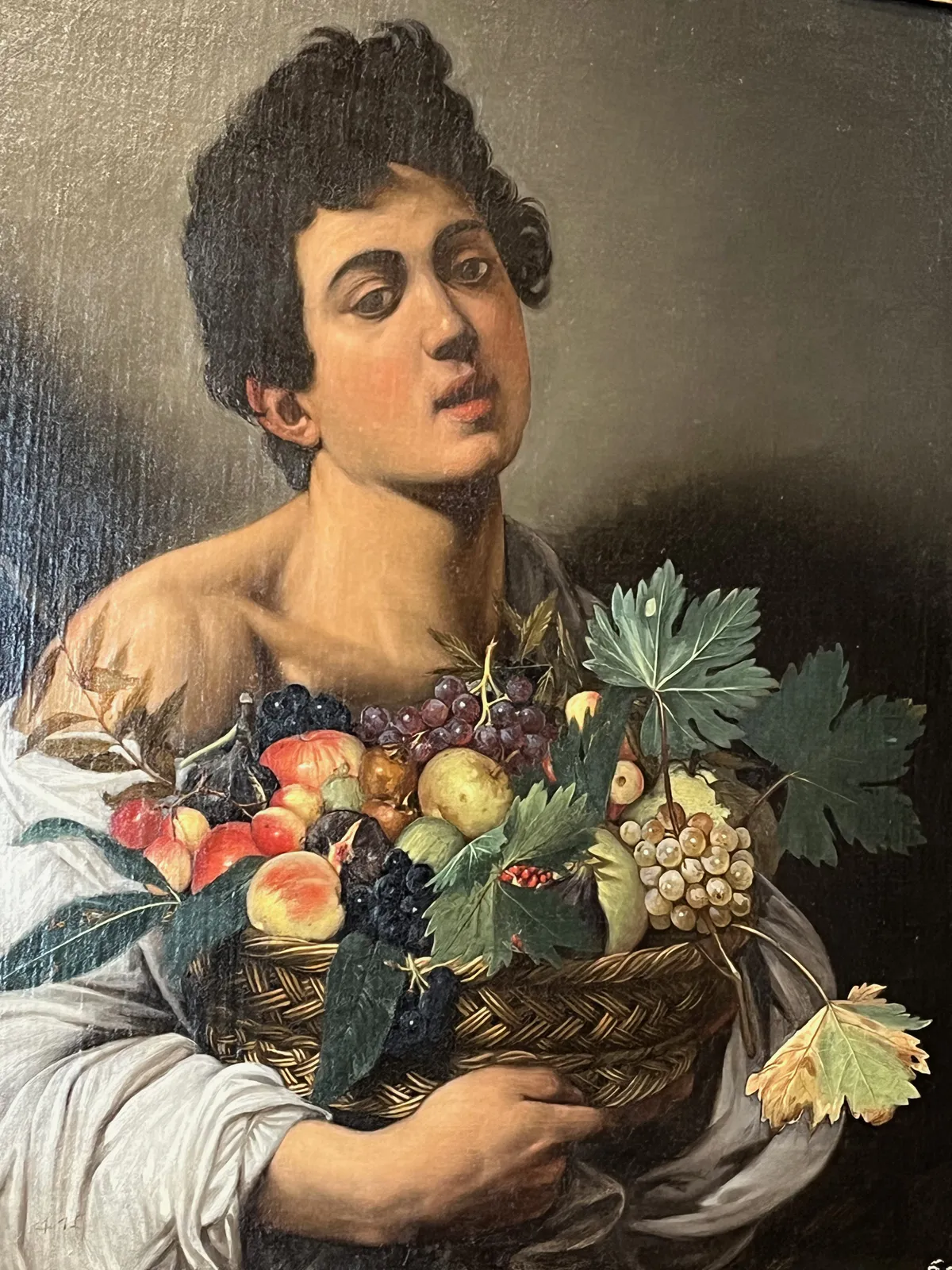
Boy with a Basket of Fruit
Caravaggio
This early Baroque painting (c. 1593) merges portraiture with still life, showing Mario Minniti holding a basket of overripe fruit. Caravaggio renders blemishes and textures with unflinching realism. The sensual posture and decaying abundance evoke themes of youthful beauty, ephemerality, and temptation.
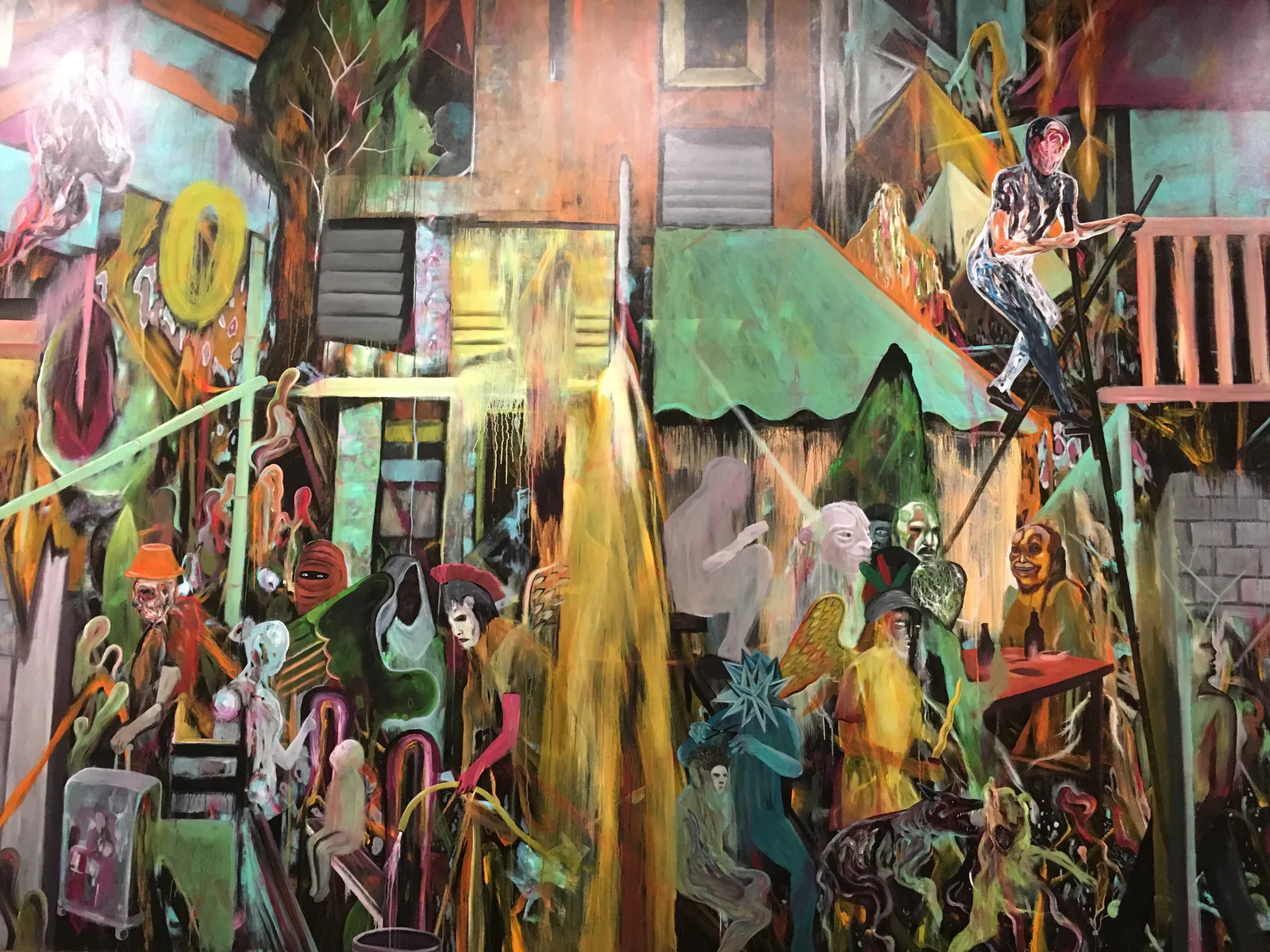
The Comedy, Parody, and Tragedy
Rodel Tapaya
This 2018 painting layers crowded shanties, billboards, and tangled walkways with mythic creatures from Philippine folklore. Human figures mingle with spirits and masked characters, blurring everyday life with the supernatural. Bright colors and abrupt shifts in scale evoke noise, congestion, and spectacle. Tapaya unfolds contemporary urban experience as a chaotic folk tale, where comedy, parody, and tragedy coexist in a single scene.
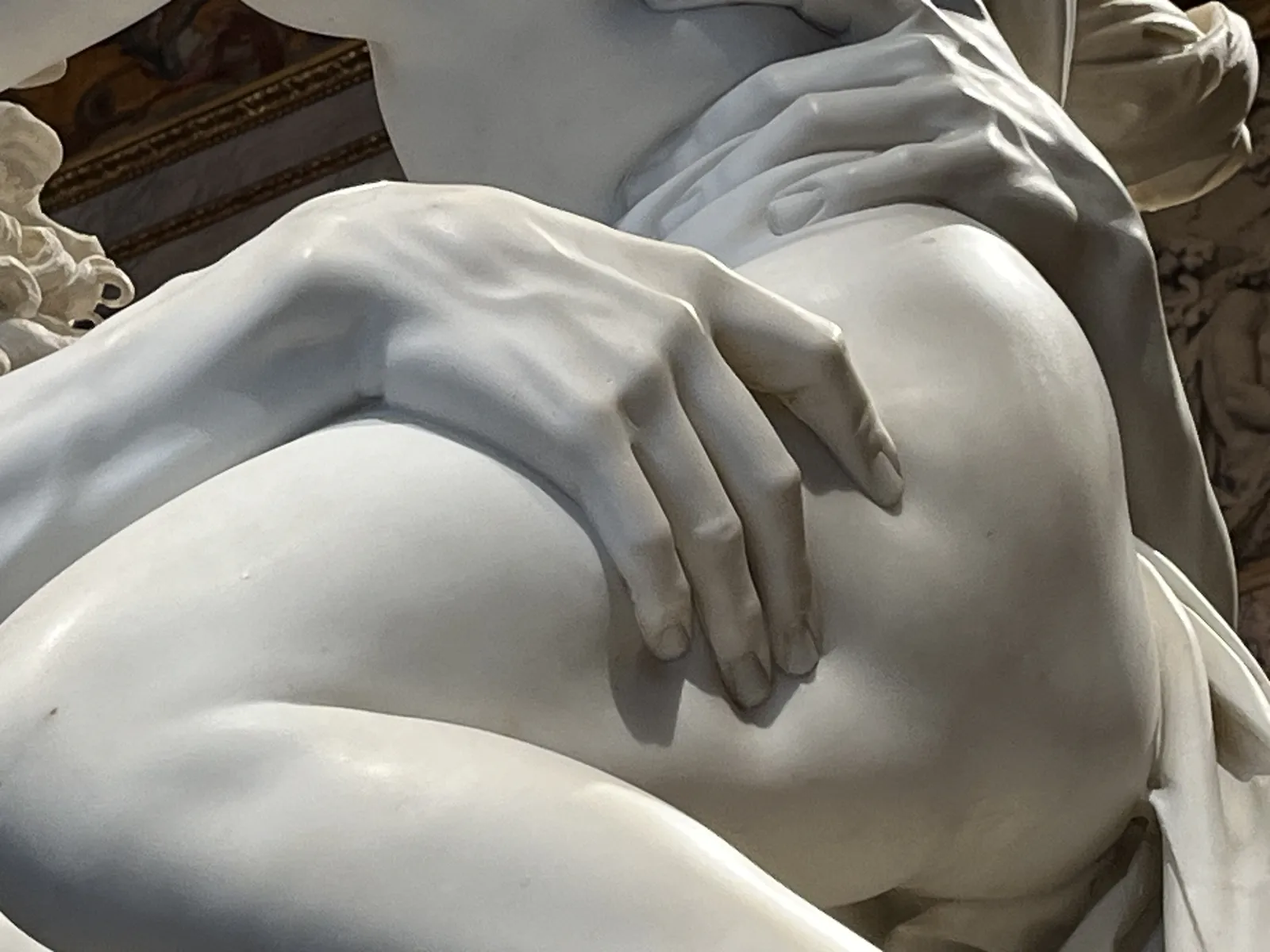
The Rape of Proserpina (detail)
Gian Lorenzo Bernini
This gripping close-up from Bernini’s marble group (1621–22) captures Pluto’s hand pressing into Proserpina’s flesh. The marble appears to yield under his grip, a dazzling illusion of softness and force. Bernini’s technical brilliance here transforms stone into living drama, amplifying the sculpture’s emotional and physical realism.
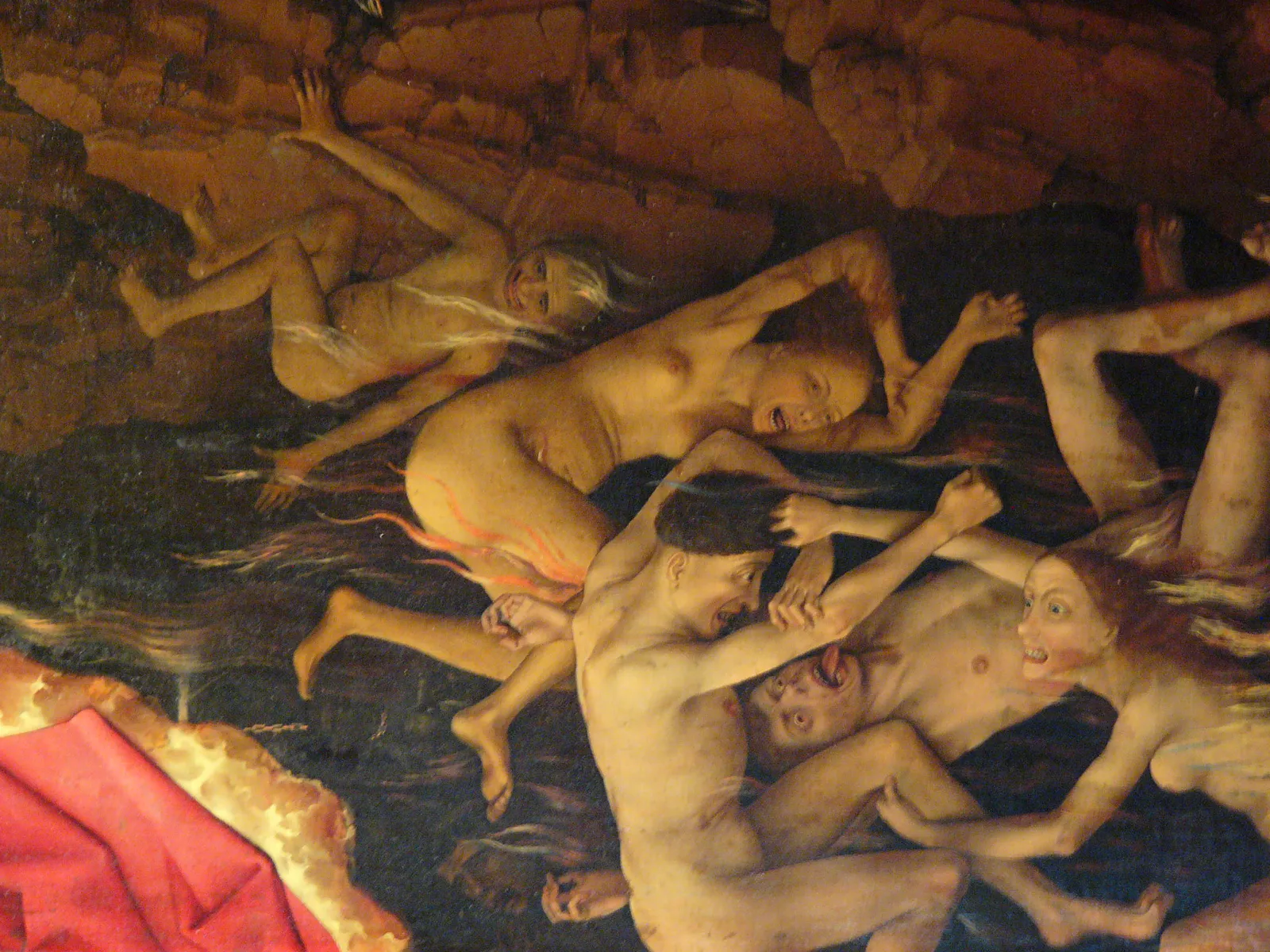
The Damned in Torment
Rogier van der Weyden
This detail from the Last Judgment Altarpiece (1445–50) intensifies the vision of damnation. Naked figures twist and collide as they plunge into dark flames, their limbs tangled in chaotic knots. Strained muscles and distorted faces display a studied range of terror and despair. For patients and caregivers at the Hôtel-Dieu, such visceral imagery sharpened awareness of sin, repentance, and the uncertainty of salvation.
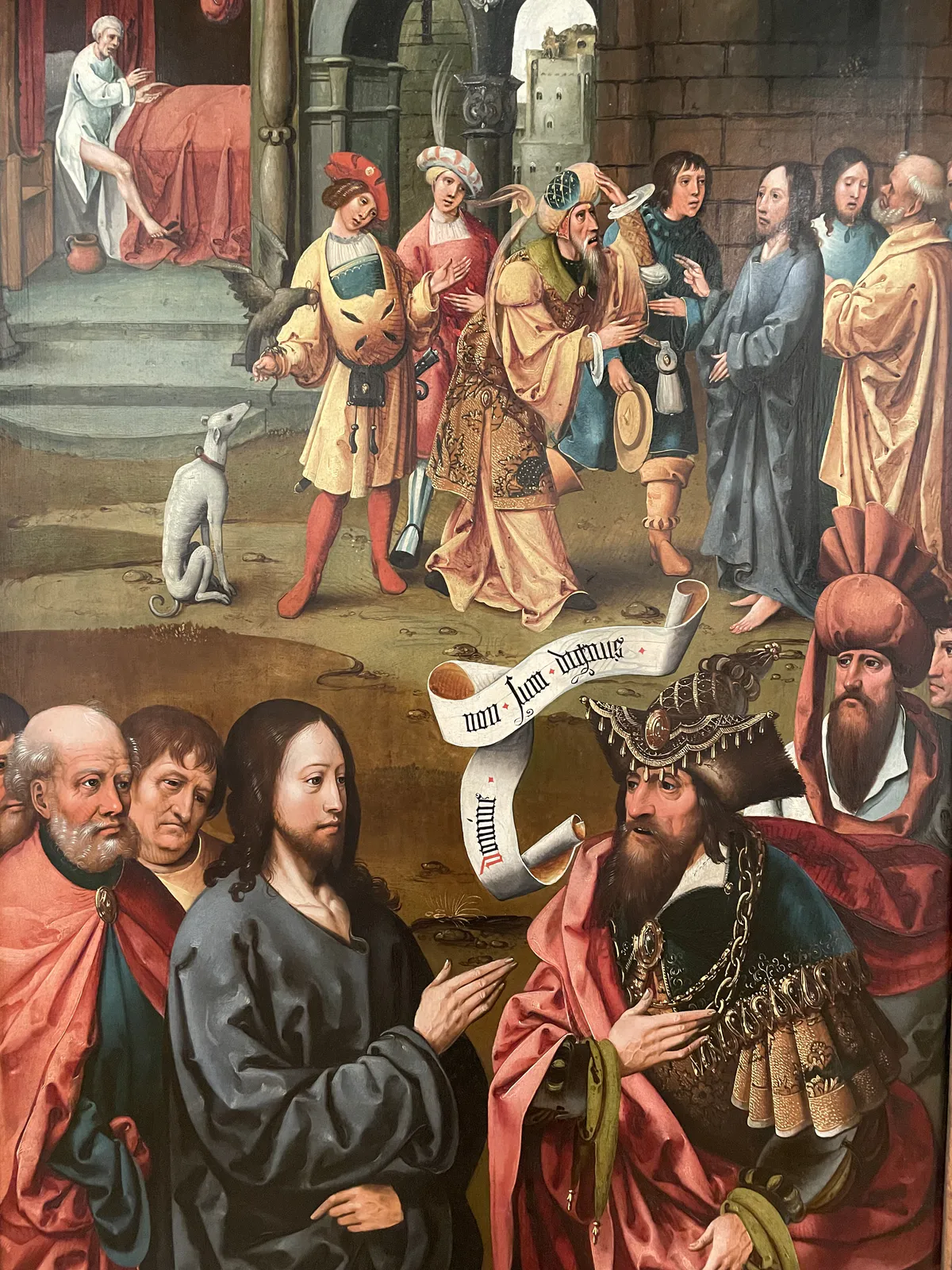
Christ and the Centurion of Capernaum
Master of Adoration of Amberes
This Northern Renaissance panel (1520–30) captures the moment a Roman centurion asks Christ to heal his servant, saying Lord, I am not worthy. The scene blends biblical narrative with contemporary Flemish attire, highlighting faith over status. The expressive gestures and rich details emphasize humility and the universal appeal of compassion, reflecting the era's fusion of religious and cultural elements.
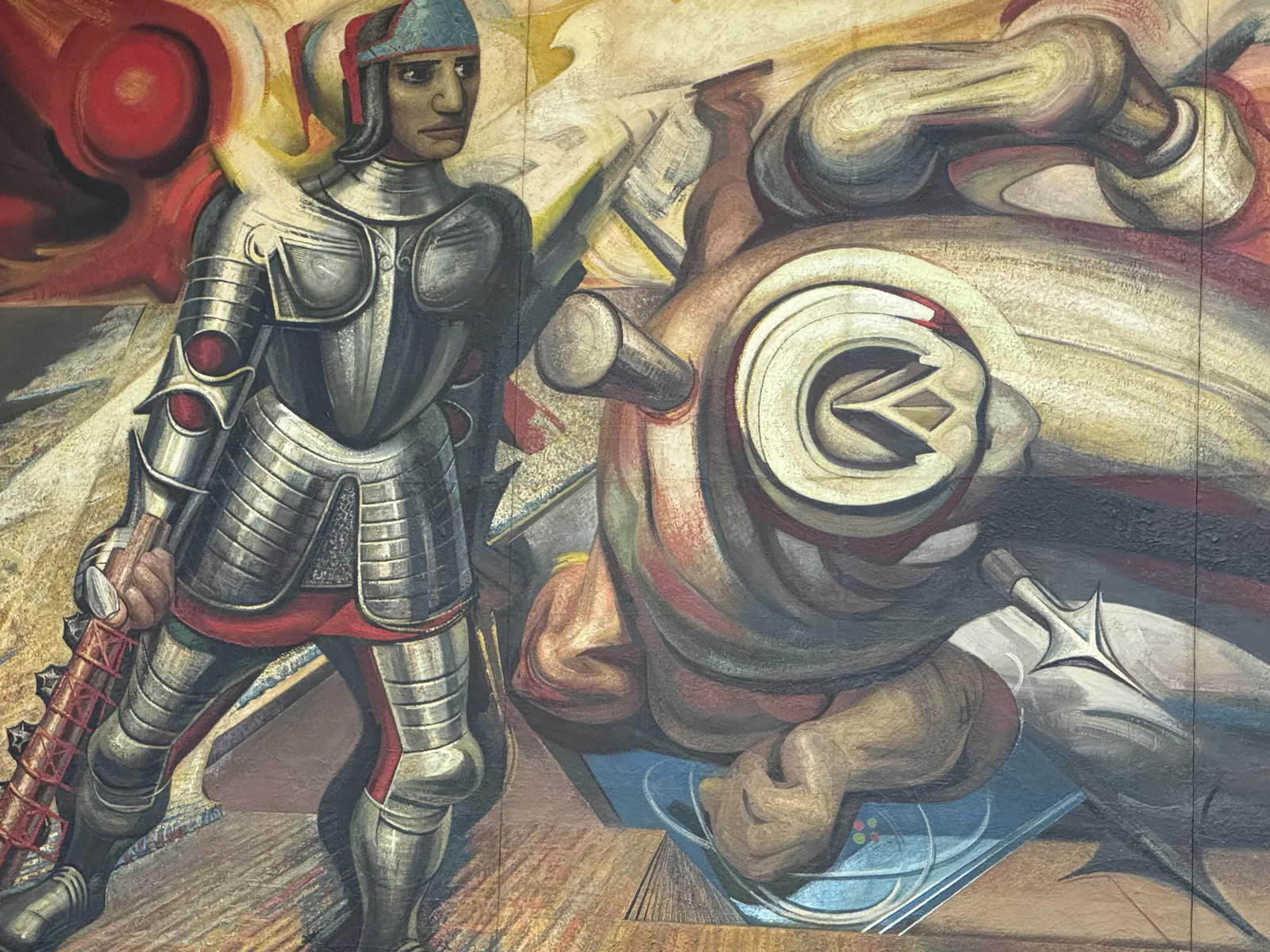
Apoteosis de Cuauhtémoc (detail)
David Alfaro Siqueiros
In this dynamic panel from Apoteosis de Cuauhtémoc (1950–51), Siqueiros reimagines the last Aztec emperor as a defiant figure armored against colonial violence. The clash of Indigenous resistance and mechanized conquest evokes Mexico’s historical trauma and the enduring spirit of revolution. Bold forms and forceful lines heighten the scene’s urgency.
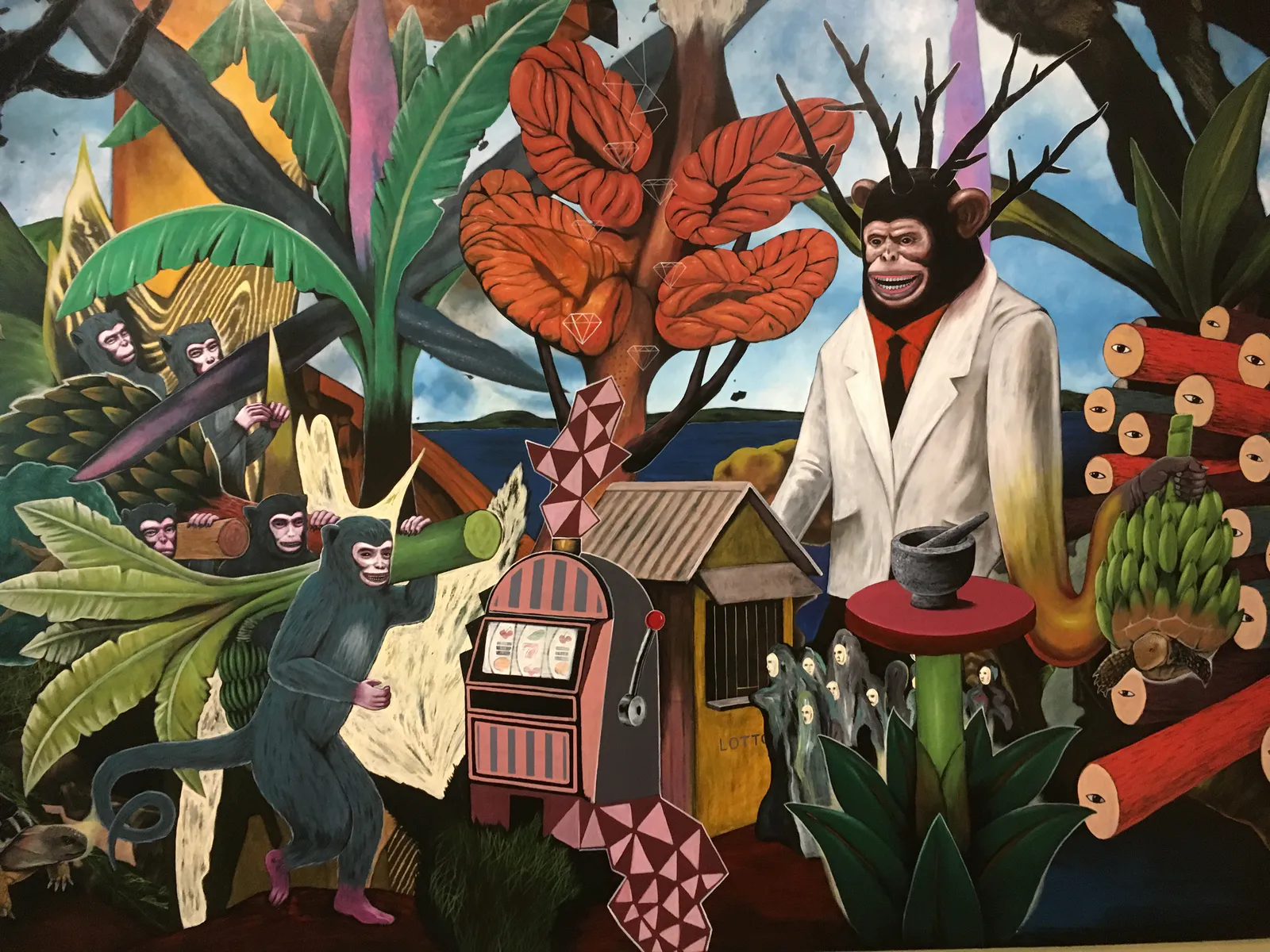
Instant Gratification
Rodel Tapaya
This work (2018) reinterprets the Filipino fable of The Monkey and the Turtle, placing its lesson within a crowded jungle of gambling stalls and restless figures. Monkeys embody the tale’s impatience and hunger for quick gain, while a small turtle-the steady effort outlasts reckless desire. Log piles, patterned trunks, and theatrical foliage frame a world driven by instant gratification and easy profit. Tapaya adapts indigenous storytelling to expose modern cycles of greed.
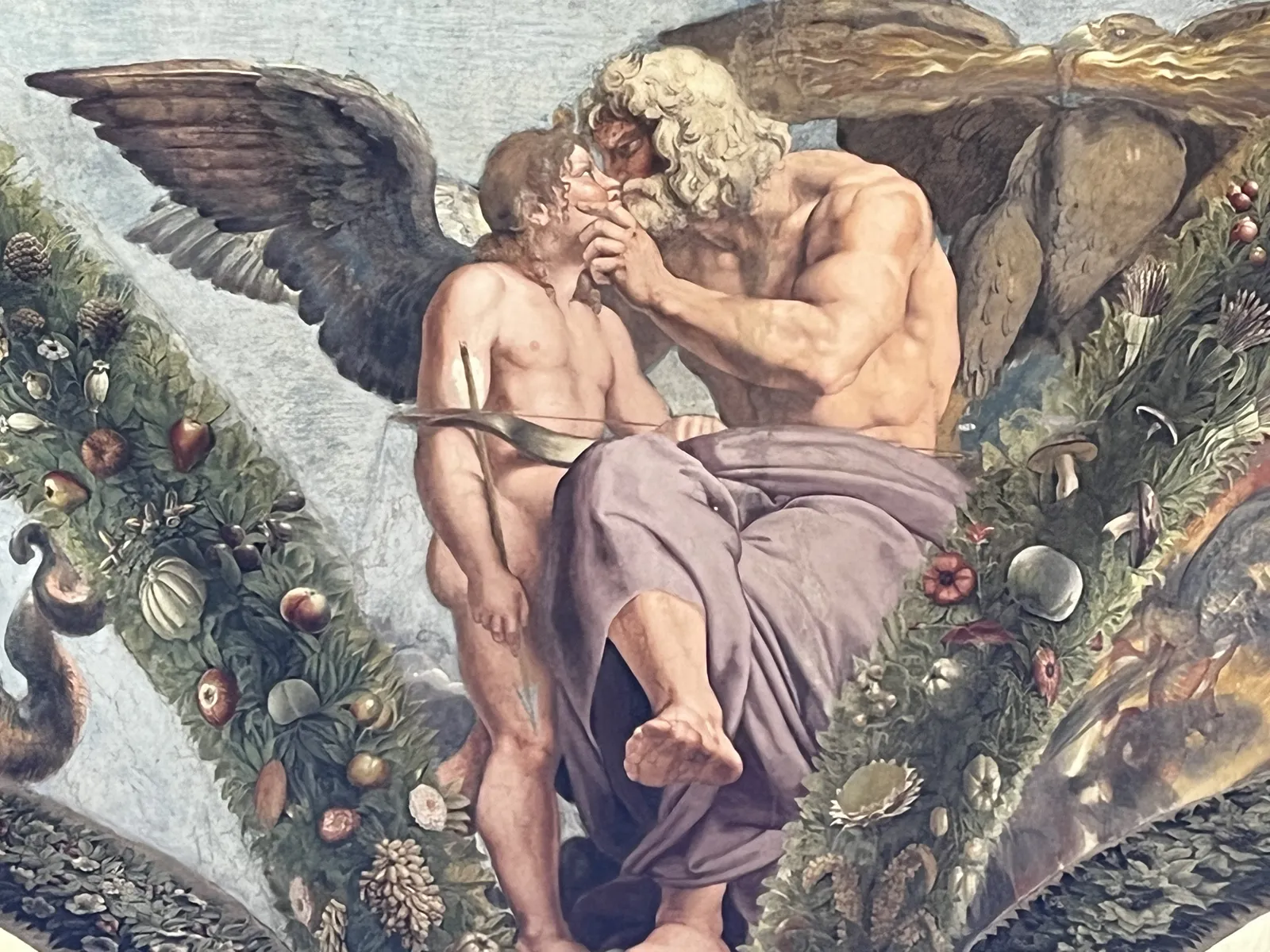
Cupid Pleads with Jupiter for Psyche
Raphael
In this fresco (1517–18), Raphael depicts the moment when Cupid petitions Jupiter for Psyche’s immortality. Jupiter’s intimate gesture suggests divine consent and compassion, while Cupid’s youthful vulnerability contrasts with the god’s authority. The work reflects Renaissance fascination with classical myths and divine love.
“When the path is beautiful, do not ask where it leads.” — Zen proverb
Welcome to my travel photography!
“When the path is beautiful, do not ask where it leads.” — Zen proverb
Welcome to my travel photography!
For as long as I can remember, my path has been one of discovery—seeking beauty, timelessness, and connection in every corner of the world. It has also been a journey of deep learning and understanding. I’ve been an avid traveler (or perhaps a travel addict?) for most of my life. My love for travel began long before I ever left home: as a child, I drew a fantasy map of my grandparents’ apartment and “traveled” through it with my cousin Sonya, imagining adventures in every corner. Nearly 90 countries and countless moments of awe later, I’m excited to share this journey with you.
Thanks to the tireless and ingenious programming of Diagilev, we’re now able to present about fifteen percent of the images I’ve accumulated over the years. More will be released in small batches depending on your interest. While the first release leans toward museum photography, later ones will include more nature, architecture, culture, and general travel experiences. If you’d like to receive email notifications about new releases, feel free to reach out—no commercial use, ever.
Throughout my travels, I’ve been drawn to two intertwined kinds of discovery. One is intellectual: learning why the world is the way it is. History became my guide, shaping my perspective and filling my camera roll with museums and old buildings. To me, history is not the past—it is the key to understanding the present and how the world became what it is. The other is emotional: seeking moments of elevation—spirituality, beauty, harmony—often found in nature, monasteries, and ancient sacred spaces. Together, these impulses shape my photography. It invites you to learn, admire, and soar—to rise above the mundane and see the world through a lens of curiosity and wonder.
Much of my later travel became possible thanks to my job with Delta Air Lines, but the wanderlust began years earlier. By the time I joined the industry, I had already visited over 35 countries and lived in several—largely thanks to a backpacking journey around the world with Luis León, whose face appears in many early photos. I grew up in Ufa in the USSR, and since leaving it I have lived, studied, and worked in Latvia, the United States, France, South Korea, Canada, Spain, Italy, Brazil, Japan, and Colombia.
A life of near-constant movement may seem a little crazy, but it has deepened my understanding of the world and produced the photography you are about to see. Over the years, my style has evolved—more intentional, more refined—yet its core remains the same: a search for understanding, timeless beauty, and a connection to those who walked this earth long before us.
I hope these photos stir something in your soul, just as they did in mine. I’d love to hear from you—whether reactions, suggestions, corrections, or a request to be added to the email list for new releases (no commercial use, I promise). You can learn more about my travels here, and my academic life here.
Enjoy our shared journey!