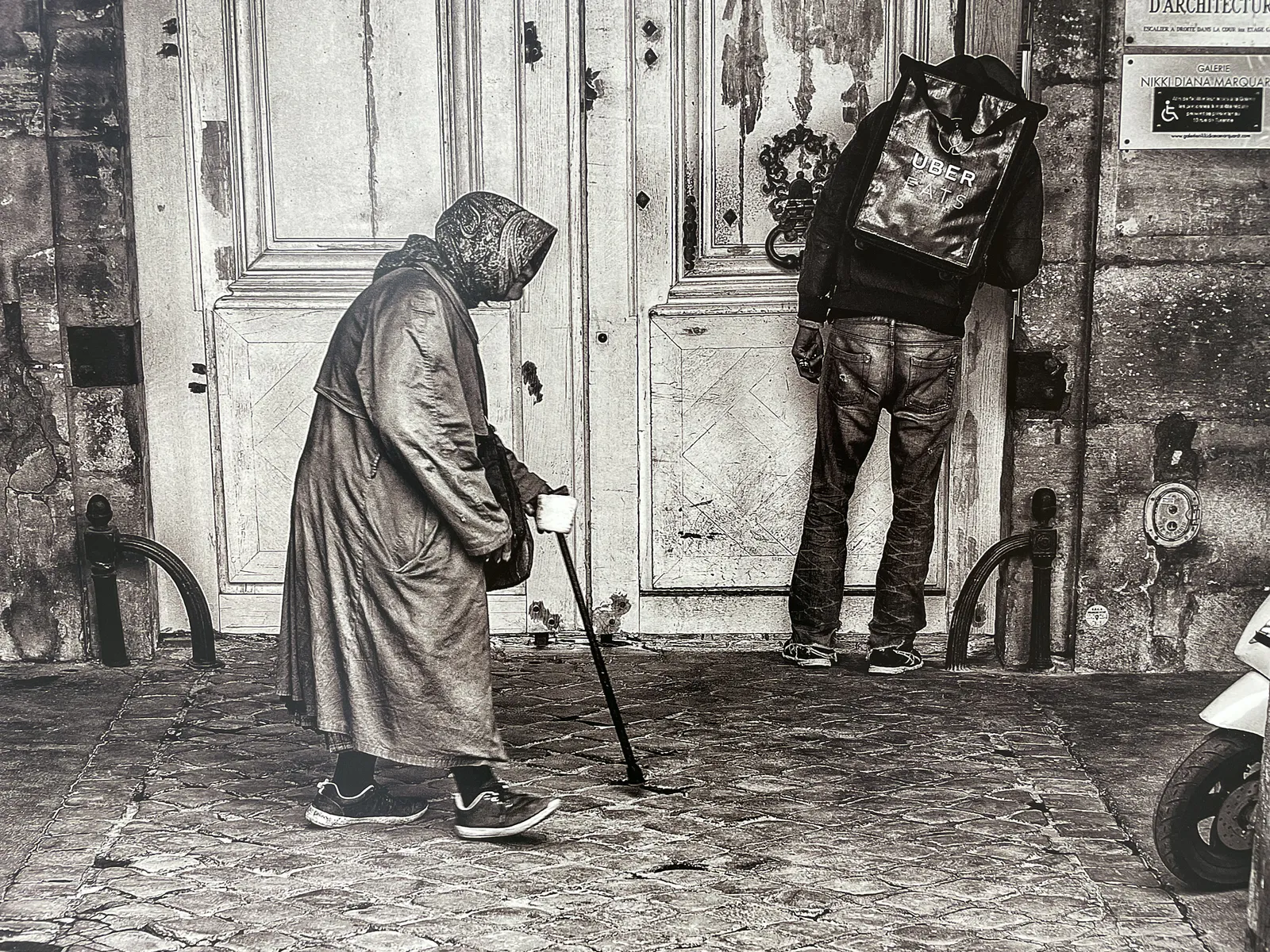
Uber Eats
Roger Zayas
This photo (2017), taken in the historic Marais district of Paris, captures a striking urban contrast: an elderly woman with a cane passes a food courier bent over a doorway. Zayas underscores generational divides and social invisibility, reflecting on aging and shifting economic realities in the European metropolis.
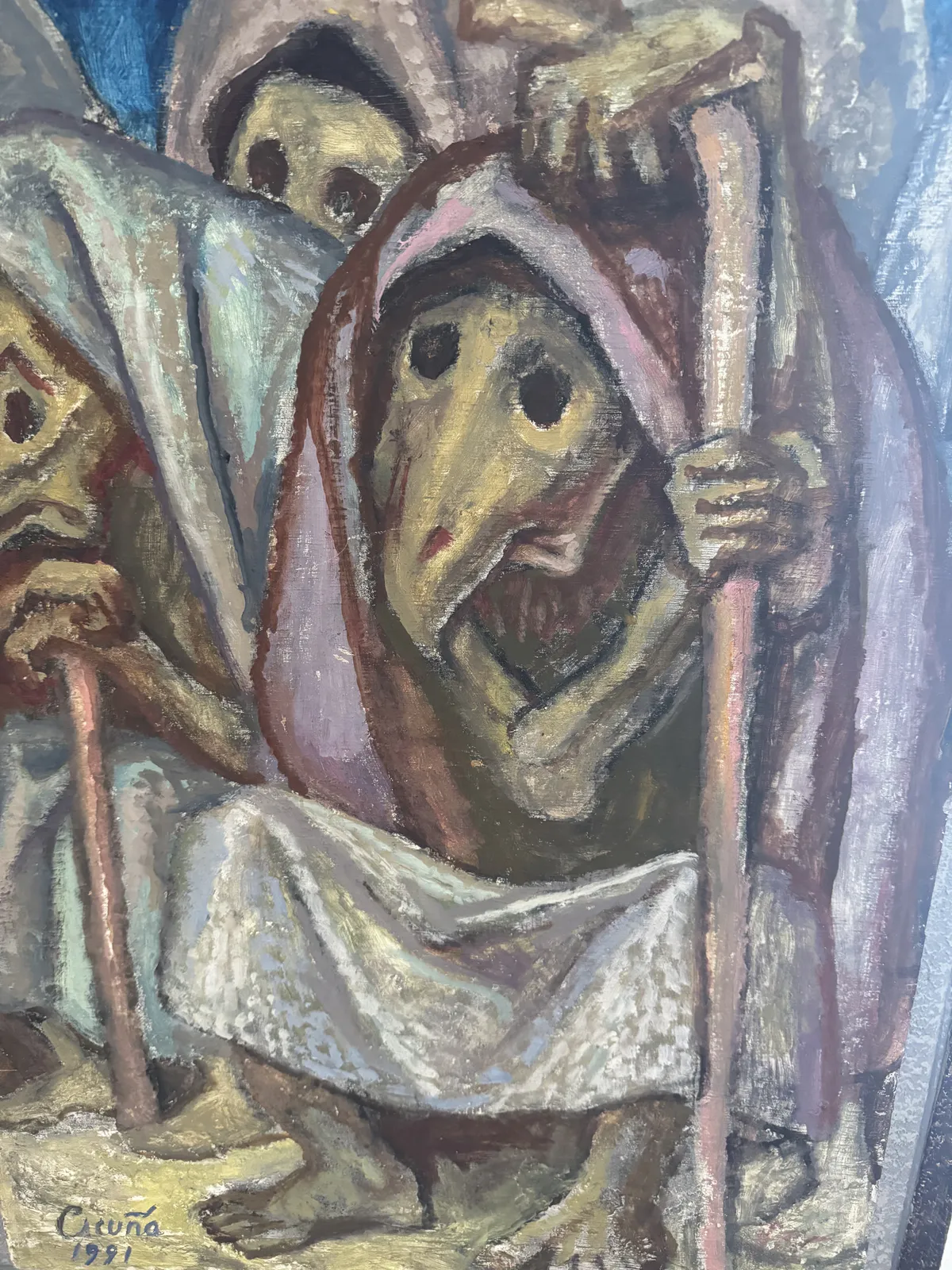
The Witch of Zascandil
Luis Alberto Acuña
This portrait (1991) shows the Witch of Zascandil, a figure rooted in Colombian folklore. Sharp features and widened eyes create a tense, exaggerated profile. The name Zascandil refers to a trickster or wandering mischief-maker in regional stories. The image indicates how rural mythology blends satire, fear, and ancestral belief.
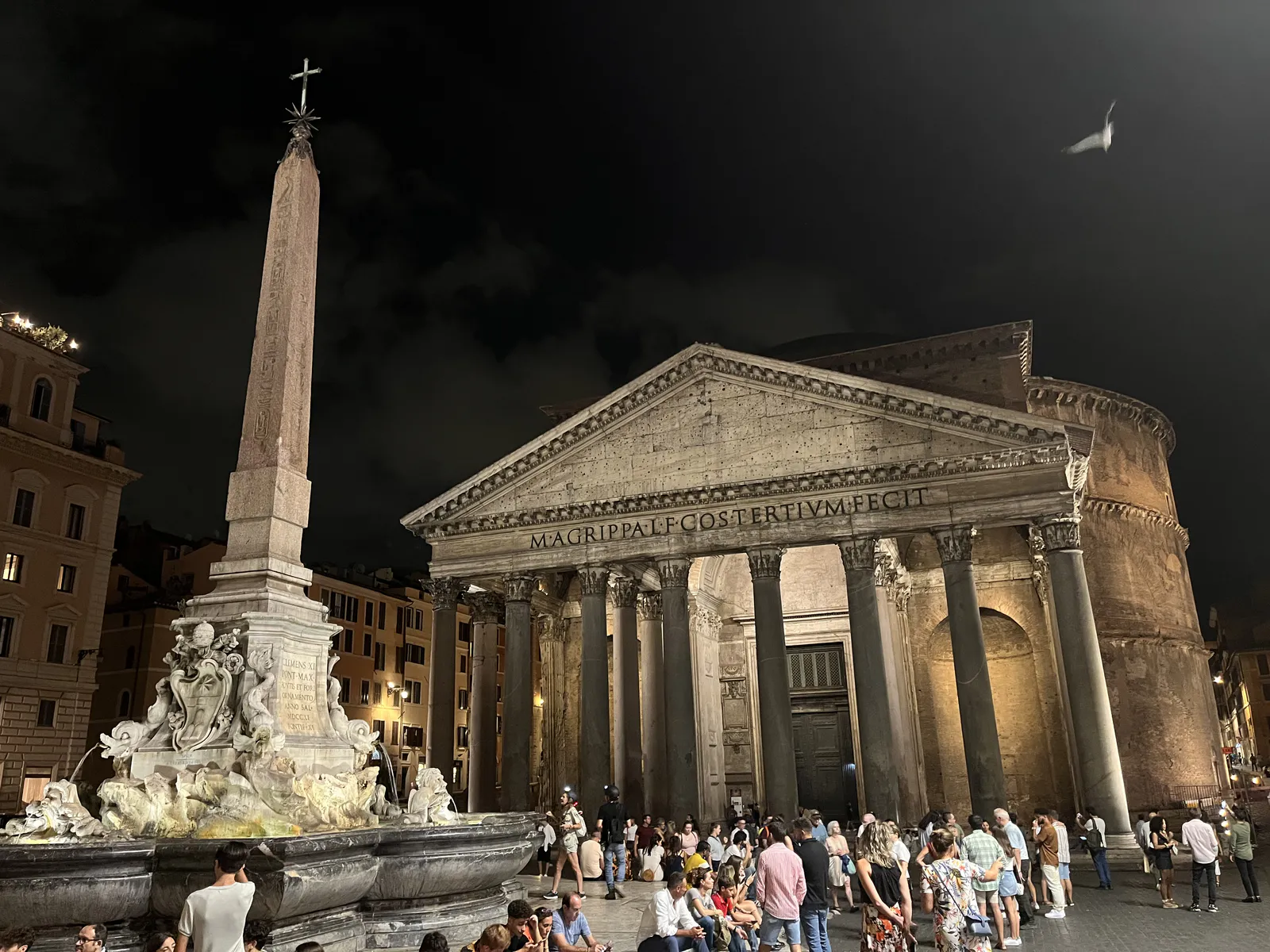
Pantheon with Macuteo Obelisk and Fountain
Filippo Barigioni
The Pantheon’s façade (118–125 AD), built under Emperor Hadrian, preserves Agrippa’s earlier inscription (M·AGRIPPA·L·F·COS·TERTIVM·FECIT - Marcus Agrippa, son of Lucius, consul for the third time, built this). Before it stands the Macuteo Obelisk from Egypt (rededicated here in 1711) and the Baroque fountain by Filippo Barigioni (1711), blending imperial Rome, Christian Rome, and papal urban renewal into one historic vista.
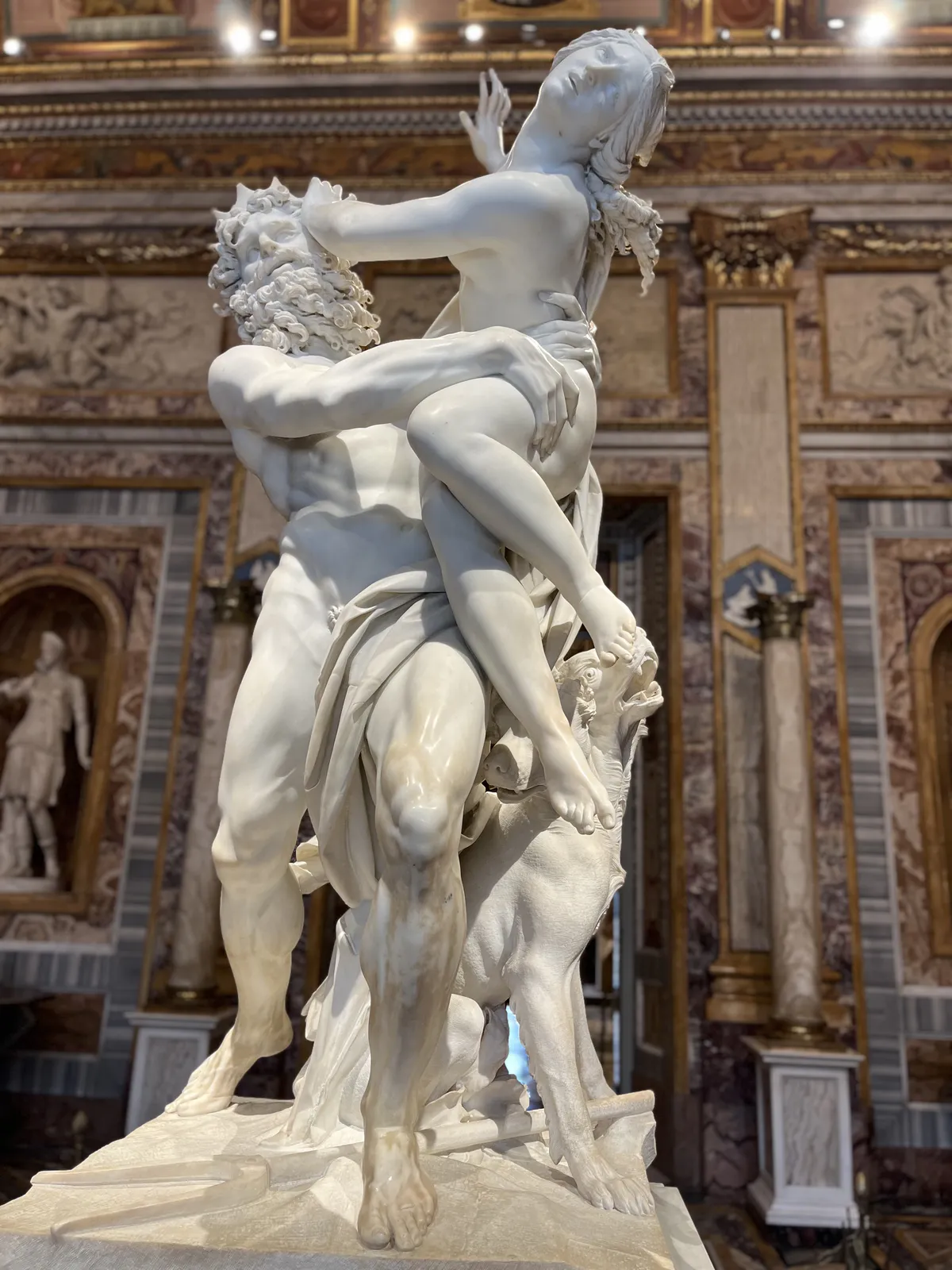
The Rape of Proserpina
Bernini
In this masterful marble (1621–22), Bernini captures Pluto’s violent abduction of Proserpina—an allegory for the changing seasons from Roman myth. Her twisting body and anguished face contrast Pluto’s force, while Cerberus, the underworld’s three-headed hound, reinforces the drama. At just 23, Bernini infused the stone with breathless motion and tactile realism, anchoring the Borghese legacy in Baroque brilliance.
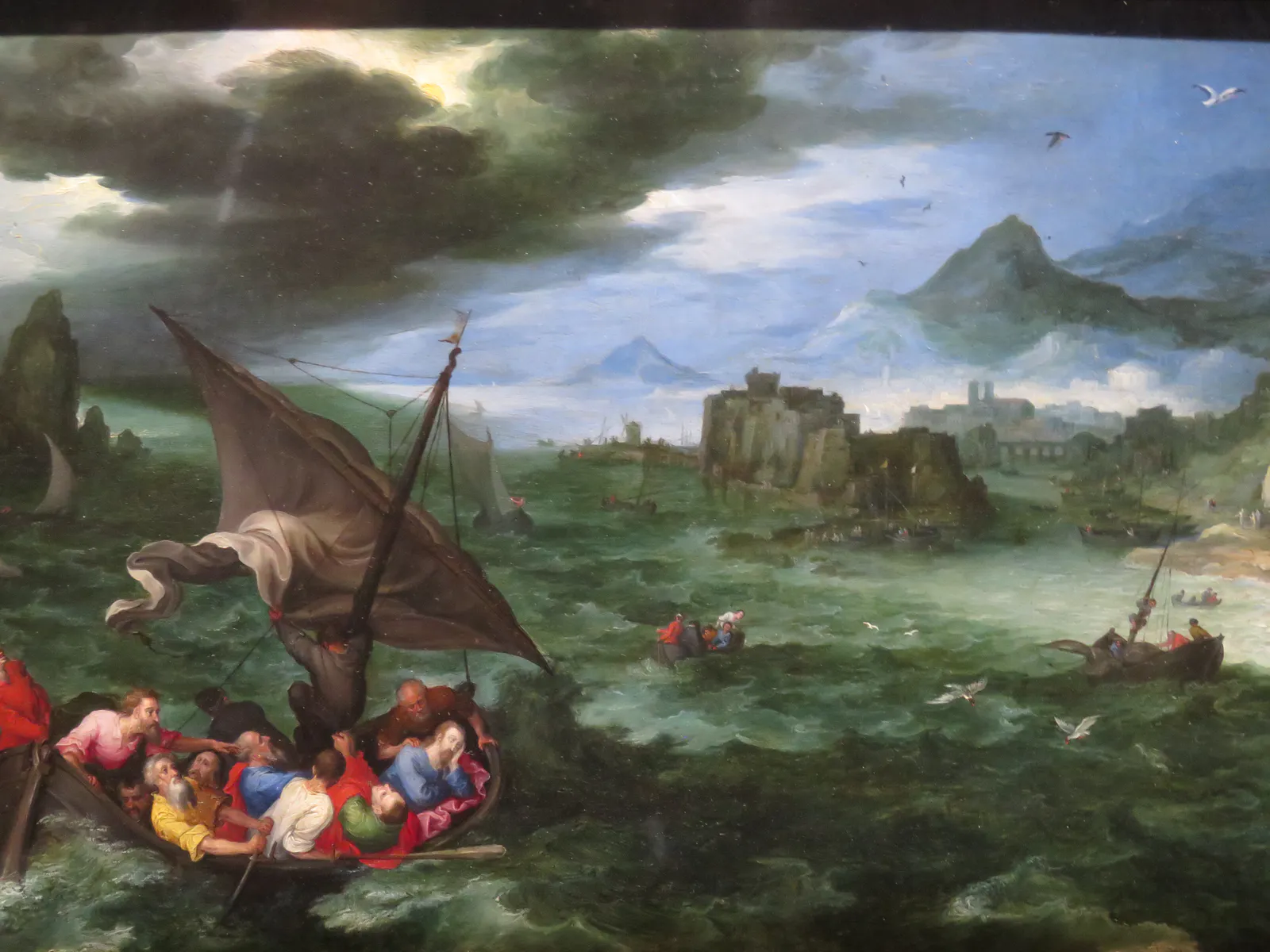
Christ in the Storm on the Sea of Galilee
Jan Brueghel
This oil on copper (1596) shows Christ asleep during a storm as an apostle wakes him amid violent waves on the Sea of Galilee. The heeling boat and twisted sail convey imminent peril, while the darkened sky dramatizes the disciples’ fear. Brueghel’s vivid rendering turns natural turbulence into a meditation on faith and divine control.
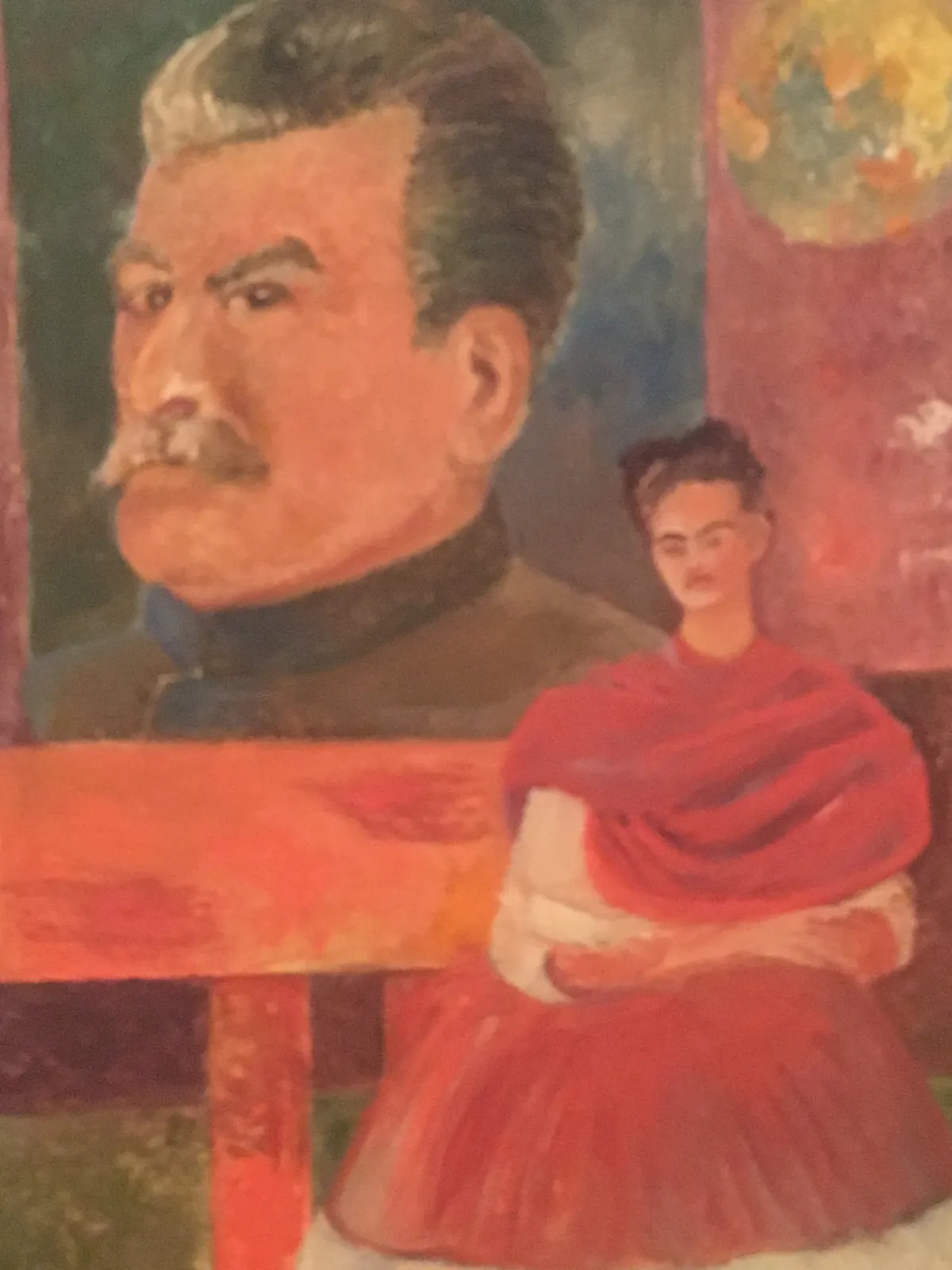
Self-Portrait with Stalin
Frida Kahlo
Painted in 1954, right before death, this political work shows Kahlo seated beside an imposing image of Stalin, whom she revered late in life. The portrait—originally titled Peace on Earth so the Marxist Science may Save the Sick and Those Oppressed by Criminal Yankee Capitalism—reflects her Marxist convictions and final artistic ideological defiance.
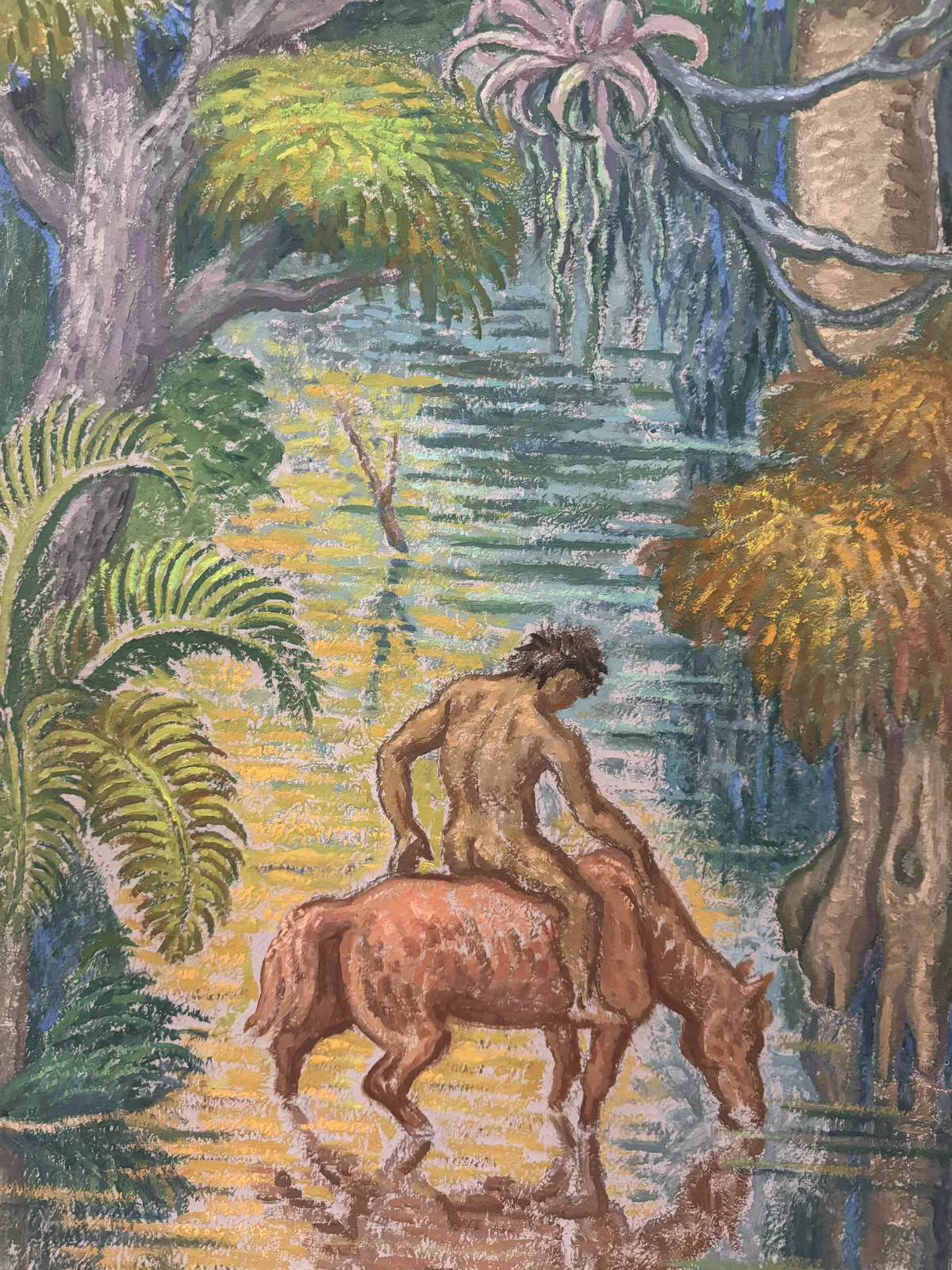
Indo-American Scene
Luis Alberto Acuña
A lone, naked rider on horseback drinks from a forest stream, immersed in a lush tropical setting. Acuña's painting (1950-60s) evokes a primordial connection between Indigenous people and the natural world, blending mythic and symbolic elements into a vision of harmony, solitude, and ancestral presence.
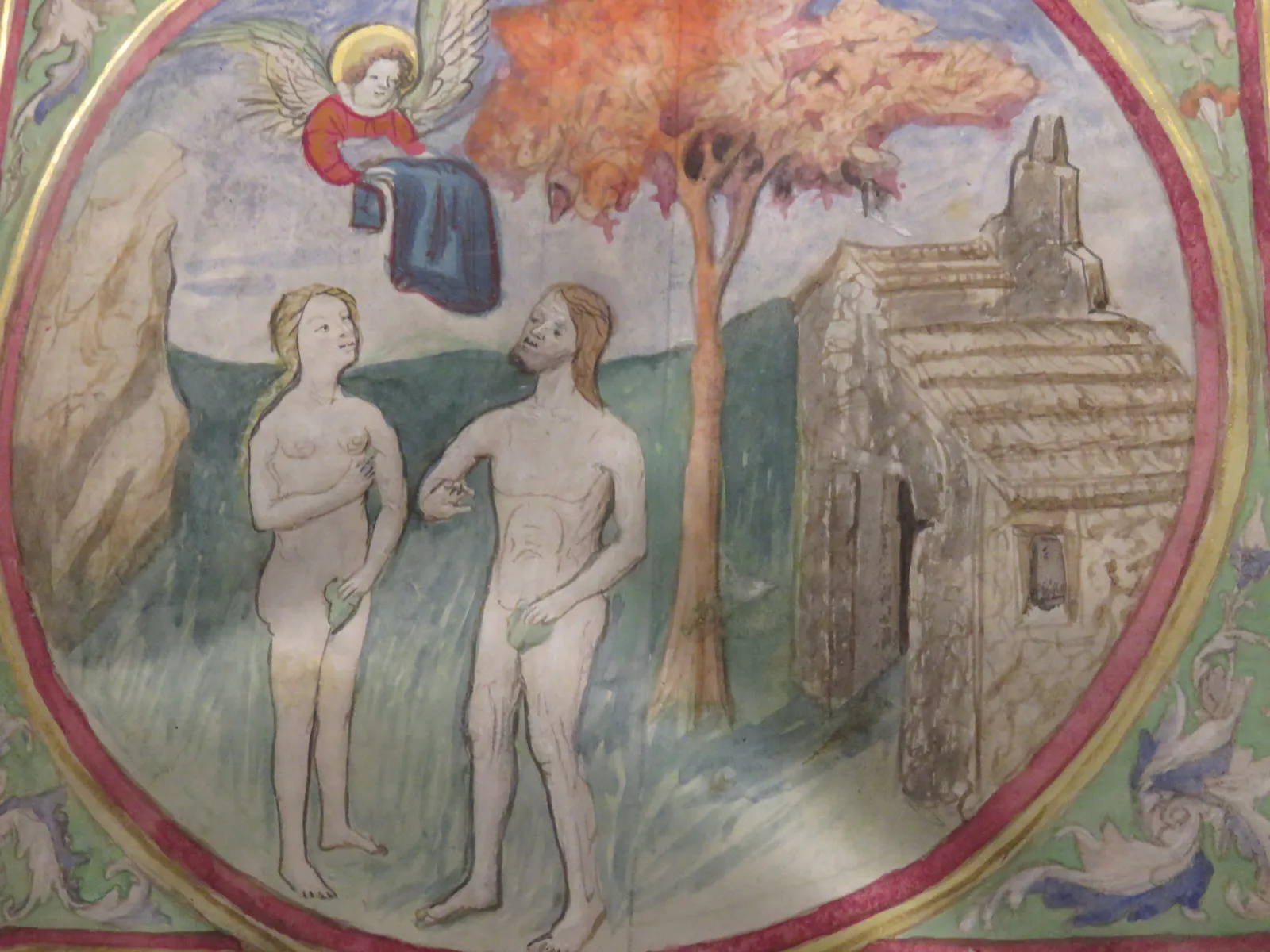
Expulsion from Eden
Maître des Médaillons
This French manuscript miniature (early 15th c.) shows Adam and Eve after the Fall, modestly covering themselves with leaves. An angel descends with a robe, while the Tree of Knowledge burns red above them. To the right stands a stone building, symbolizing exile from Paradise. The vivid colors and fine detail reflect late medieval devotional art.
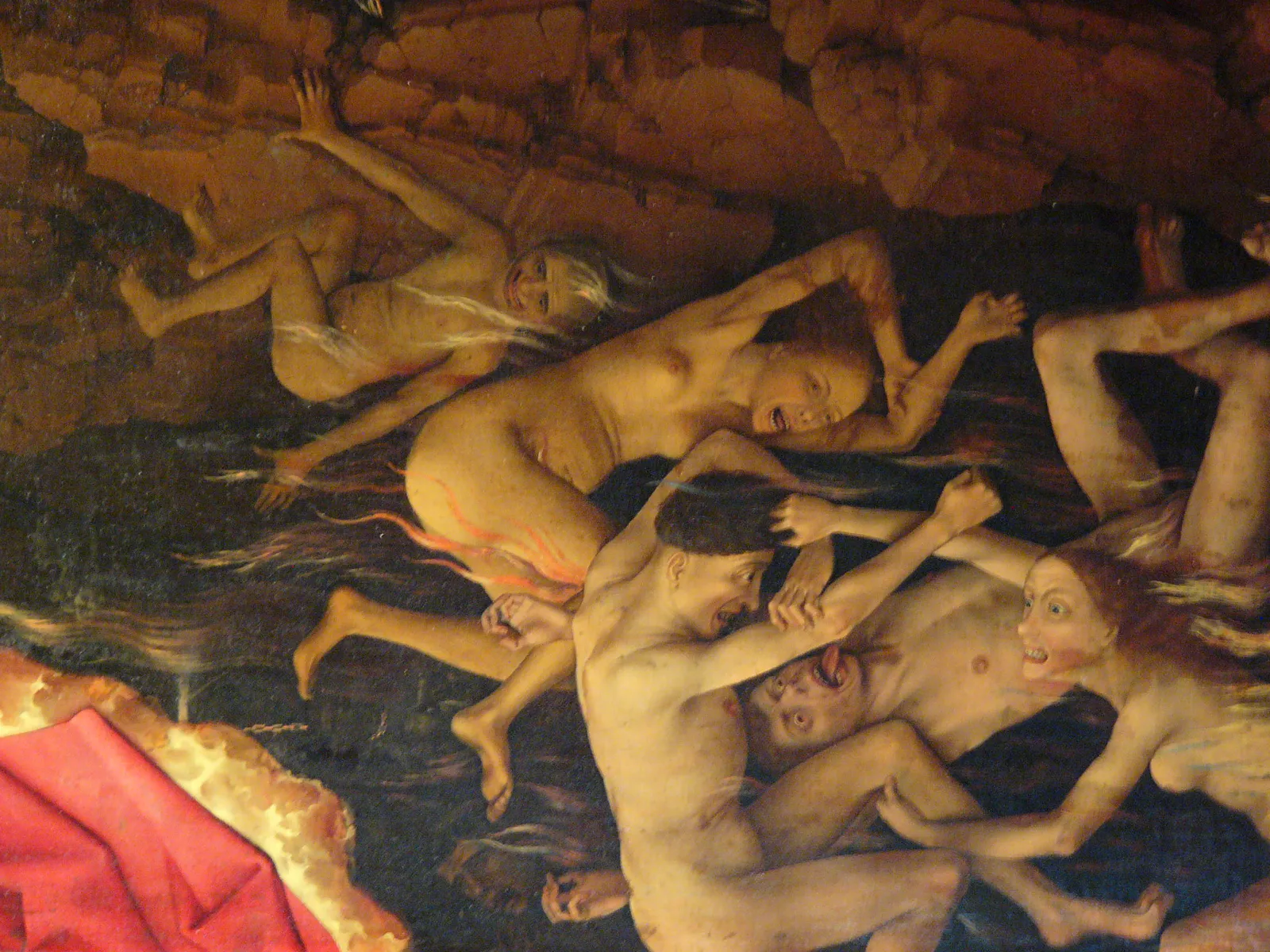
The Damned in Torment
Rogier van der Weyden
This detail from the Last Judgment Altarpiece (1445–50) intensifies the vision of damnation. Naked figures twist and collide as they plunge into dark flames, their limbs tangled in chaotic knots. Strained muscles and distorted faces display a studied range of terror and despair. For patients and caregivers at the Hôtel-Dieu, such visceral imagery sharpened awareness of sin, repentance, and the uncertainty of salvation.
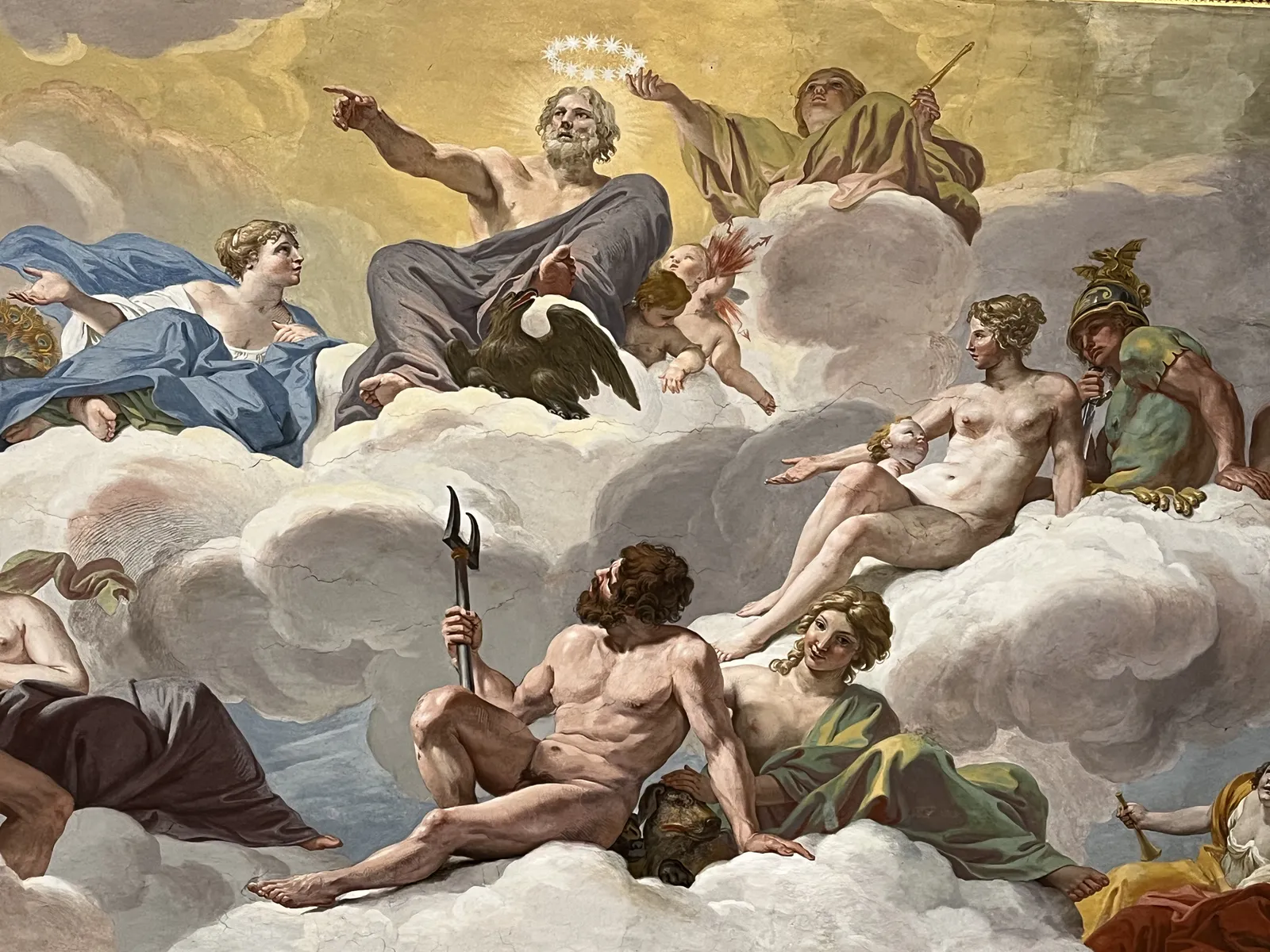
The Council of the Gods (detail)
Giovanni Lanfranco
In this celestial scene from The Council of the Gods (1624–25), Jupiter presides over Olympus, crowned with stars and flanked by his eagle. Surrounding him are Juno, Venus, Mars, and Pluto, their divine forms emerging from clouds. Painted for the Sala della Loggia in Villa Borghese, the fresco evokes the grandeur and illusionistic power of Baroque heaven.
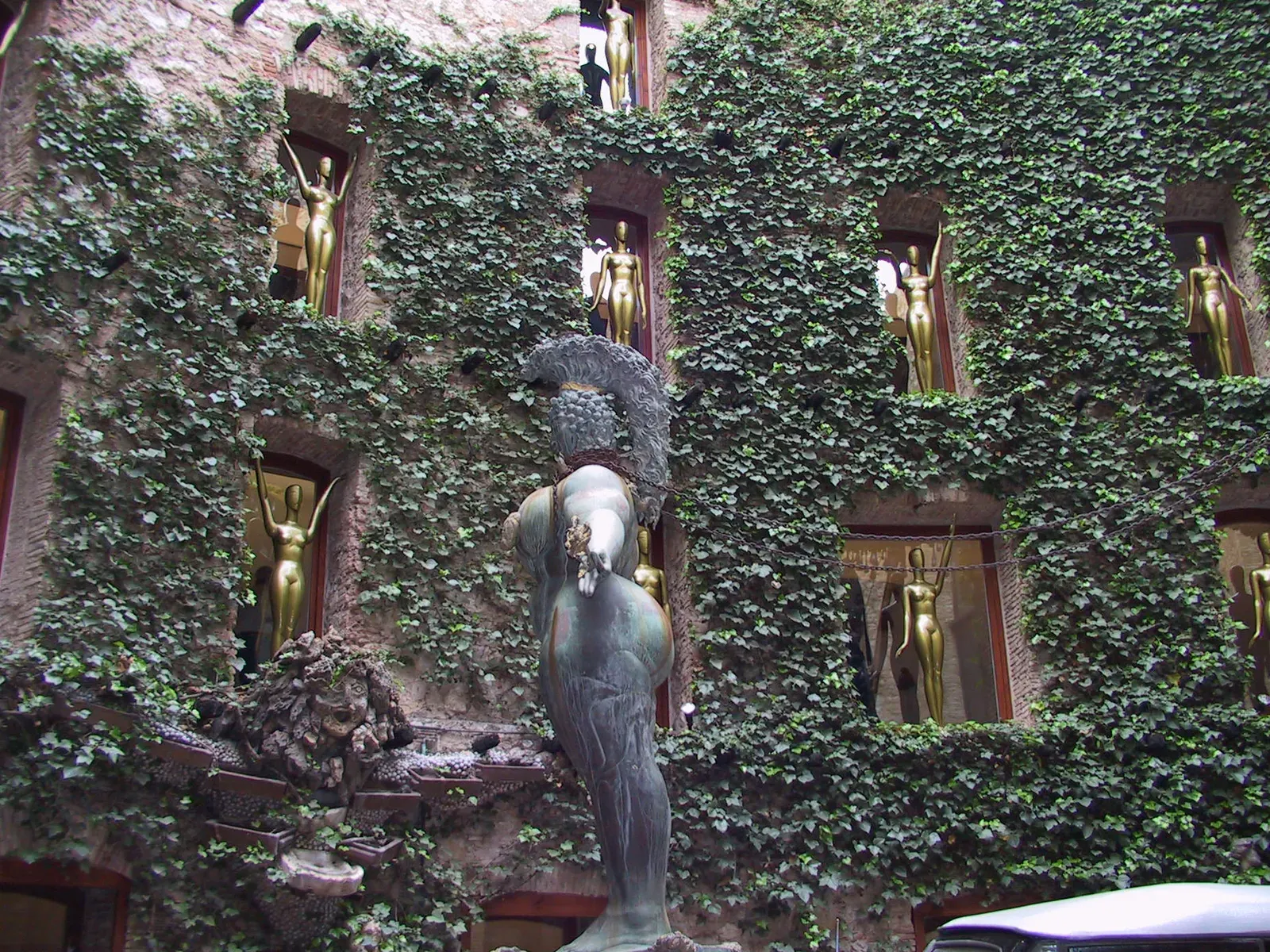
The Courtyard of the Wind Palace
Salvador Dalí
Dalí’s surreal installation (1970s) features golden female mannequins resembling votive icons in windows surrounding a central bronze figure of Venus crowned with a ship. This work merges classical motifs with theatrical elements, creating a fantastical vision of fertility, mythology, and voyeurism, showcasing Dalí’s unique blend of art and architecture.
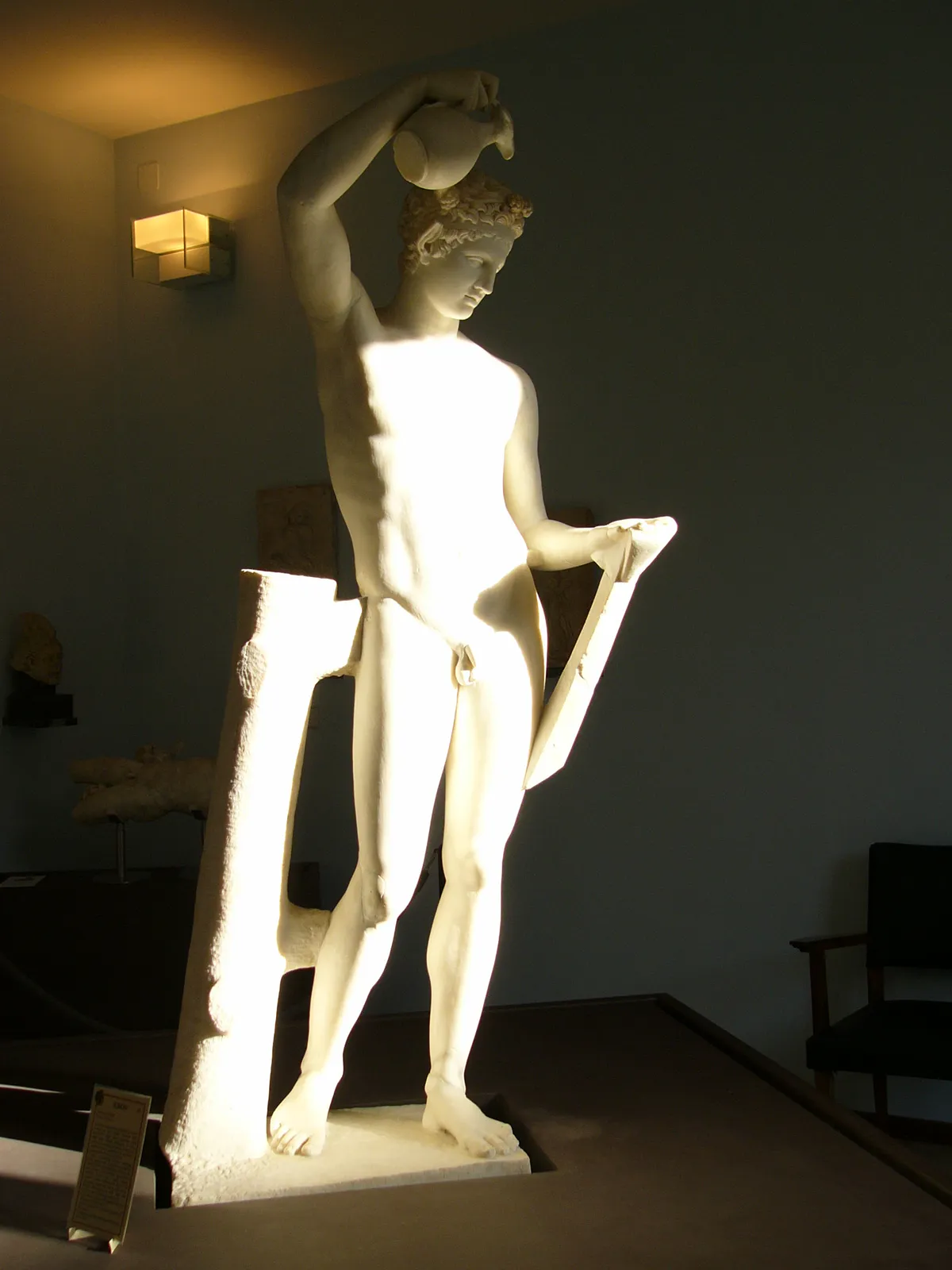
Satyr Pouring Wine
Praxiteles
This Roman marble statue is a copy of Praxiteles’ 4th-c. BC Greek original, depicting a youthful satyr, a companion of Dionysus, pouring wine. Though the pitcher and cup are missing, it captures the revelry and music linked to satyrs. Found near Naples in 1797, it exemplifies Praxiteles’ style with sinuous curves and a naturalistic pose, embodying the carefree spirit of Dionysian myth.
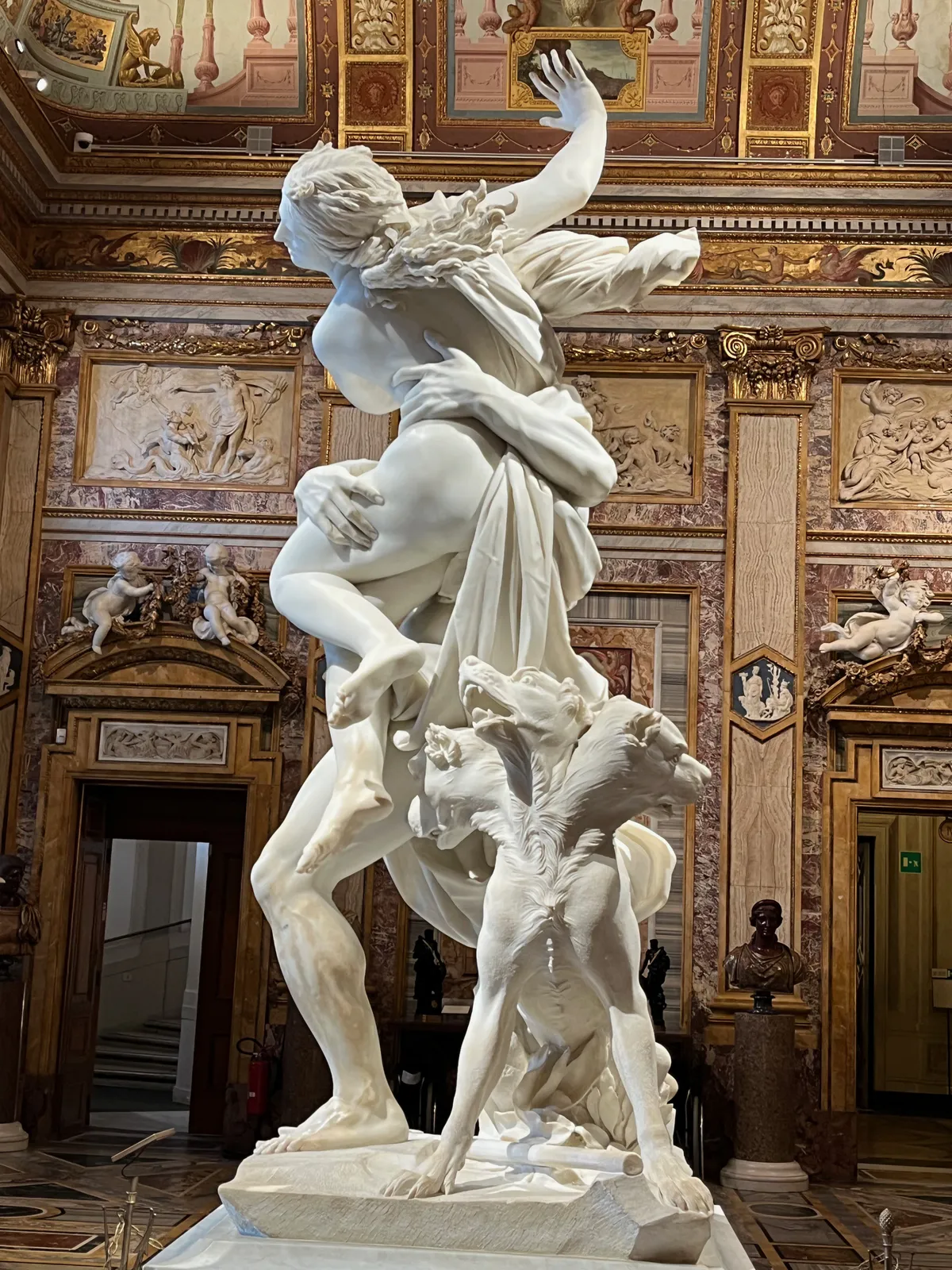
The Rape of Proserpina
Bernini
This angle captures the emotional arc of Proserpina’s resistance as she twists away from Pluto’s grasp. Her outstretched arm and flowing hair dramatize the violence of the abduction. Cerberus, the infernal hound, reinforces the mythological setting, while the composition’s spiral motion showcases Bernini’s virtuosity in carving living flesh from marble.
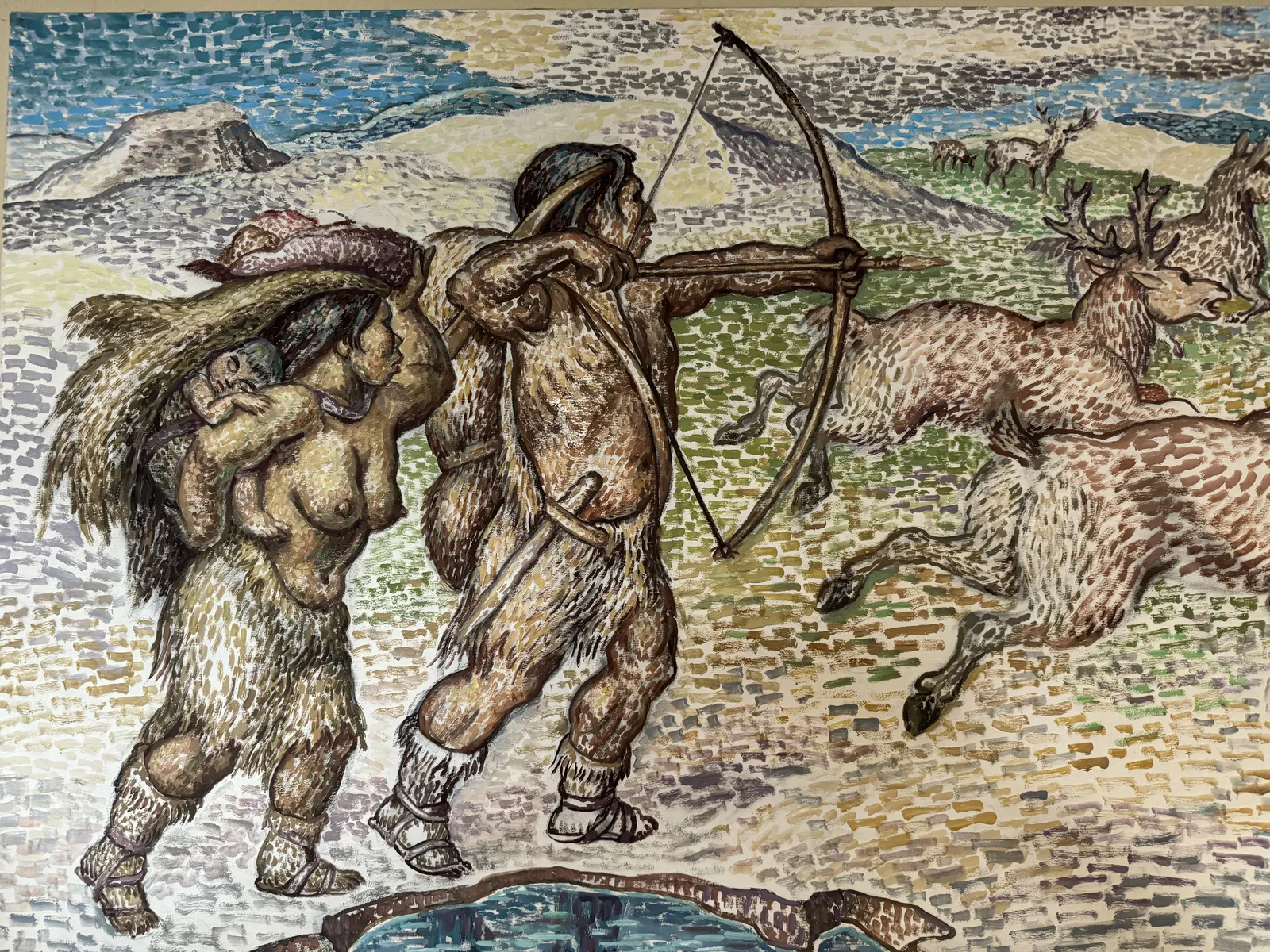
Prehistoric Hunt
Luis Alberto Acuña
This dynamic mural depicts a prehistoric hunting scene, with a male figure aiming his bow at deer while a woman, carrying a child and bundled goods, follows closely. Painted in Acuña’s signature neo-primitivist style (late 1960s-early 1970s), it reflects his interest in the mythic foundations of civilization and the daily heroism of early human life. The textured brushwork echoes rock art while grounding the composition in a modern, expressive idiom rooted in Colombian identity.
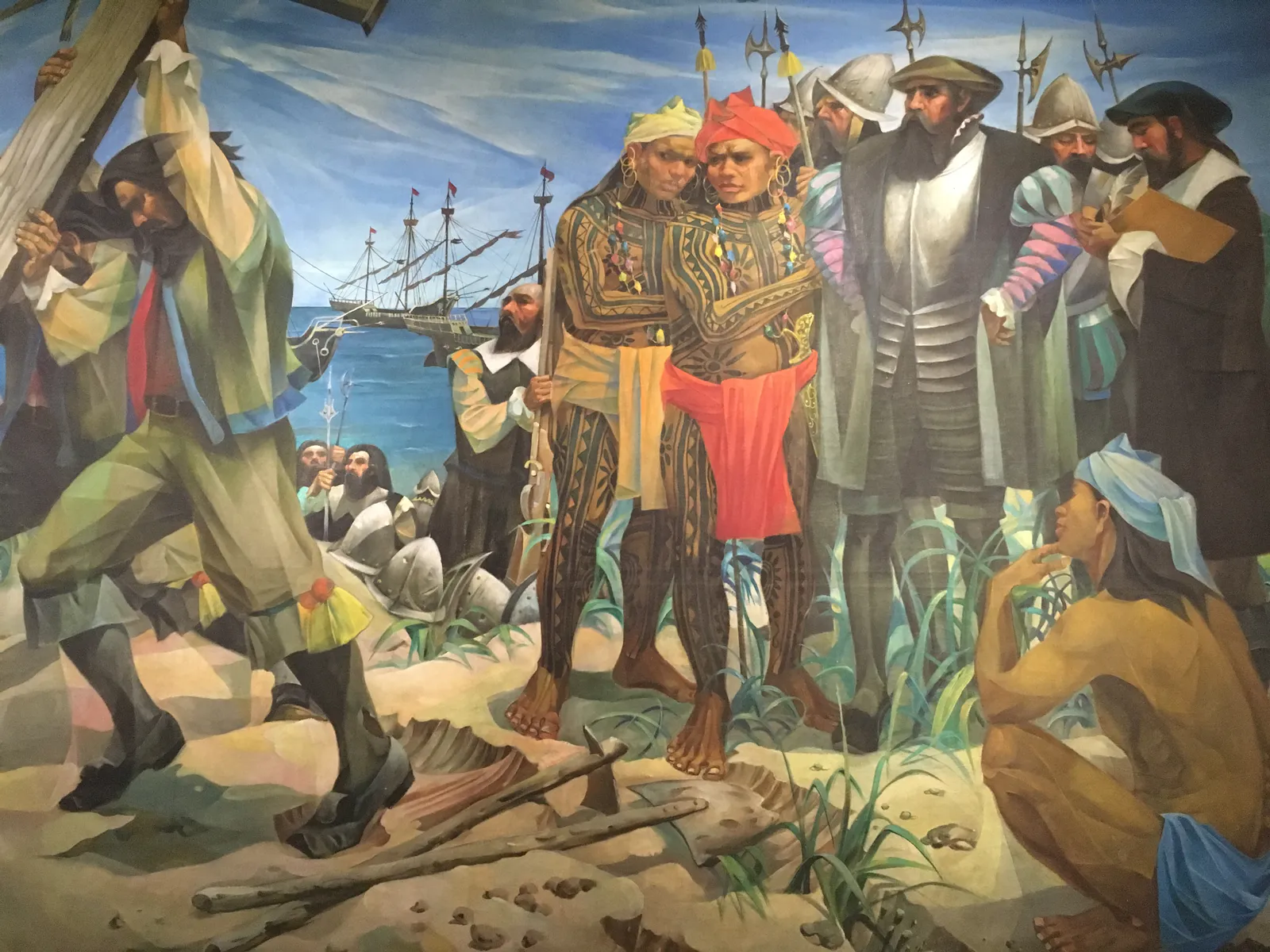
Planting of the First Cross
Vicente Manansala
The painting depicts the 1521 event in Cebu where Ferdinand Magellan and Spanish soldiers, with tattooed natives called pintados, planted a cross. Commissioned for the 400th anniversary of Philippine Christianization in 1965, it captures a pivotal historical moment. Manansala’s transparent cubism blends traditional and modern styles, highlighting cultural convergence. The original cross is a historical artifact in Cebu City.
“When the path is beautiful, do not ask where it leads.” — Zen proverb
Welcome to my travel photography!
“When the path is beautiful, do not ask where it leads.” — Zen proverb
Welcome to my travel photography!
For as long as I can remember, my path has been one of discovery—seeking beauty, timelessness, and connection in every corner of the world. It has also been a journey of deep learning and understanding. I’ve been an avid traveler (or perhaps a travel addict?) for most of my life. My love for travel began long before I ever left home: as a child, I drew a fantasy map of my grandparents’ apartment and “traveled” through it with my cousin Sonya, imagining adventures in every corner. Nearly 90 countries and countless moments of awe later, I’m excited to share this journey with you.
Thanks to the tireless and ingenious programming of Diagilev, we’re now able to present about fifteen percent of the images I’ve accumulated over the years. More will be released in small batches depending on your interest. While the first release leans toward museum photography, later ones will include more nature, architecture, culture, and general travel experiences. If you’d like to receive email notifications about new releases, feel free to reach out—no commercial use, ever.
Throughout my travels, I’ve been drawn to two intertwined kinds of discovery. One is intellectual: learning why the world is the way it is. History became my guide, shaping my perspective and filling my camera roll with museums and old buildings. To me, history is not the past—it is the key to understanding the present and how the world became what it is. The other is emotional: seeking moments of elevation—spirituality, beauty, harmony—often found in nature, monasteries, and ancient sacred spaces. Together, these impulses shape my photography. It invites you to learn, admire, and soar—to rise above the mundane and see the world through a lens of curiosity and wonder.
Much of my later travel became possible thanks to my job with Delta Air Lines, but the wanderlust began years earlier. By the time I joined the industry, I had already visited over 35 countries and lived in several—largely thanks to a backpacking journey around the world with Luis León, whose face appears in many early photos. I grew up in Ufa in the USSR, and since leaving it I have lived, studied, and worked in Latvia, the United States, France, South Korea, Canada, Spain, Italy, Brazil, Japan, and Colombia.
A life of near-constant movement may seem a little crazy, but it has deepened my understanding of the world and produced the photography you are about to see. Over the years, my style has evolved—more intentional, more refined—yet its core remains the same: a search for understanding, timeless beauty, and a connection to those who walked this earth long before us.
I hope these photos stir something in your soul, just as they did in mine. I’d love to hear from you—whether reactions, suggestions, corrections, or a request to be added to the email list for new releases (no commercial use, I promise). You can learn more about my travels here, and my academic life here.
Enjoy our shared journey!