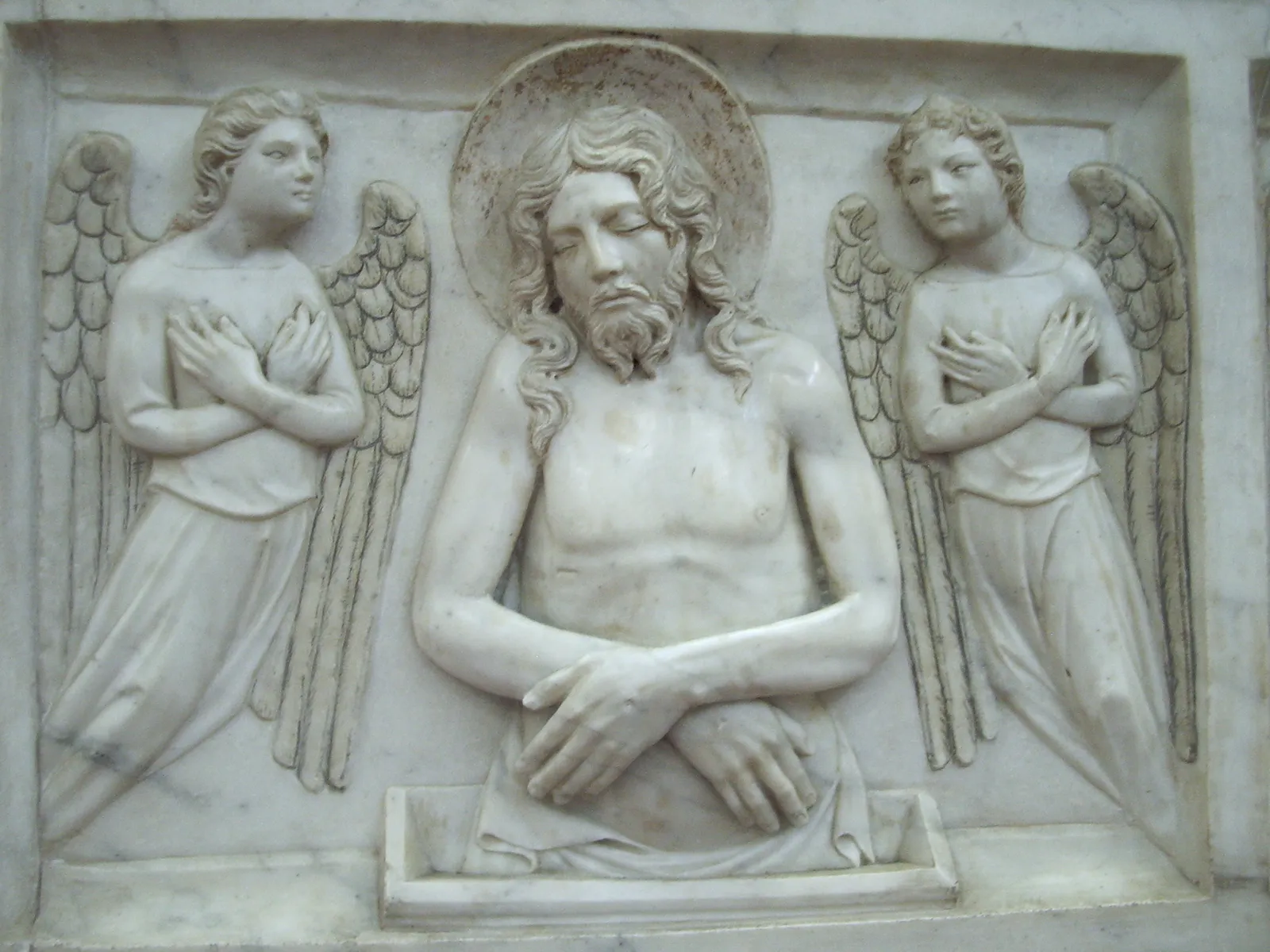
Tomb of Archbishop Scherlatti
Nino Pisano
This marble relief (c. 1300–1350) formed part of the tomb of Archbishop Scherlatti. Christ is depicted in the Imago Pietatis pose, rising from the tomb with eyes closed, flanked by two mourning angels. The scene blends devotional tenderness with refined Gothic elegance, exemplifying Nino Pisano’s lyrical style and the growing emotional realism in 14th-c. funerary art.
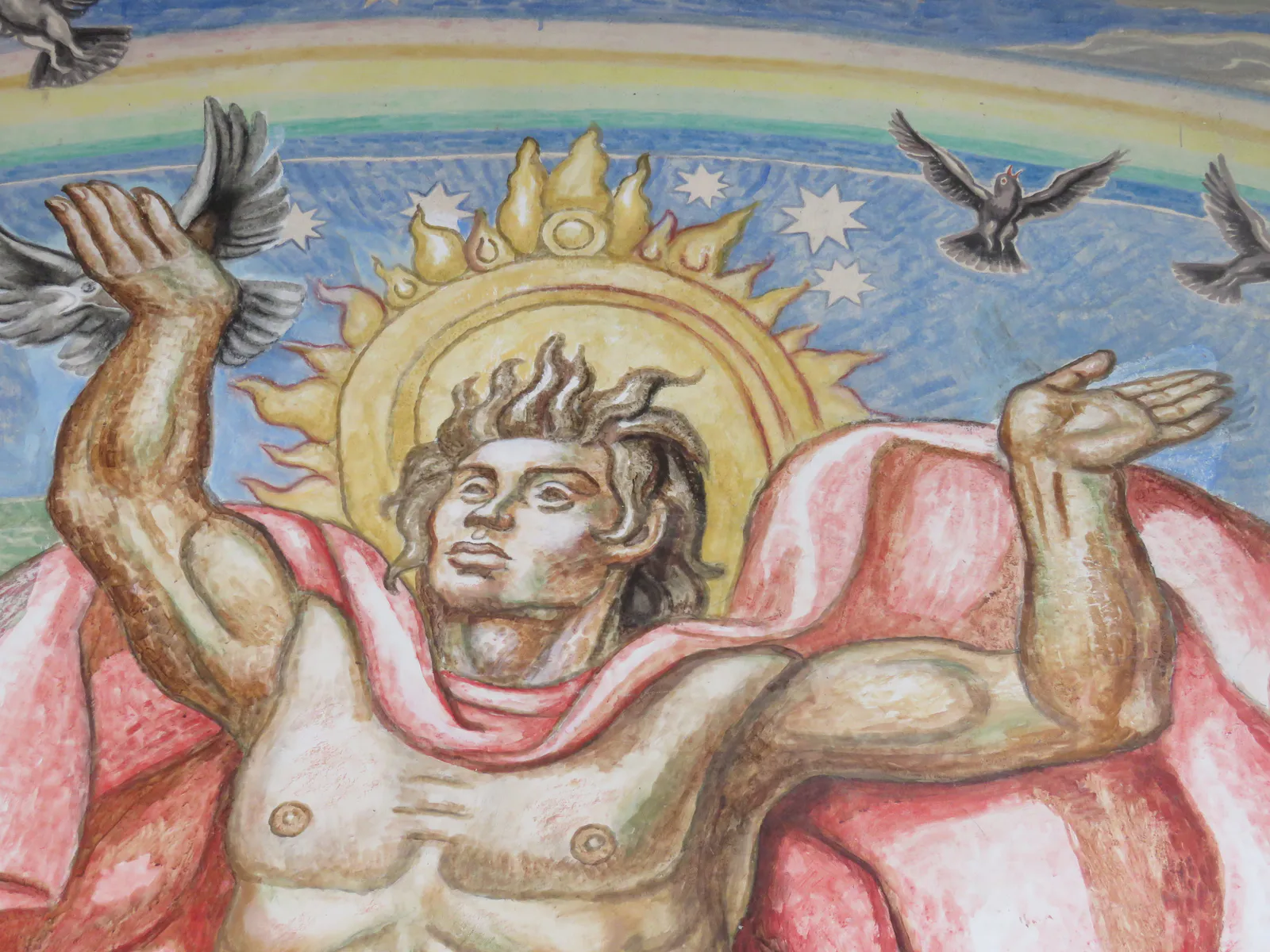
Chiminigagua Releases Light
Luis Alberto Acuña
Detail from a mural (1960–70s) reimagining the Chibcha creation myth. The supreme god Chiminigagua raises his arms as radiant birds burst forth, bringing light to the cosmos. A glowing sun and celestial rainbow crown the scene, marking the divine act that initiated life and order in the Muisca universe.
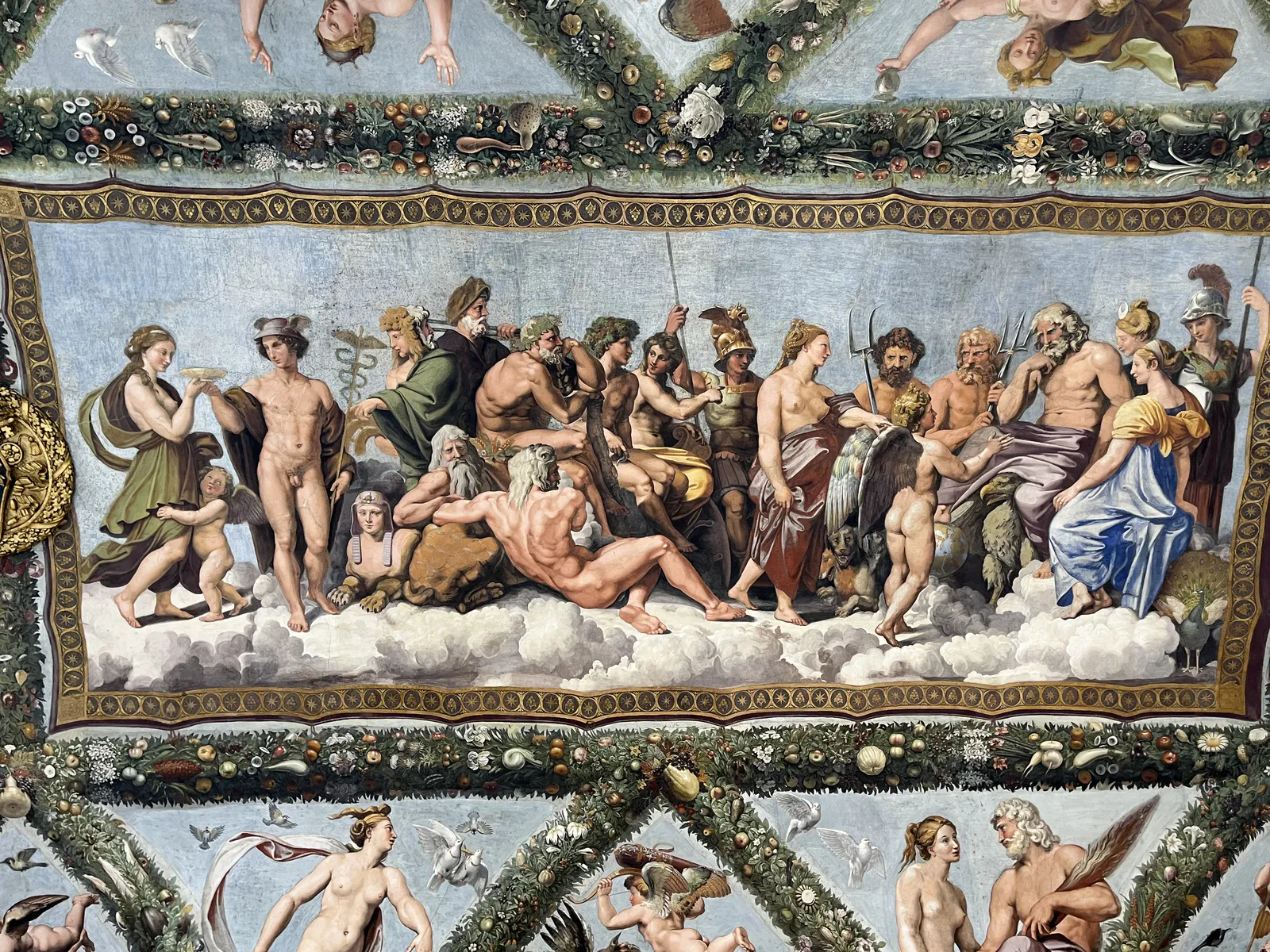
Council of the Gods
Raphael
In this scene (1518), Raphael depicts the gods deciding Psyche’s fate. Right to left: Minerva (helmet), Diana (with crescent moon), Jupiter (eagle below), Juno (blue robe), Neptune (trident), Pluto (bident, dog Cerberus), Venus (semi-nude, pointing), Mars (helmet). On the far left, Mercury (caduceus) leads Psyche to Olympus. Cupid kneels before Jupiter, pleading for Psyche’s immortality. The council embodies divine justice, granting the soul eternal union with love.
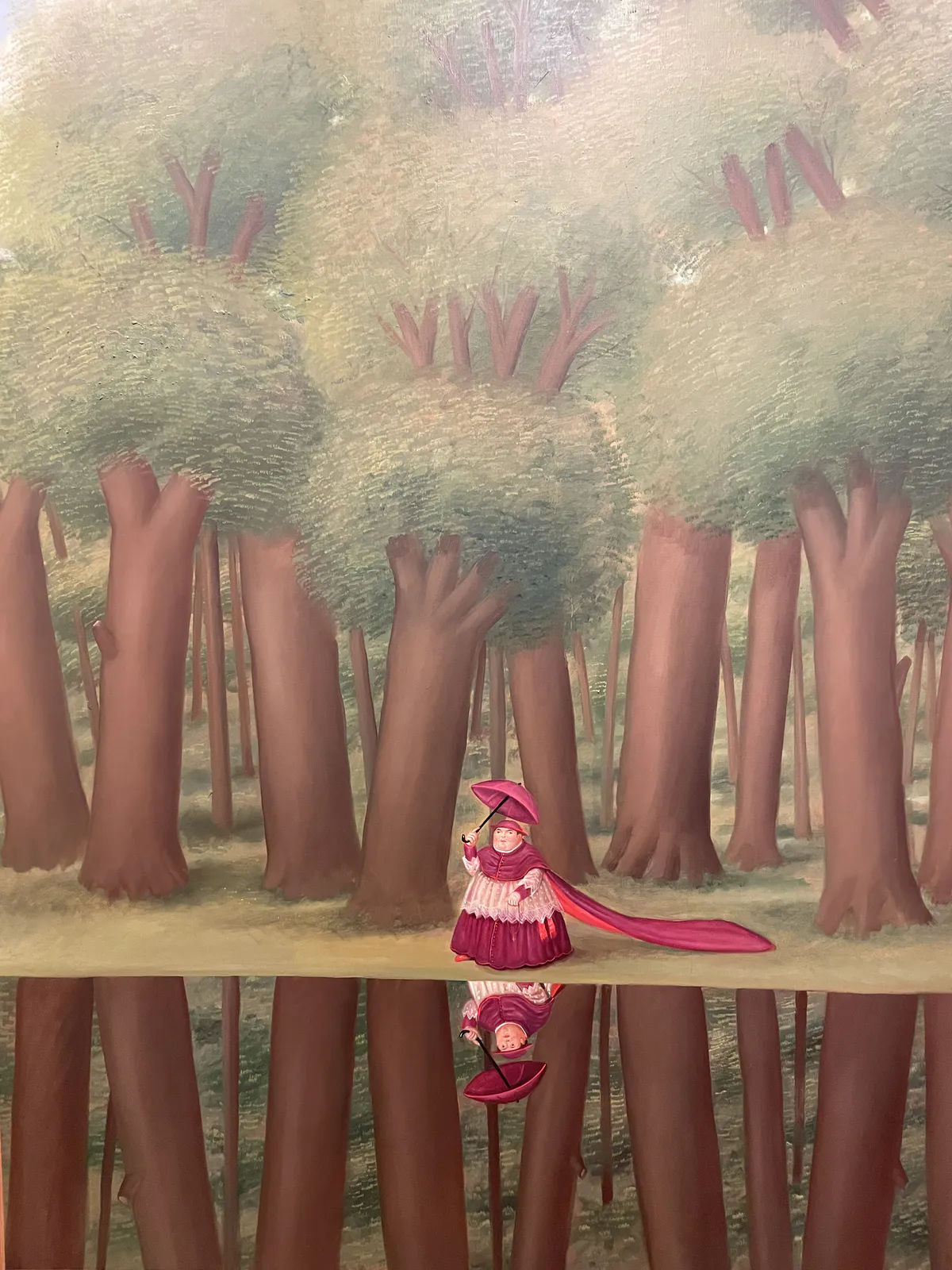
Woman with Umbrella
Fernando Botero
A solitary figure walks through a forest, her reflection mirrored below as if suspended between worlds. Her voluminous dress and umbrella contrast with the vertical rhythm of the trees. With surreal calm and poetic symmetry, Botero (1989) transforms a simple stroll into a meditation on solitude, identity, and the quiet theatricality of everyday life.
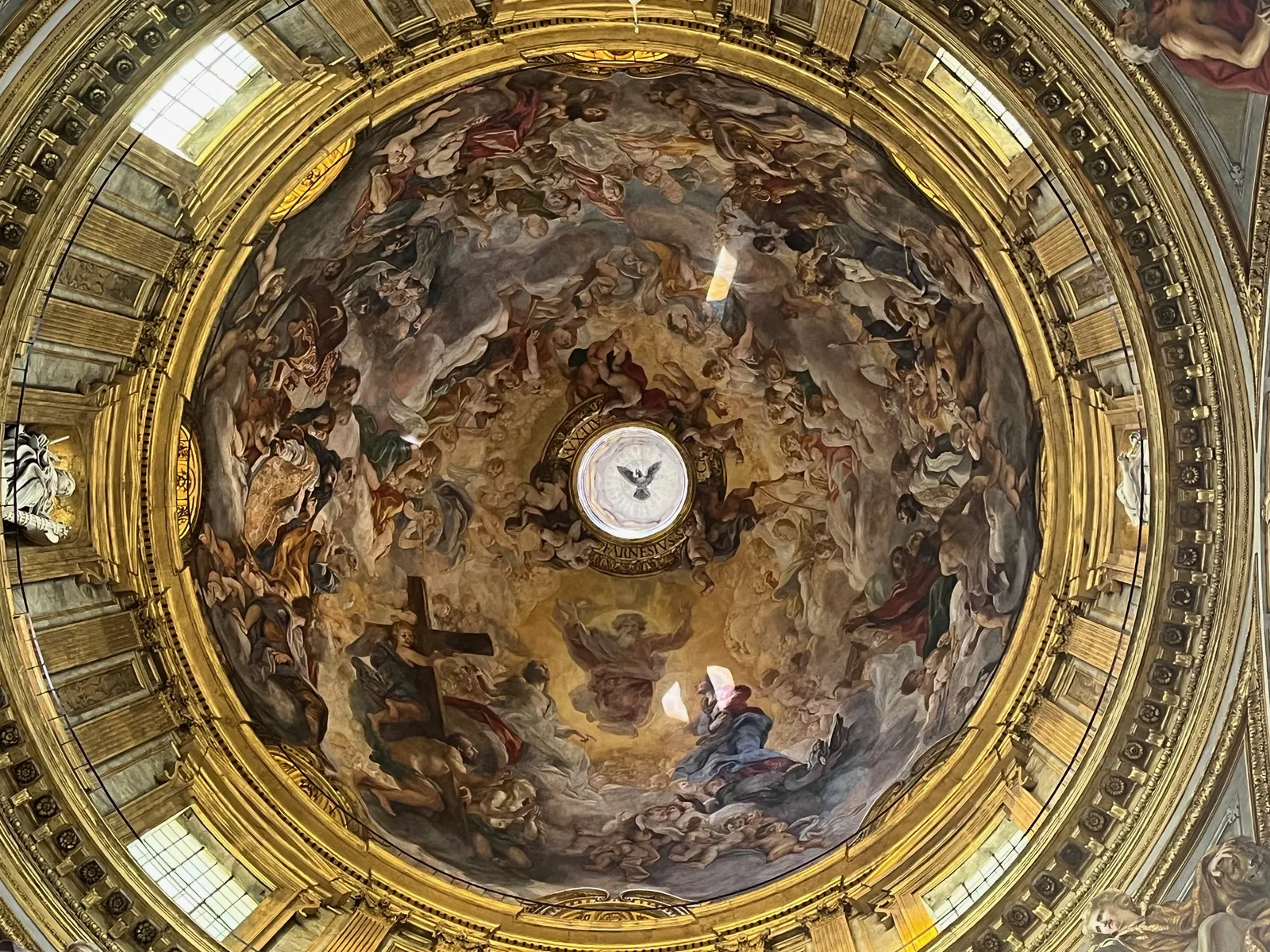
The Glory of the Holy Spirit
Giovanni Battista Gaulli
This radiant fresco (c. 1679) fills the dome with concentric rings of clouds, gilded ribs, and crowded figures. At the center, the Holy Spirit appears as a white dove in a glowing medallion, encircled by saints and angels swept upward in swirling light. The painted architecture merges with the real cornice, a Baroque illusion that makes the vault seem to open into a realm of revelation.
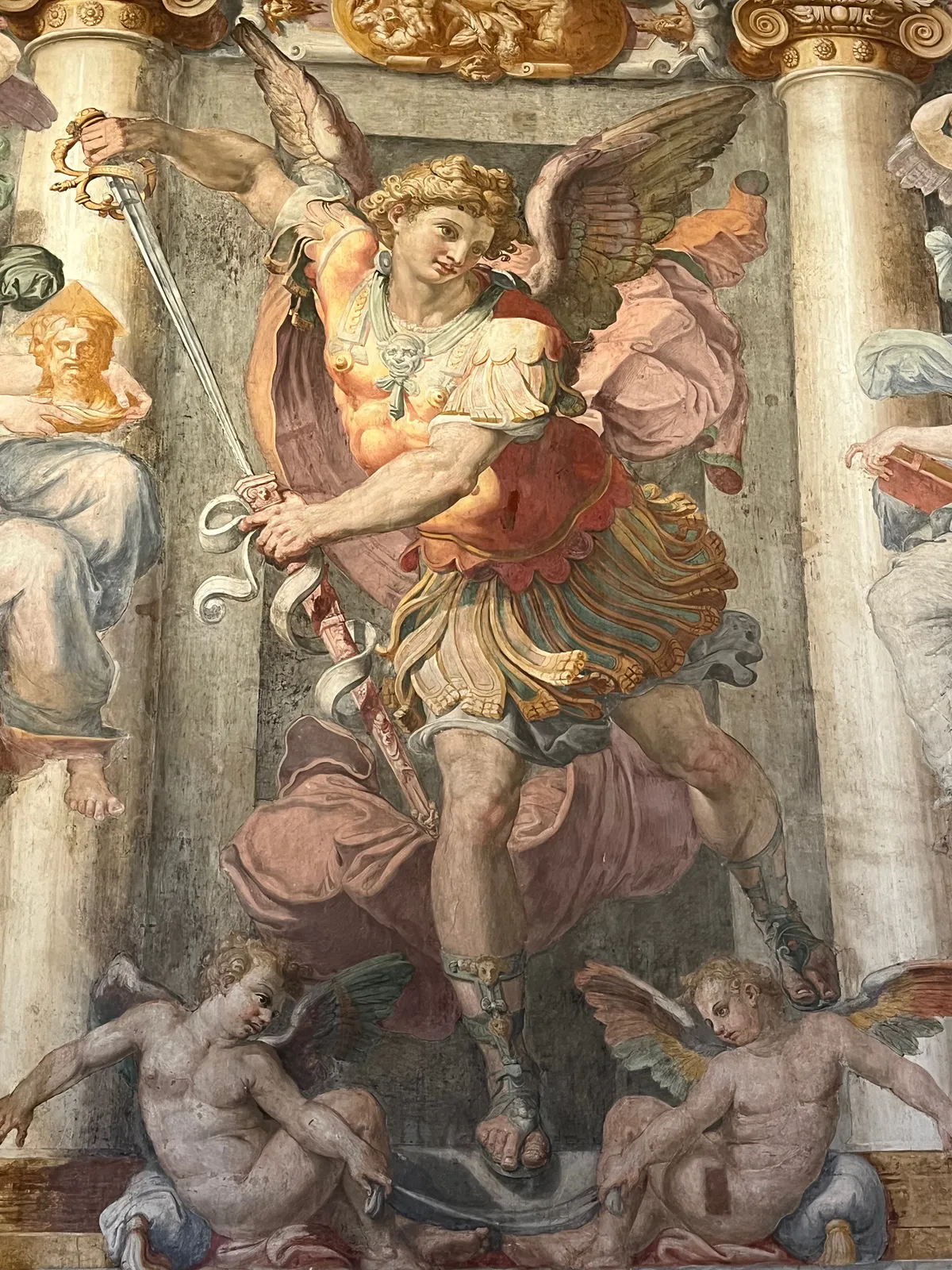
Saint Michael the Archangel
Pellegrino Tibaldi
This fresco (1545–46) in the Sala Paolina at Castel Sant'Angelo depicts the Archangel Michael sheathing his sword, symbolizing the end of the plague in 590. His muscular form and gilded armor convey divine justice and Roman salvation, highlighting the spiritual and civic authority of angelic intervention.
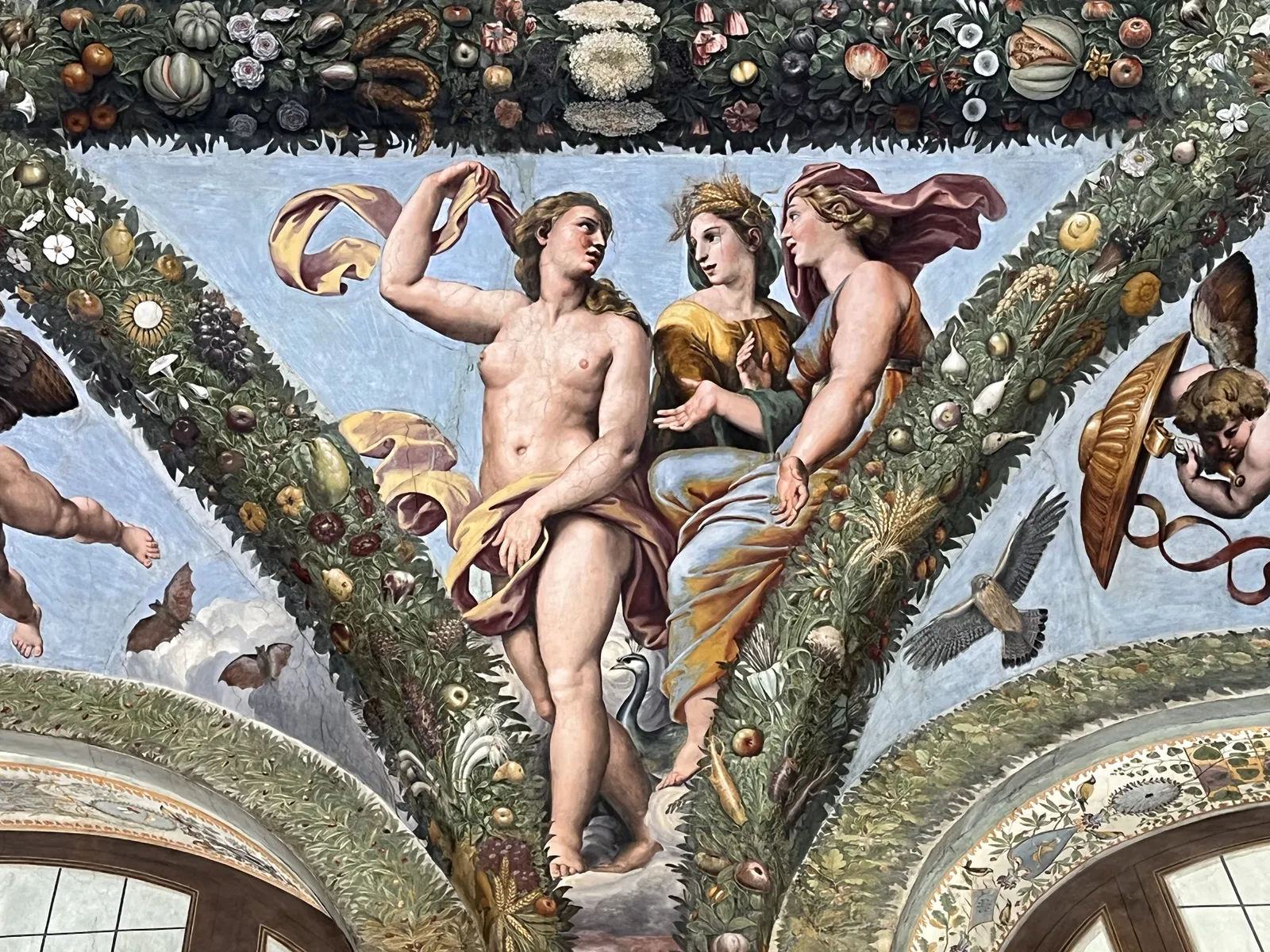
Venus Appeals to Ceres and Juno
Raphael, Giovanni da Udine
In this scene (1518), Raphael depicts Venus appealing to Ceres and Juno for vengeance on Psyche, but both goddesses refuse. The fresco illustrates the tension between divine power and mortal love. Da Udine’s elaborate botanical festoons frame the composition, enhancing its Renaissance richness.
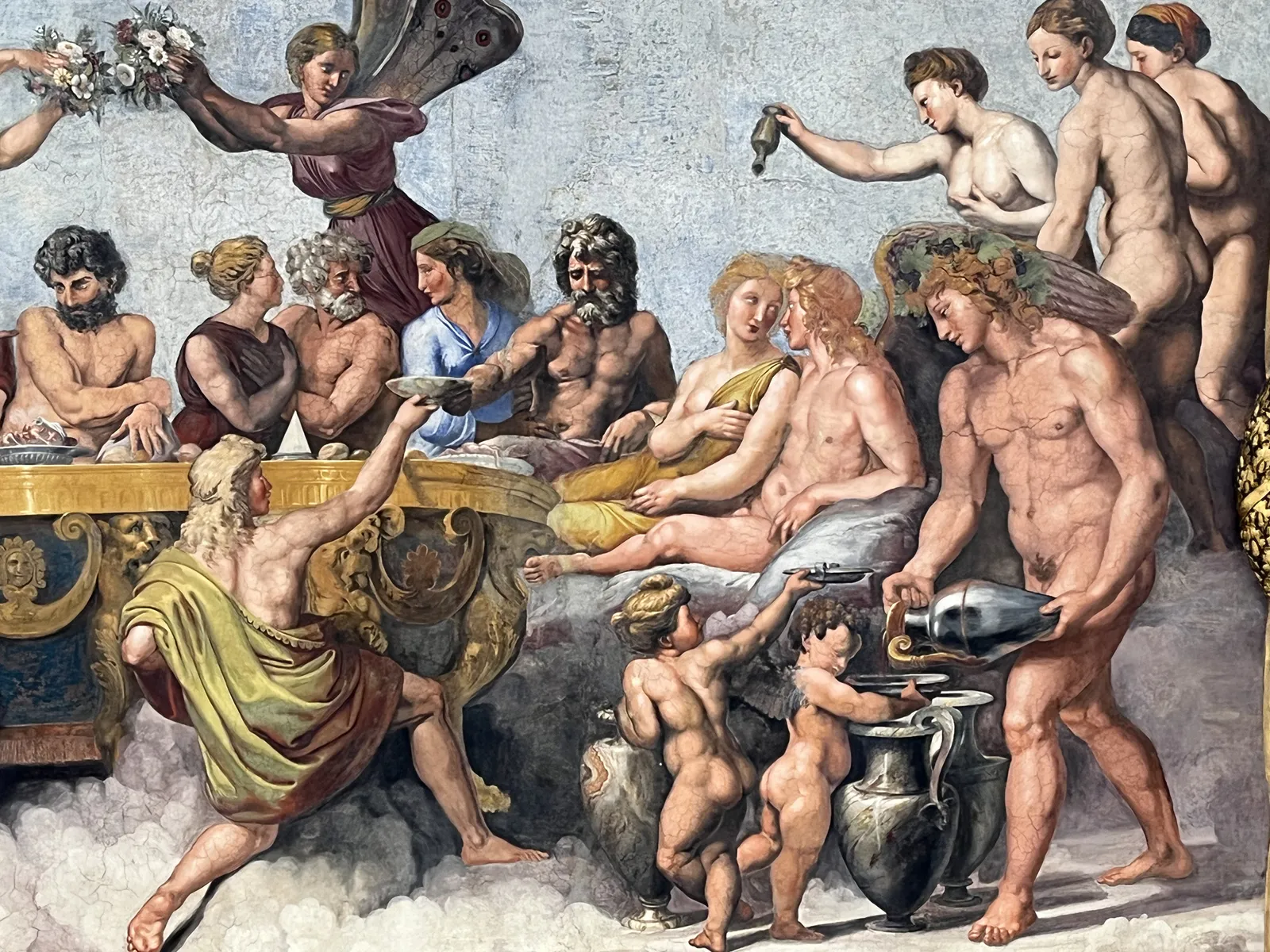
The Wedding Banquet of Cupid and Psyche
Raphael
In this fresco (1518–19), Raphael presents the divine banquet:on the left are Neptune, Persephone, Pluto, Juno, and Jupiter receiving a drink from Ganymede. On the right sit Psyche and Cupid, gazing at each other. In the foreground, Bacchus and a young satyr pour wine, highlighting the festive nature of Cupid’s immortal union with Psyche.
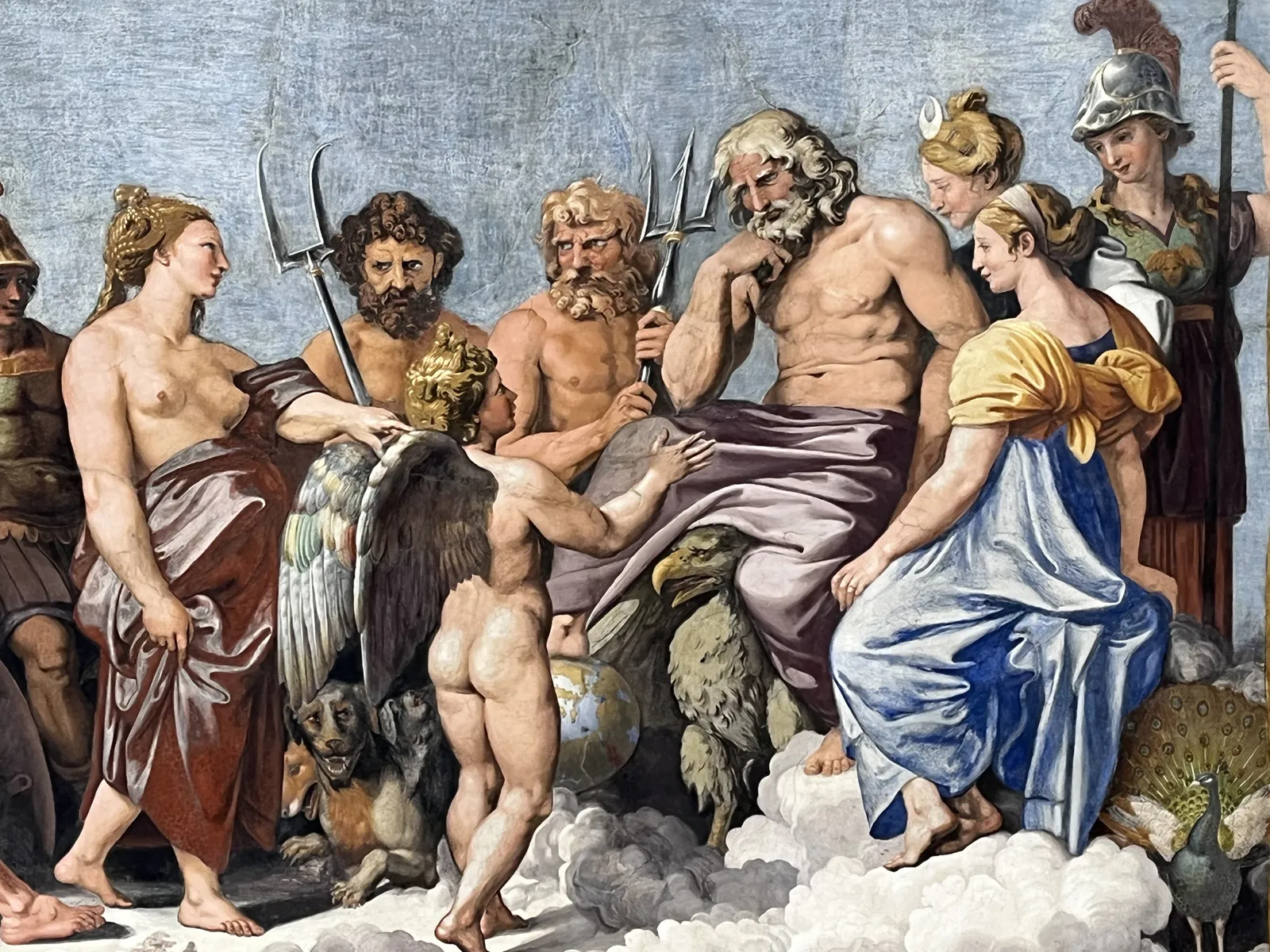
The Council of the Gods (detail)
Raphael
In this scene (1518), Raphael depicts Cupid pleading with Jupiter to grant Psyche immortality and approve their union. Jupiter, seated with his eagle, listens thoughtfully. Beside him are Juno (with peacock), Diana (with crescent moon), and Minerva (in armor). Venus stands bare-breasted beside her son, while Neptune (with trident) and Pluto (with bident and dog Cerberus) and Mars (in armor) observe from behind.
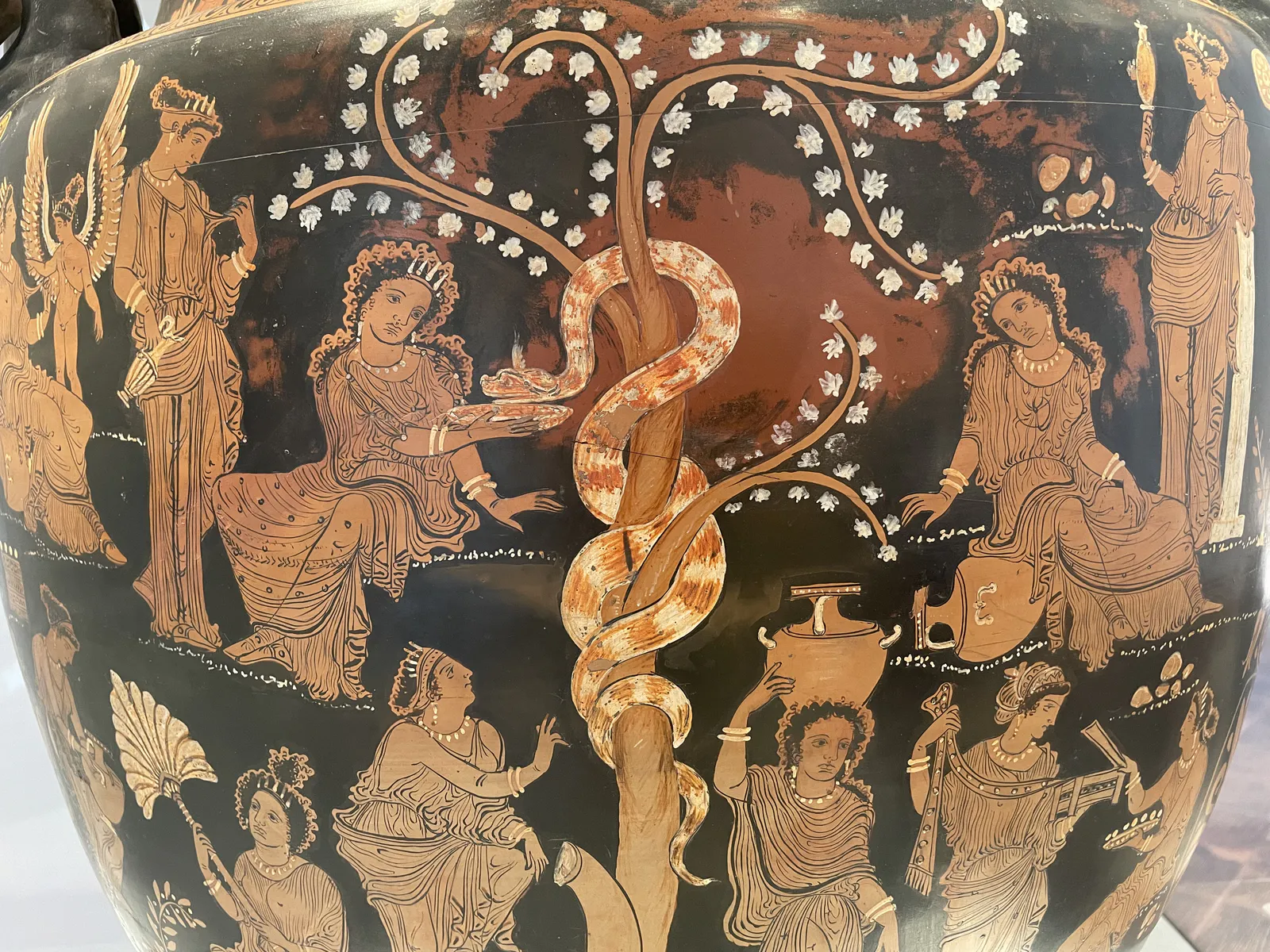
The Garden of the Hesperides
Lycurgus Painter
This Apulian red-figure volute krater (360–345 BC) shows maidens guarding the golden apples gifted by Gaia, with the serpent Ladon coiling around the sacred tree. Heracles is tasked with retrieving these apples in his final labor. The scene symbolizes the hero's triumph over peril, reflecting the ancient Greek themes of challenge and victory.
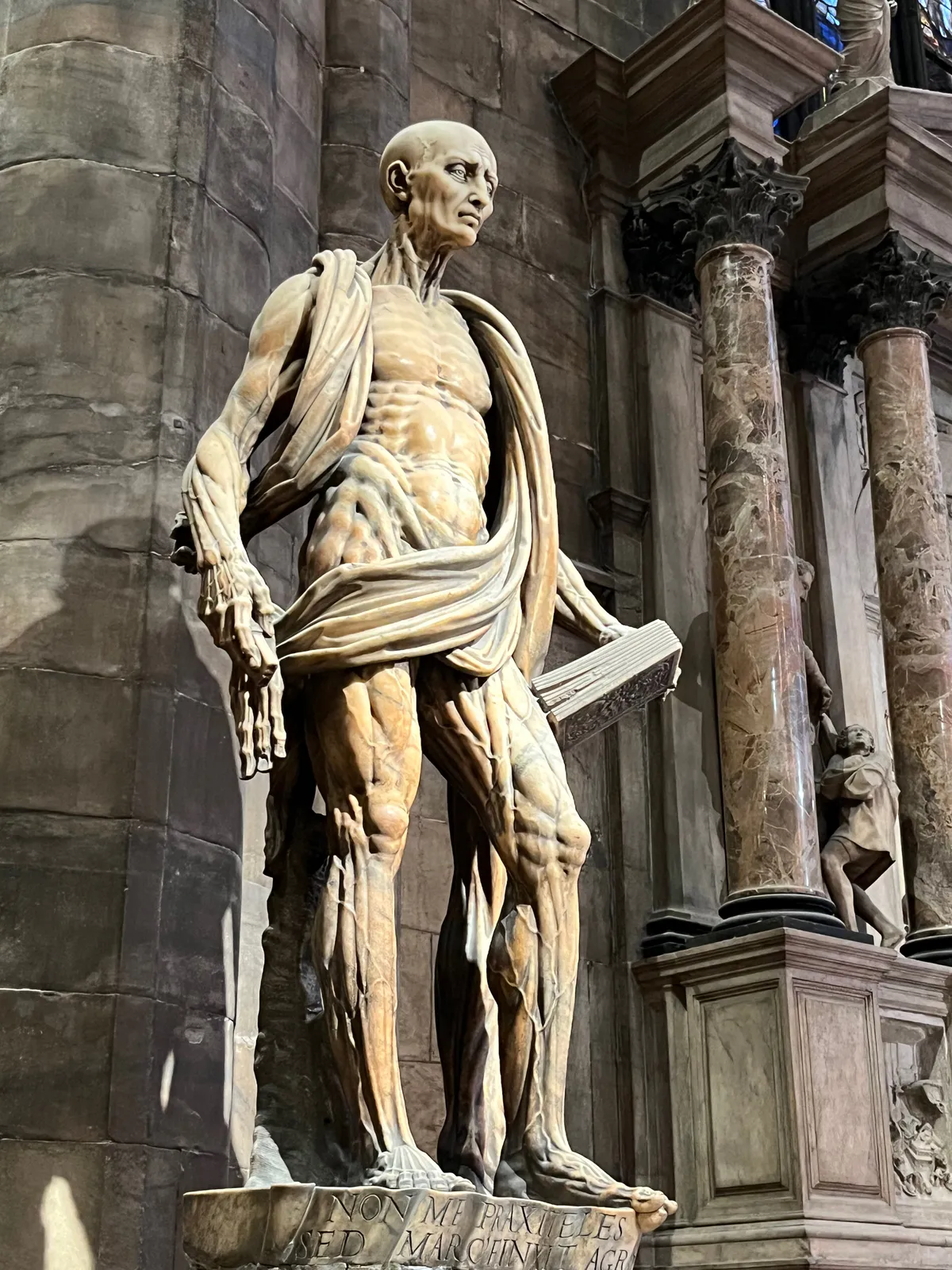
St Bartholomew Flayed
Marco d’Agrate
This marble statue (1562) shows St Bartholomew as a flayed figure, his own skin arranged like a draped garment around an exposed muscular body. Such extreme anatomical precision draws on Renaissance study of dissected cadavers. The saint’s upright stance and calm, frontal gaze demonstrate how martyrdom could be articulated as steadfast faith rather than physical defeat.
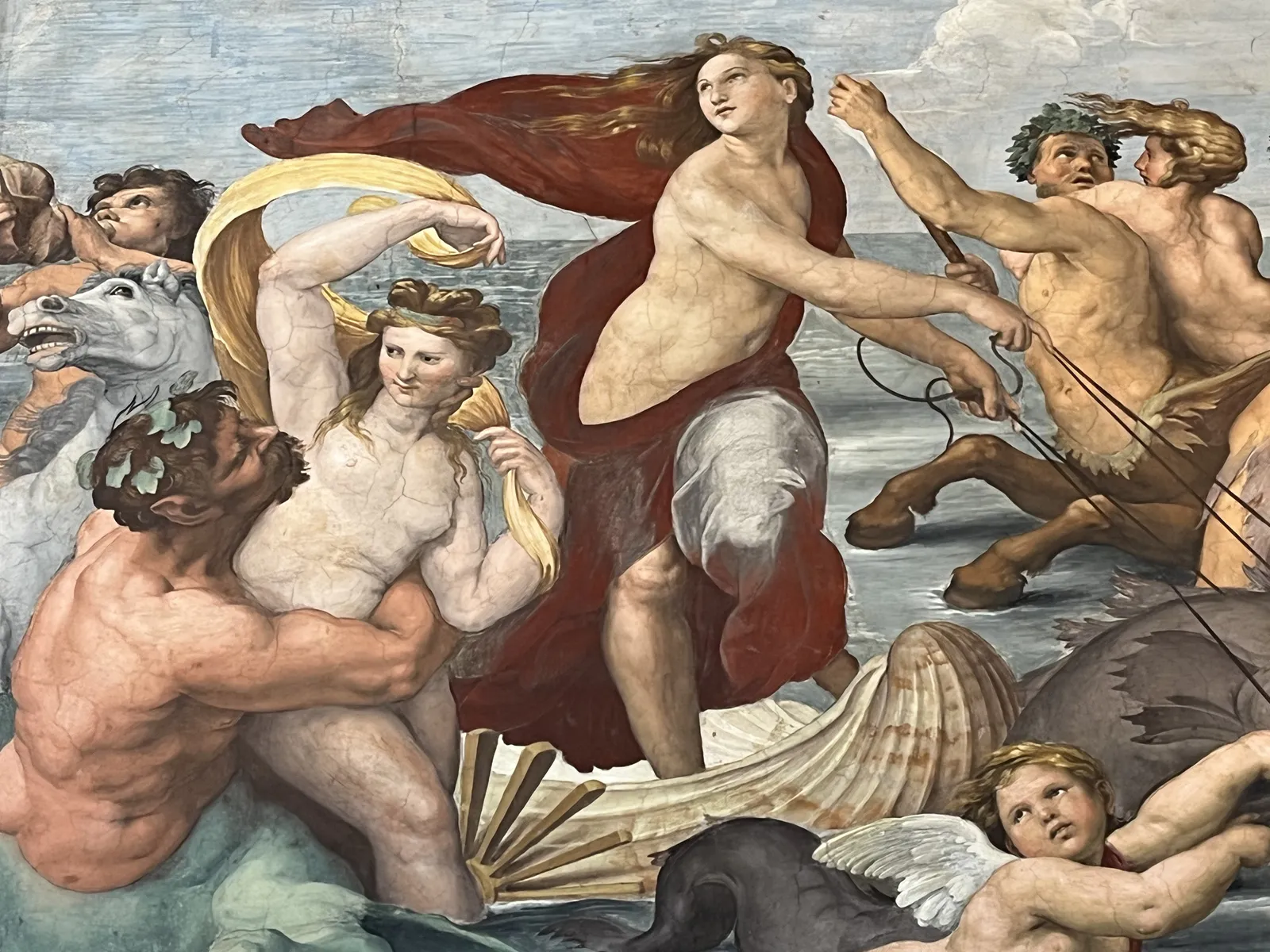
Triumph of Galatea (detail)
Raphael
This portion (1511–12) shows Galatea, the sea nymph of Greek myth, riding a dolphin-drawn shell chariot. Around her, tritons and nereids embody the vibrant energy of the sea. Raphael’s design celebrates Galatea’s beauty and grace, while capturing the joyful movement of the marine procession.
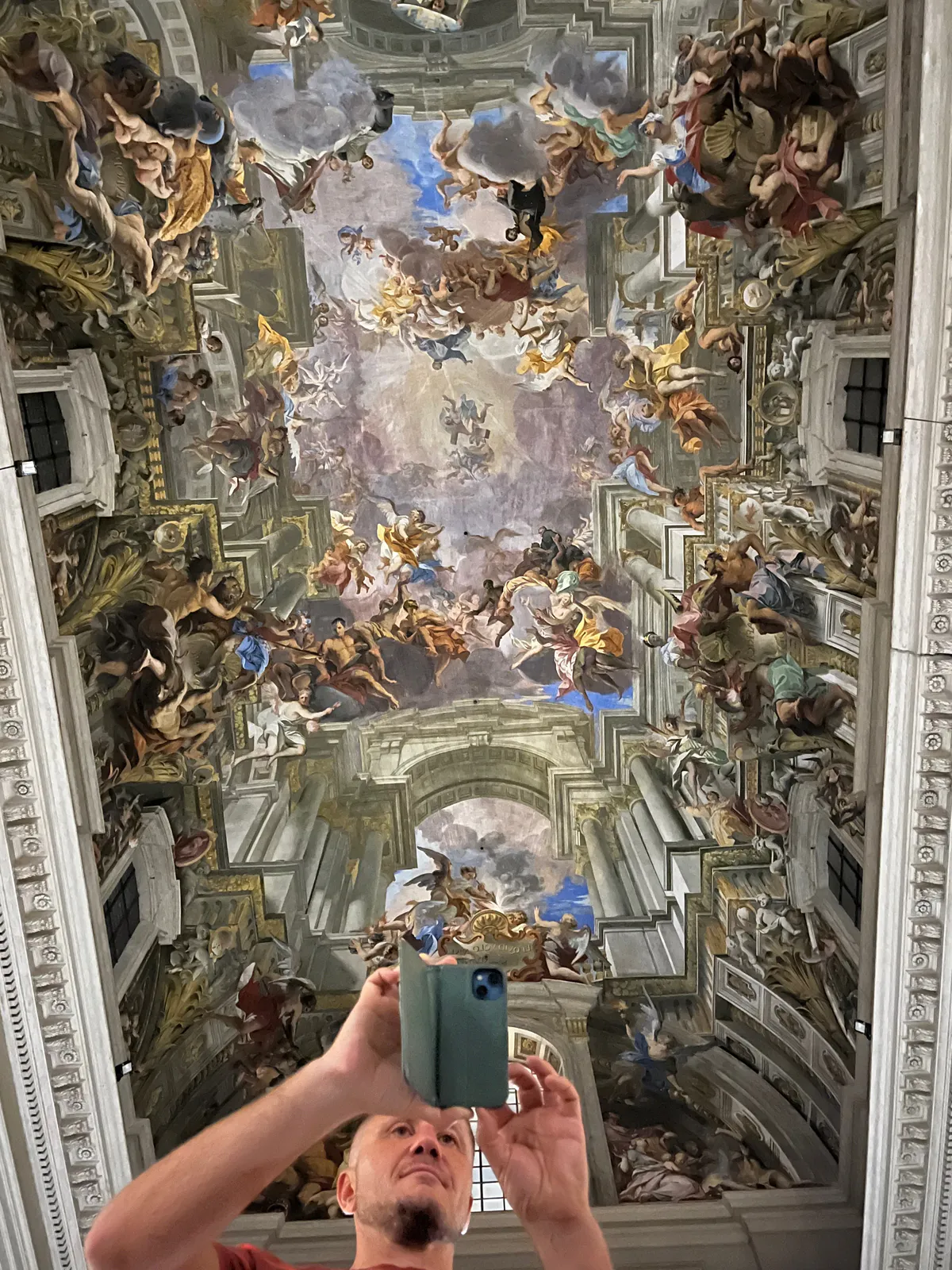
The Apotheosis of St. Ignatius
Andrea Pozzo
Max captures The Apotheosis of St. Ignatius (1685–1694) using a viewing mirror beneath the ceiling, enhancing Pozzo’s Baroque illusionism. This optical device unveils the masterful perspective that transforms the flat vault into a celestial vision, merging art and exemplifying the Baroque fascination with perspective: a dynamic interplay between earthly and divine realms.
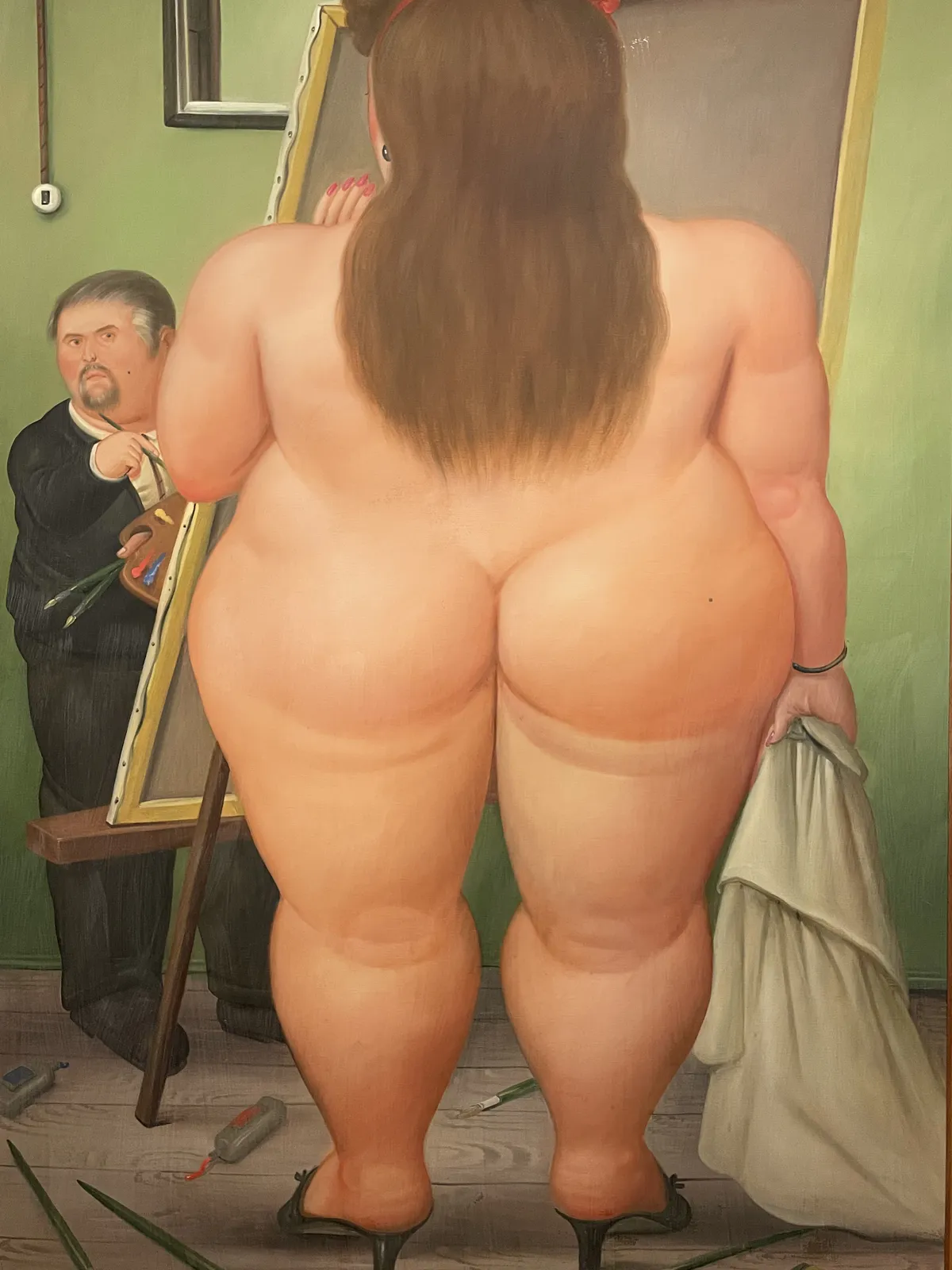
The Painter and His Model
Fernando Botero
Fernando Botero's The Painter and His Model (1984) humorously subverts the traditional artist-muse dynamic. The painting features a voluptuous nude model dominating the canvas, while the artist, dwarfed behind his easel, peers out with a palette in hand. This playful inversion highlights themes of power, beauty, and authorship, celebrating physical abundance with irony and affection. Botero's work invites reflection on the nature of artistic creation and the roles within it.
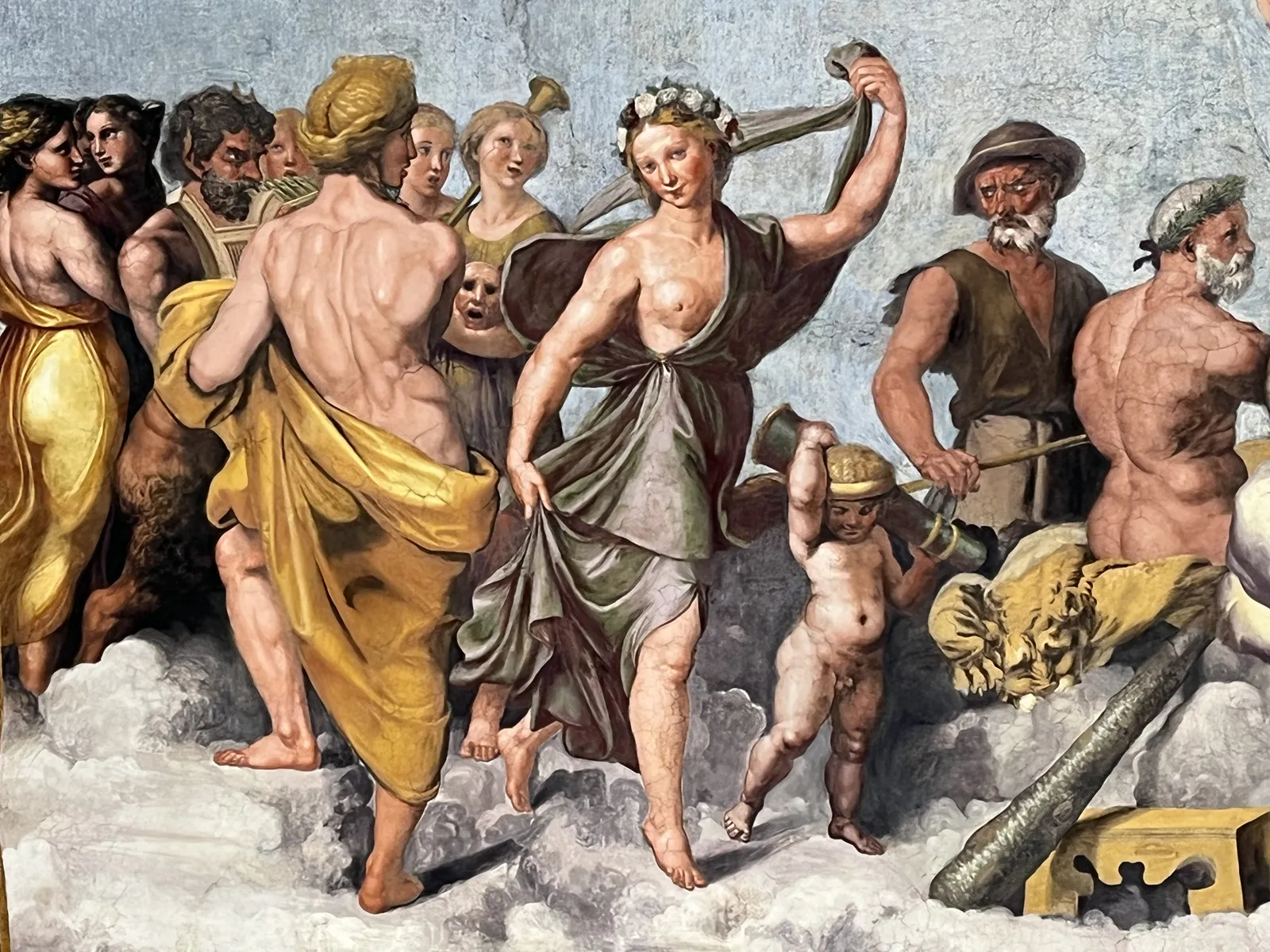
Dionysian Procession
Raphael
In this scene (1518), Raphael depicts Bacchus (Dionysus) leading a joyful procession of Maenads, Satyrs toward Cupid and Psyche’s wedding. The central Maenad, in ecstasy, embodies the Dionysian cult of revelry, blending divine intoxication with theatrical festivity.
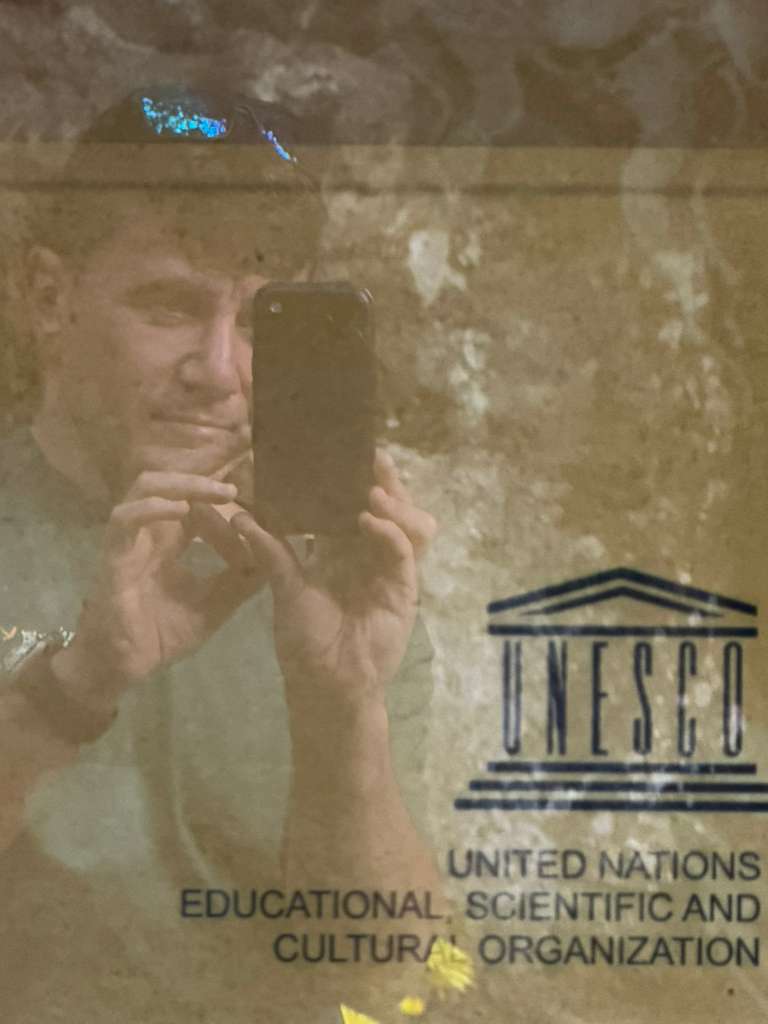
“When the path is beautiful, do not ask where it leads.” — Zen proverb
Welcome to my travel photography!
“When the path is beautiful, do not ask where it leads.” — Zen proverb
Welcome to my travel photography!
For as long as I can remember, my path has been one of discovery—seeking beauty, timelessness, and connection in every corner of the world. It has also been a journey of deep learning and understanding. I’ve been an avid traveler (or perhaps a travel addict?) for most of my life. My love for travel began long before I ever left home: as a child, I drew a fantasy map of my grandparents’ apartment and “traveled” through it with my cousin Sonya, imagining adventures in every corner. Nearly 90 countries and countless moments of awe later, I’m excited to share this journey with you.
Thanks to the tireless and ingenious programming of Diagilev, we’re now able to present about fifteen percent of the images I’ve accumulated over the years. More will be released in small batches depending on your interest. While the first release leans toward museum photography, later ones will include more nature, architecture, culture, and general travel experiences. If you’d like to receive email notifications about new releases, feel free to reach out—no commercial use, ever.
Throughout my travels, I’ve been drawn to two intertwined kinds of discovery. One is intellectual: learning why the world is the way it is. History became my guide, shaping my perspective and filling my camera roll with museums and old buildings. To me, history is not the past—it is the key to understanding the present and how the world became what it is. The other is emotional: seeking moments of elevation—spirituality, beauty, harmony—often found in nature, monasteries, and ancient sacred spaces. Together, these impulses shape my photography. It invites you to learn, admire, and soar—to rise above the mundane and see the world through a lens of curiosity and wonder.
Much of my later travel became possible thanks to my job with Delta Air Lines, but the wanderlust began years earlier. By the time I joined the industry, I had already visited over 35 countries and lived in several—largely thanks to a backpacking journey around the world with Luis León, whose face appears in many early photos. I grew up in Ufa in the USSR, and since leaving it I have lived, studied, and worked in Latvia, the United States, France, South Korea, Canada, Spain, Italy, Brazil, Japan, and Colombia.
A life of near-constant movement may seem a little crazy, but it has deepened my understanding of the world and produced the photography you are about to see. Over the years, my style has evolved—more intentional, more refined—yet its core remains the same: a search for understanding, timeless beauty, and a connection to those who walked this earth long before us.
I hope these photos stir something in your soul, just as they did in mine. I’d love to hear from you—whether reactions, suggestions, corrections, or a request to be added to the email list for new releases (no commercial use, I promise). You can learn more about my travels here, and my academic life here.
Enjoy our shared journey!