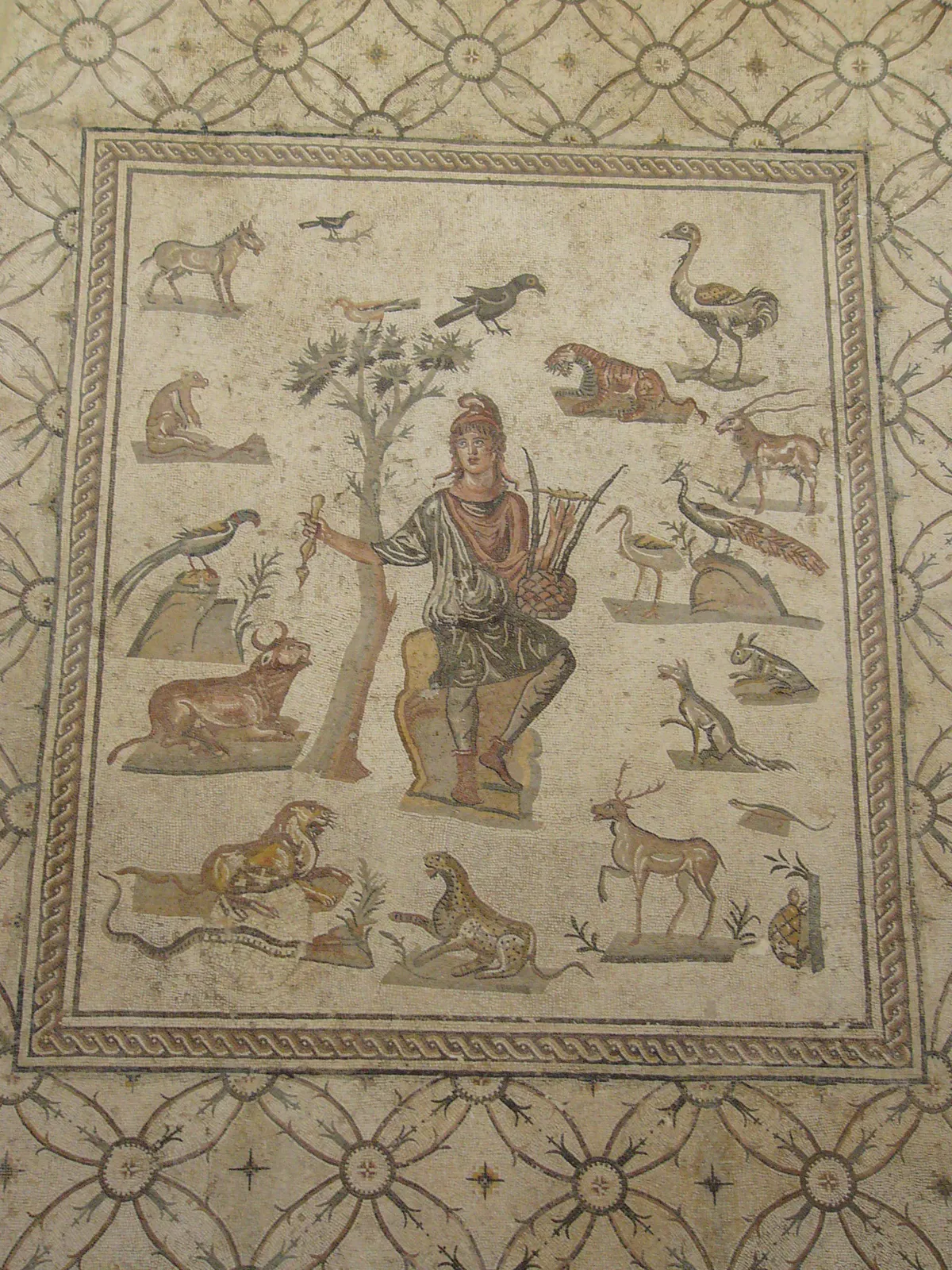
Roman Mosaic of Orpheus Among Animals
This Roman mosaic (c. 250 AD) from Palermo depicts Orpheus, the legendary Greek musician, enchanting animals with his lyre. It illustrates Orpheus’s mythical power to charm all living creatures, showcasing the enduring allure of his story. As a significant example of Roman mosaic art, it reflects the cultural fascination with music and myth in antiquity.
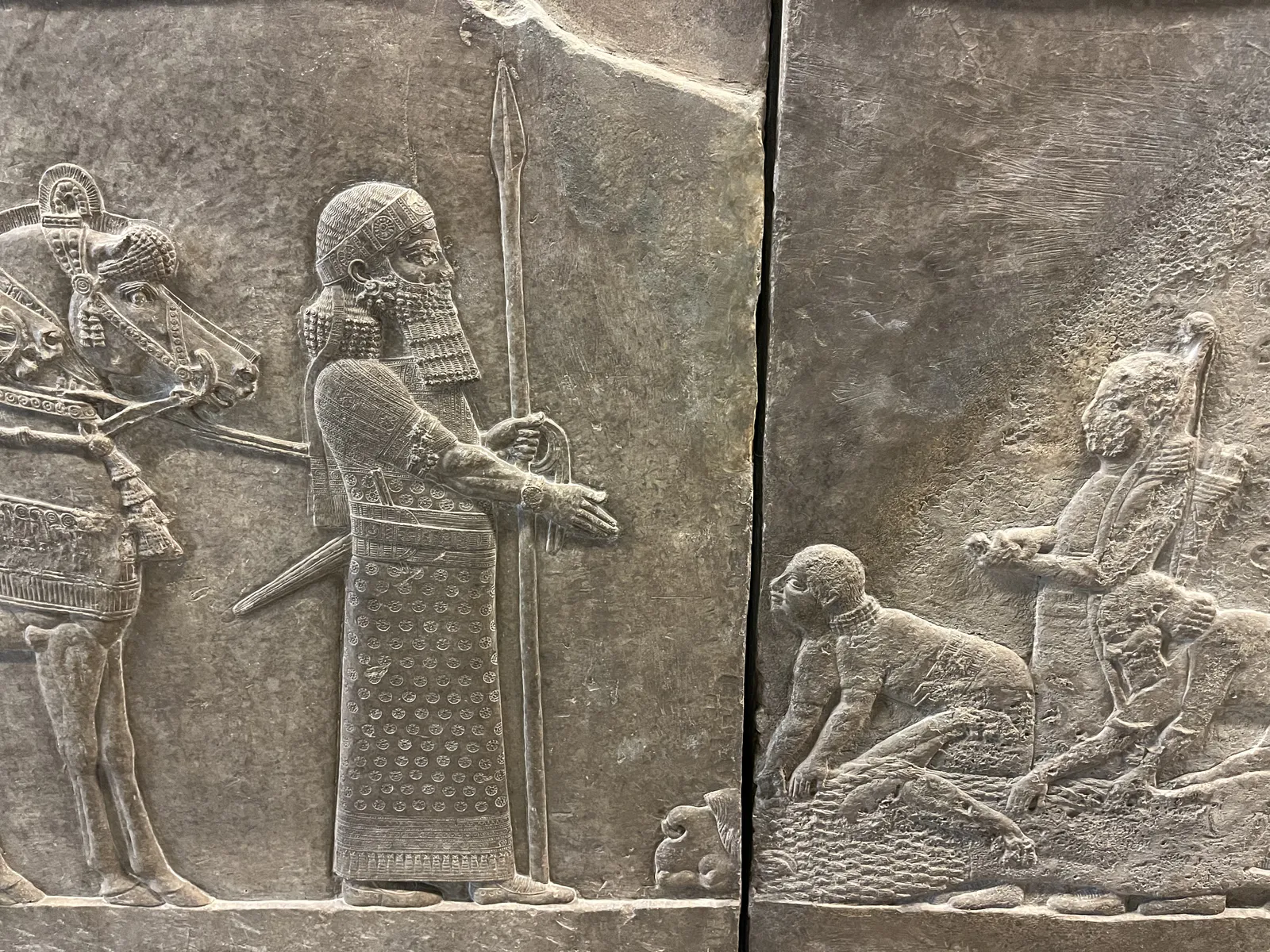
Ashurbanipal and the Dying Lioness
This Assyrian relief (645–635 BC) depicts King Ashurbanipal overseeing a lion hunt, symbolizing royal power. The mortally wounded lioness is portrayed with vivid realism, emphasizing the king’s supremacy over nature. Such scenes affirmed Ashurbanipal’s divine right to rule, showcasing his might and reinforcing his status as a protector, embodying the Assyrian ideal of kingship through conquest and control.
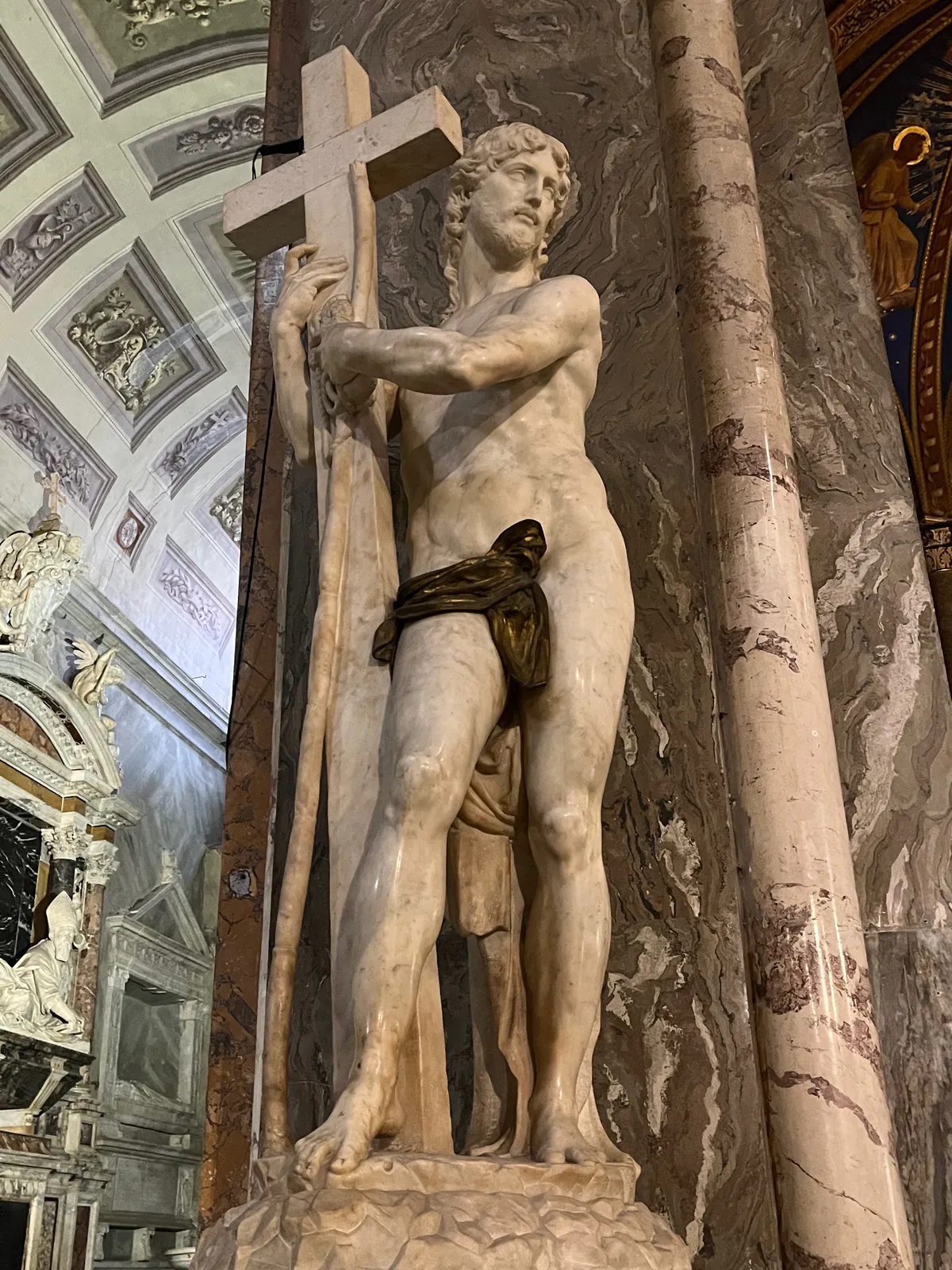
The Risen Christ
Michelangelo
Michelangelo's The Risen Christ (1521) depicts the resurrected Christ holding a cross, symbolizing triumph over death. This marble statue embodies Renaissance humanism, blending classical beauty with spiritual dignity. The idealized nude form reflects the fusion of divine suffering and victory, showcasing Michelangelo's mastery in capturing both physical perfection and profound spiritual themes.
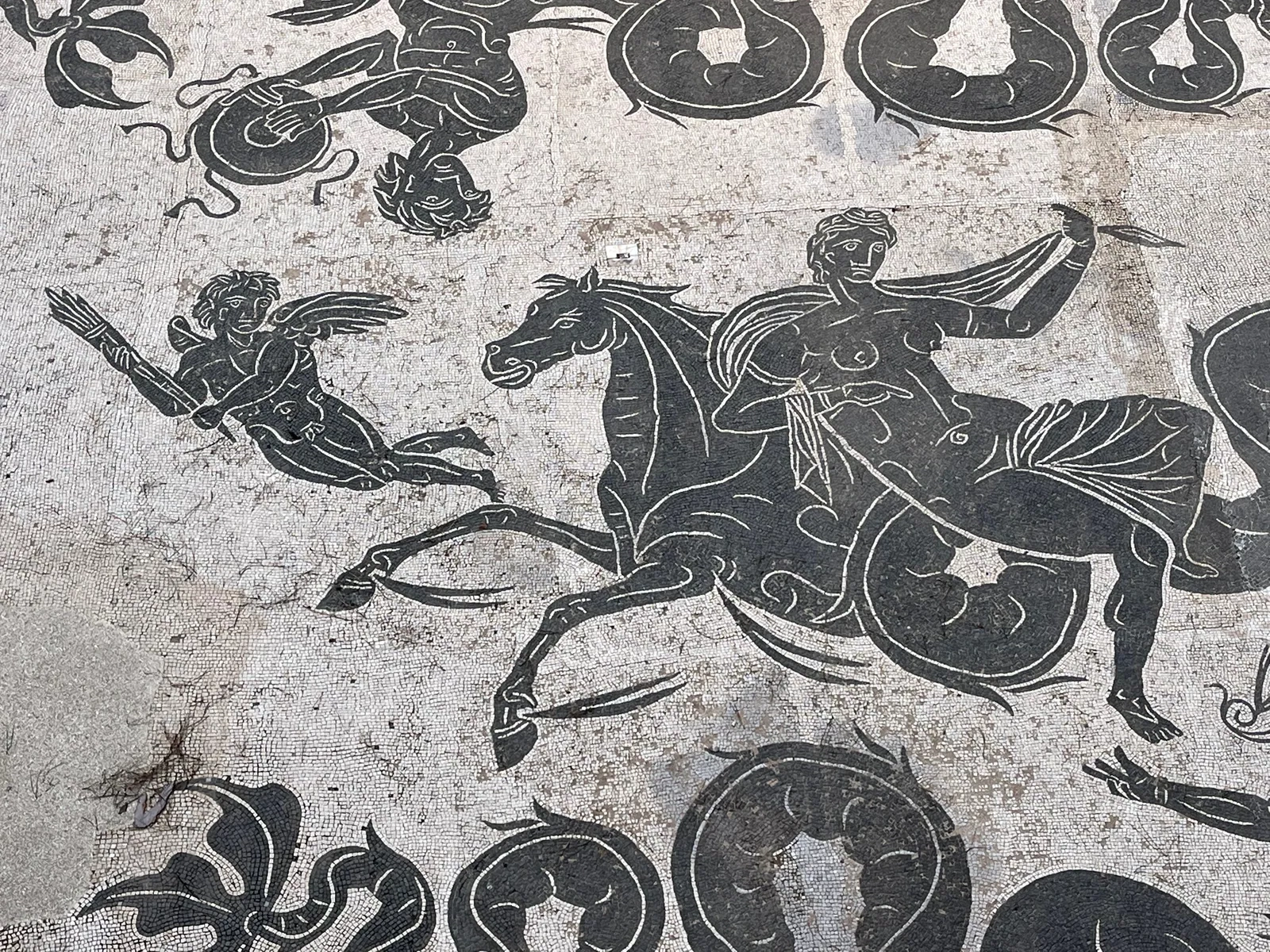
Venus and Eros in Marine Procession
In this section of the 2nd-century AD Neptune Mosaic from the Baths of Neptune, Venus rides a sea-horse with her drapery billowing, accompanied by Eros holding arrows. This imagery balances Poseidon's power with Venus's allure, symbolizing the sea's generative forces and the union of divine realms in Roman mythology. The mosaic reflects the Roman appreciation for harmony between strength and beauty, illustrating cultural values of balance and unity.
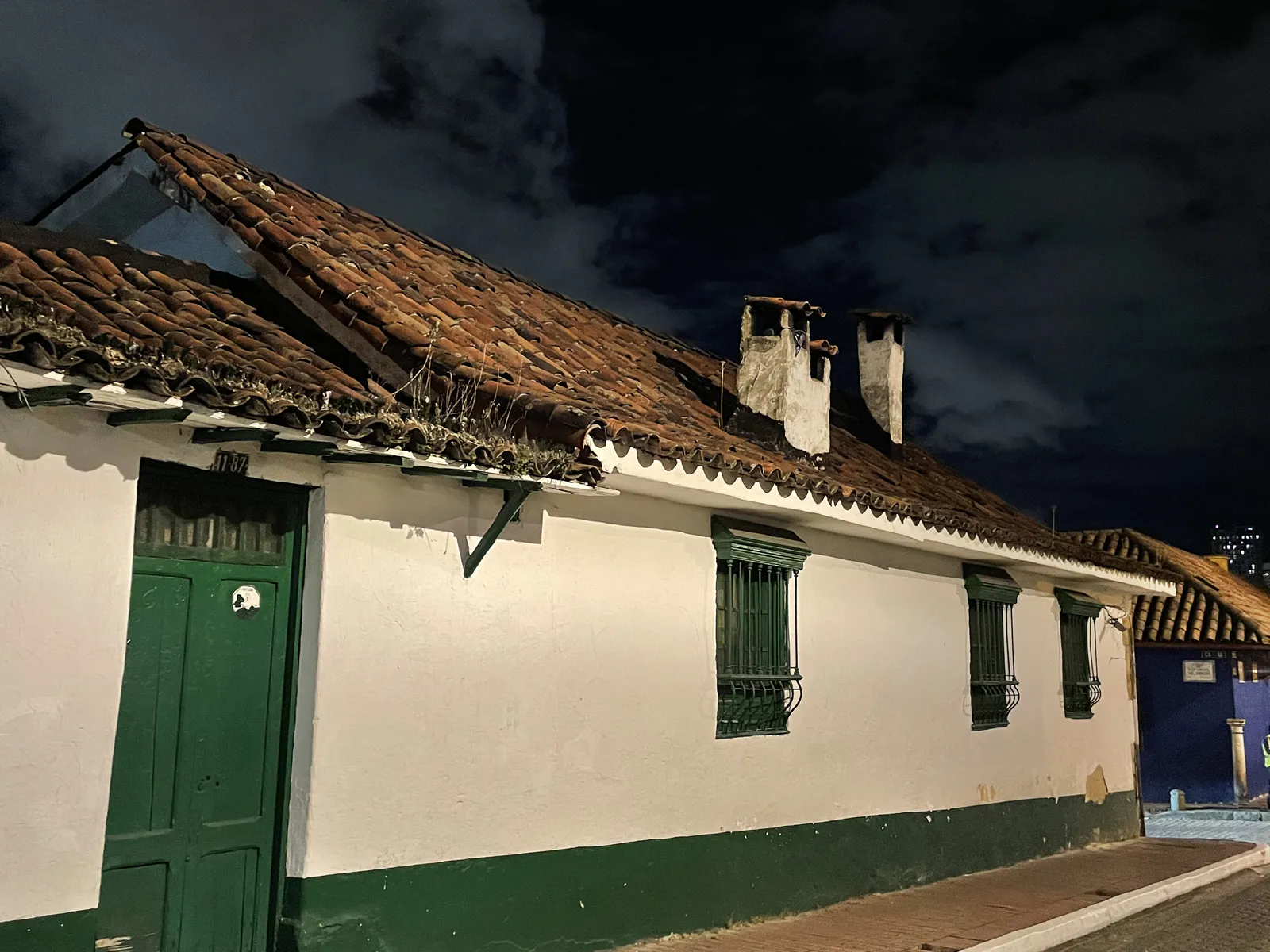
Colonial House with Chimneys
This long, low house shows whitewashed walls, green doors and windows, a clay tile roof, and two tall chimneys. Built in the colonial period (18th c.), it follows Spanish urban models adapted to Bogotá’s Andean setting. The chimneys indicate the need for indoor heating at high altitude, while barred windows and roof tiles maintain recognizable colonial street frontage.
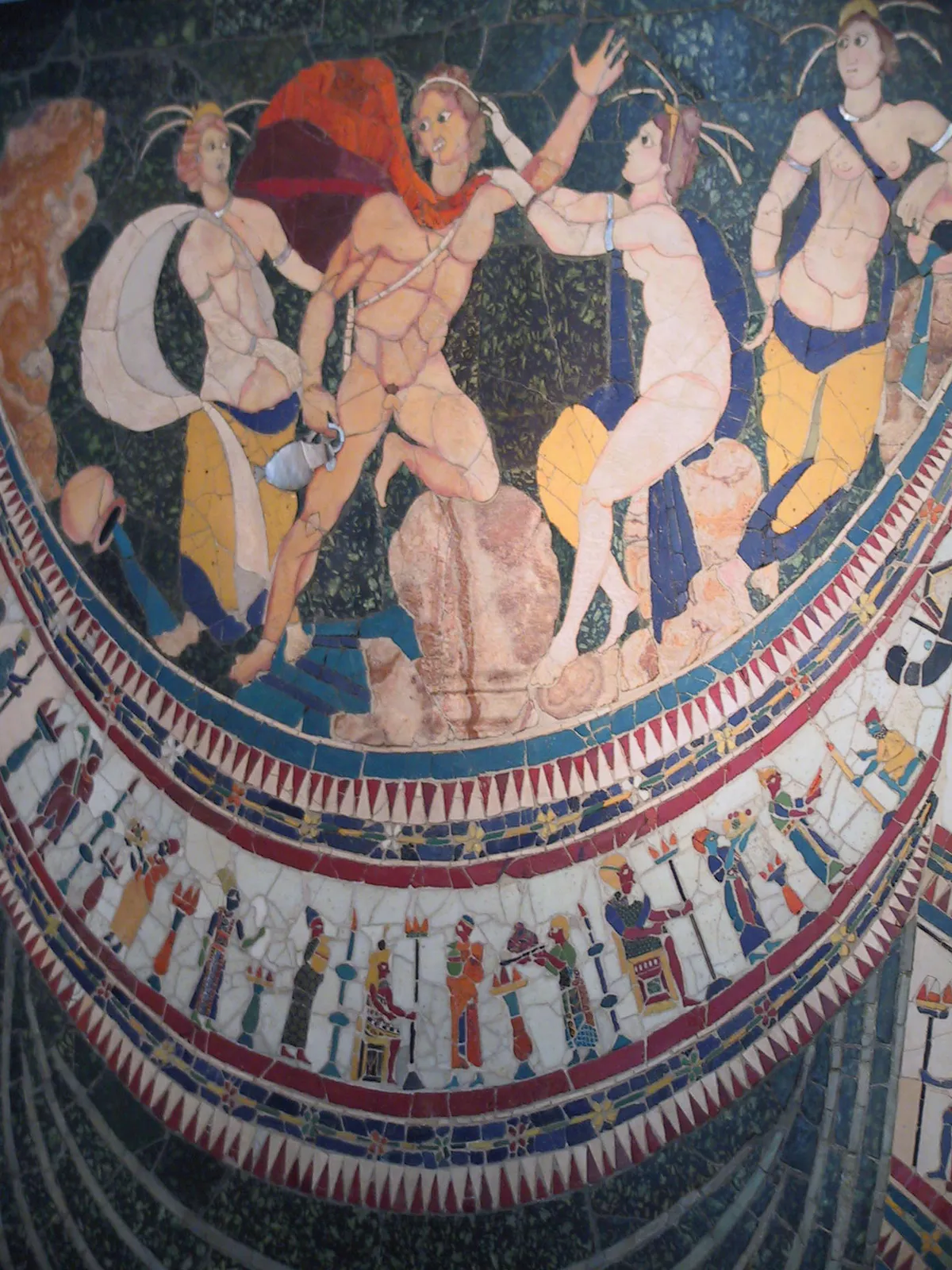
Opus Sectile Panel: Abduction of Hylas and Festive Procession
This early 4th-c. opus sectile from the Basilica of Junius Bassus—an elite civic complex built by the powerful urban prefect—shows Hylas, Heracles' beloved companion sent to fetch water for the Argonauts, kneeling with his water jar as nymphs seize him, enchanted by his beauty. In the myth they pull him into the spring forever, leaving Heracles to search in vain. Below, a marble procession panel evokes order and civic ritual, contrasting mortal duty with divine seduction.
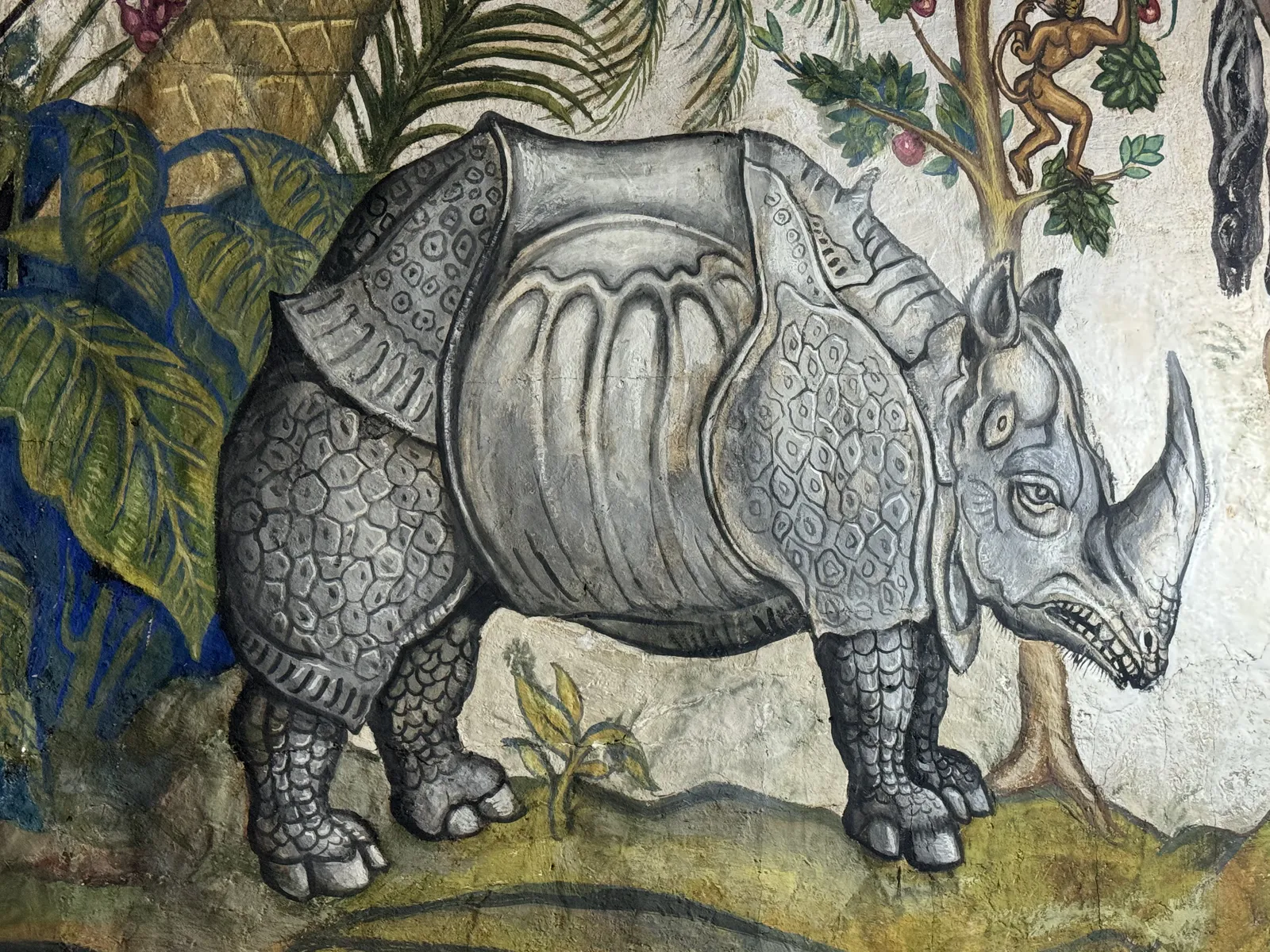
Fantastical Rhinoceros
This mural detail (c. 1590) depicts a rhinoceros modeled on Dürer’s 1515 woodcut, which became the European archetype of the beast despite anatomical inaccuracies. Its armored plates and dragon-like expression reflect colonial-era fascination with exotic fauna, filtered through Renaissance imagination and limited firsthand knowledge of African and Asian animals.
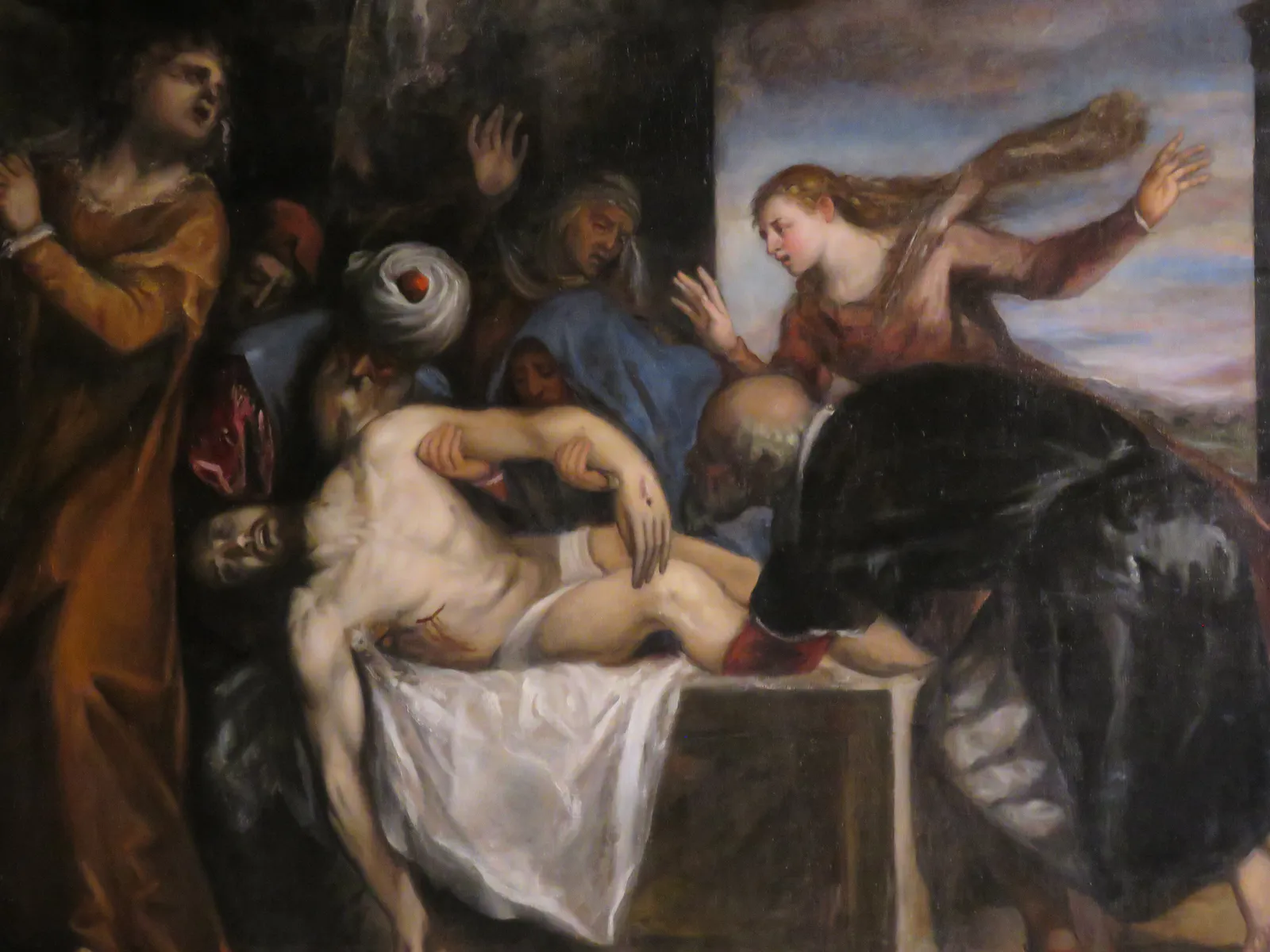
The Entombment of Christ
Titian and Palma the Younger
A poignant rendering of Christ’s burial, this oil on canvas (1618) was begun by Titian and completed by Palma the Younger. The composition captures collective grief, emphasizing the physical weight of death and the emotional weight of loss. The figures’ gestures and expressions mirror Renaissance ideals of pathos and human dignity.
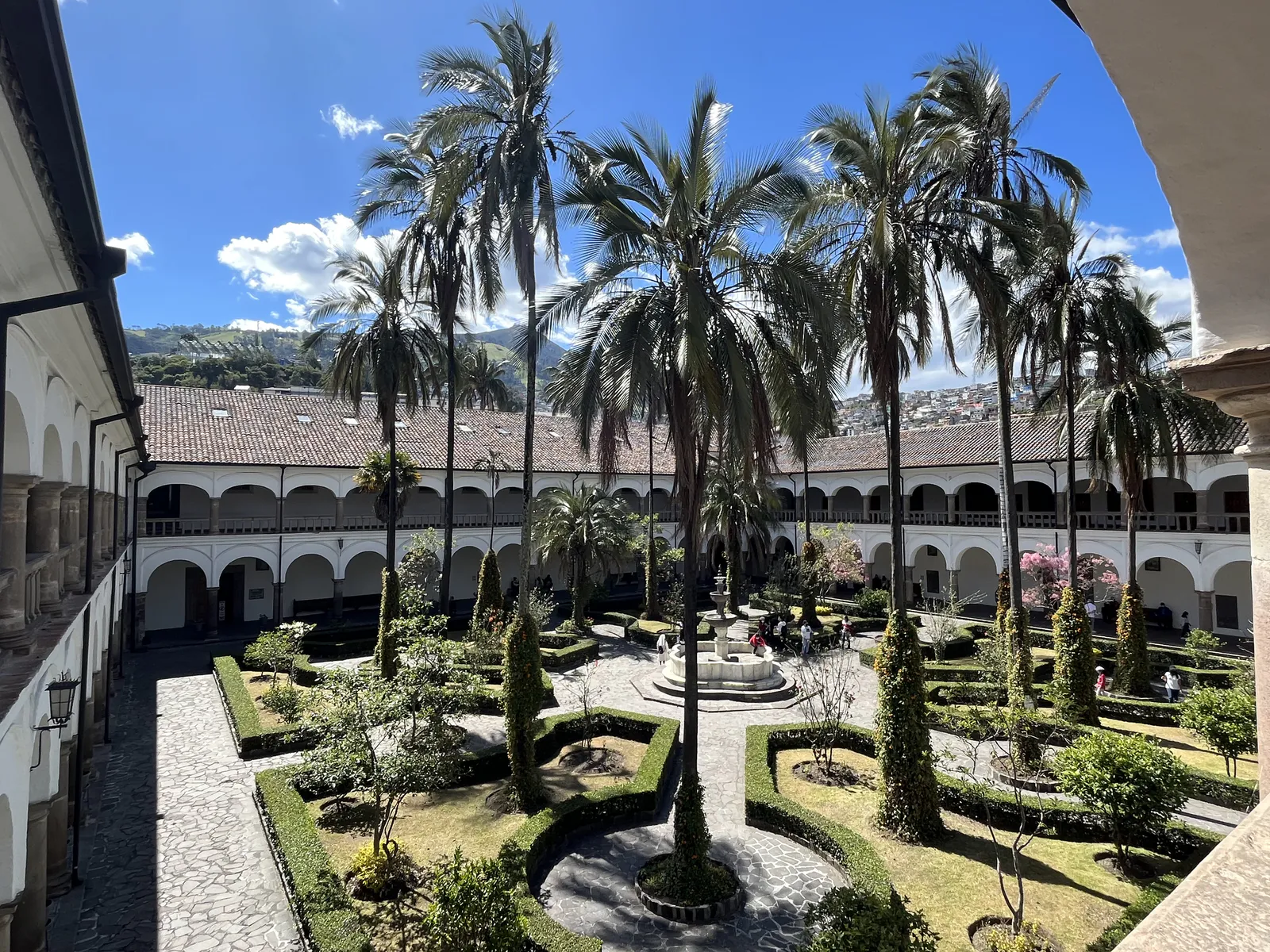
Main Cloister Garden, Convent of San Francisco
Laid out in the 16th c., this quadrangular garden served as the contemplative heart of the Franciscan convent in Quito. Palm trees soar over geometric boxwood paths and a central fountain, reflecting the fusion of European monastic design with Andean landscape. A living metaphor of Eden, it nourished both body and spirit.
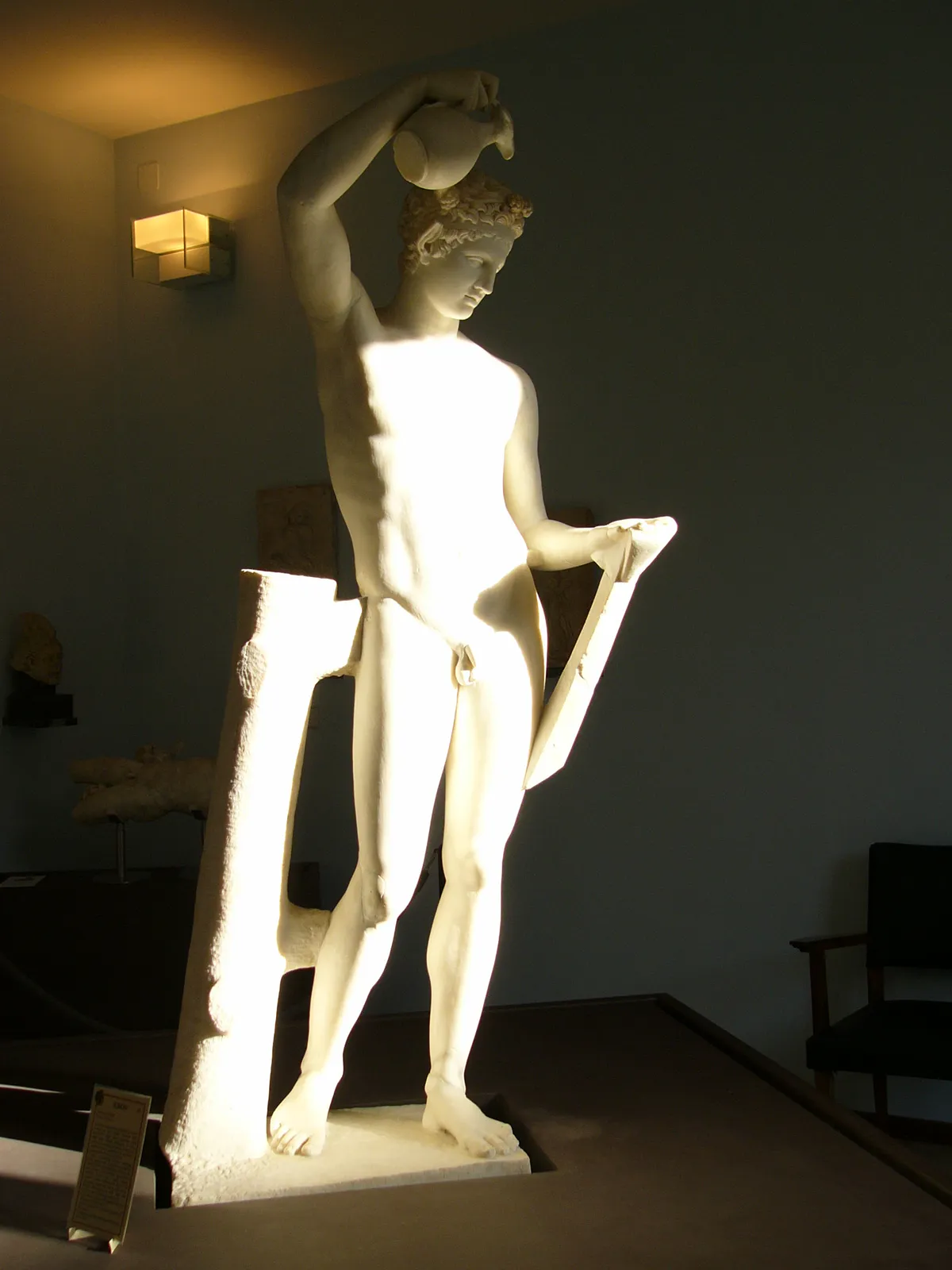
Satyr Pouring Wine
Praxiteles
This Roman marble statue is a copy of Praxiteles’ 4th-c. BC Greek original, depicting a youthful satyr, a companion of Dionysus, pouring wine. Though the pitcher and cup are missing, it captures the revelry and music linked to satyrs. Found near Naples in 1797, it exemplifies Praxiteles’ style with sinuous curves and a naturalistic pose, embodying the carefree spirit of Dionysian myth.

Rider on a Fish
A youthful figure, echoing the antlered god, rides a large fish amid dotted, fluid patterns. This may evoke the Irish tale of Tuan mac Cairill, who transformed through animal forms—stag, boar, fish—before rebirth. Though the fish is not a salmon, this Gundestrup Cauldron panel (150 BC - 1 AD) suggests shamanic metamorphosis and mythic continuity across cc. and geographies.
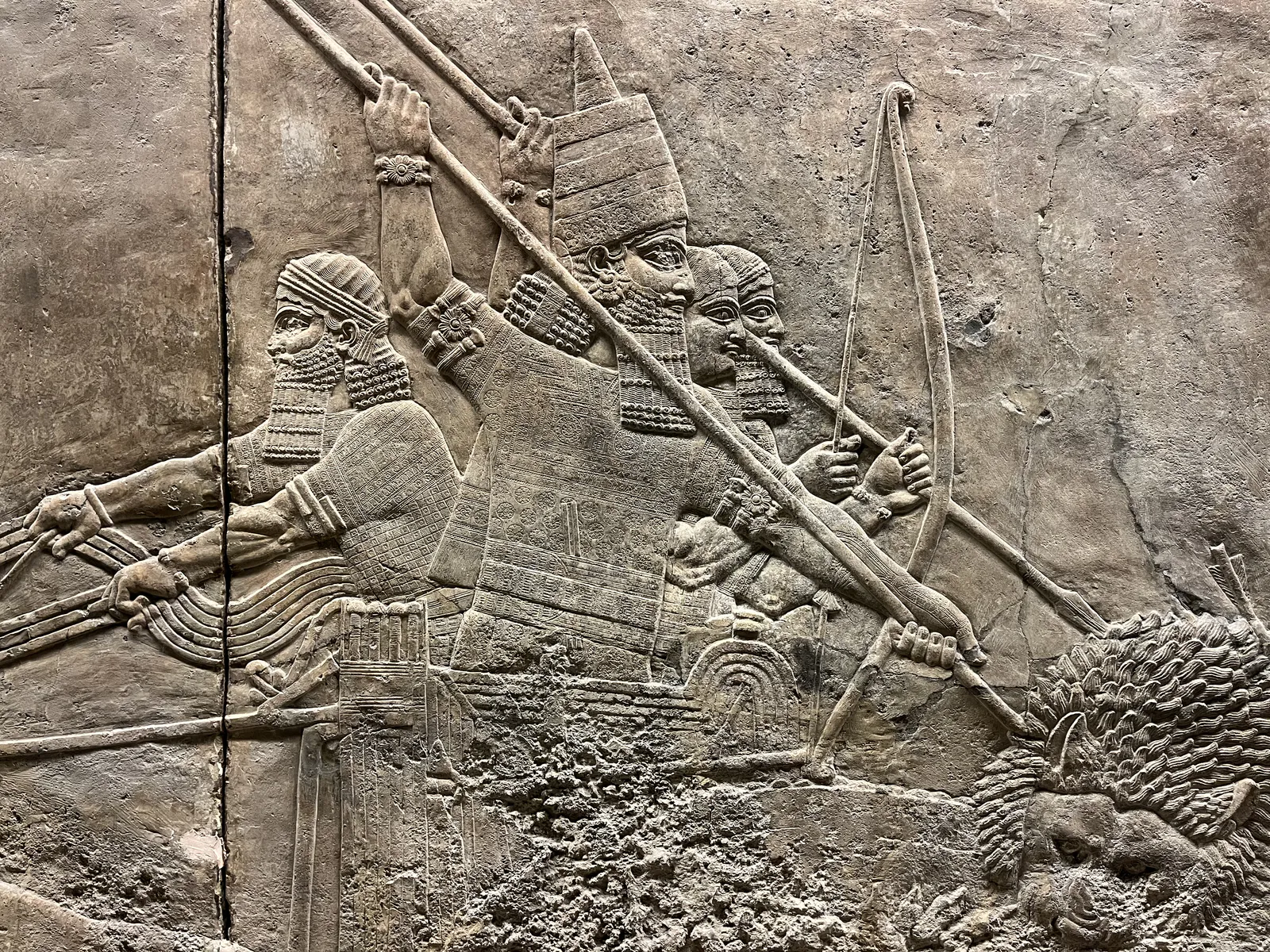
Ashurbanipal Strikes
This 7th-c. BC relief from Nineveh depicts King Ashurbanipal in a chariot, spearing a lion. The dynamic carving symbolizes royal power and valor. The lion’s defiant stance, even in defeat, highlights the king’s dominance over nature’s mightiest creature. Such scenes reinforced the king’s divine right to rule, portraying him as a protector and conqueror of chaos, a central theme in Assyrian royal ideology.
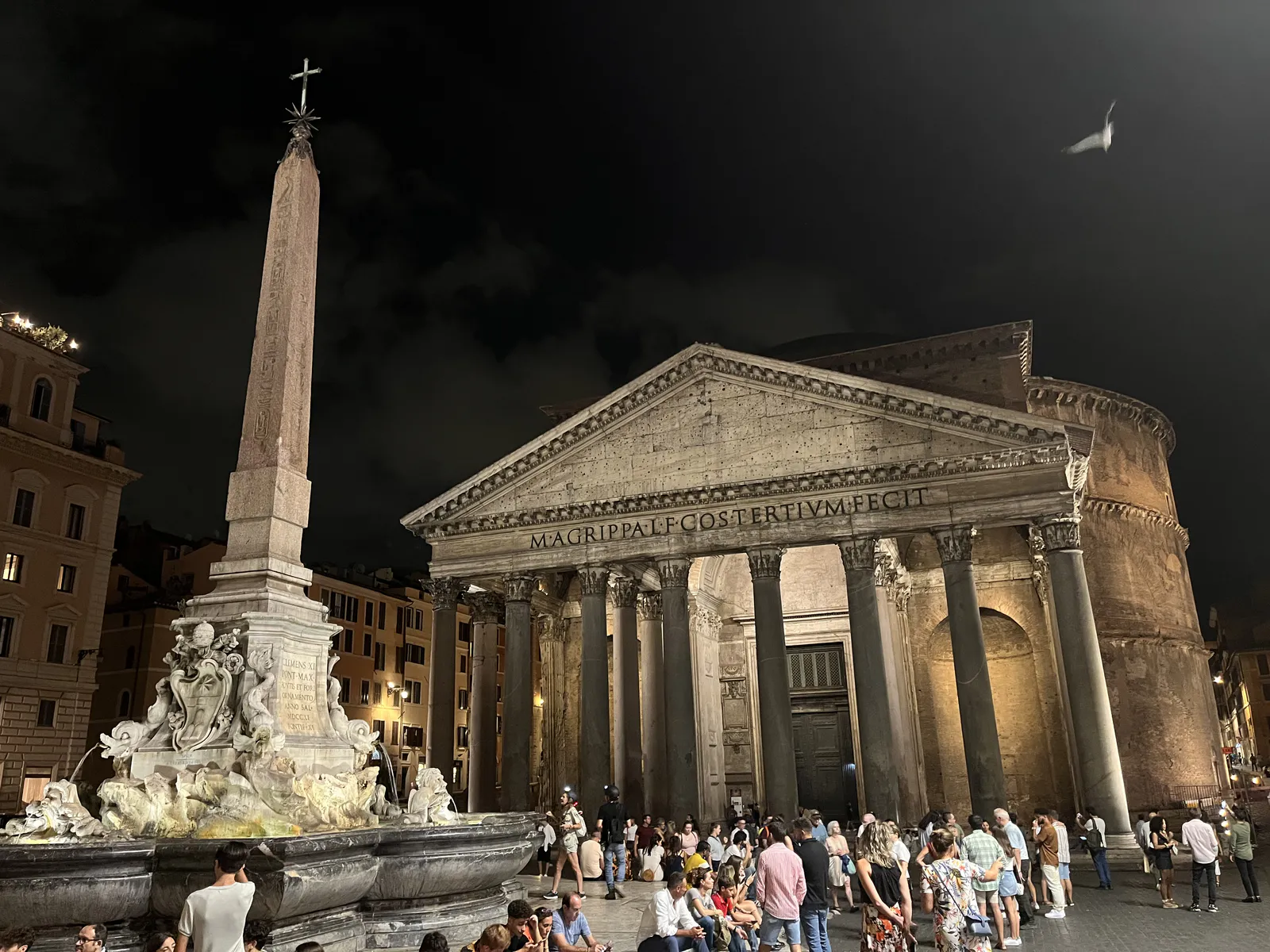
Pantheon with Macuteo Obelisk and Fountain
Filippo Barigioni
The Pantheon’s façade (118–125 AD), built under Emperor Hadrian, preserves Agrippa’s earlier inscription (M·AGRIPPA·L·F·COS·TERTIVM·FECIT - Marcus Agrippa, son of Lucius, consul for the third time, built this). Before it stands the Macuteo Obelisk from Egypt (rededicated here in 1711) and the Baroque fountain by Filippo Barigioni (1711), blending imperial Rome, Christian Rome, and papal urban renewal into one historic vista.
Adoration of the Christ Child
Bramantino
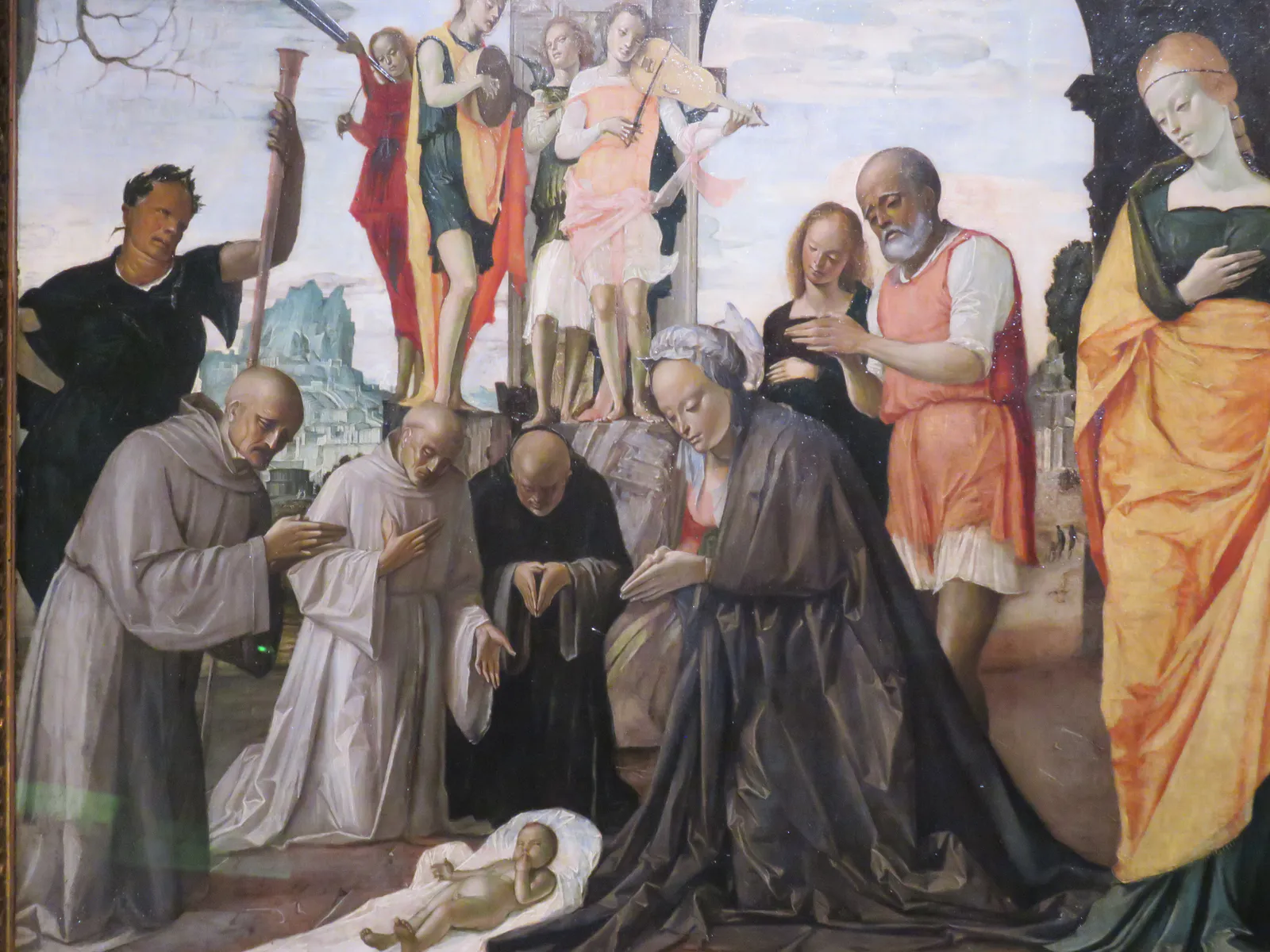
In this tempera panel (c. 1485), the Milanese innovator arranges the Nativity as a cool study of space. The Child rests on a stone slab, flanked by Mary and Saints Bernardino, Francis, and Benedict, while angel musicians provide a celestial motet. Rigid perspective, sculptural figures, and an architectonic backdrop reveal Bramantino’s quest for mathematical order within devotional feeling.
Boxer Mosaic Fragment
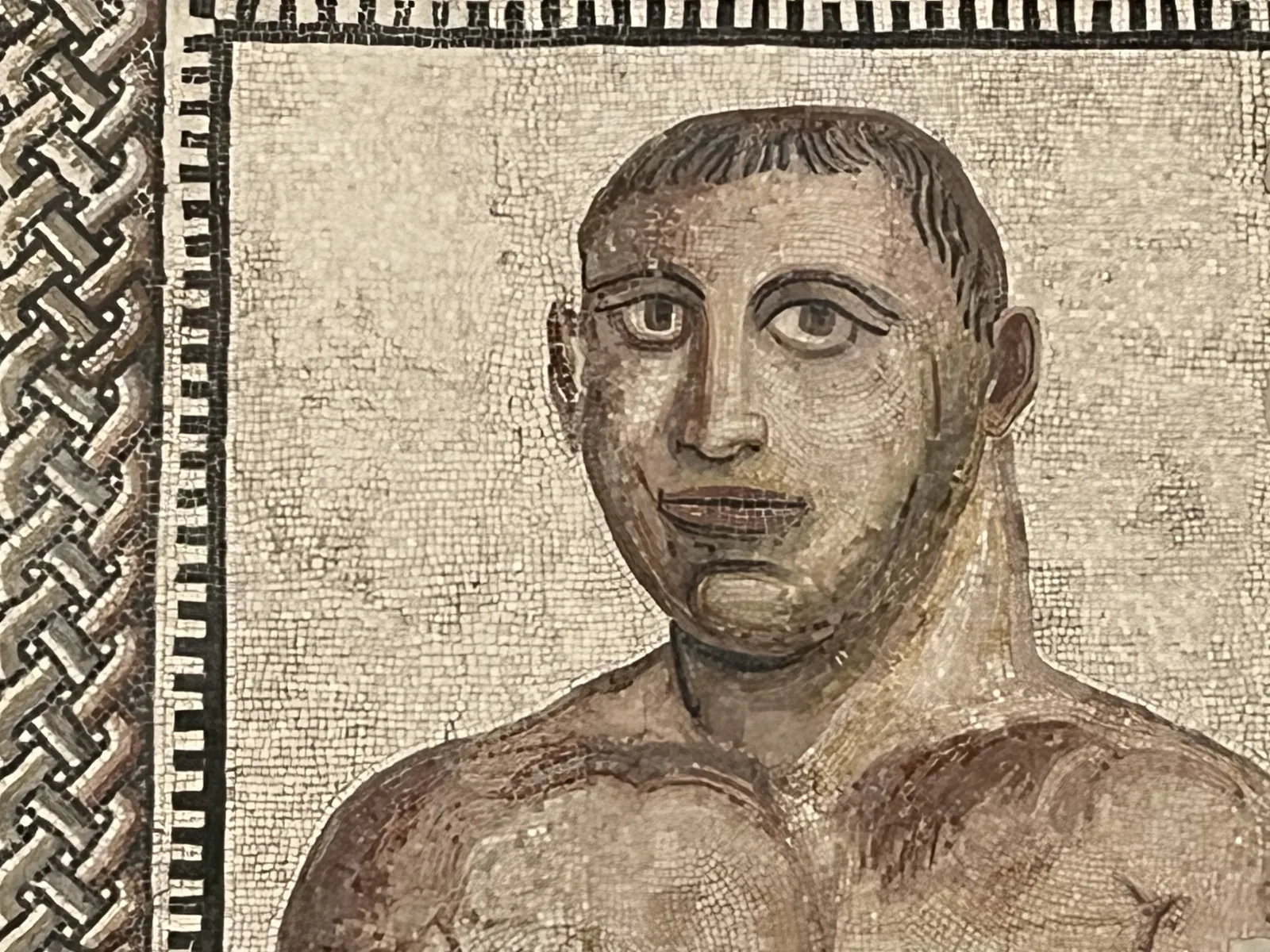
This mosaic fragment (c. 200 AD) from the Baths of Caracalla in Rome depicts a Roman athlete, capturing the intensity of his gaze. Crafted with stone tesserae—small, square tiles—it exemplifies late imperial art's focus on realism and idealized musculature. Such works celebrated physical endurance and the spectacle of public games, reflecting the cultural importance of athletic prowess in Roman society.
Explore the world through my eyes: begin with the image below, the map, the dropdowns above, or the search button. Every photo includes a thoughtful caption.
Explore the world through my eyes: begin with the image below, the map, the dropdowns above, or the search button. Every photo includes a thoughtful caption.
When the path is beautiful, do not ask where it leads.
My travels have always been shaped by two intertwined forms of discovery. One is intellectual: learning why the world is the way it is. History became my guide, drawing me toward museums, old cities, architecture, and the layers of meaning carried by places. The other is emotional: the search for beauty, harmony, and moments of elevation, often found in nature, monasteries, and sacred spaces.
Together, these impulses shape how I travel, what I photograph, and how I interpret what I see. This site is my way of sharing that lifelong learning in visual form—one image at a time, with enough context to deepen curiosity and understanding. I hope these photographs leave you with a sense of wonder and a deeper feeling for the world.
Now let’s explore together.