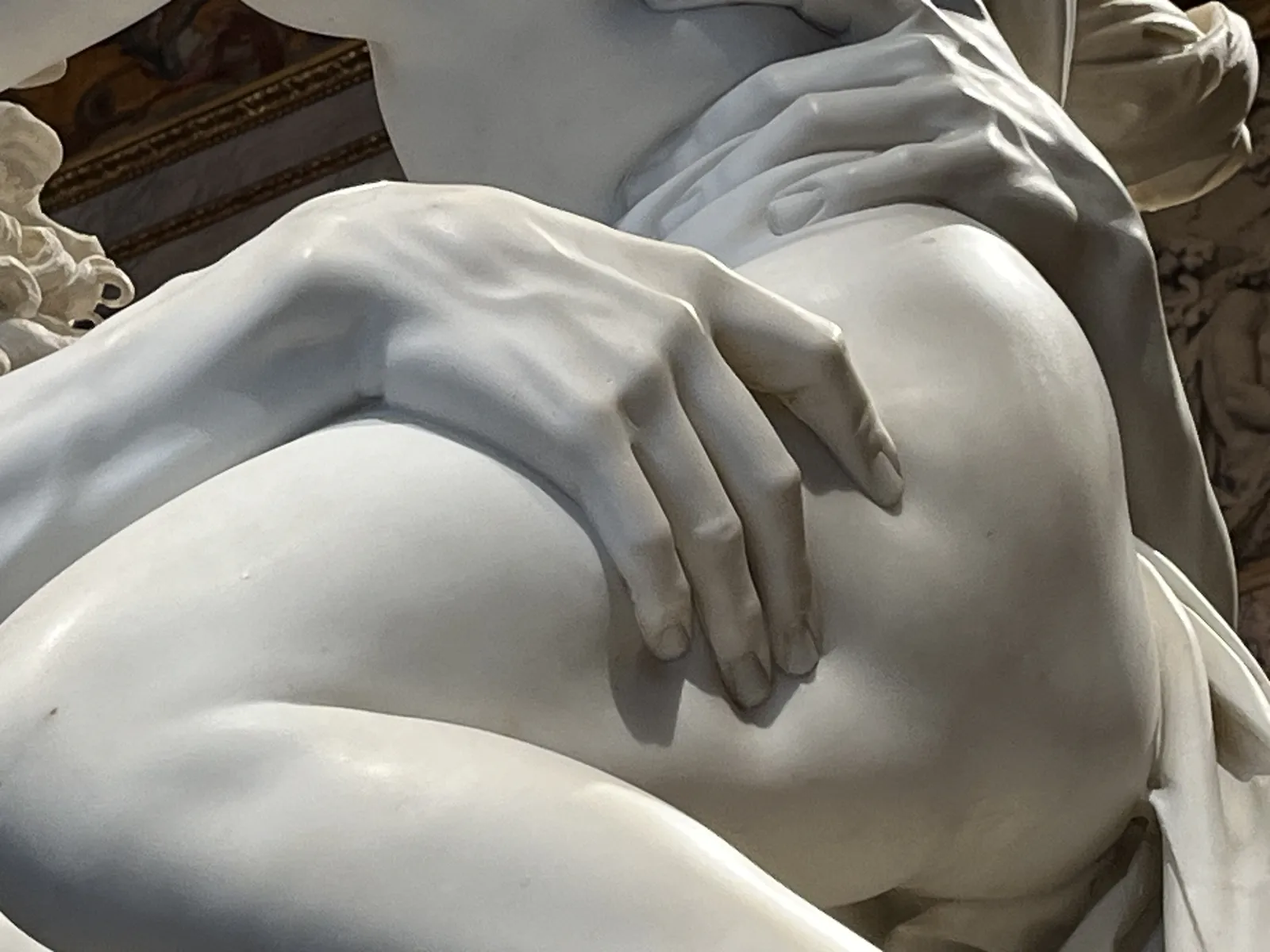
The Rape of Proserpina (detail)
Gian Lorenzo Bernini
This gripping close-up from Bernini’s marble group (1621–22) captures Pluto’s hand pressing into Proserpina’s flesh. The marble appears to yield under his grip, a dazzling illusion of softness and force. Bernini’s technical brilliance here transforms stone into living drama, amplifying the sculpture’s emotional and physical realism.
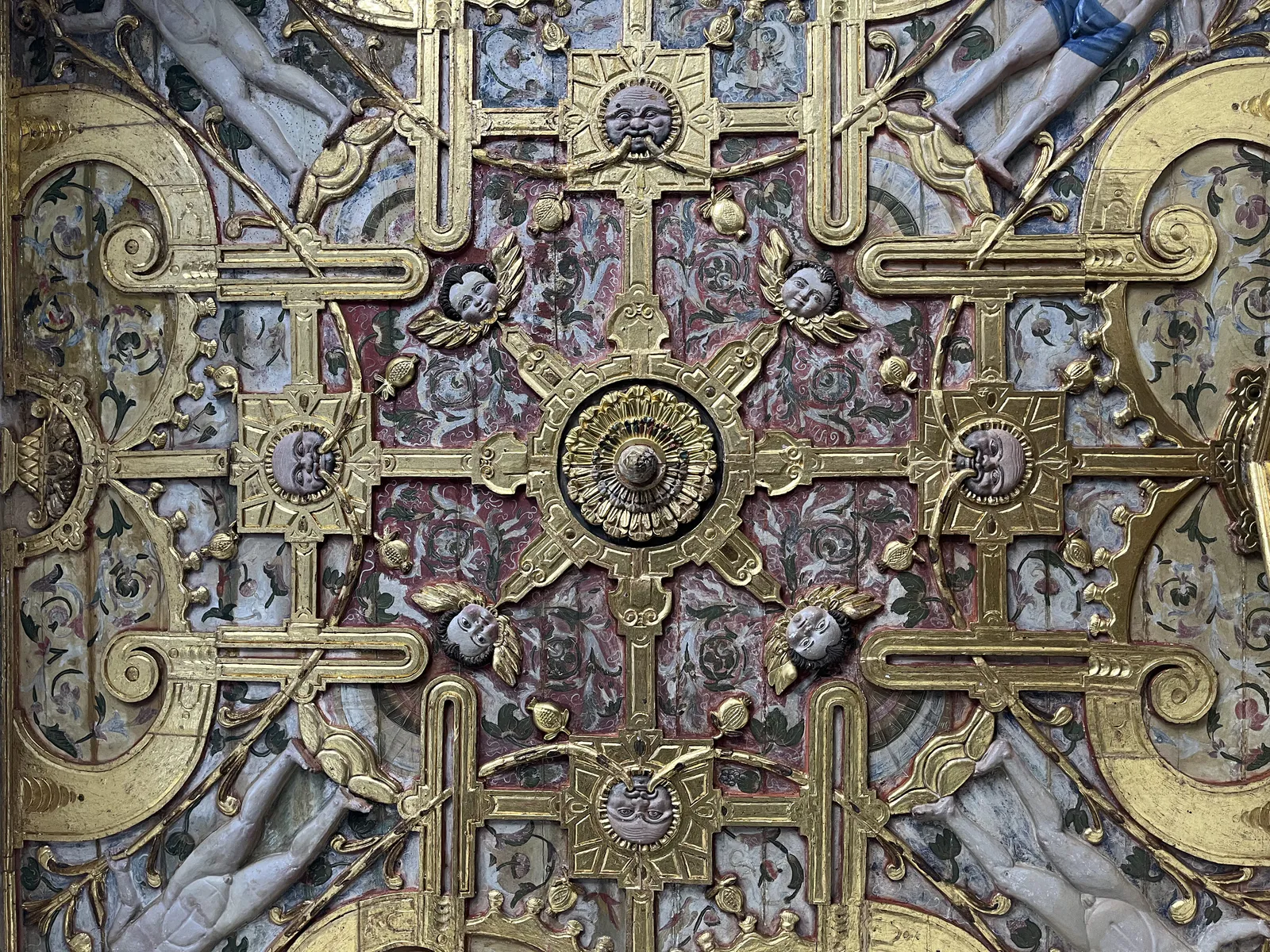
Andean Baroque Ceiling Panel
Manuel Chili (Capiscara)
This carved and gilded ceiling panel (1770–80) shows radiant faces, golden beams, and floral motifs arranged around a central sunburst. Produced in late-colonial Quito, it aligns with the Andean baroque’s celestial imagery. Caspicara joined Catholic cosmology with Indigenous conceptions of ordered, sacred geometry.
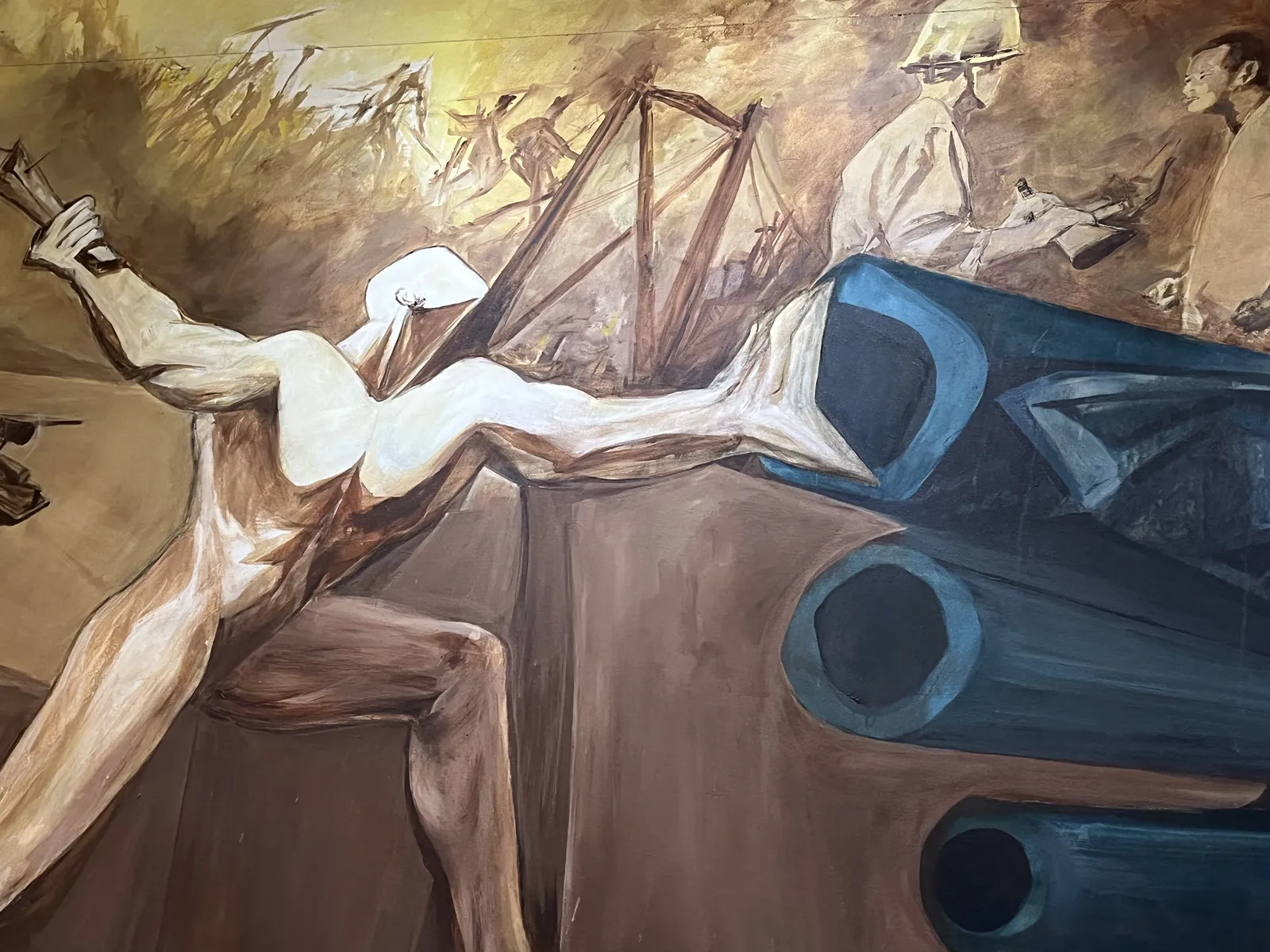
El pueblo en lucha
Ramón Oviedo
This mural (2013) shows a bound, faceless figure hurling itself toward the dark mouths of cannons, while ghostly soldiers and crowds emerge in the background. The scene recalls the Dominican struggle against dictatorship and foreign intervention in the 20th c. By fusing a single straining body with collective, blurred forms, Oviedo concentrates individual sacrifice into a broader history of resistance.
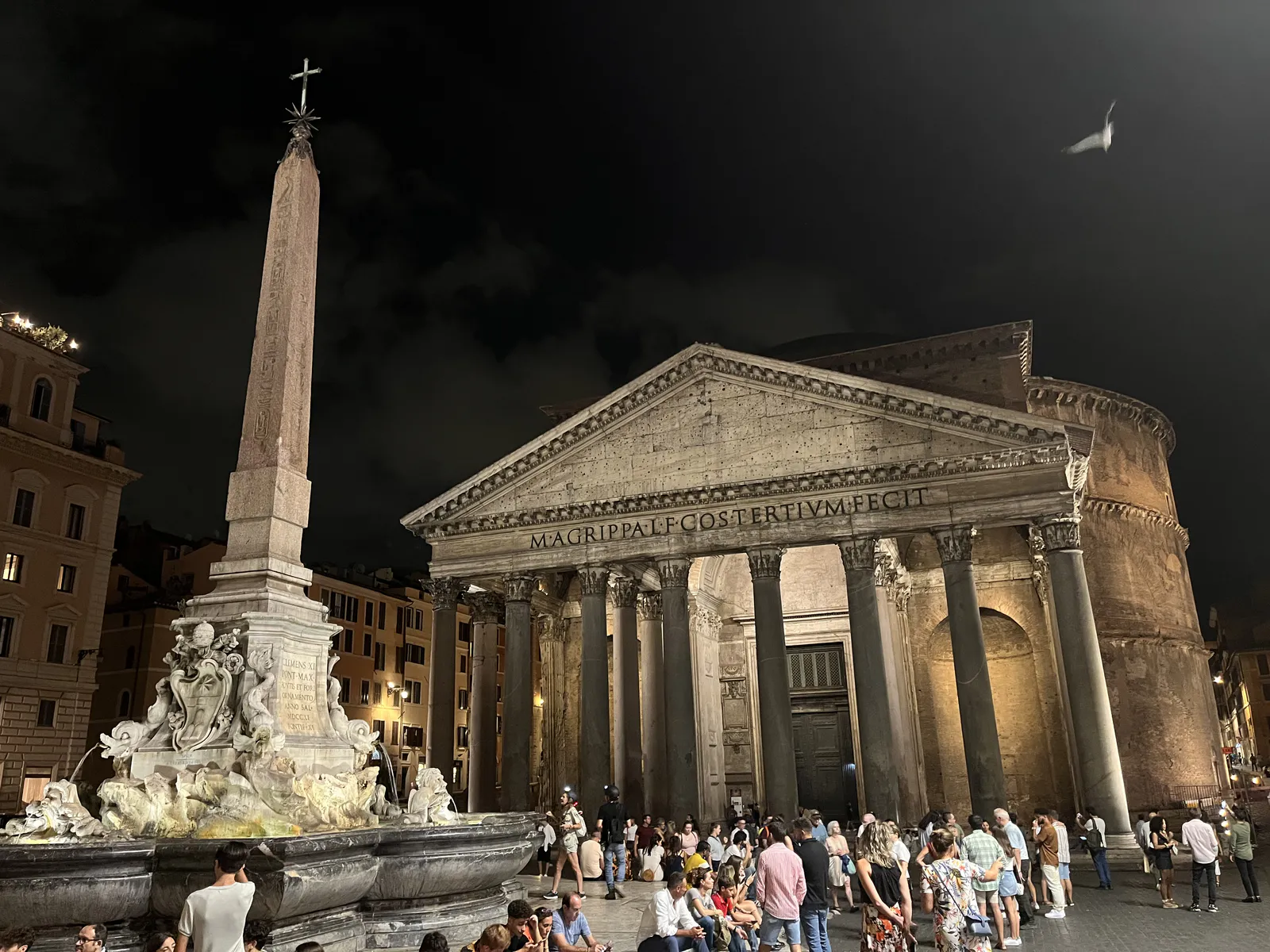
Pantheon with Macuteo Obelisk and Fountain
Filippo Barigioni
The Pantheon’s façade (118–125 AD), built under Emperor Hadrian, preserves Agrippa’s earlier inscription (M·AGRIPPA·L·F·COS·TERTIVM·FECIT - Marcus Agrippa, son of Lucius, consul for the third time, built this). Before it stands the Macuteo Obelisk from Egypt (rededicated here in 1711) and the Baroque fountain by Filippo Barigioni (1711), blending imperial Rome, Christian Rome, and papal urban renewal into one historic vista.
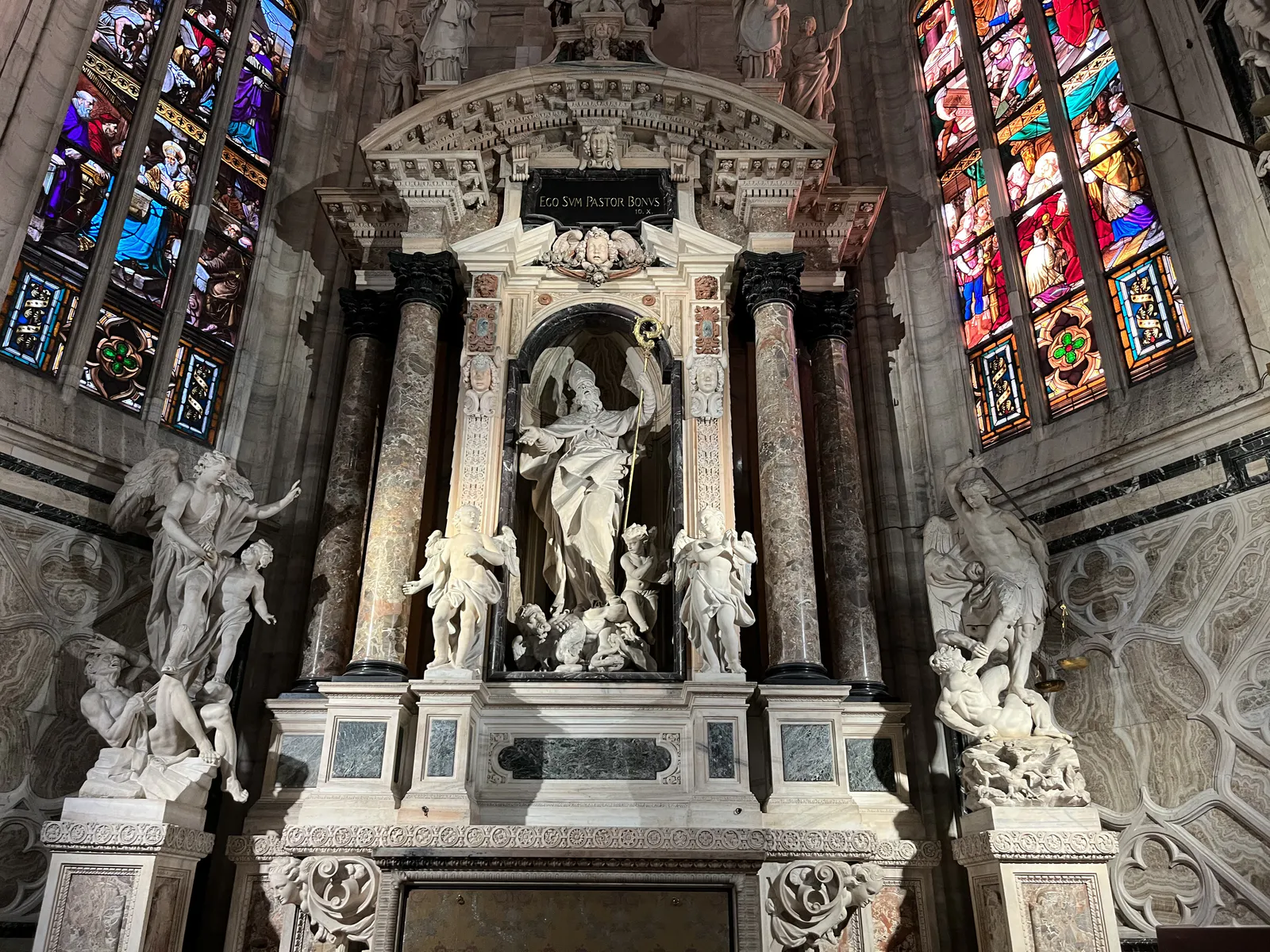
Altar of Saint John Bono
Elia Vincenzo Buzzi
This monumental altar (c. 1763) in the Milan Cathedral honors Saint John Bono, a 13th-c. bishop known for his piety and service. The central figure is framed by angels and crowned by the inscription Ego sum pastor bonus (I am the Good Shepherd), evoking Christ-like compassion and episcopal authority.
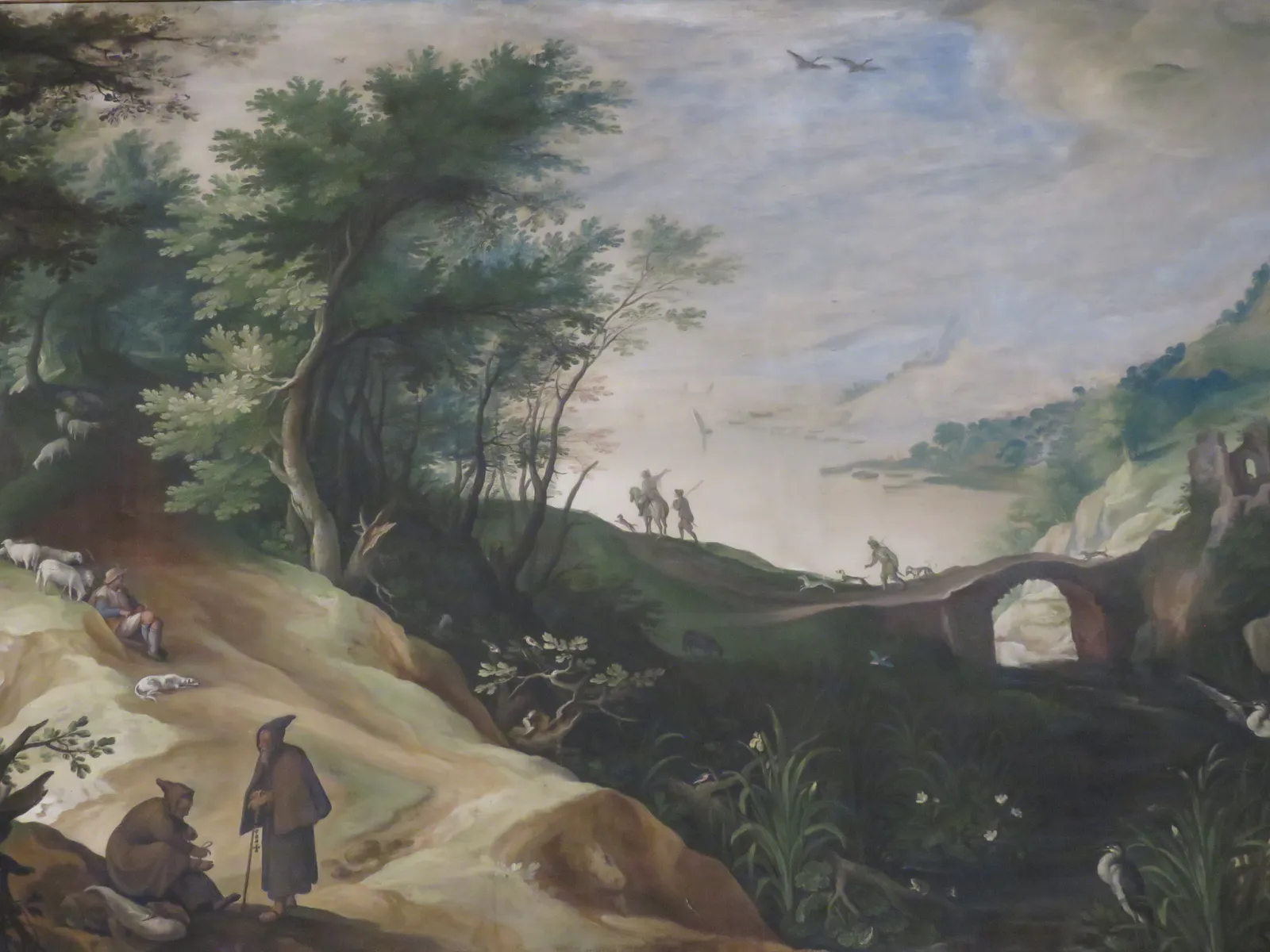
Landscape with Hermits
Paul Bril
This landscape (c. 1600) shows monks gathered in a wooded clearing beneath a broad, luminous sky. Their small figures sit or stand along a path that opens toward distant hills. Such scenes appeared in early Baroque painting, especially in northern regions where sacred retreat was a common theme. The composition indicates how artists linked hermitic life with the ordered quiet of nature.
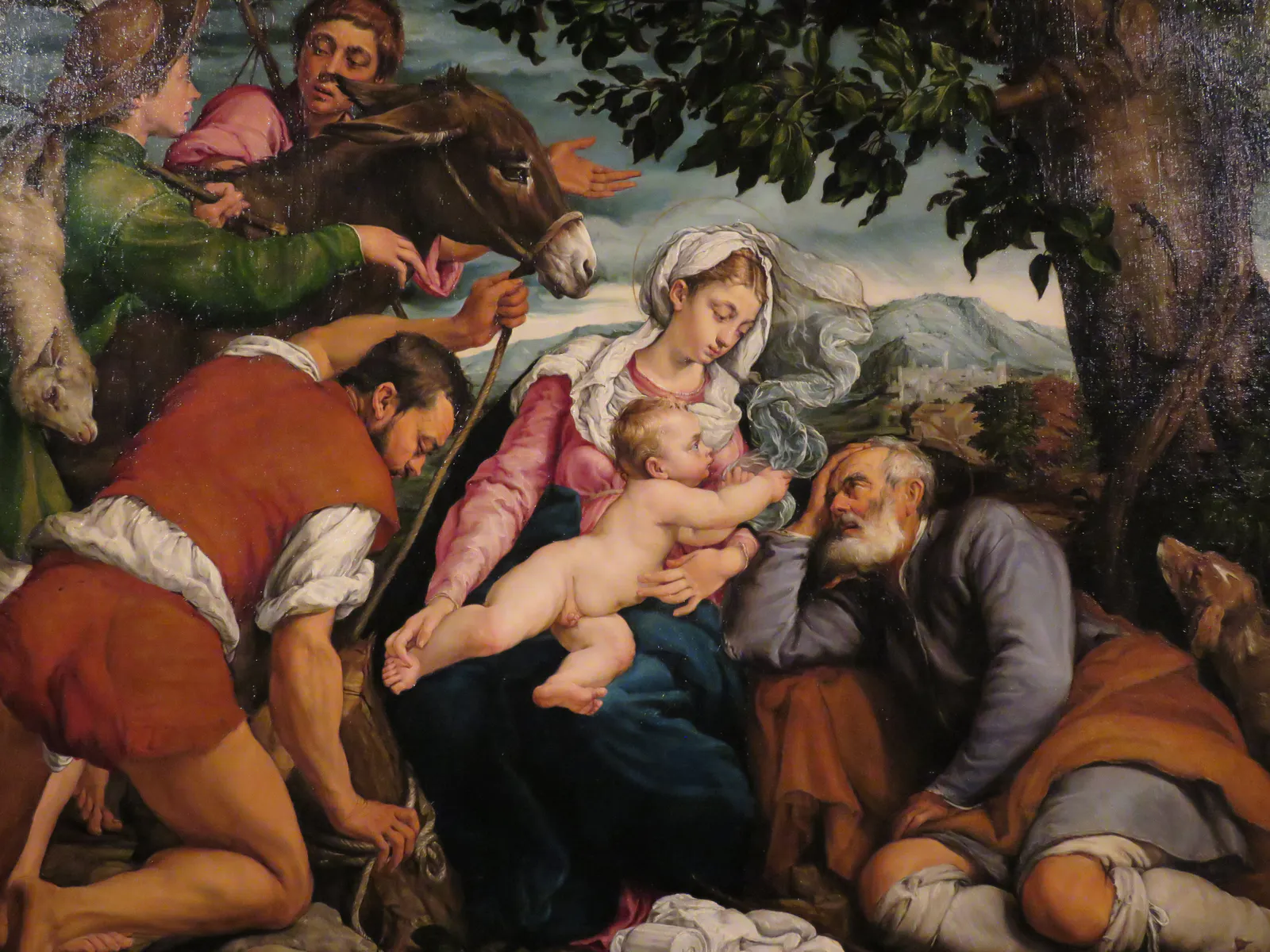
Rest on the Flight to Egypt
Jacopo Bassano
In this luminous canvas (c. 1547), Bassano blends biblical narrative with rustic realism. The Holy Family, joined by shepherds and animals, pauses under a tree. The tender gesture of the Child reaching for Joseph evokes familial warmth amid hardship, while the detailed pastoral setting links divine history to everyday Venetian life.
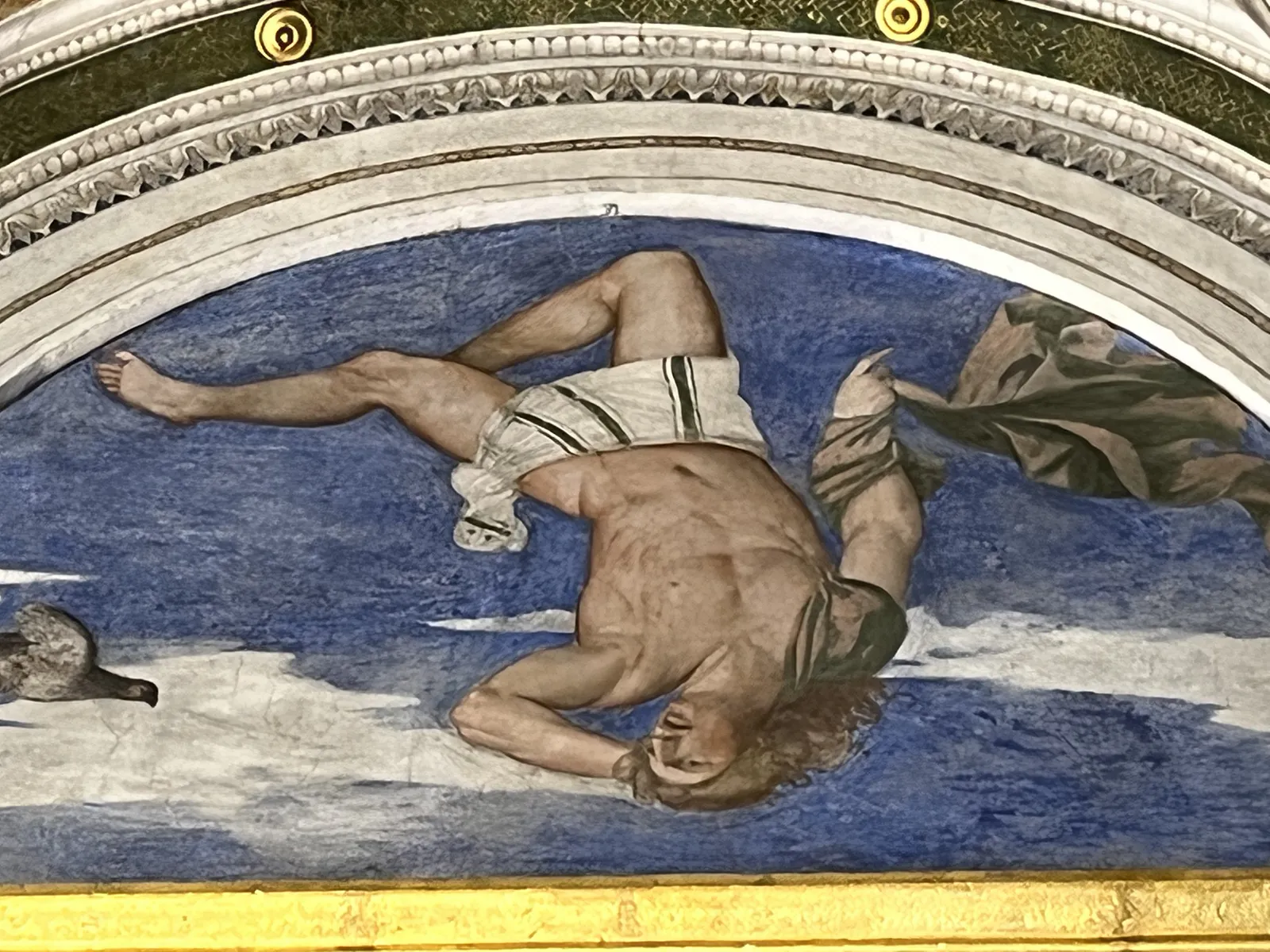
The Fall of Phaeton
Sebastiano del Piombo
This fragment (c. 1511) shows Phaeton falling from the sky after failing to control the sun chariot of his father Helios. To save the world, Zeus strikes him down. Part of Sebastiano del Piombo’s mythological cycle at Villa Farnesina, it complements Raphael’s Triumph of Galatea with a dramatic warning against hubris.
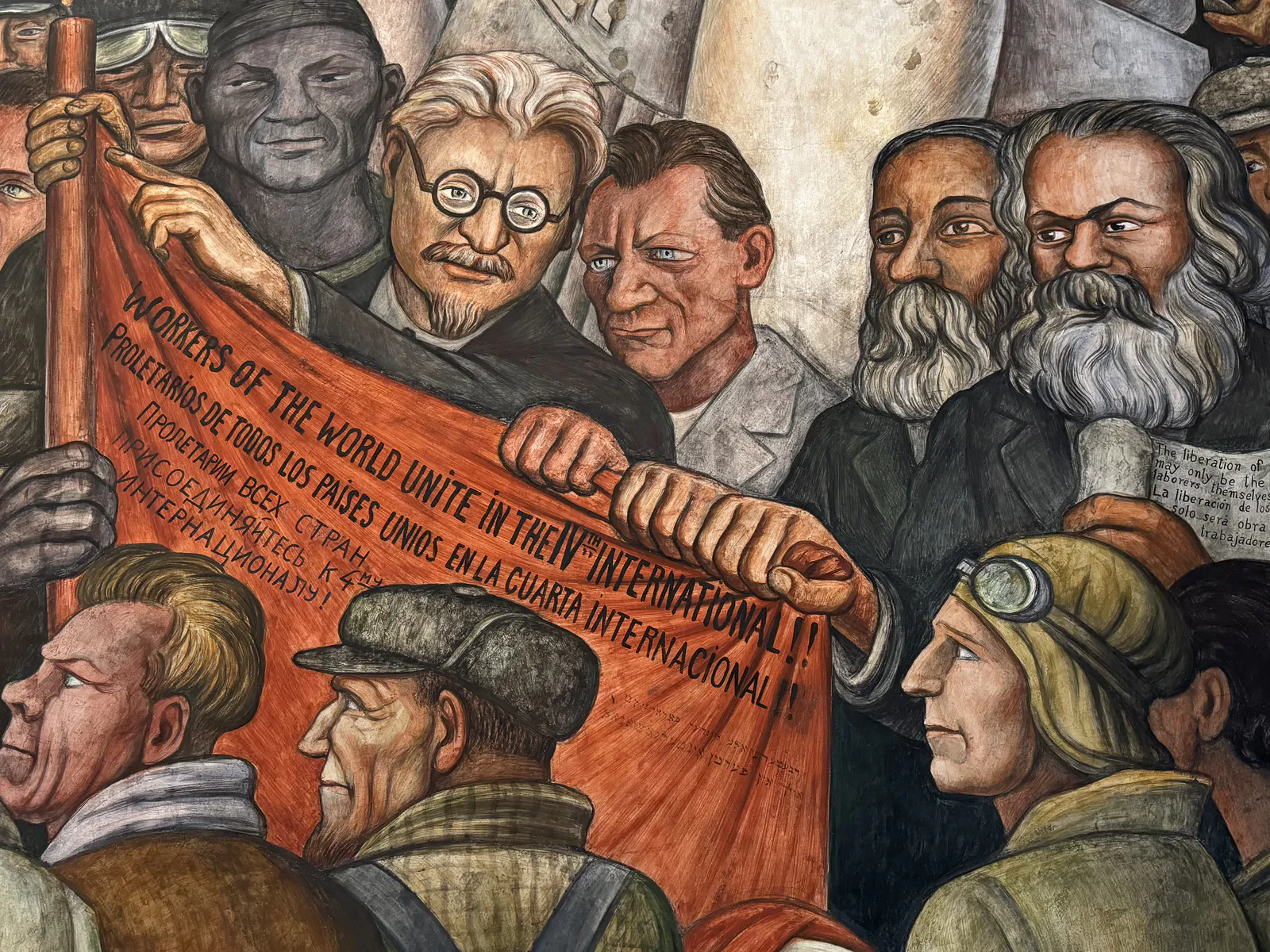
Fourth International (detail)
Diego Rivera
This segment of Rivera’s 1934 mural shows Marx, Engels, and Trotsky rallying workers beneath a red banner proclaiming unity across nations. The multilingual call to join the Fourth International affirms Rivera’s radical vision: true liberation must come from the workers themselves, guided by socialist ideals and international solidarity.
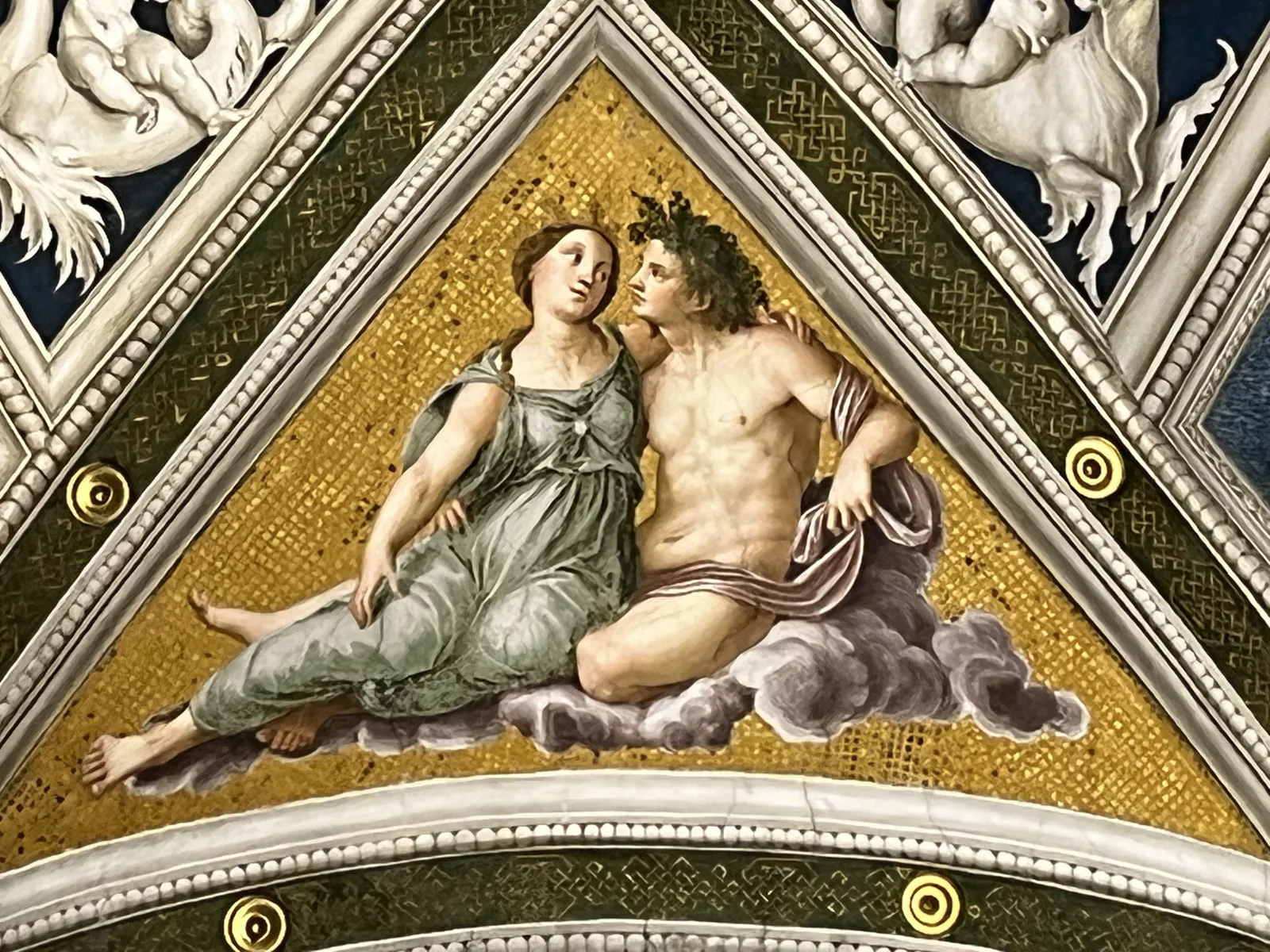
Bacchus and Ariadne
Baldassare Peruzzi
Painted c. 1511 in the Loggia of Galatea, Villa Farnesina, this scene depicts Bacchus, the god of wine, with Ariadne, whom he marries after her abandonment by Theseus. The golden mosaic-like background evokes classical luxury, while Peruzzi’s composition aligns with the villa’s mythological and astrological themes. This artwork reflects Renaissance fascination with classical mythology and the interplay of fate and divine intervention.
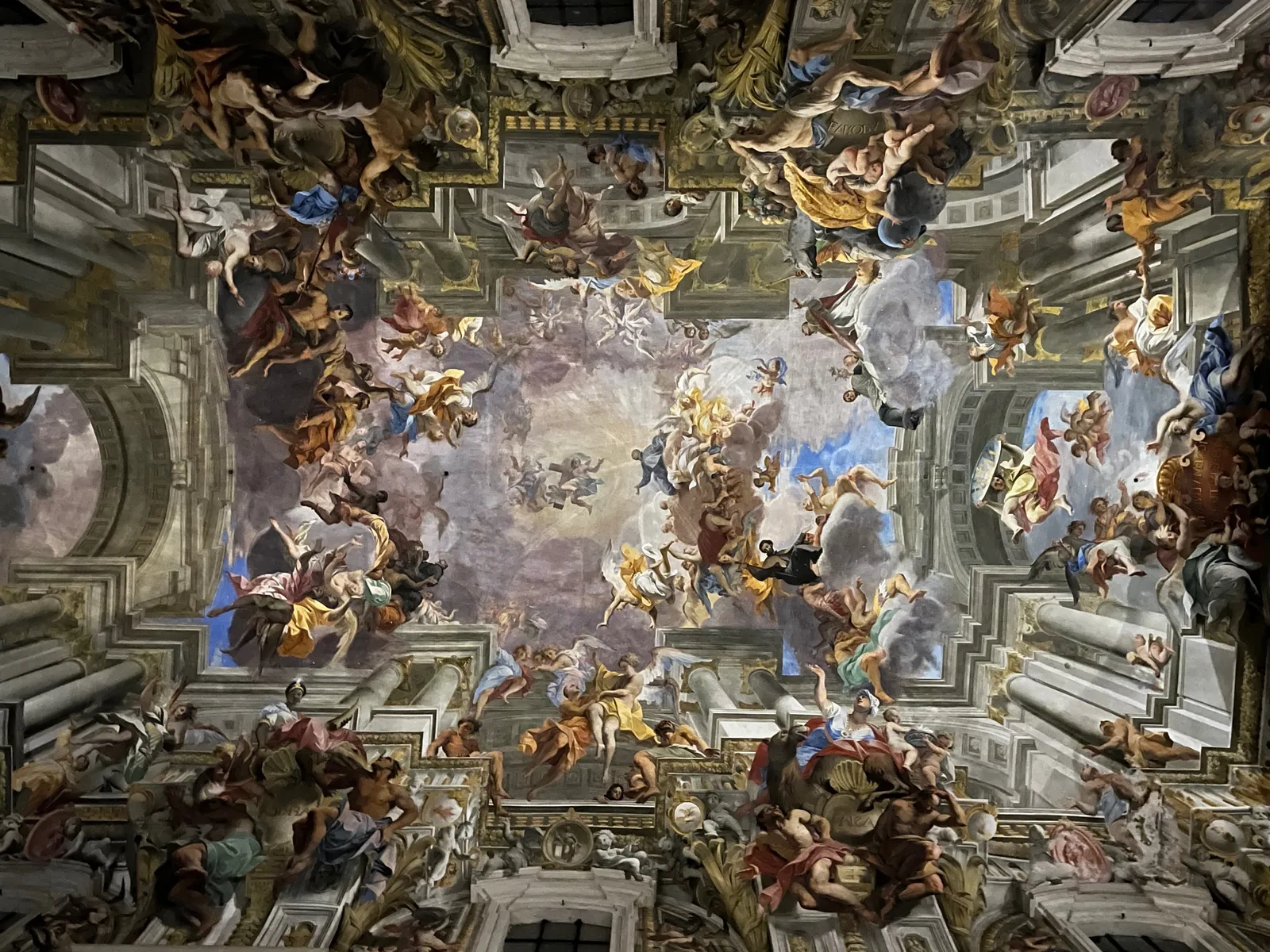
The Apotheosis of St. Ignatius
Andrea Pozzo
This Baroque trompe-l’œil painting (1685–94) transforms the flat ceiling into a soaring heavenly vision. St. Ignatius is welcomed into paradise by Christ and the Virgin, while allegories of the continents celebrate Jesuit missions. Pozzo’s masterful illusionism merges faith, perspective, and global ambition.
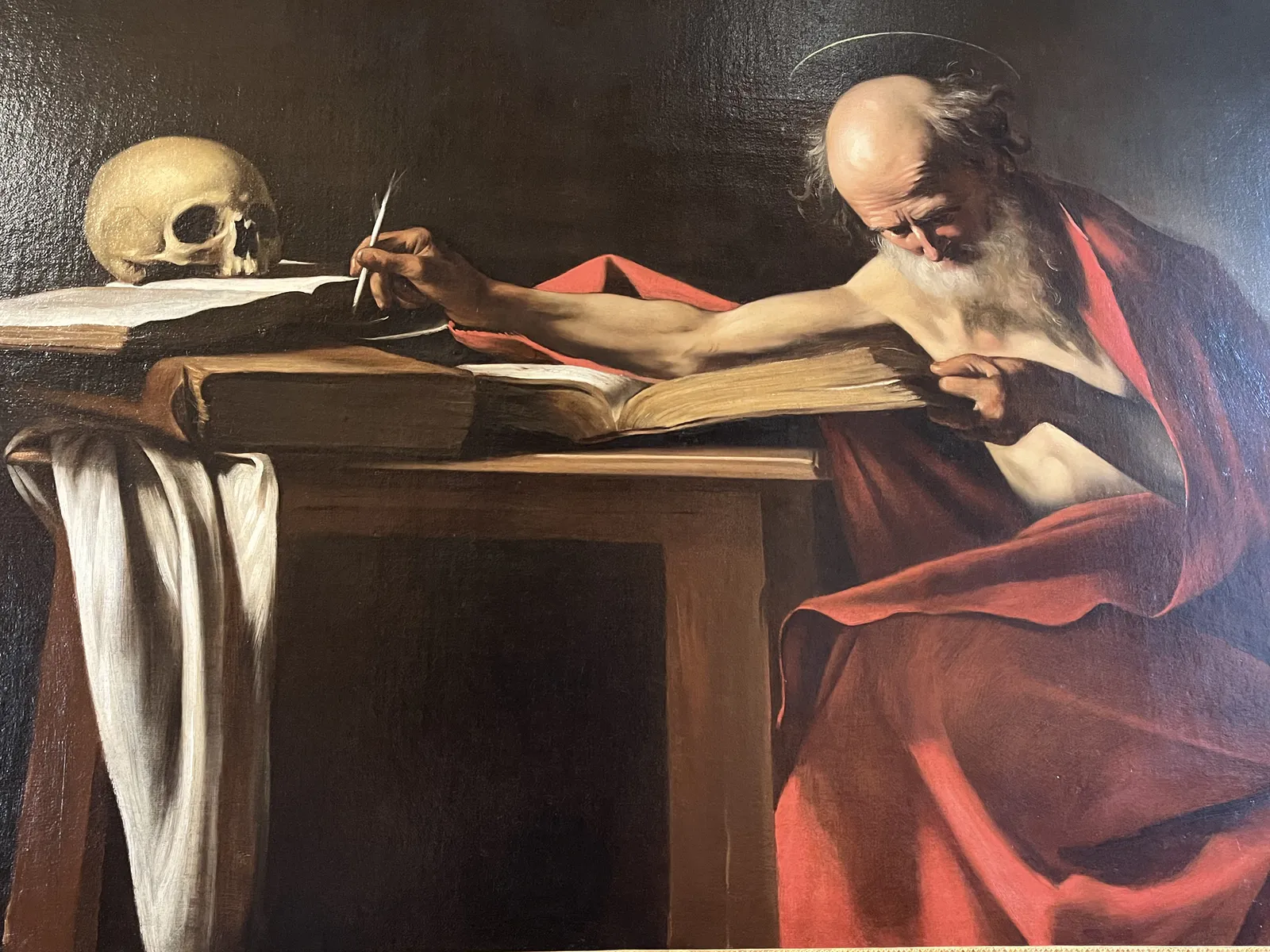
St. Jerome Writing
Caravaggio
This introspective painting (1605–6) shows Saint Jerome translating the Bible, immersed in thought. A skull atop the desk serves as a memento mori (remembrance of death), while dramatic lighting and vivid red drapery highlight the tension between divine labor and mortal fragility. Caravaggio transforms study into a spiritual battleground of flesh, faith, and time.
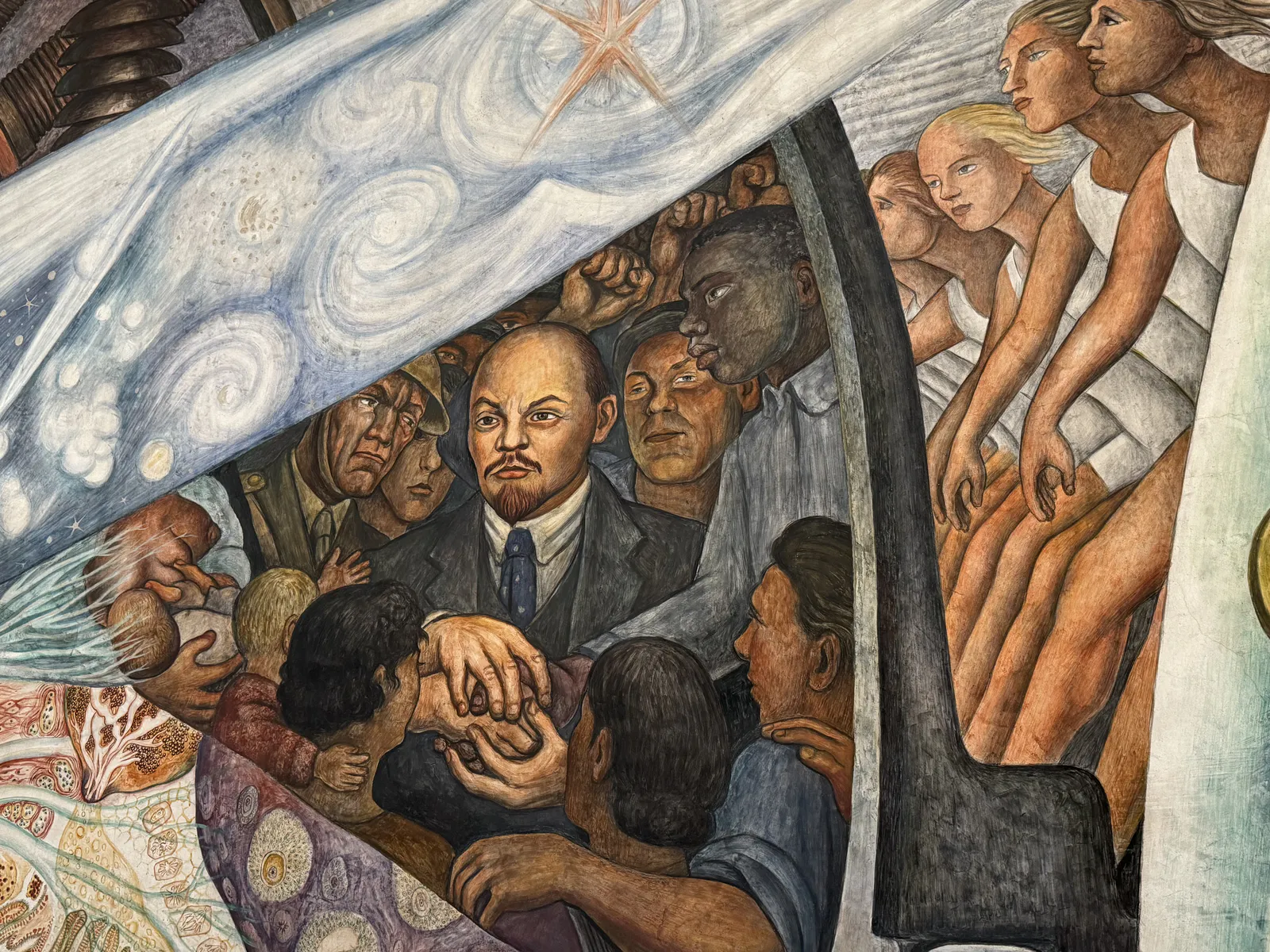
Lenin and the Workers (detail)
Diego Rivera
In this vivid section of Man, Controller of the Universe (1934), Lenin extends his hand to unite workers of different races and backgrounds. His central placement amid galaxies and scientific motifs reflects Rivera’s belief in a revolutionary, rational future led by socialist ideals and global class solidarity.
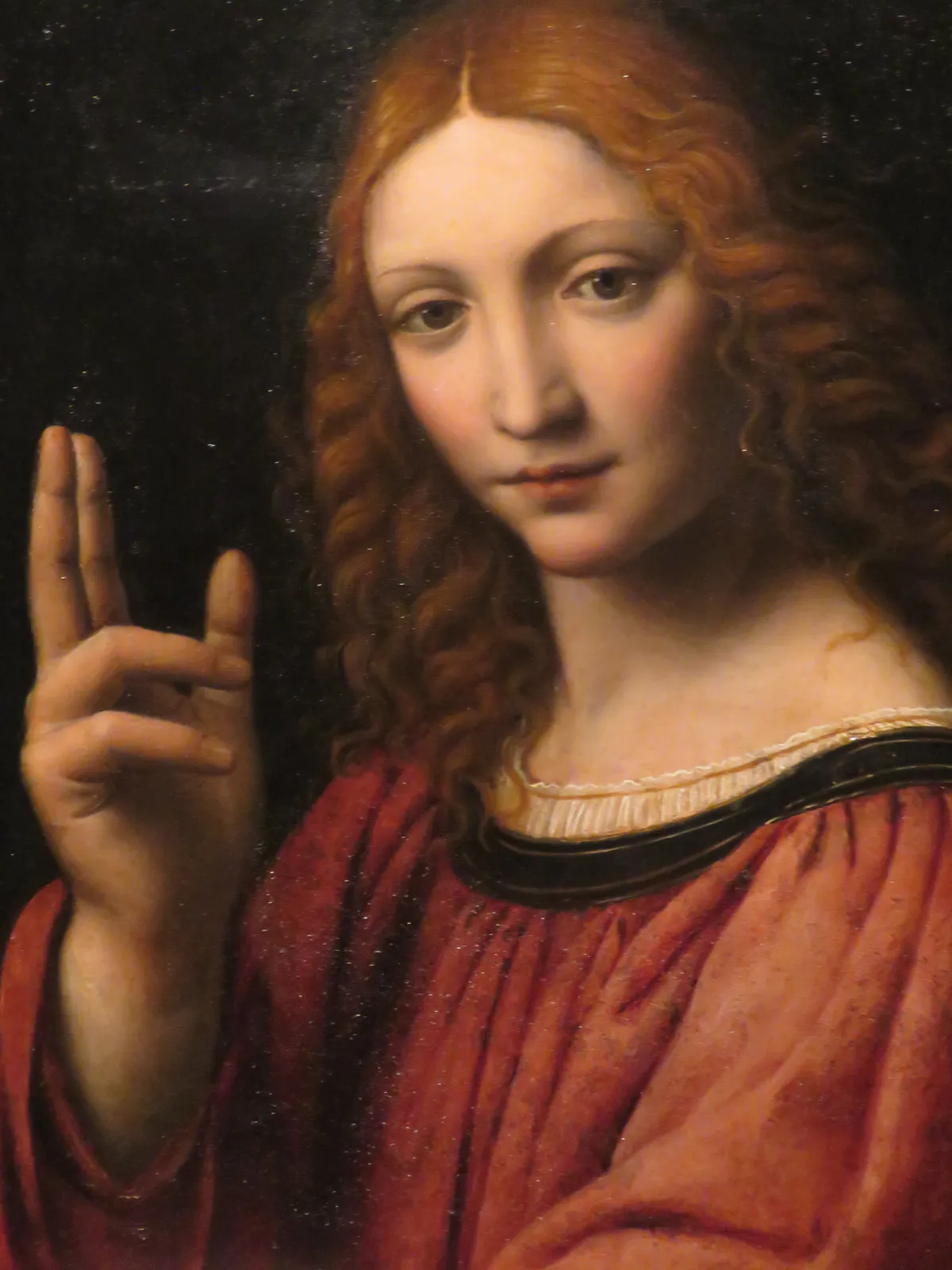
Christ Blessing
Bernardino Luini
In this serene image of Christ (c. 1520), Luini captures divine benevolence with a gentle gesture of blessing. The soft modeling of features, rich red garment, and delicate curls echo Leonardo da Vinci’s influence, yet Luini’s style emphasizes a tranquil spirituality. The raised hand unites authority with compassion, inviting personal devotion.
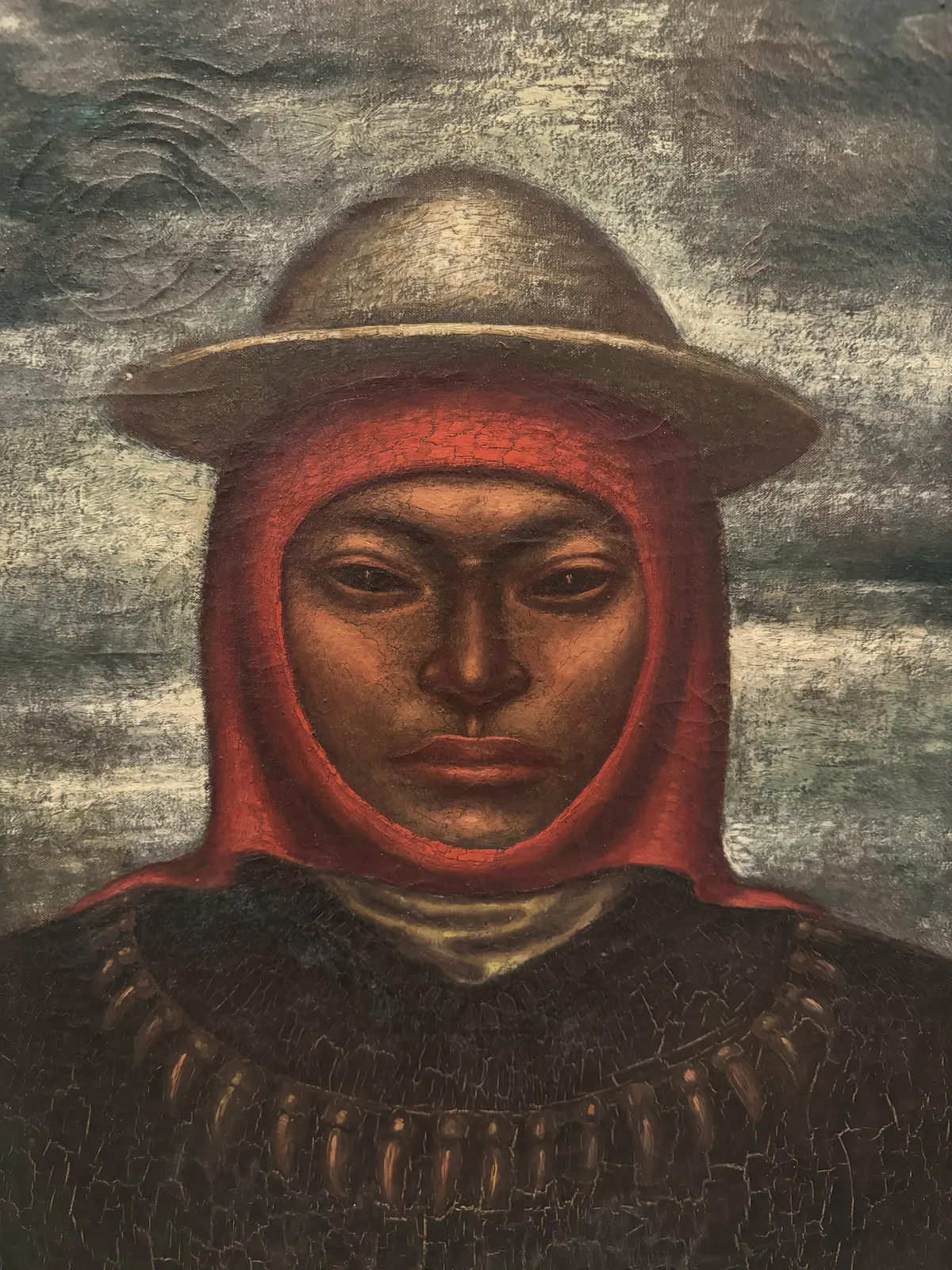
Portrait of Indigenous Person
Luis Alberto Acuña
This striking 1934 oil painting reflects the artist’s deep engagement with indigenous identity and pre-Columbian heritage. The stoic, symmetrical face, wrapped in a red hood beneath a wide-brimmed hat, evokes dignity and resilience. Acuña, a key figure in Colombian modernism, often highlighted native ancestry as a counter-narrative to Eurocentric ideals.
“When the path is beautiful, do not ask where it leads.” — Zen proverb
Welcome to my travel photography!
“When the path is beautiful, do not ask where it leads.” — Zen proverb
Welcome to my travel photography!
For as long as I can remember, my path has been one of discovery—seeking beauty, timelessness, and connection in every corner of the world. It has also been a journey of deep learning and understanding. I’ve been an avid traveler (or perhaps a travel addict?) for most of my life. My love for travel began long before I ever left home: as a child, I drew a fantasy map of my grandparents’ apartment and “traveled” through it with my cousin Sonya, imagining adventures in every corner. Nearly 90 countries and countless moments of awe later, I’m excited to share this journey with you.
Thanks to the tireless and ingenious programming of Diagilev, we’re now able to present about fifteen percent of the images I’ve accumulated over the years. More will be released in small batches depending on your interest. While the first release leans toward museum photography, later ones will include more nature, architecture, culture, and general travel experiences. If you’d like to receive email notifications about new releases, feel free to reach out—no commercial use, ever.
Throughout my travels, I’ve been drawn to two intertwined kinds of discovery. One is intellectual: learning why the world is the way it is. History became my guide, shaping my perspective and filling my camera roll with museums and old buildings. To me, history is not the past—it is the key to understanding the present and how the world became what it is. The other is emotional: seeking moments of elevation—spirituality, beauty, harmony—often found in nature, monasteries, and ancient sacred spaces. Together, these impulses shape my photography. It invites you to learn, admire, and soar—to rise above the mundane and see the world through a lens of curiosity and wonder.
Much of my later travel became possible thanks to my job with Delta Air Lines, but the wanderlust began years earlier. By the time I joined the industry, I had already visited over 35 countries and lived in several—largely thanks to a backpacking journey around the world with Luis León, whose face appears in many early photos. I grew up in Ufa in the USSR, and since leaving it I have lived, studied, and worked in Latvia, the United States, France, South Korea, Canada, Spain, Italy, Brazil, Japan, and Colombia.
A life of near-constant movement may seem a little crazy, but it has deepened my understanding of the world and produced the photography you are about to see. Over the years, my style has evolved—more intentional, more refined—yet its core remains the same: a search for understanding, timeless beauty, and a connection to those who walked this earth long before us.
I hope these photos stir something in your soul, just as they did in mine. I’d love to hear from you—whether reactions, suggestions, corrections, or a request to be added to the email list for new releases (no commercial use, I promise). You can learn more about my travels here, and my academic life here.
Enjoy our shared journey!