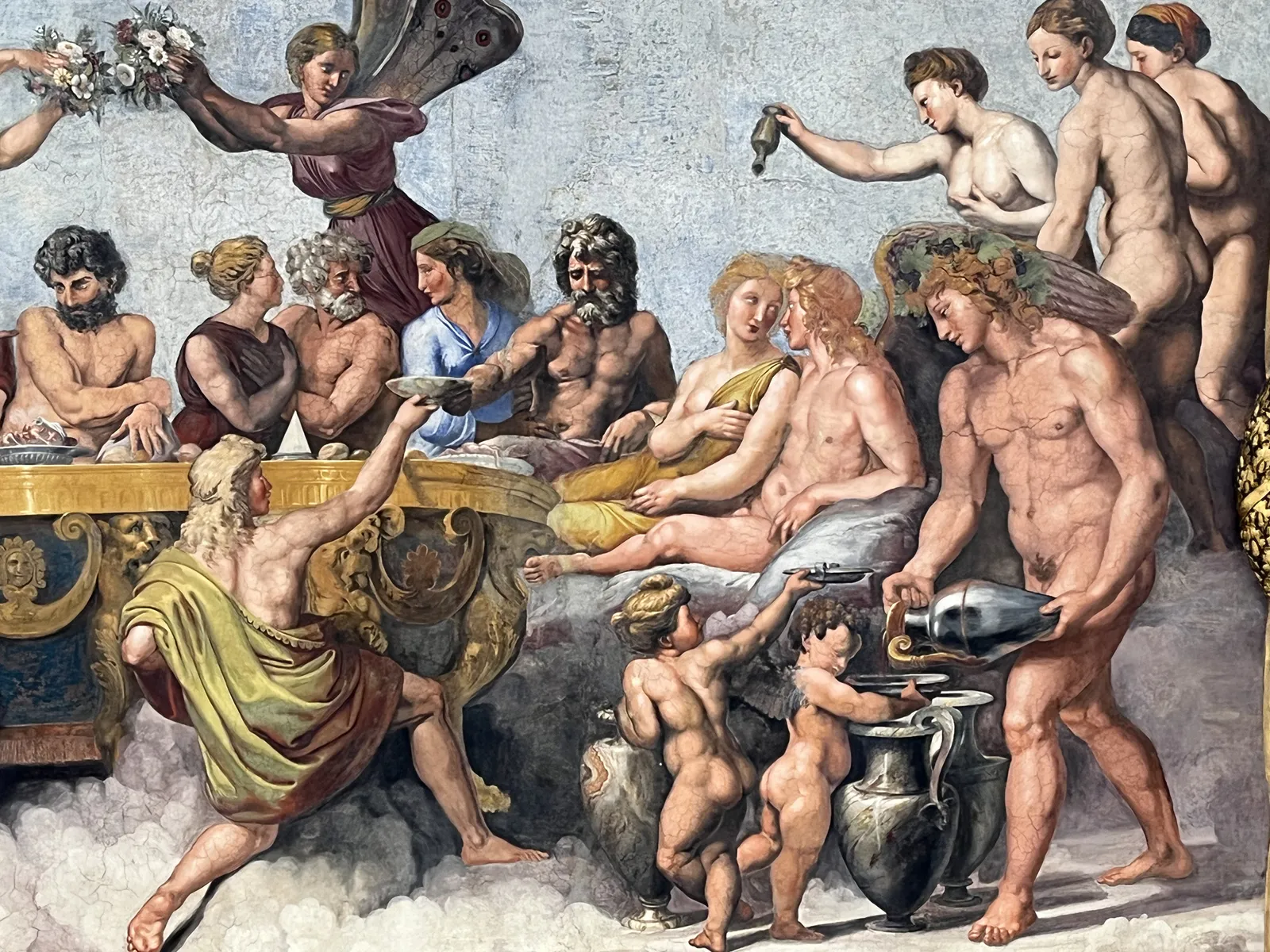
The Wedding Banquet of Cupid and Psyche
Raphael
In this fresco (1518–19), Raphael presents the divine banquet:on the left are Neptune, Persephone, Pluto, Juno, and Jupiter receiving a drink from Ganymede. On the right sit Psyche and Cupid, gazing at each other. In the foreground, Bacchus and a young satyr pour wine, highlighting the festive nature of Cupid’s immortal union with Psyche.
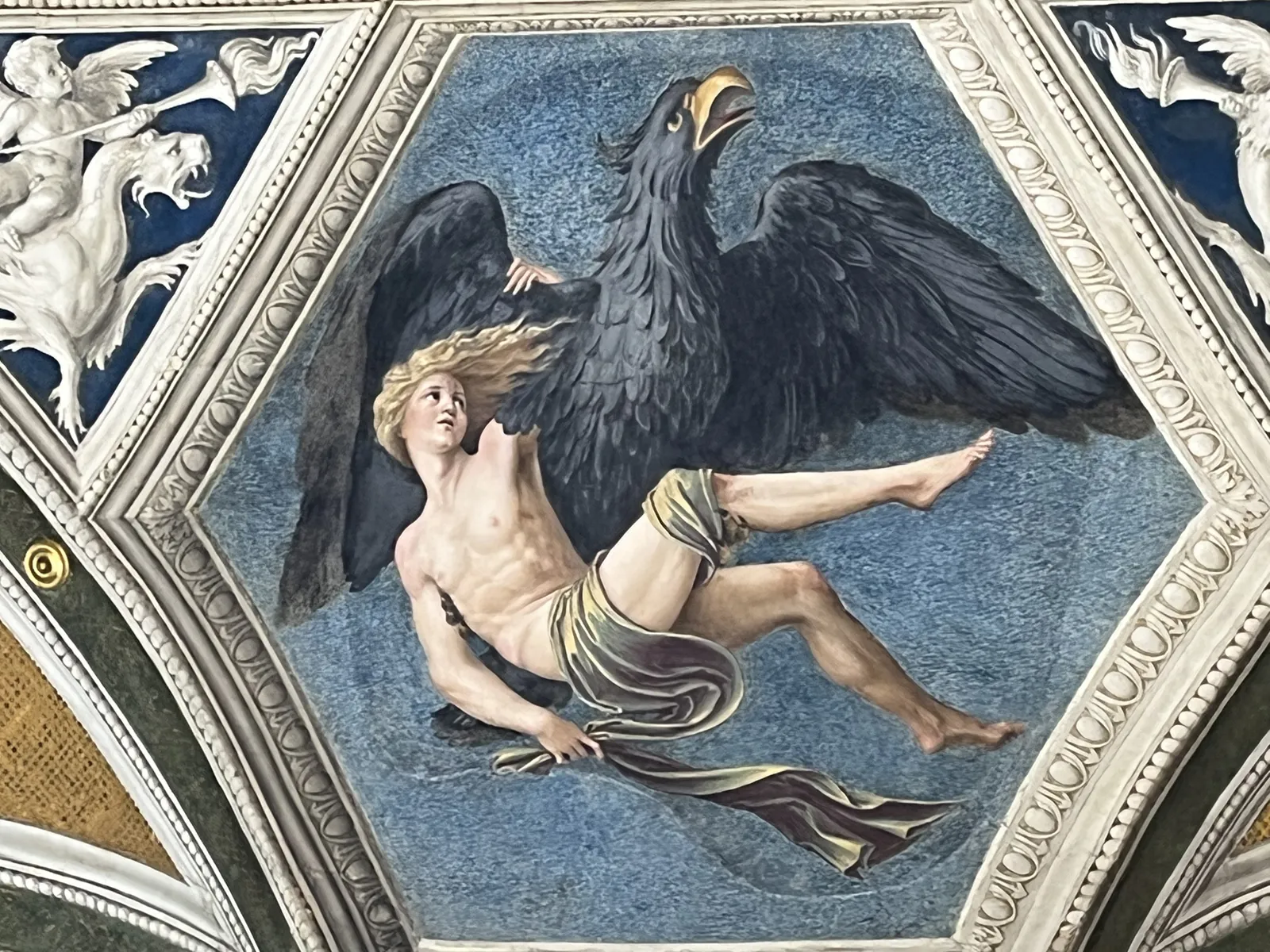
The Rape of Ganymede
Baldassarre Peruzzi
This Renaissance ceiling panel (1509–14) shows Zeus, in the form of an eagle, abducting the beautiful youth Ganymede to Olympus. The myth frames the act as a moment of divine erotic desire, with Ganymede raised to immortal companionship as Zeus’s beloved. The term rape follows the Latin raptus, meaning abduction, not its modern sense.
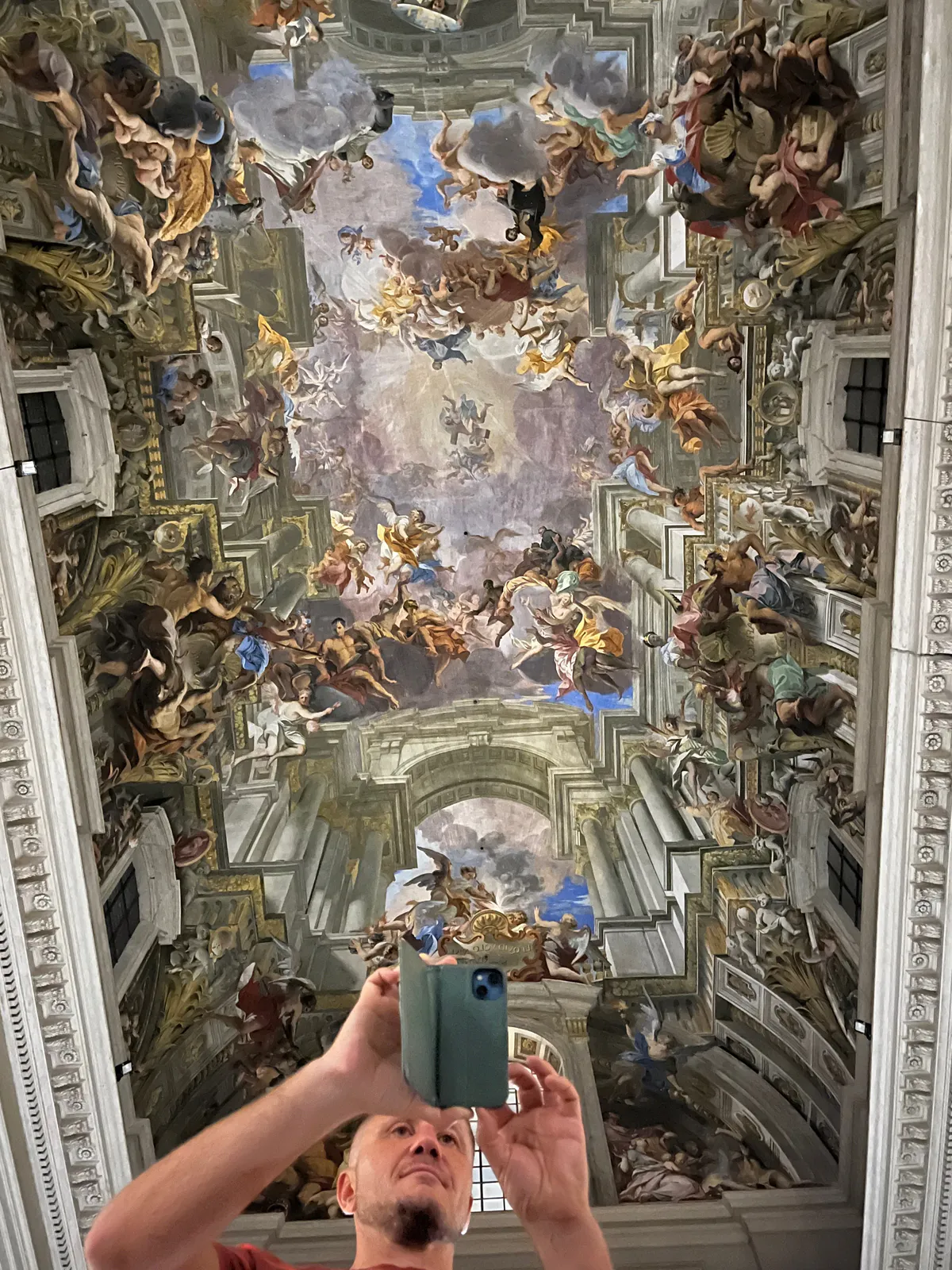
The Apotheosis of St. Ignatius
Andrea Pozzo
Max captures The Apotheosis of St. Ignatius (1685–1694) using a viewing mirror beneath the ceiling, enhancing Pozzo’s Baroque illusionism. This optical device unveils the masterful perspective that transforms the flat vault into a celestial vision, merging art and exemplifying the Baroque fascination with perspective: a dynamic interplay between earthly and divine realms.
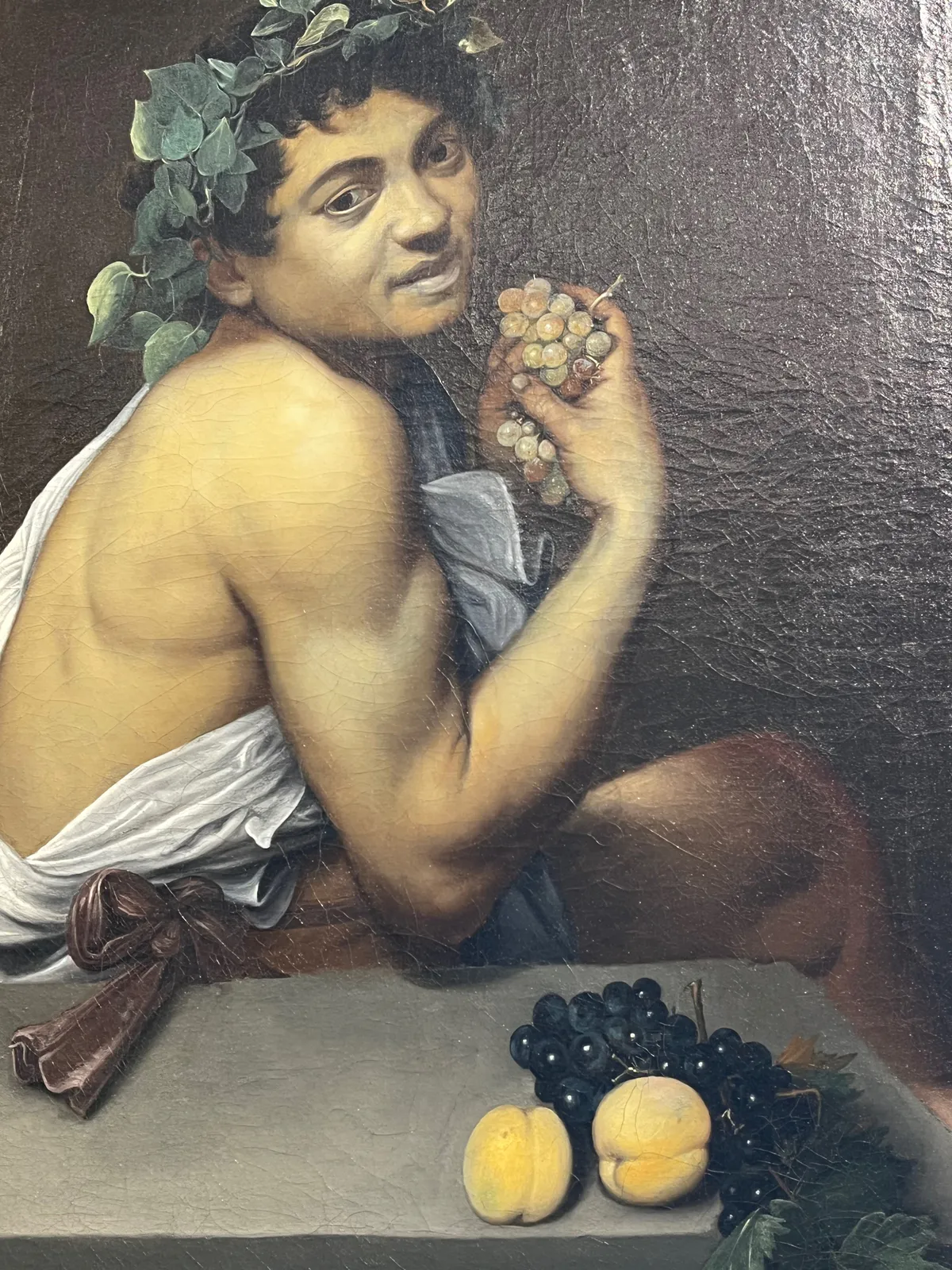
Young Sick Bacchus
Caravaggio
This self-portrait (c. 1593) shows Caravaggio as Bacchus with jaundiced skin and tense features, painted while recovering from illness. The ivy crown replaces the usual vine leaves, subverting divine idealism. Both sensual and unsettling, the image mocks classical beauty and reveals the artist’s own physical vulnerability.
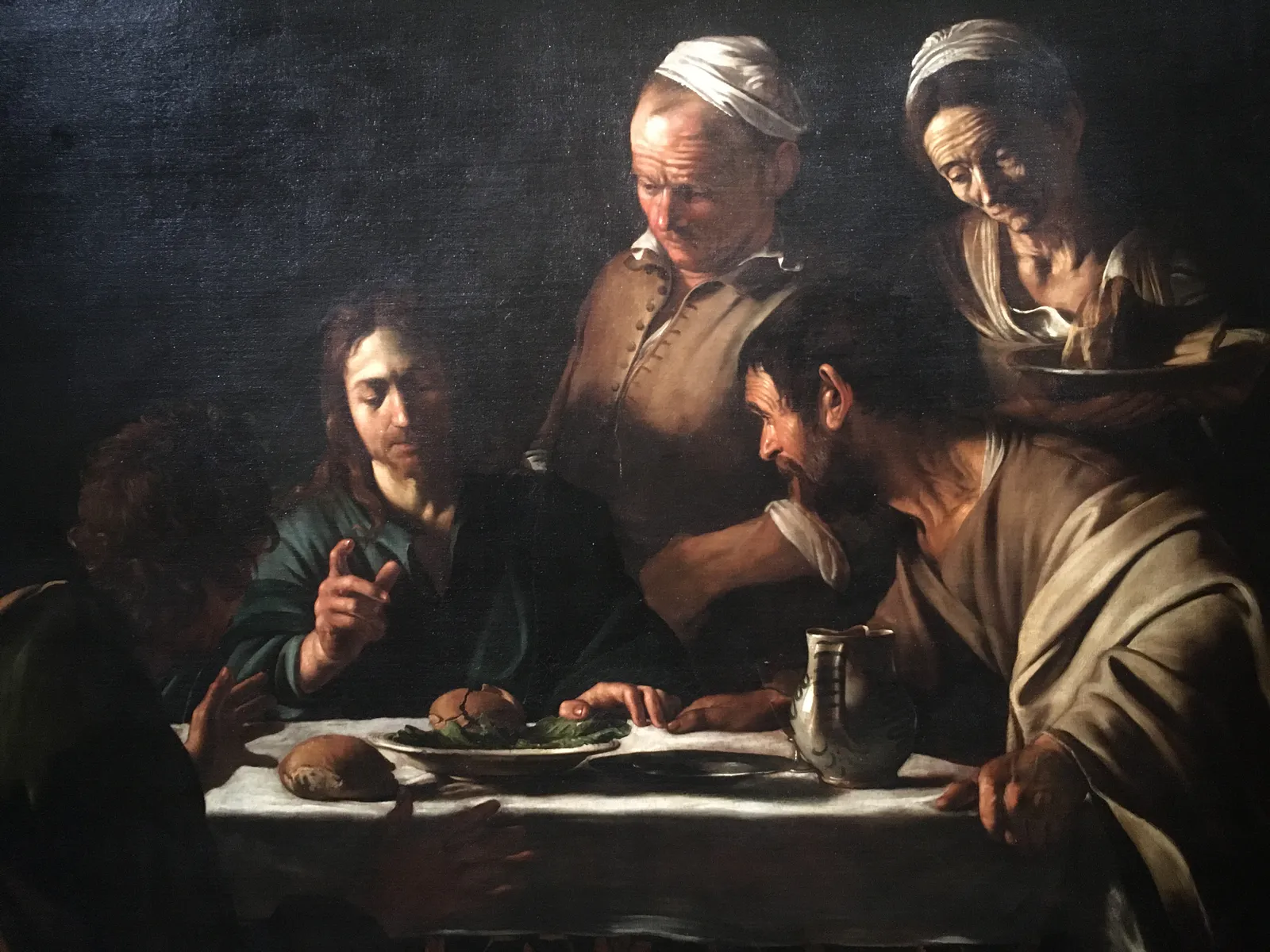
The Supper at Emmaus
Caravaggio
This painting (c.1606) focuses on Christ’s quiet gesture and the attentive figures around him. Subtle expressions replace dramatic shock, emphasizing intimacy over display. Caravaggio draws revelation into the realm of the ordinary, showing faith as recognition that dawns quietly amid human fragility.
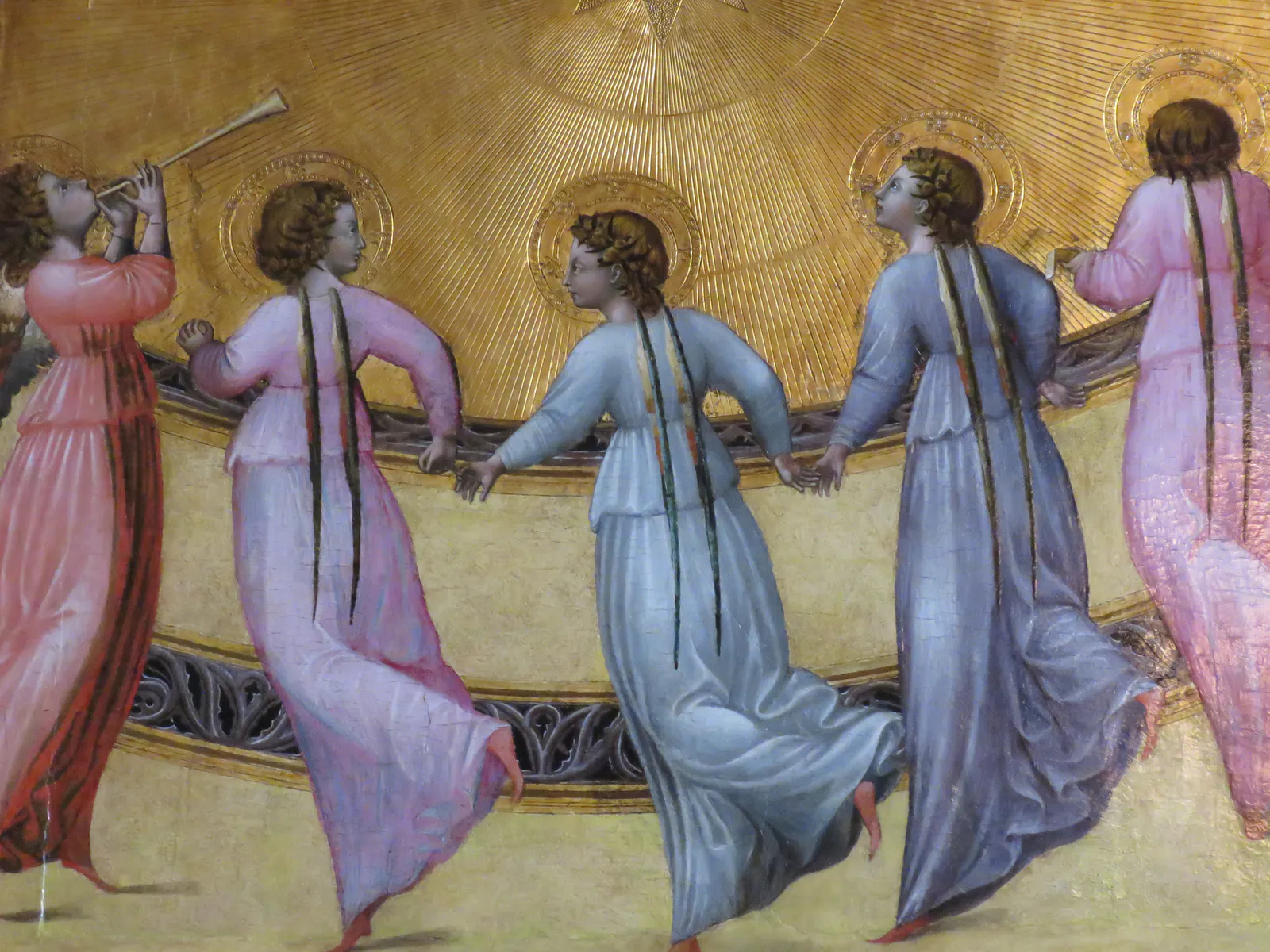
Five Dancing Angels (detail)
Giovanni di Paolo
This detail (c.1436) comes from Giovanni di Paolo’s Five Dancing Angels. Here, three angels join hands in a celestial dance while another plays the trumpet before a golden sun, symbolizing God. Their flowing robes and rhythmic gestures convey divine harmony, reflecting the spiritual intensity of 15th-c. Sienese art.
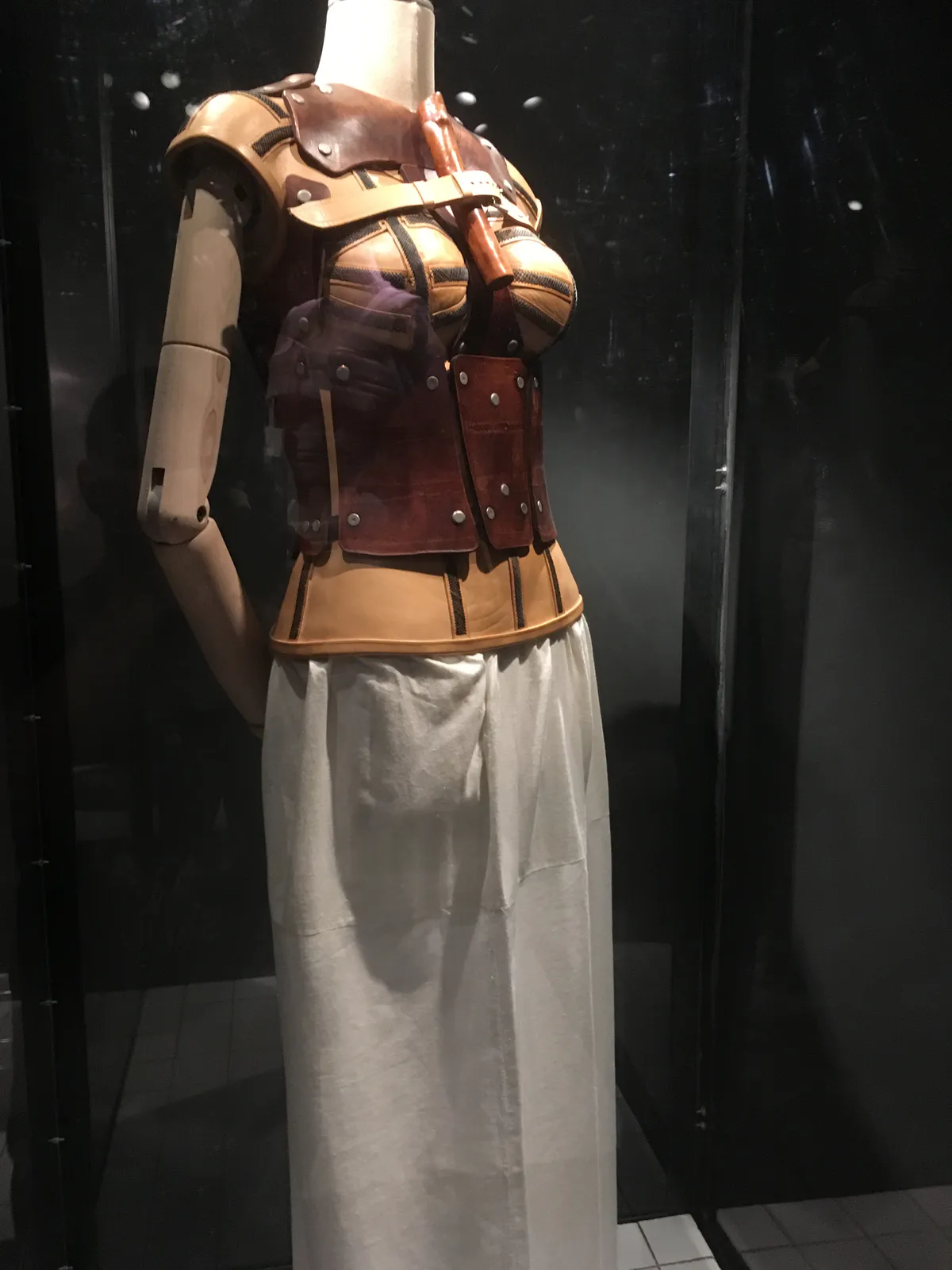
Painted Orthopedic Corset
Frida Kahlo
This hand-painted leather corset (c.1944), worn by Frida Kahlo, illustrates both her physical suffering and creative defiance. After spinal injuries and repeated surgeries, Kahlo turned orthopedic braces into canvases, inscribing them with personal symbols. She transformed medical necessity into art, merging pain, identity, and resilience.
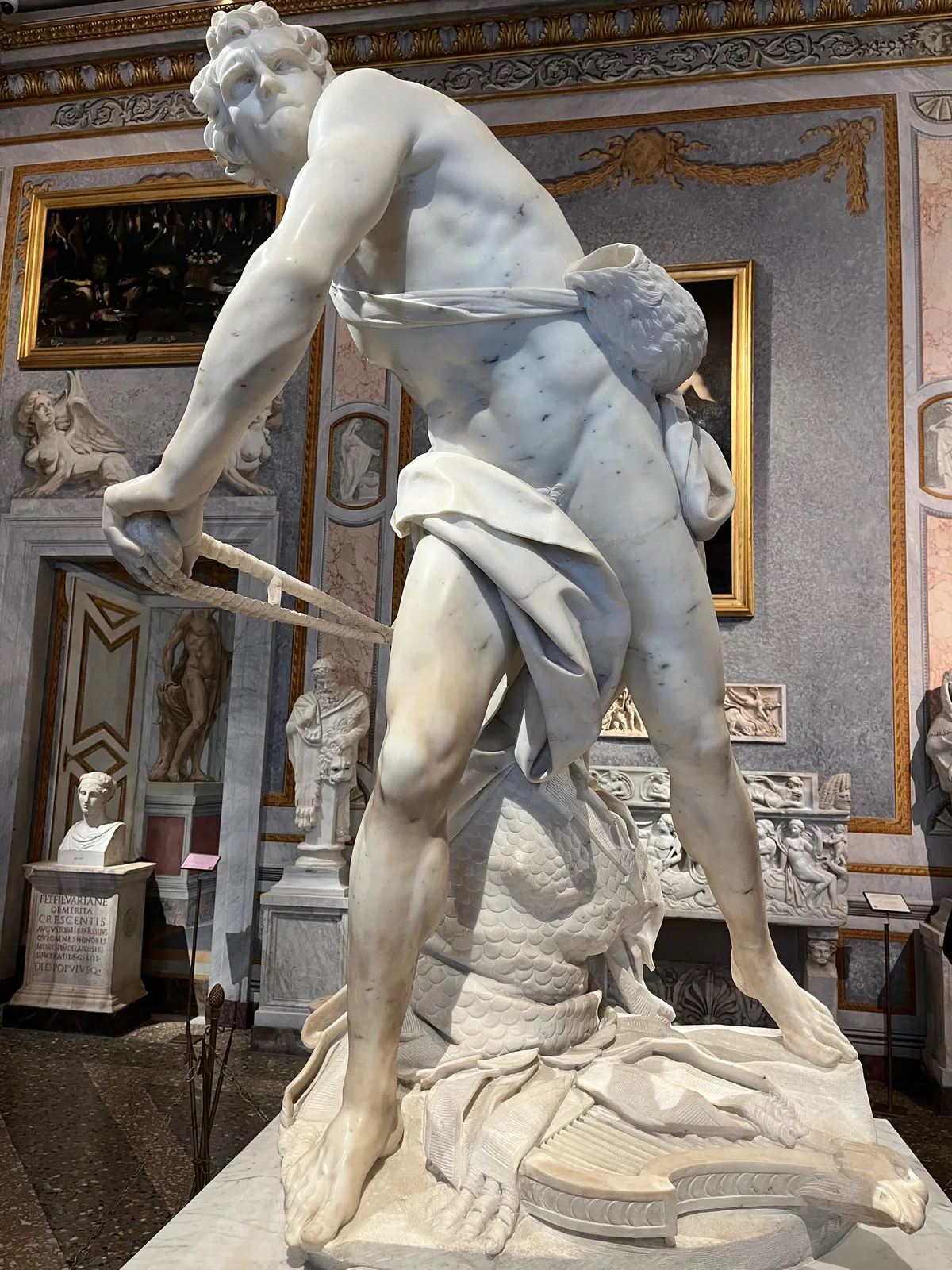
David
Gian Lorenzo Bernini
This electrifying sculpture (1623–24) captures David mid-swing as he prepares to strike Goliath. Commissioned by Cardinal Scipione Borghese, it breaks from static Renaissance models by freezing a moment of intense motion and psychological resolve. Bernini’s vivid realism and spiraling pose typify the Baroque celebration of drama and energy.
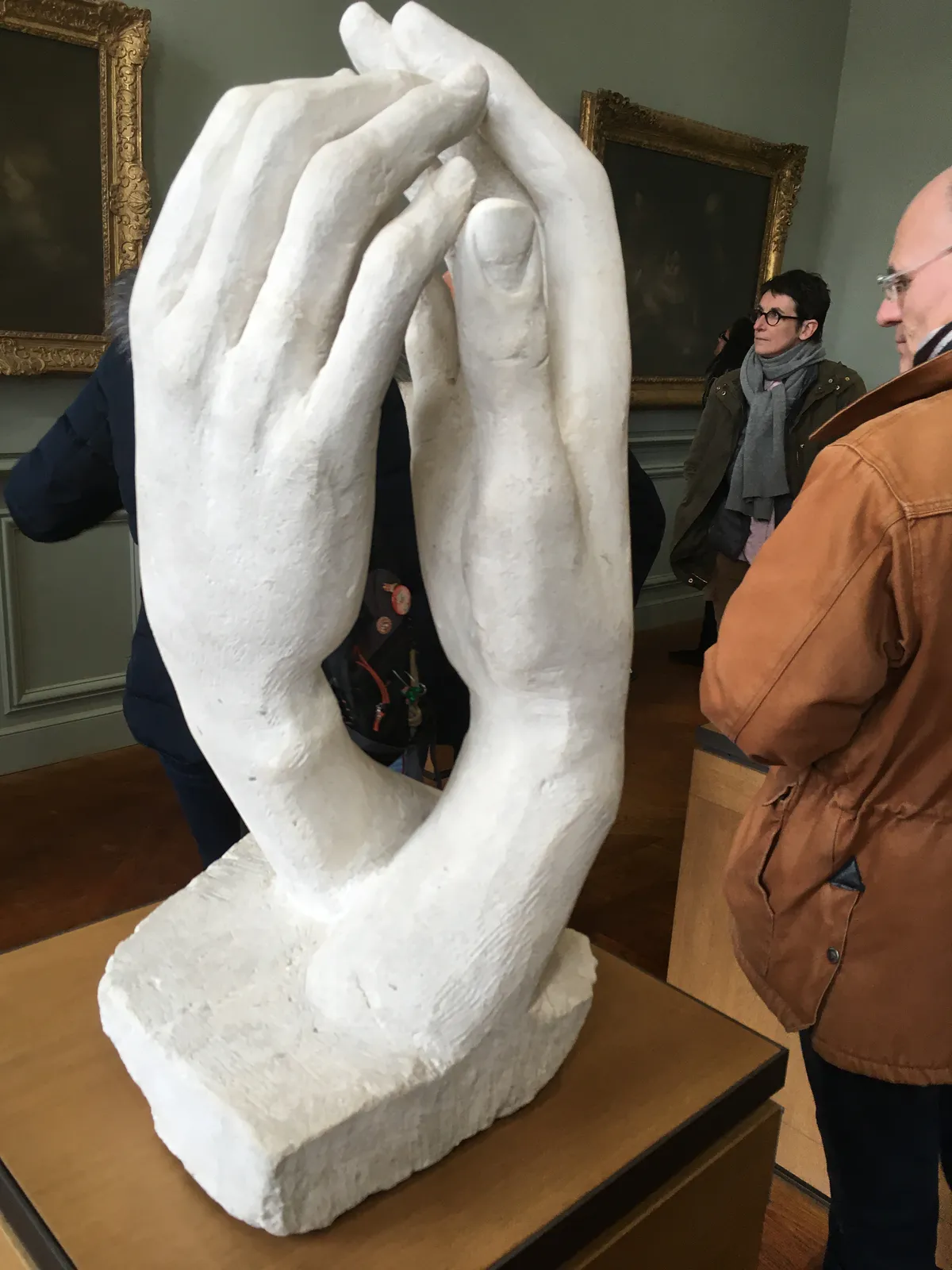
The Cathedral
Auguste Rodin
This 1908 sculpture features two right hands reaching towards each other, symbolizing connection and unity. Initially named The Arch of Alliance, it was inspired by Gothic cathedral rib vaults and renamed in 1914. The texture and interplay of light and shadow evoke prayer and contemplation. This work marks Rodin’s shift from realism to modernism, emphasizing emotional depth over physical form.
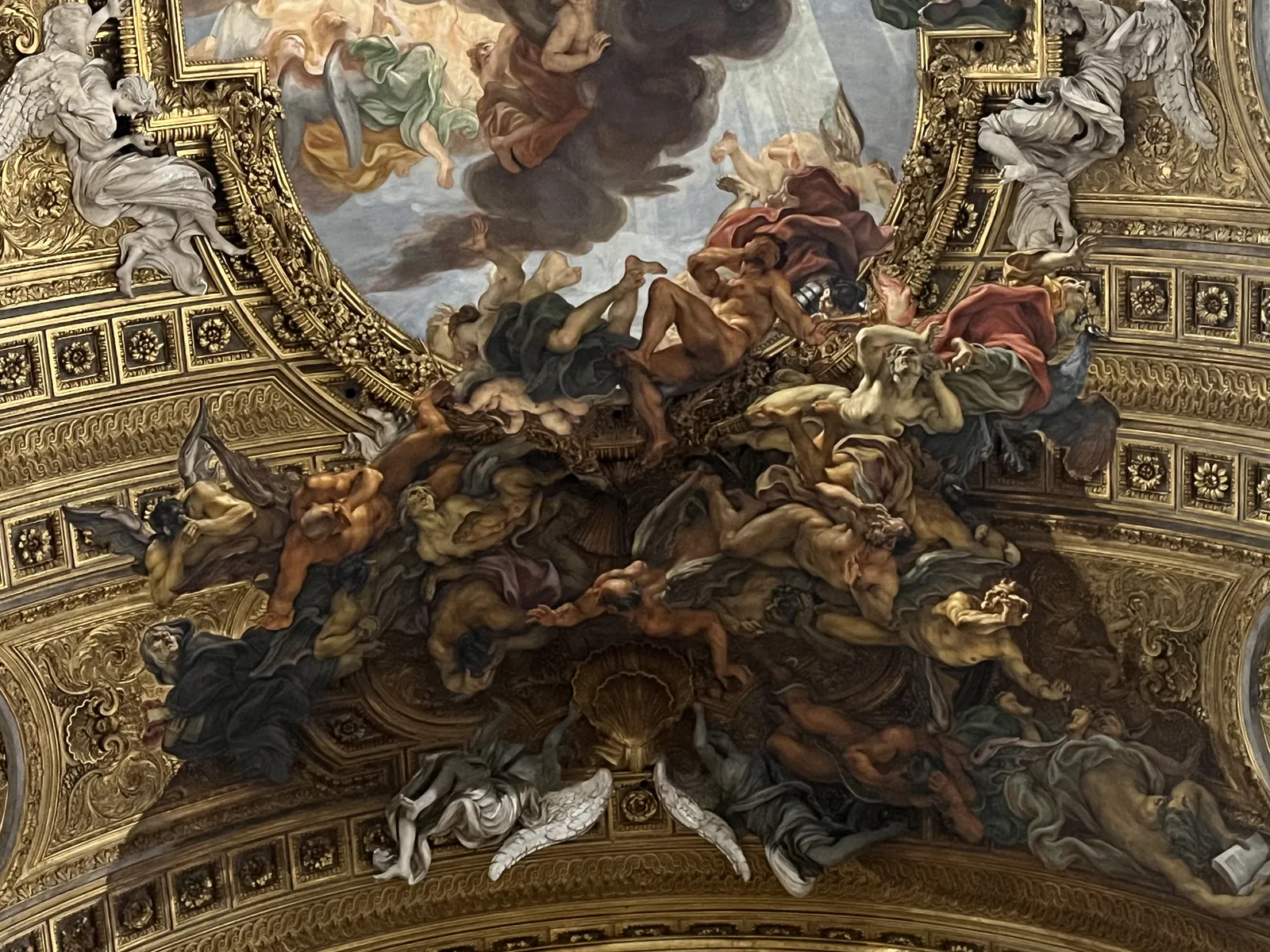
The Damned
Giovanni Battista Gaulli
In this dramatic segment (1676–79) from the Triumph of the Name of Jesus, Gaulli casts the damned from heaven into shadow and chaos. Their bodies twist, morph, and scream as they recoil from the divine light. Cloaked in darkness and shame, they contrast sharply with the radiant saved above—embodying Baroque emotion and the terrifying cost of spiritual failure.
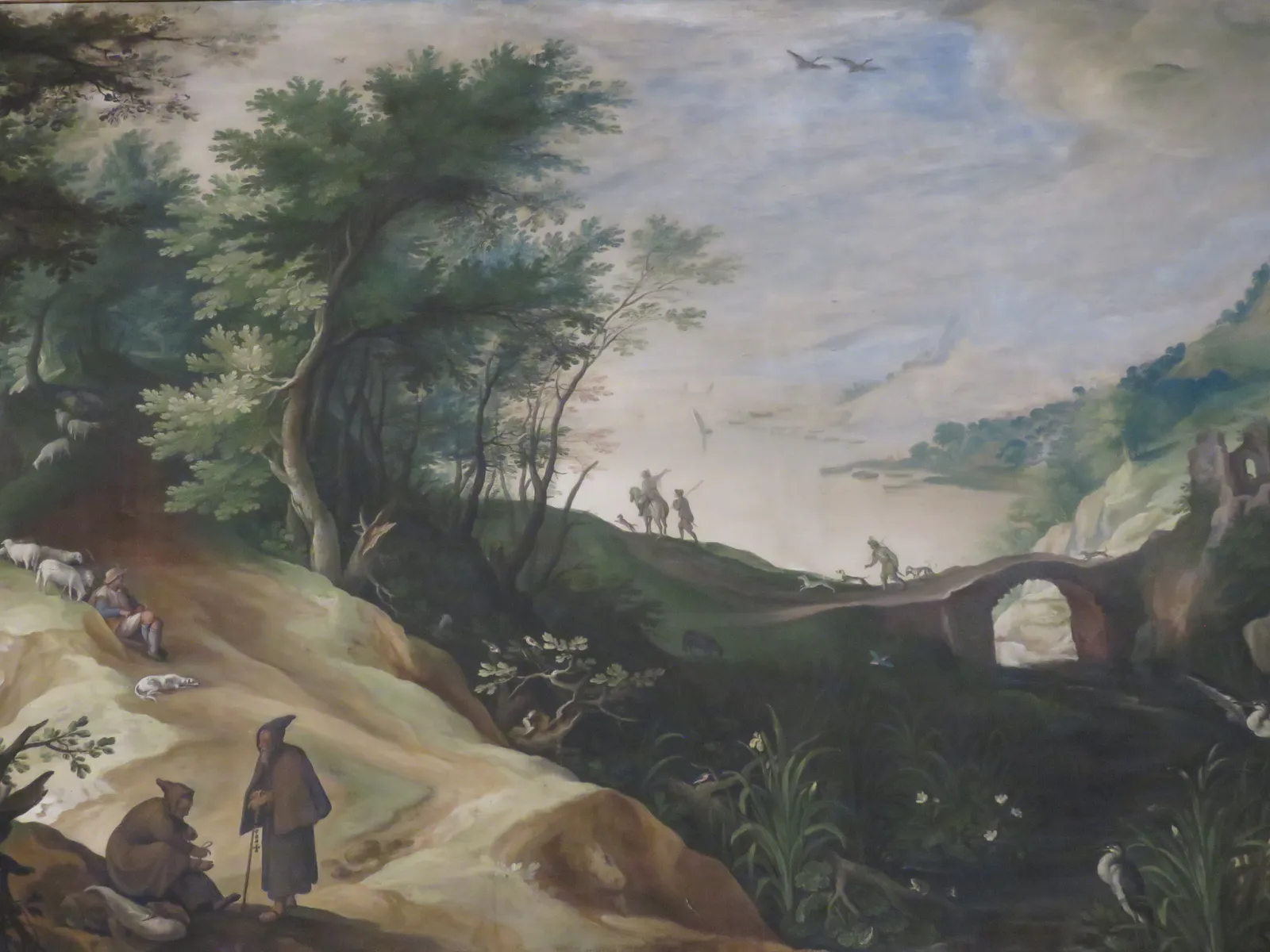
Landscape with Hermits
Paul Bril
This landscape (c. 1600) shows monks gathered in a wooded clearing beneath a broad, luminous sky. Their small figures sit or stand along a path that opens toward distant hills. Such scenes appeared in early Baroque painting, especially in northern regions where sacred retreat was a common theme. The composition indicates how artists linked hermitic life with the ordered quiet of nature.
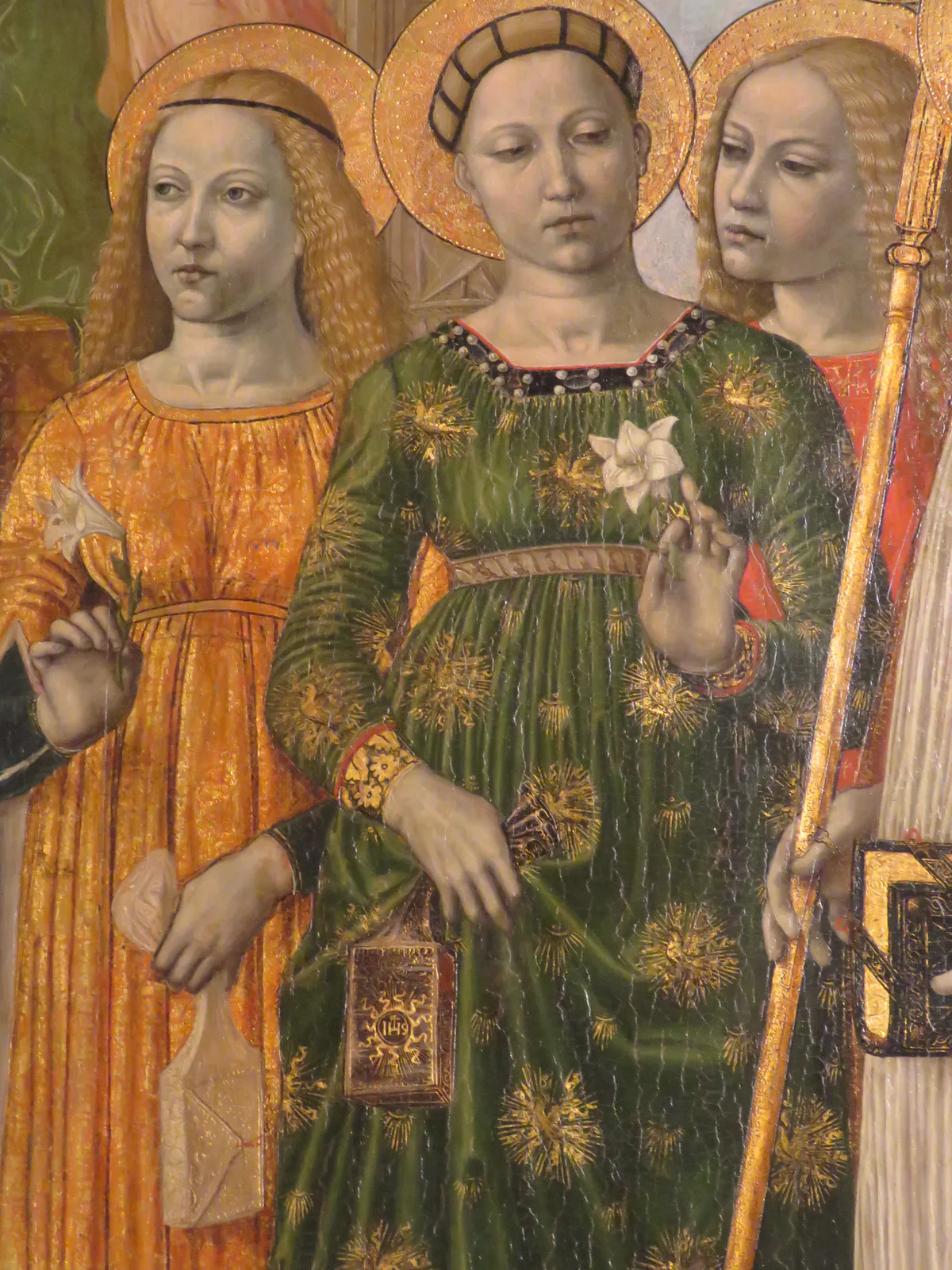
Santa Conversazione (detail)
Ambrogio Bergognone
This panel 1490-95) features a trio of female saints bearing lilies, symbolizing purity. Adorned with gold and intricate embroidery, their garments suggest sanctity and nobility. The solemn expressions and clasped books evoke wisdom and devotion, emphasizing the fusion of holiness and human dignity in late Gothic religious art.
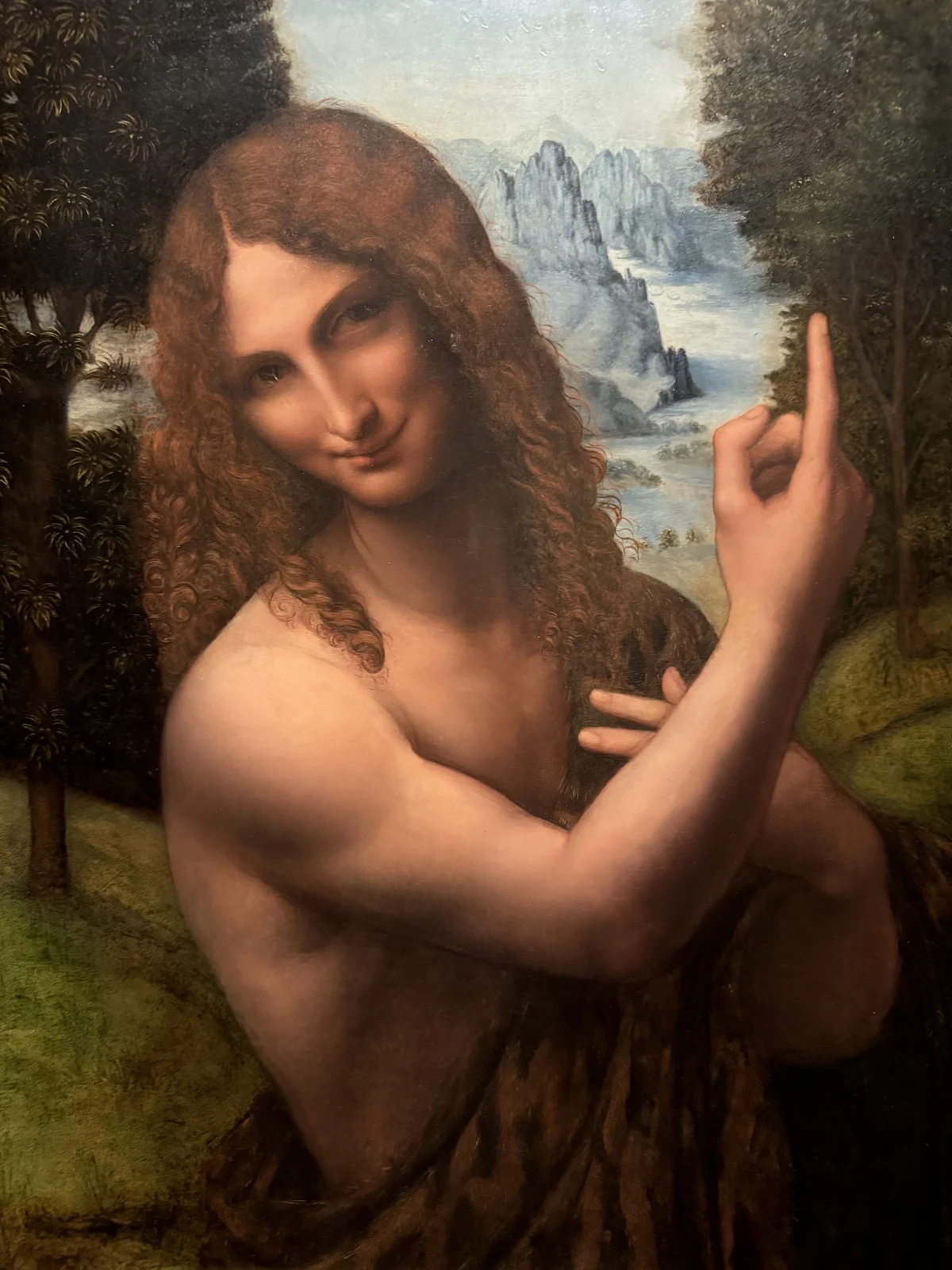
St John the Baptist
Salaino
This sensuous portrayal of John the Baptist (early 16th c.) blends spiritual solemnity with ambiguous allure. Influenced by Leonardo da Vinci, the figure’s delicate features and mysterious smile reflect a complex merging of divine grace and human beauty, inviting contemplation beyond doctrine.
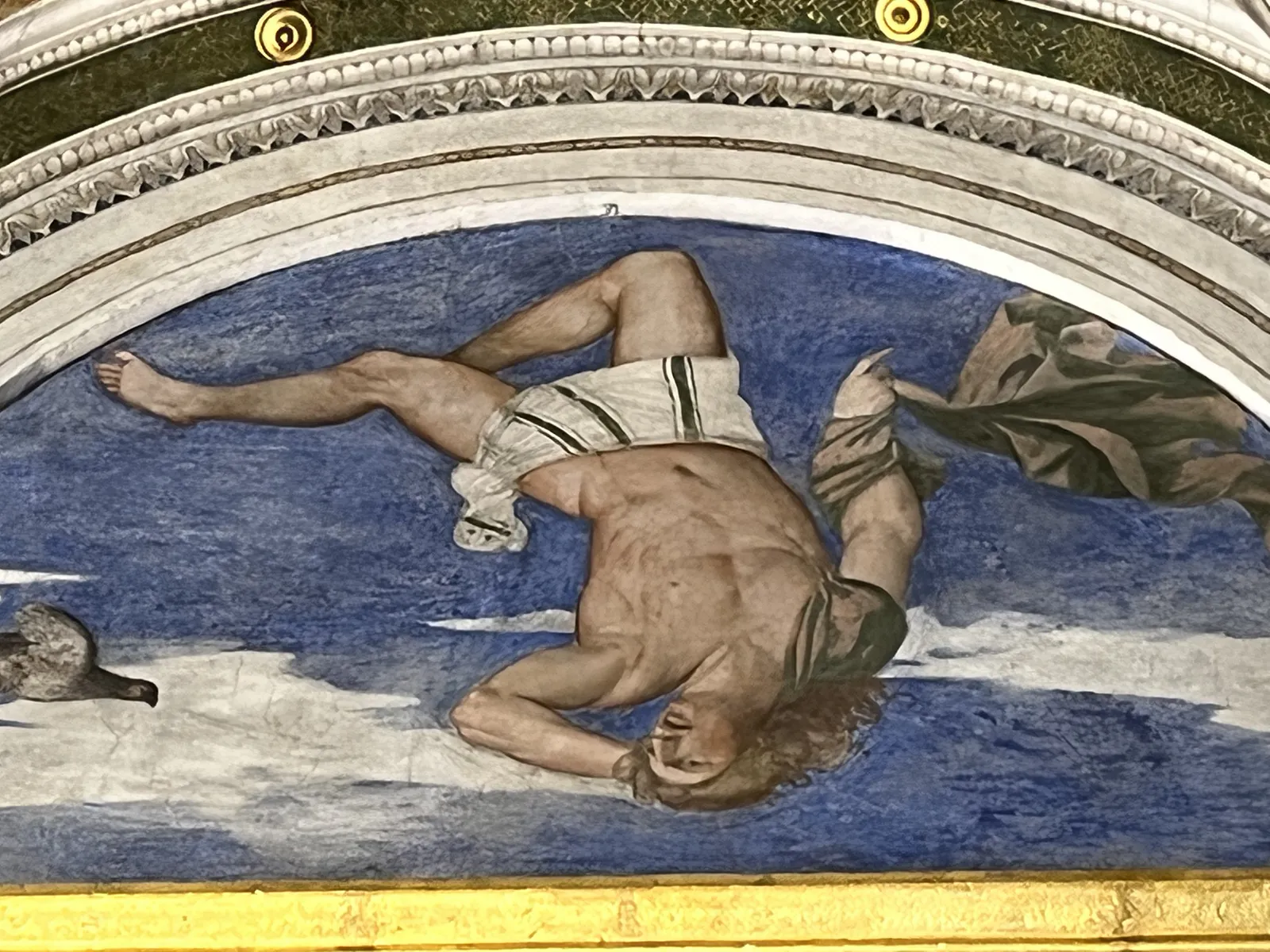
The Fall of Phaeton
Sebastiano del Piombo
This fragment (c. 1511) shows Phaeton falling from the sky after failing to control the sun chariot of his father Helios. To save the world, Zeus strikes him down. Part of Sebastiano del Piombo’s mythological cycle at Villa Farnesina, it complements Raphael’s Triumph of Galatea with a dramatic warning against hubris.
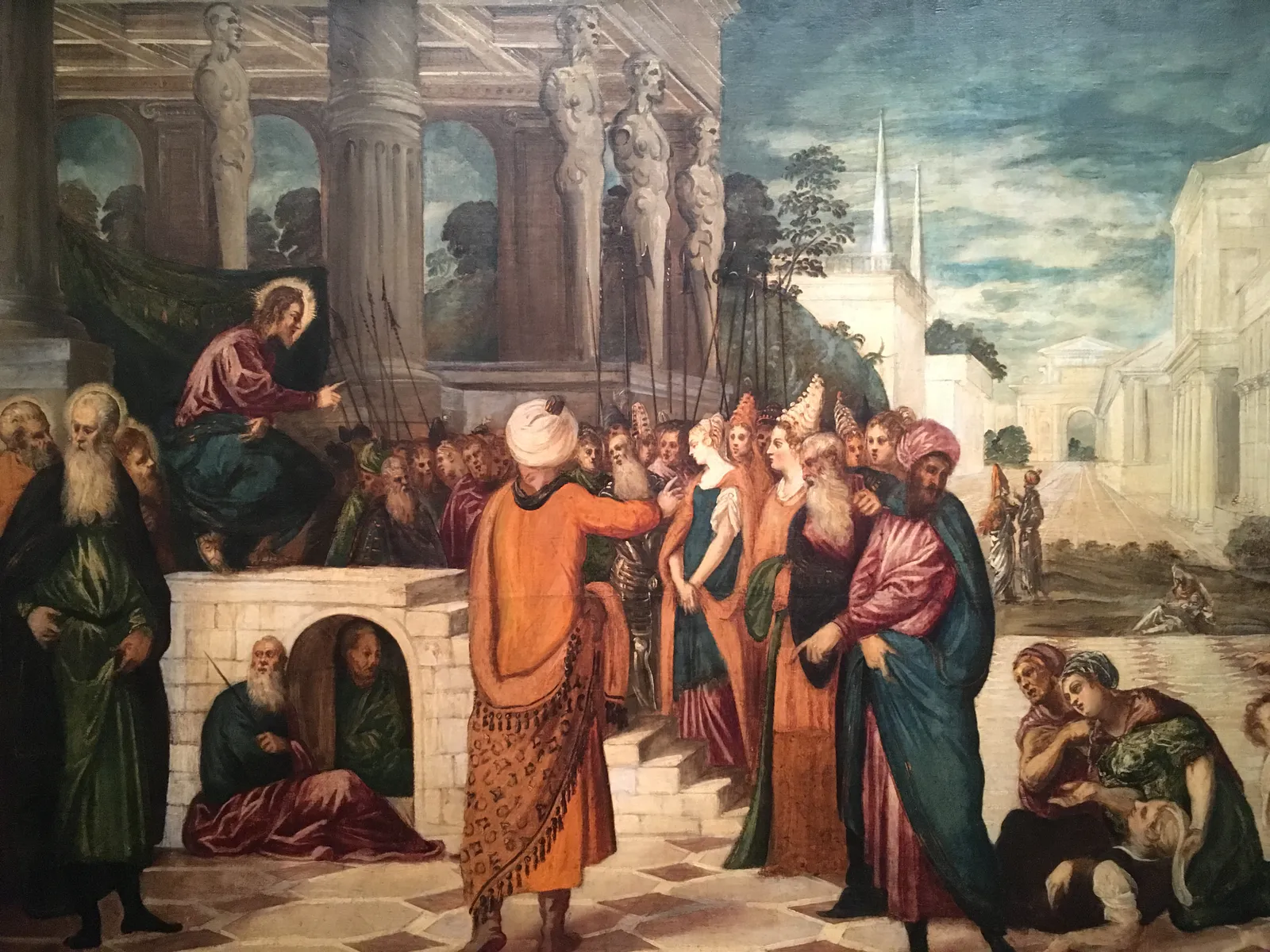
Christ and the Adulteress
Tintoretto
This scene (c. 1555) is from the Gospel of John: Jesus responds to scribes and Pharisees demanding judgment on an adulterous woman. His challenge—inviting the sinless to cast the first stone—teaches mercy over condemnation. Tintoretto’s dynamic style appears in the sharp contrasts of light and shadow, elongated figures, and oblique spatial arrangement that intensify the moral tension. Classical architectural elements frame the encounter, emphasizing the conflict between legalism and redemption.
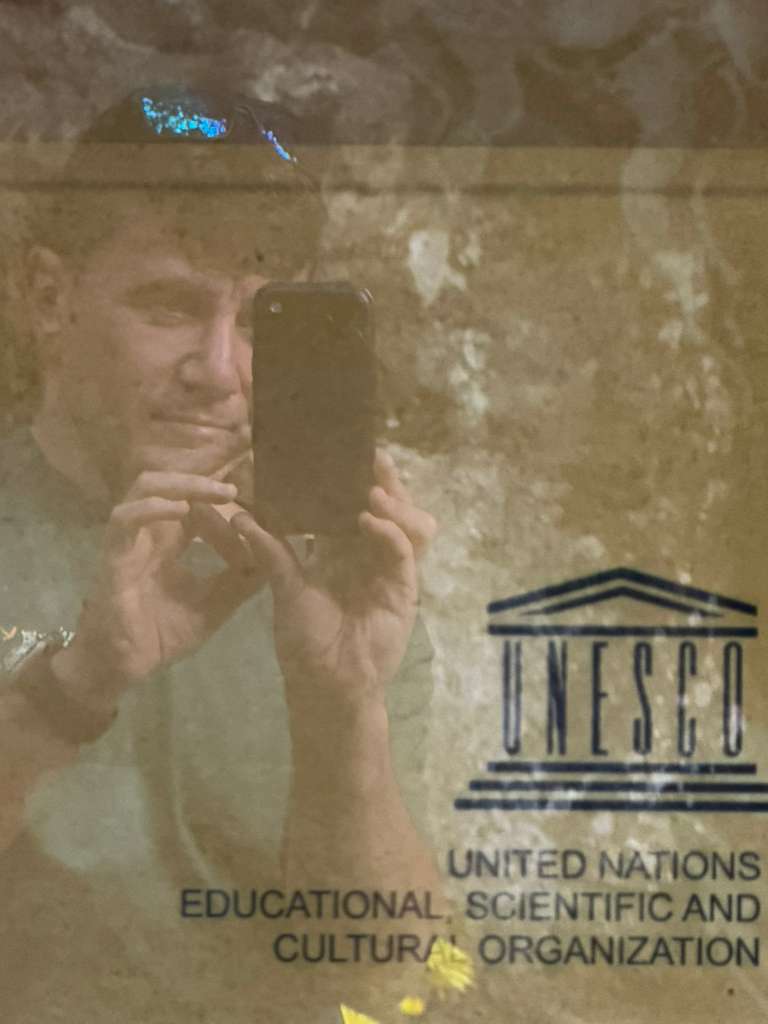
“When the path is beautiful, do not ask where it leads.” — Zen proverb
Welcome to my travel photography!
“When the path is beautiful, do not ask where it leads.” — Zen proverb
Welcome to my travel photography!
For as long as I can remember, my path has been one of discovery—seeking beauty, timelessness, and connection in every corner of the world. It has also been a journey of deep learning and understanding. I’ve been an avid traveler (or perhaps a travel addict?) for most of my life. My love for travel began long before I ever left home: as a child, I drew a fantasy map of my grandparents’ apartment and “traveled” through it with my cousin Sonya, imagining adventures in every corner. Nearly 90 countries and countless moments of awe later, I’m excited to share this journey with you.
Thanks to the tireless and ingenious programming of Diagilev, we’re now able to present about fifteen percent of the images I’ve accumulated over the years. More will be released in small batches depending on your interest. While the first release leans toward museum photography, later ones will include more nature, architecture, culture, and general travel experiences. If you’d like to receive email notifications about new releases, feel free to reach out—no commercial use, ever.
Throughout my travels, I’ve been drawn to two intertwined kinds of discovery. One is intellectual: learning why the world is the way it is. History became my guide, shaping my perspective and filling my camera roll with museums and old buildings. To me, history is not the past—it is the key to understanding the present and how the world became what it is. The other is emotional: seeking moments of elevation—spirituality, beauty, harmony—often found in nature, monasteries, and ancient sacred spaces. Together, these impulses shape my photography. It invites you to learn, admire, and soar—to rise above the mundane and see the world through a lens of curiosity and wonder.
Much of my later travel became possible thanks to my job with Delta Air Lines, but the wanderlust began years earlier. By the time I joined the industry, I had already visited over 35 countries and lived in several—largely thanks to a backpacking journey around the world with Luis León, whose face appears in many early photos. I grew up in Ufa in the USSR, and since leaving it I have lived, studied, and worked in Latvia, the United States, France, South Korea, Canada, Spain, Italy, Brazil, Japan, and Colombia.
A life of near-constant movement may seem a little crazy, but it has deepened my understanding of the world and produced the photography you are about to see. Over the years, my style has evolved—more intentional, more refined—yet its core remains the same: a search for understanding, timeless beauty, and a connection to those who walked this earth long before us.
I hope these photos stir something in your soul, just as they did in mine. I’d love to hear from you—whether reactions, suggestions, corrections, or a request to be added to the email list for new releases (no commercial use, I promise). You can learn more about my travels here, and my academic life here.
Enjoy our shared journey!