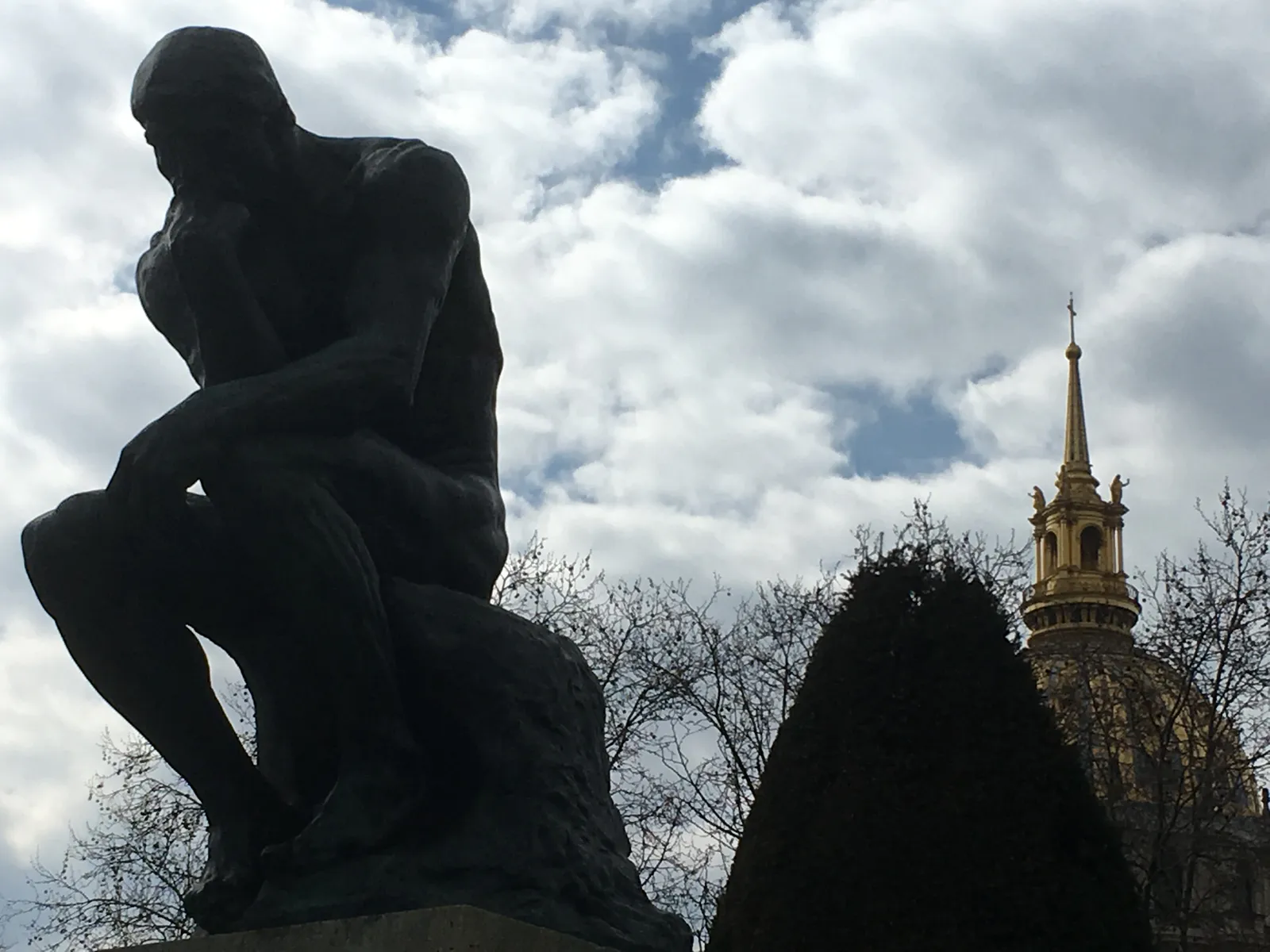
The Thinker
Auguste Rodin
Rodin's iconic bronze sculpture, The Thinker(1904), depicts a nude male figure in deep contemplation, symbolizing profound thought. Originally part of The Gates of Hell, it reflects on philosophy and introspection. This one is the monumental casting, with 27 full-sized versions worldwide. The masterpiece invites viewers to ponder life's complexities, embodying the universal quest for understanding and intellectual pursuit.
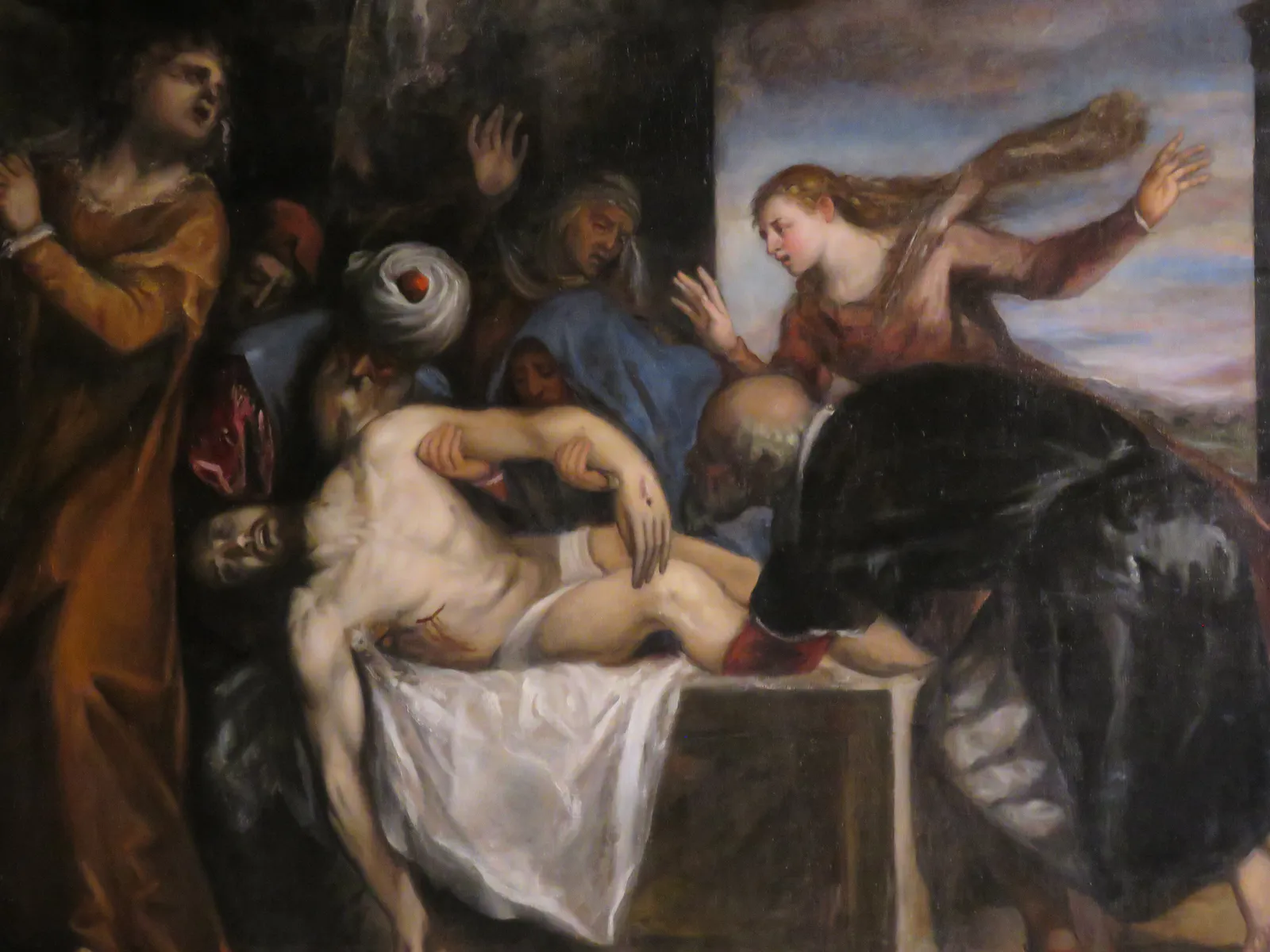
The Entombment of Christ
Titian and Palma the Younger
A poignant rendering of Christ’s burial, this oil on canvas (1618) was begun by Titian and completed by Palma the Younger. The composition captures collective grief, emphasizing the physical weight of death and the emotional weight of loss. The figures’ gestures and expressions mirror Renaissance ideals of pathos and human dignity.
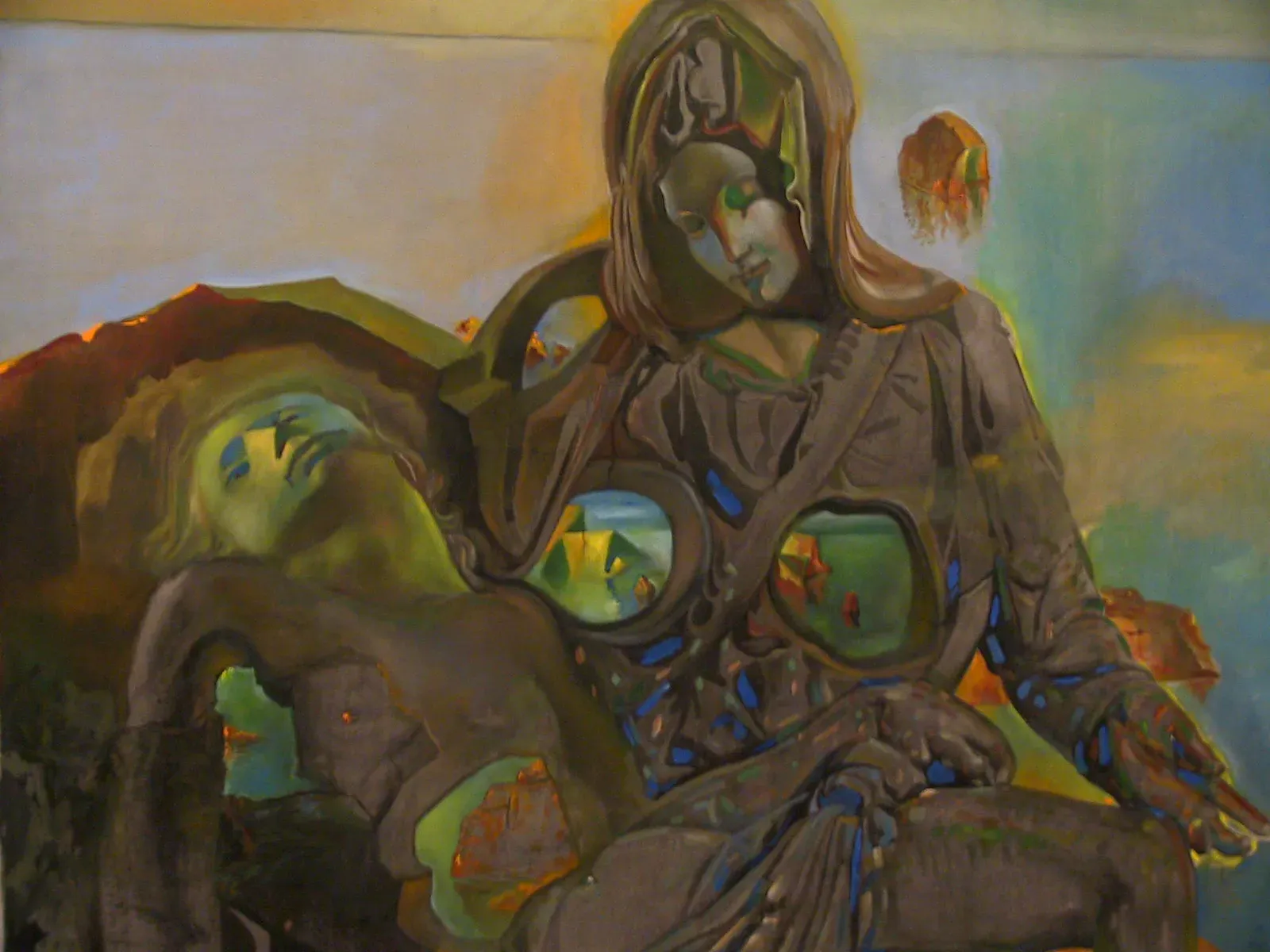
Geological Echo. La Pietà
Salvador Dalí
Dalí reinterprets Michelangelo’s La Pietà, merging sacred imagery with surreal geological forms (1982). The figures’ bodies become fragmented landscapes, symbolizing the erosion of memory and time. Created during Gala’s final years, the work reflects personal grief, exploring themes of love, loss, and the unconscious through voids that resonate with emotional depth and introspection.
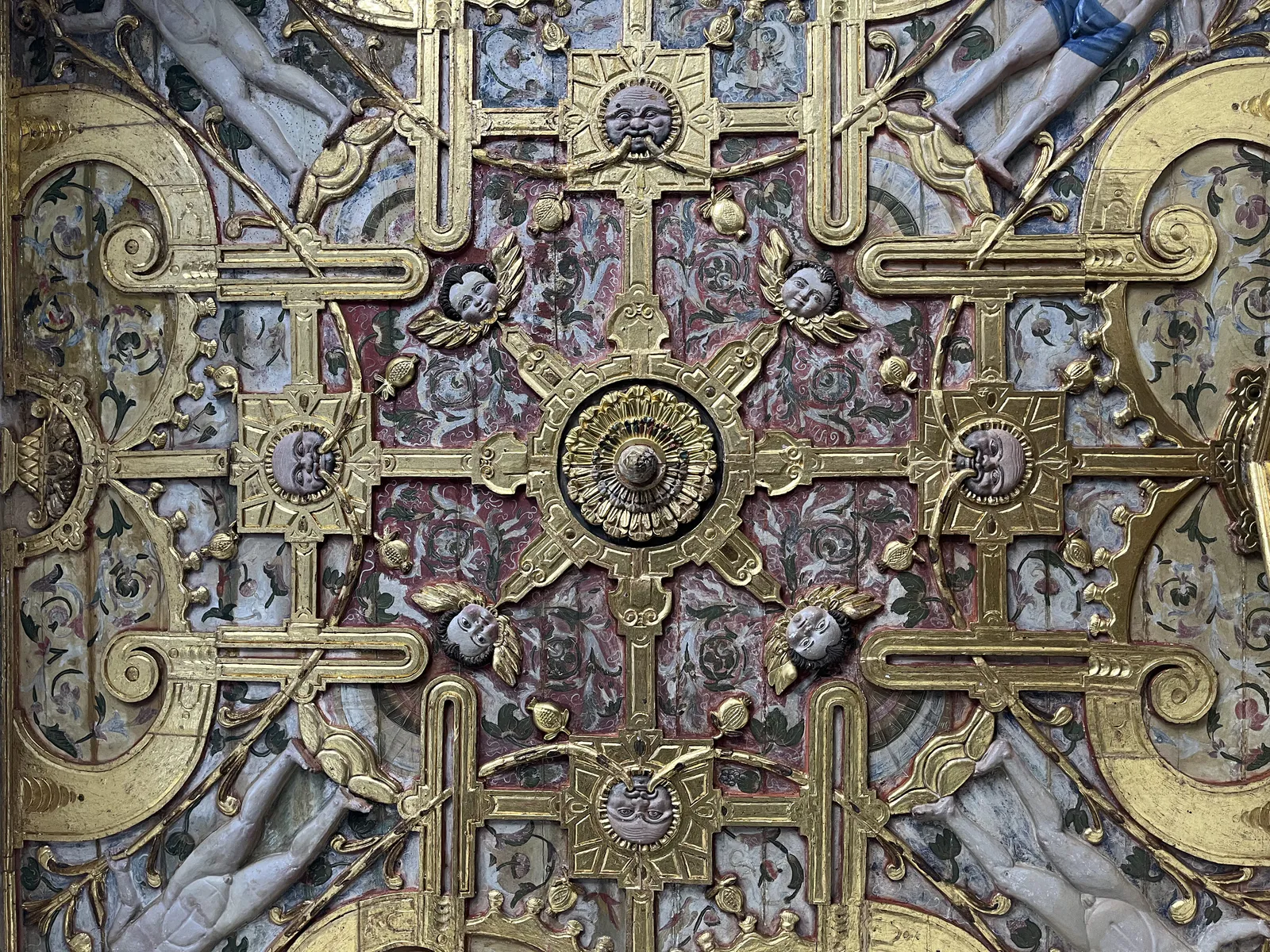
Andean Baroque Ceiling Panel
Manuel Chili (Capiscara)
This carved and gilded ceiling panel (1770–80) shows radiant faces, golden beams, and floral motifs arranged around a central sunburst. Produced in late-colonial Quito, it aligns with the Andean baroque’s celestial imagery. Caspicara joined Catholic cosmology with Indigenous conceptions of ordered, sacred geometry.
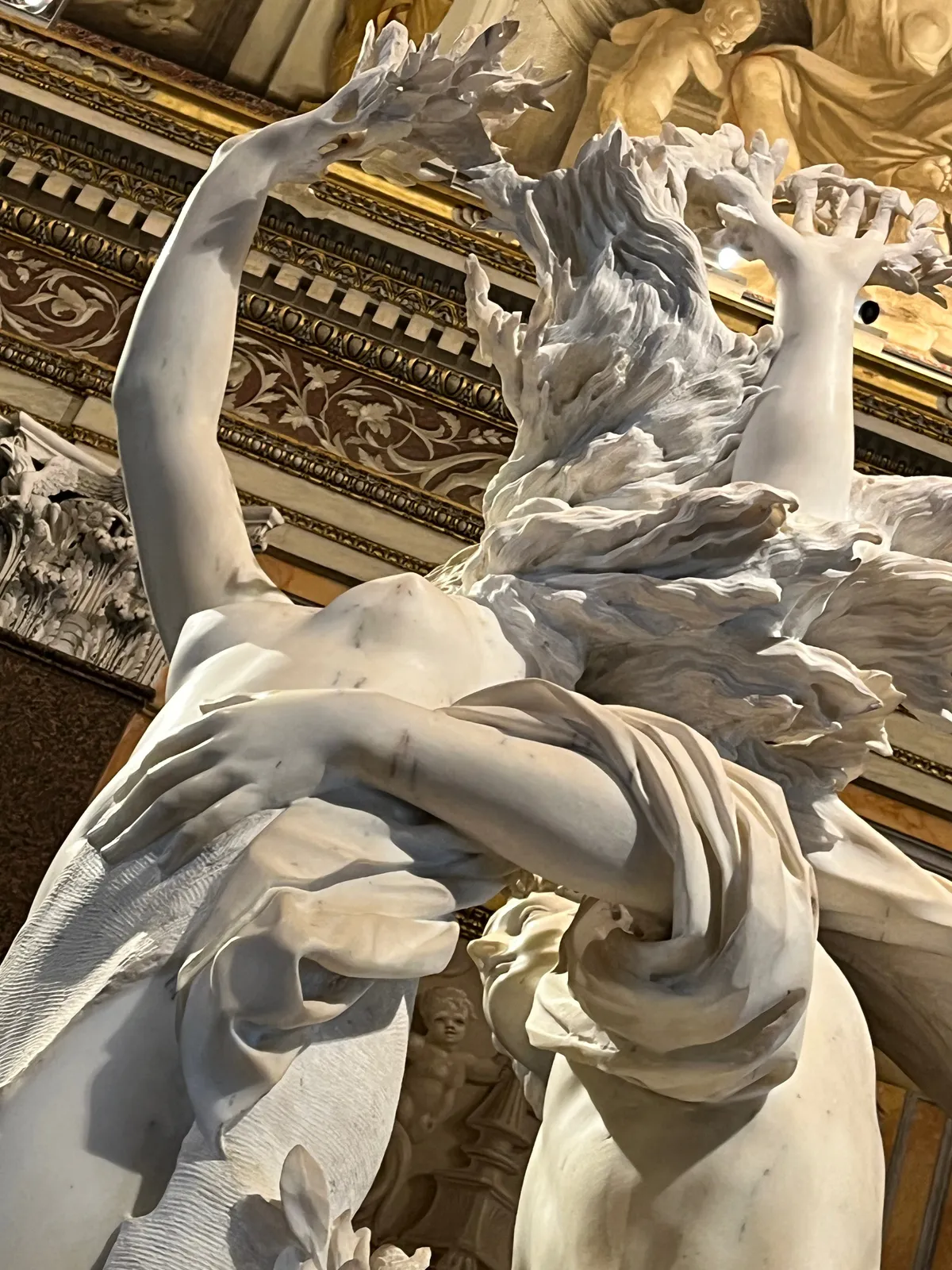
Apollo and Daphne (detail)
Gian Lorenzo Bernini
In this electrifying detail from Apollo and Daphne (1622–25), Daphne’s transformation peaks: her fingers stretch skyward as they fracture into laurel branches. Bernini’s carving achieves an uncanny fluidity—Apollo’s embrace contrasts her fleeing limbs, while bark and hair blur into motion, embodying divine metamorphosis and tragic escape.
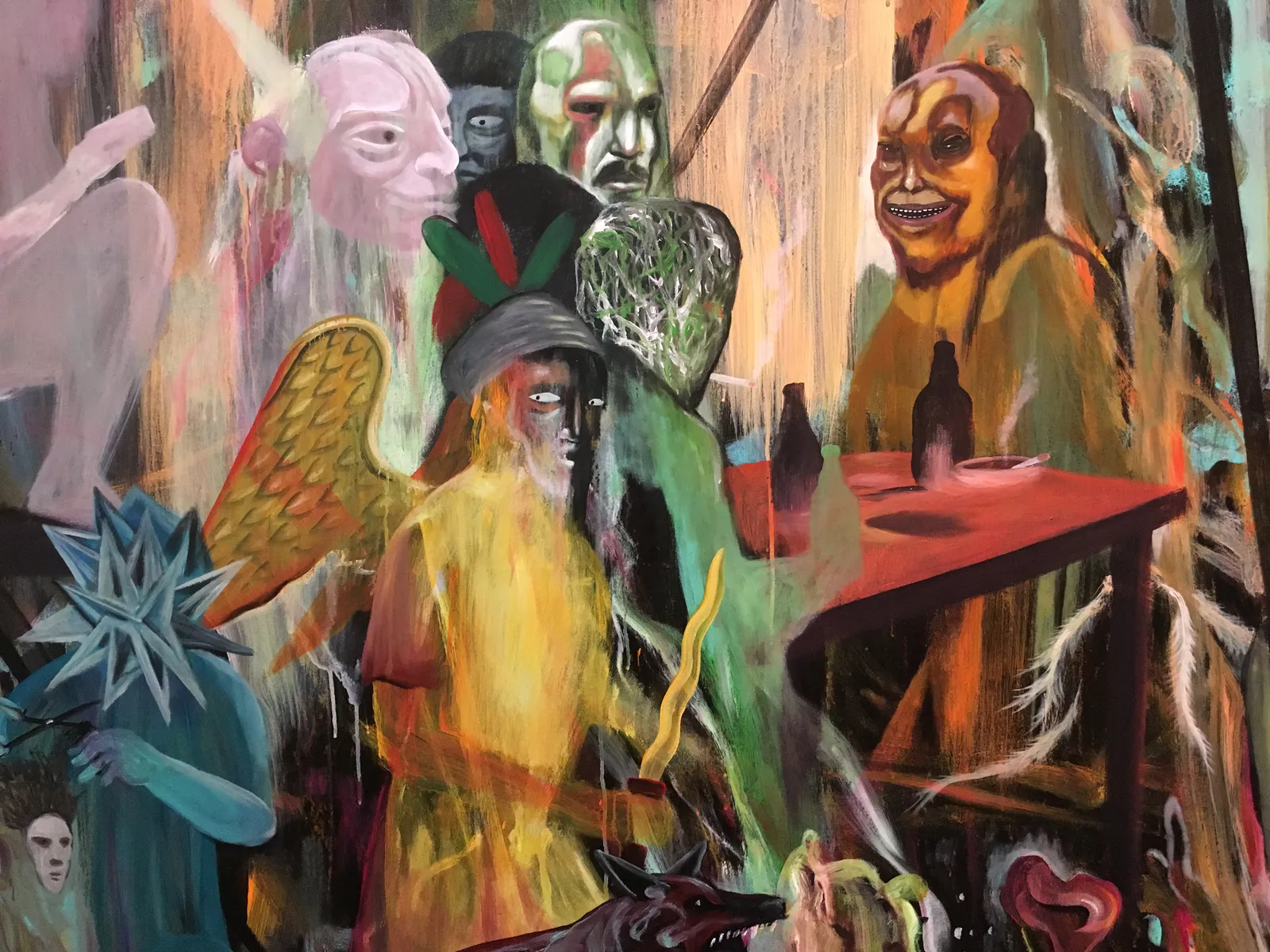
The Comedy, Parody, and Tragedy
Rodel Tapaya
This painting (2018) from Tapaya’s Urban Labyrinth series swirls with hybrid beings, masks, and mythic figures at a chaotic table. Angelic wings, demonic grins, and spectral visages blur folk imagination with urban satire. Tapaya weaves Philippine mythology into contemporary critique, where humor and menace mirror the fractured realities of modern city life.
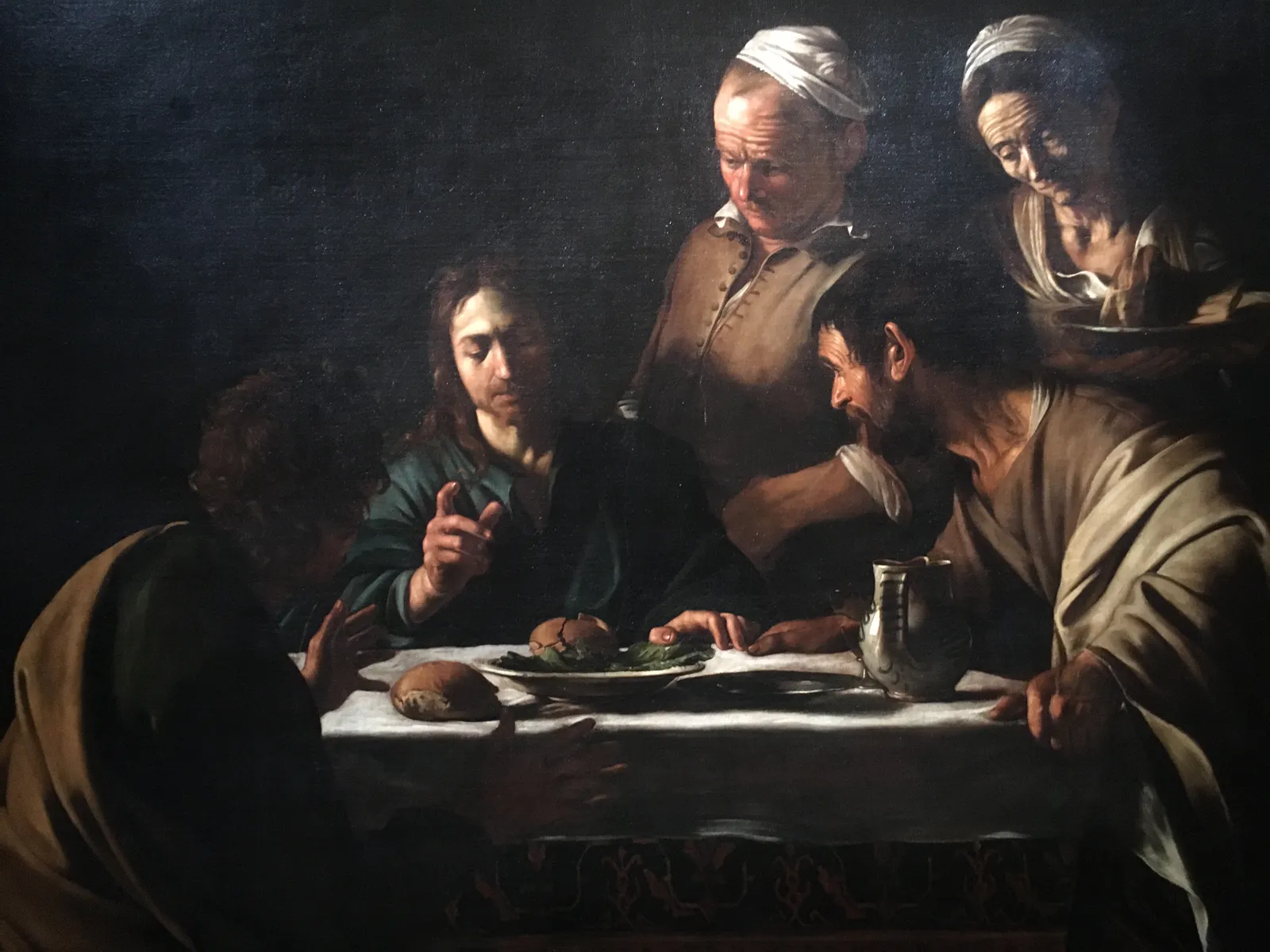
The Supper at Emmaus
Caravaggio
This painting (c.1606) was created after Caravaggio fled Rome for Naples. It depicts Christ revealing himself in Emmaus at the blessing of bread. Unlike Caravaggio’s earlier 1601 version, gestures are subdued and the table almost bare. In this darker vision, the recognition of the divine comes not in spectacle but in shadow and silence.
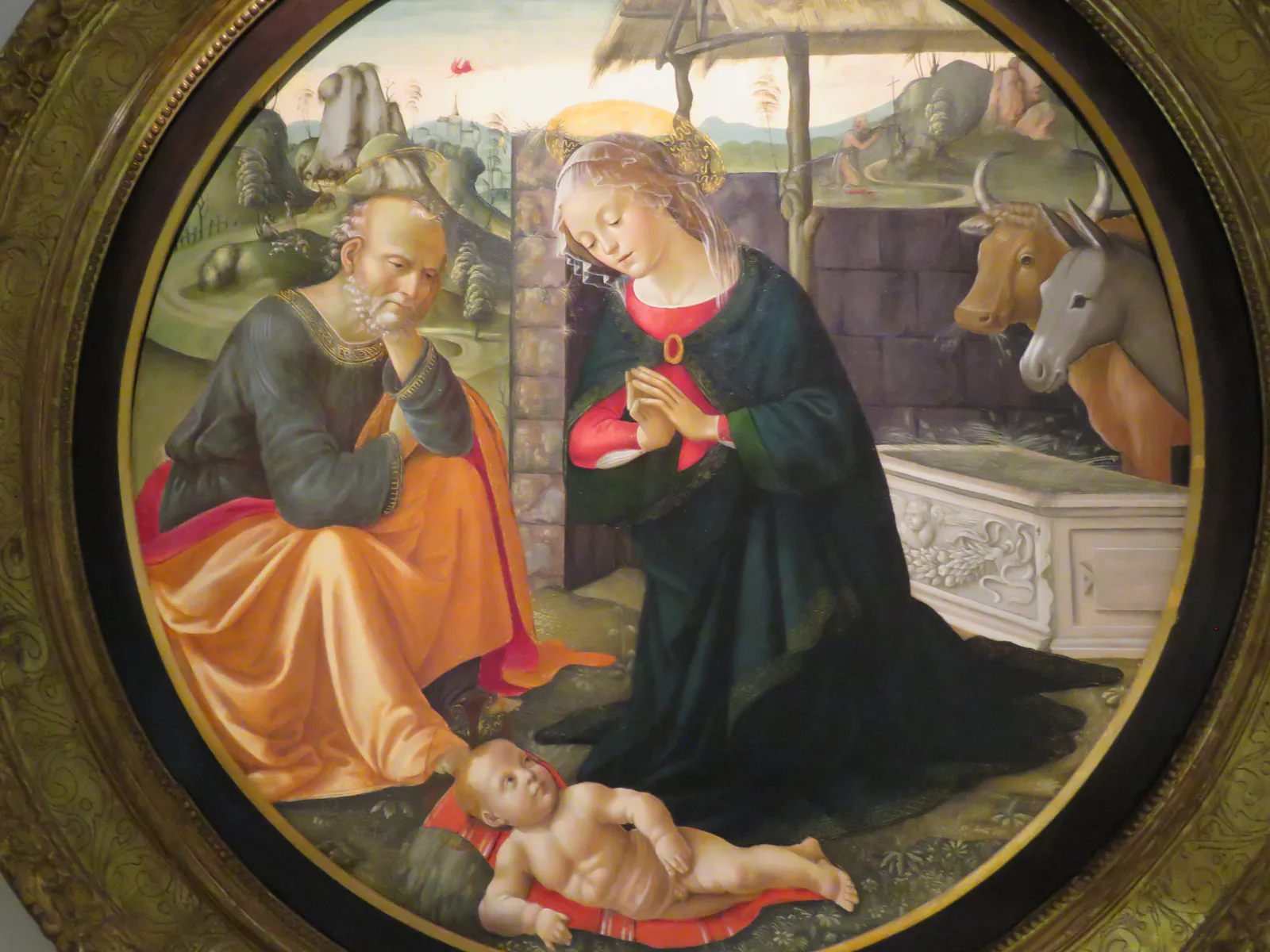
Adoration of the Christ Child
Workshop of Domenico Ghirlandaio
This tondo (c. 1485–1490) shows Mary and Joseph adoring the infant Christ, lying humbly on the earth. The sarcophagus-like manger prefigures his Passion, while the ox and donkey fulfill Isaiah and Habakkuk’s prophecy of animals recognizing the Lord. The scene binds intimacy, humility, and cosmic redemption.
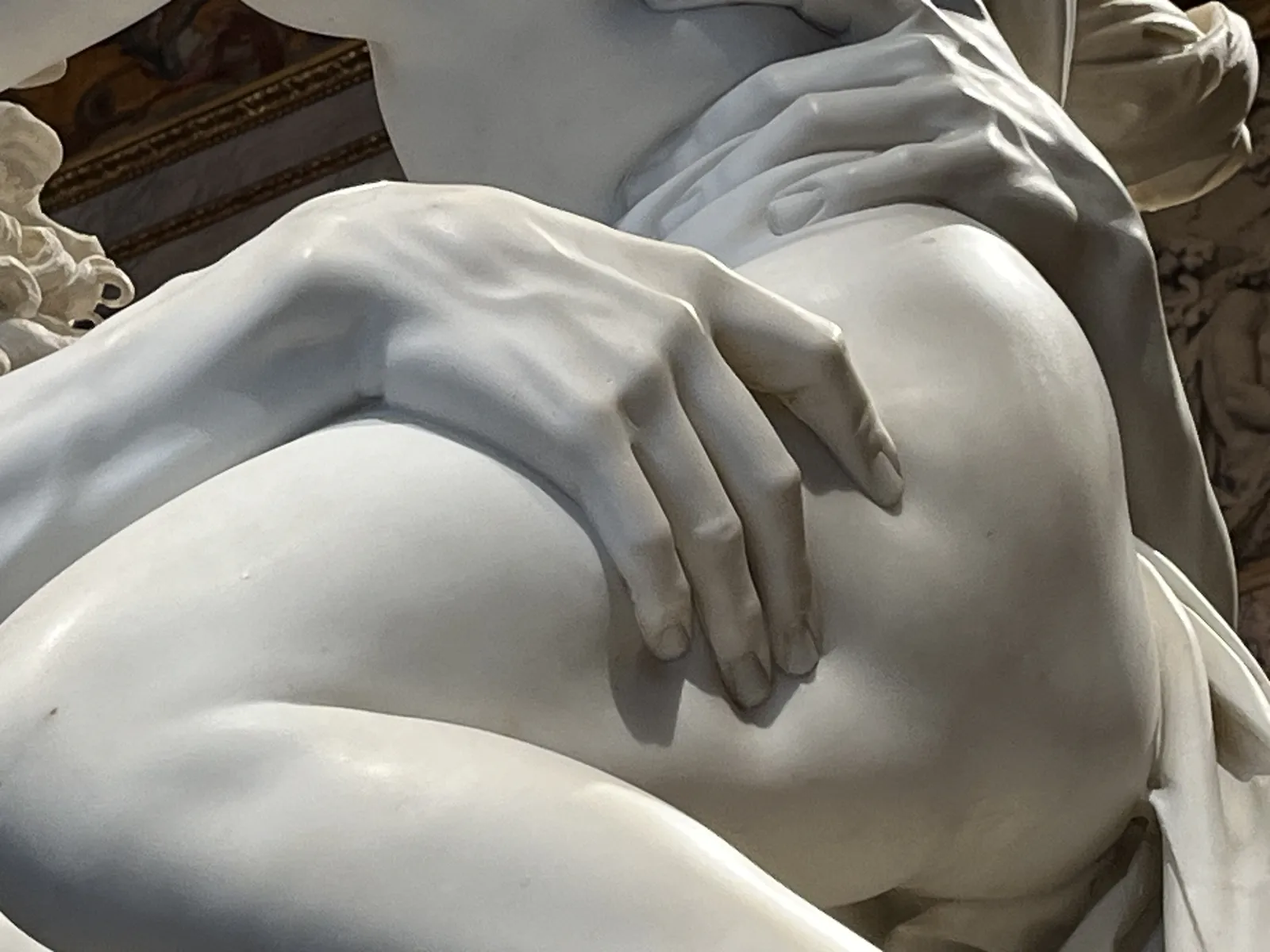
The Rape of Proserpina (detail)
Gian Lorenzo Bernini
This gripping close-up from Bernini’s marble group (1621–22) captures Pluto’s hand pressing into Proserpina’s flesh. The marble appears to yield under his grip, a dazzling illusion of softness and force. Bernini’s technical brilliance here transforms stone into living drama, amplifying the sculpture’s emotional and physical realism.
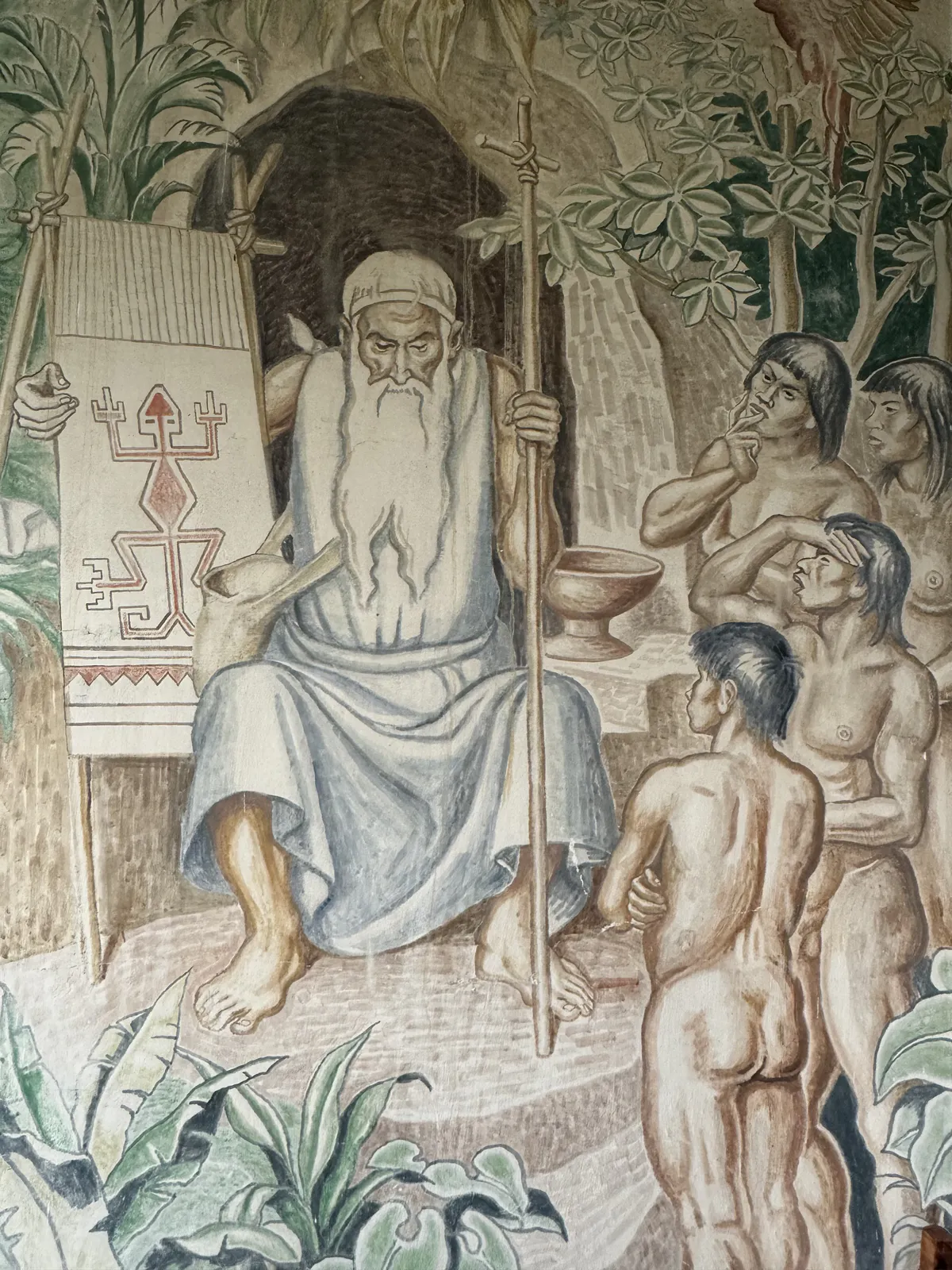
Bochica Teaching the Muisca
Luis Alberto Acuña
This 1960-70s mural depicts Bochica, the bearded sage and civilizing hero of Muisca mythology, imparting moral and spiritual lessons. Seated before young disciples, he holds symbols of power and knowledge, including a woven banner. A revered figure, Bochica was believed to have formed the Tequendama Falls and taught the Muisca how to live harmoniously.
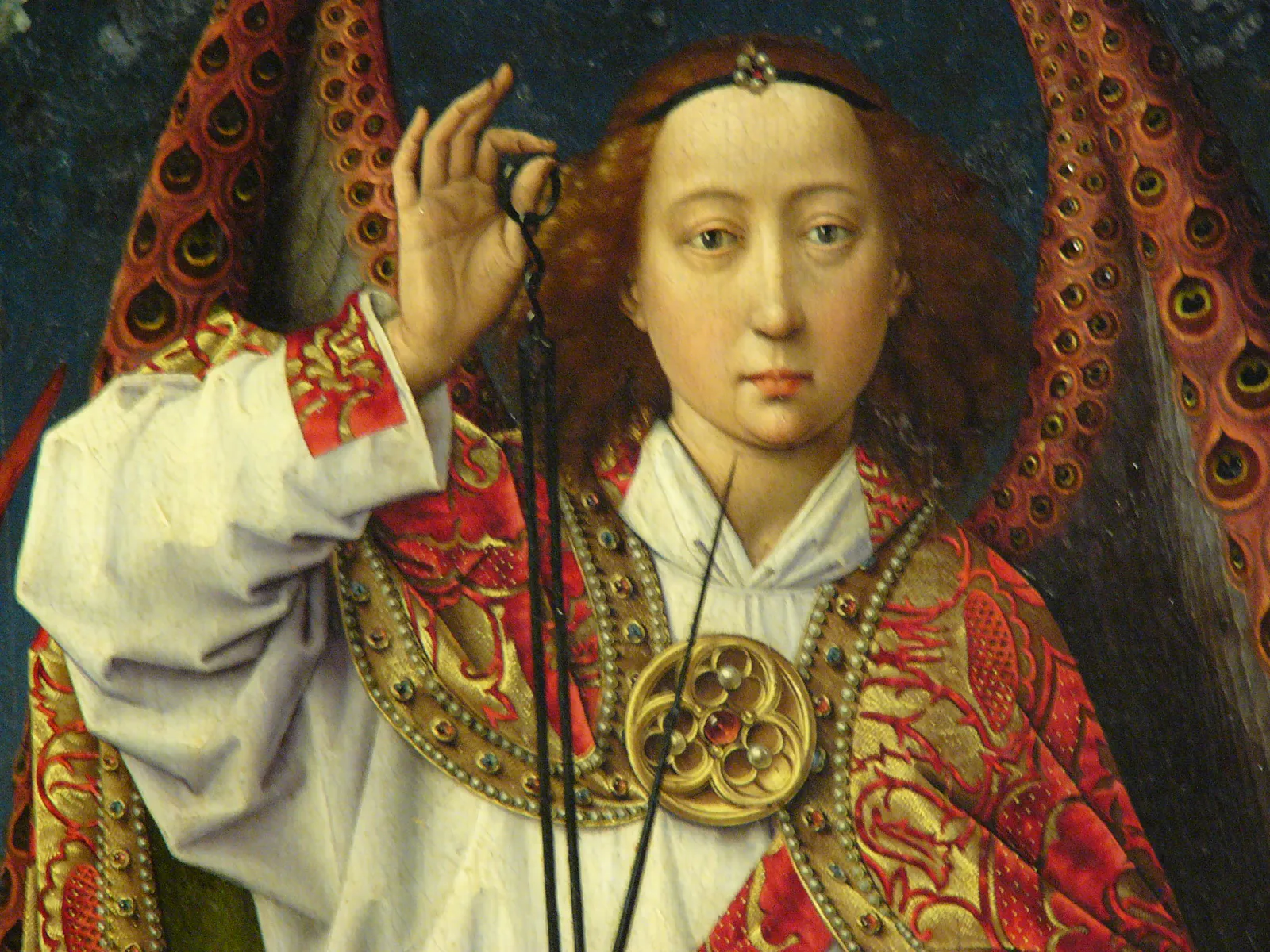
Archangel Michael
Rogier van der Weyden
This panel (1445–50) from the Beaune Altarpiece shows Archangel Michael weighing souls on Judgment Day. His youthful calm contrasts with the gravity of divine judgment. The richly patterned brocade and peacock-feather wings reflect Burgundian court opulence, linking celestial imagery with the devotional grandeur of 15th-century Flanders.
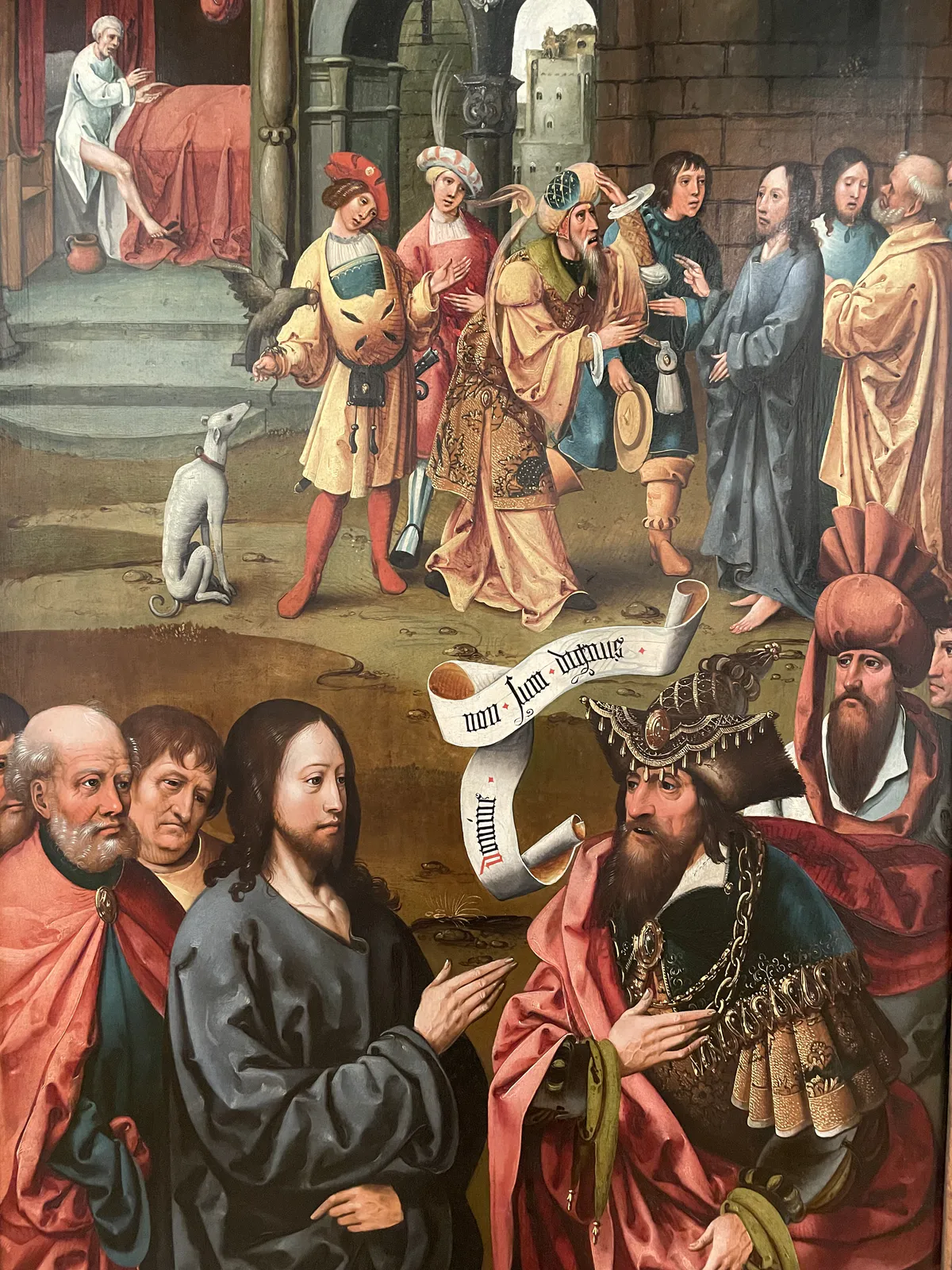
Christ and the Centurion of Capernaum
Master of Adoration of Amberes
This Northern Renaissance panel (1520–30) captures the moment a Roman centurion asks Christ to heal his servant, saying Lord, I am not worthy. The scene blends biblical narrative with contemporary Flemish attire, highlighting faith over status. The expressive gestures and rich details emphasize humility and the universal appeal of compassion, reflecting the era's fusion of religious and cultural elements.
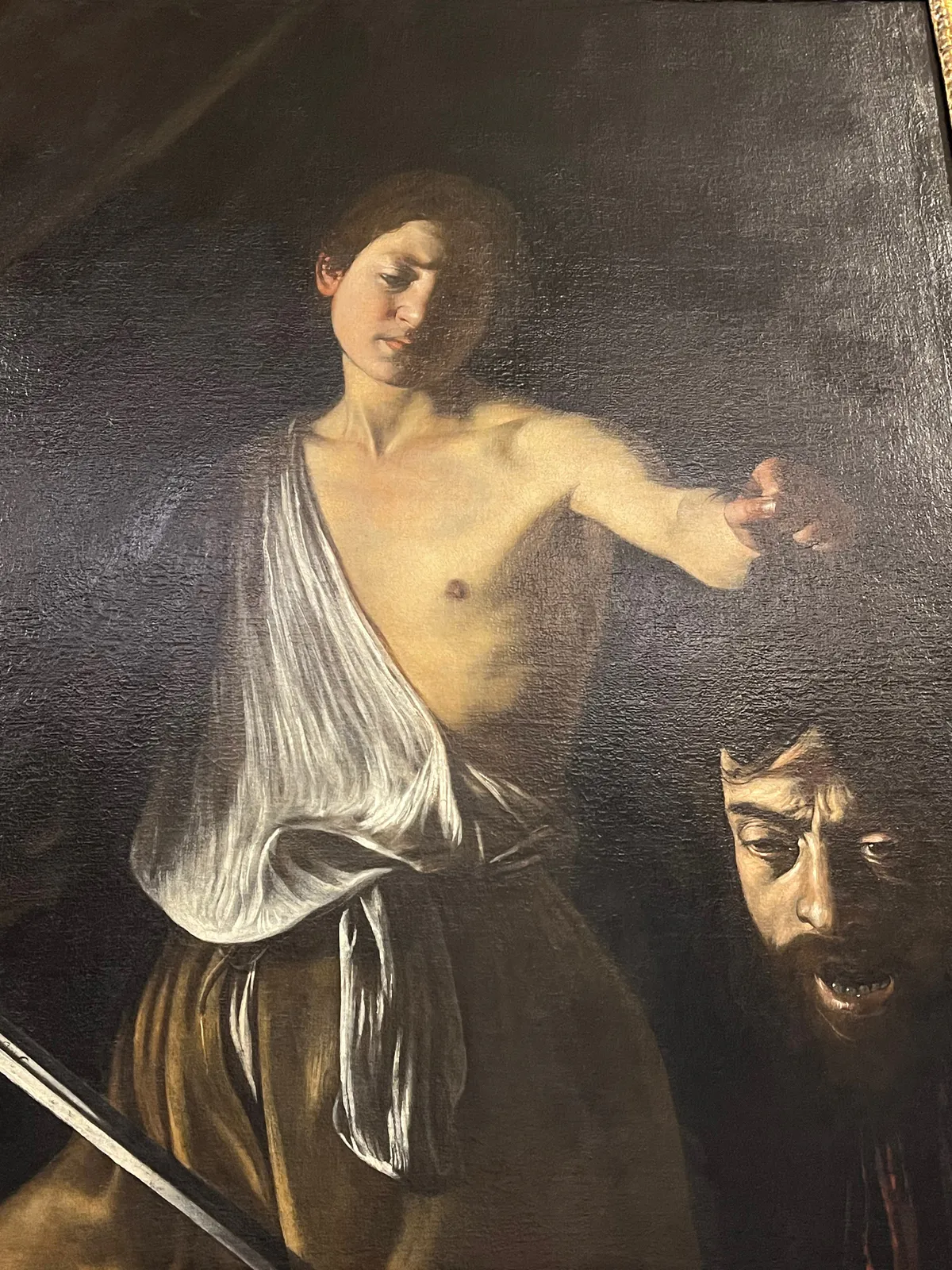
David with the Head of Goliath
Caravaggio
This haunting composition (1609–10) shows David holding Goliath’s severed head—modeled on Caravaggio himself. Rather than triumph, the mood is remorseful. The intense chiaroscuro, psychological realism, and moral ambiguity turn this biblical victory into a meditation on guilt, mortality, and inner torment.
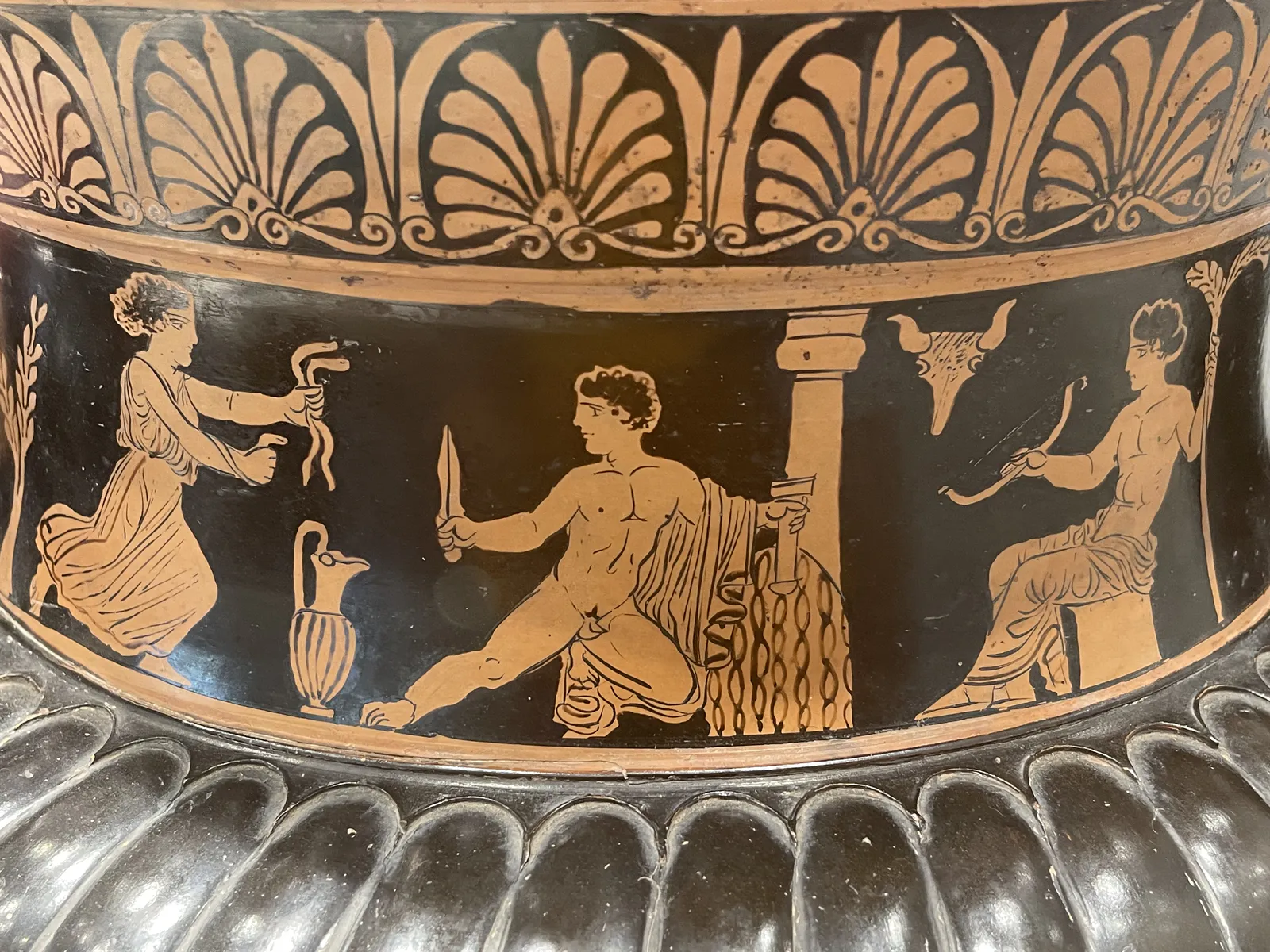
Orestes Pursued by the Furies
Painter of the Birth of Dionysus
This Apulian red-figure krater, used for mixing wine and water, (410–390 BC) depicts Orestes defending himself with a sword against the Erinyes, avenging his mother's death. Apollo, seated with a bow, offers protection, symbolizing divine sanction amid human guilt. This scene illustrates the complex interplay of justice and retribution in Greek mythology.
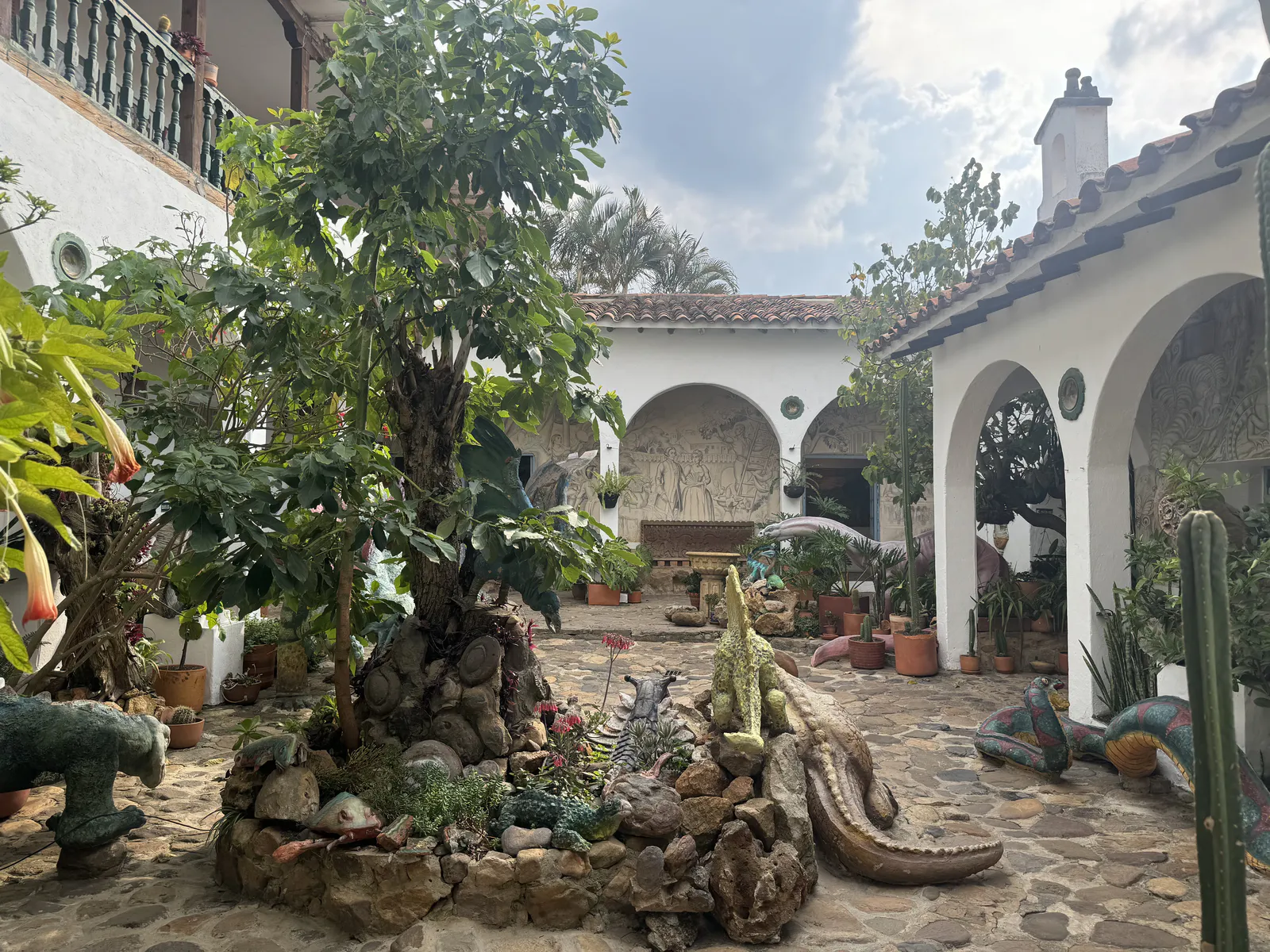
Museum Courtyard
Luis Alberto Acuña
This eclectic courtyard blends colonial architecture with fantastical sculptures and lush vegetation. Dinosaurs, jaguars, and snakes emerge from the stone paths, reflecting Acuña’s imaginative fusion of pre-Columbian, mythological, and surrealist influences.
“When the path is beautiful, do not ask where it leads.” — Zen proverb
Welcome to my travel photography!
“When the path is beautiful, do not ask where it leads.” — Zen proverb
Welcome to my travel photography!
For as long as I can remember, my path has been one of discovery—seeking beauty, timelessness, and connection in every corner of the world. It has also been a journey of deep learning and understanding. I’ve been an avid traveler (or perhaps a travel addict?) for most of my life. My love for travel began long before I ever left home: as a child, I drew a fantasy map of my grandparents’ apartment and “traveled” through it with my cousin Sonya, imagining adventures in every corner. Nearly 90 countries and countless moments of awe later, I’m excited to share this journey with you.
Thanks to the tireless and ingenious programming of Diagilev, we’re now able to present about fifteen percent of the images I’ve accumulated over the years. More will be released in small batches depending on your interest. While the first release leans toward museum photography, later ones will include more nature, architecture, culture, and general travel experiences. If you’d like to receive email notifications about new releases, feel free to reach out—no commercial use, ever.
Throughout my travels, I’ve been drawn to two intertwined kinds of discovery. One is intellectual: learning why the world is the way it is. History became my guide, shaping my perspective and filling my camera roll with museums and old buildings. To me, history is not the past—it is the key to understanding the present and how the world became what it is. The other is emotional: seeking moments of elevation—spirituality, beauty, harmony—often found in nature, monasteries, and ancient sacred spaces. Together, these impulses shape my photography. It invites you to learn, admire, and soar—to rise above the mundane and see the world through a lens of curiosity and wonder.
Much of my later travel became possible thanks to my job with Delta Air Lines, but the wanderlust began years earlier. By the time I joined the industry, I had already visited over 35 countries and lived in several—largely thanks to a backpacking journey around the world with Luis León, whose face appears in many early photos. I grew up in Ufa in the USSR, and since leaving it I have lived, studied, and worked in Latvia, the United States, France, South Korea, Canada, Spain, Italy, Brazil, Japan, and Colombia.
A life of near-constant movement may seem a little crazy, but it has deepened my understanding of the world and produced the photography you are about to see. Over the years, my style has evolved—more intentional, more refined—yet its core remains the same: a search for understanding, timeless beauty, and a connection to those who walked this earth long before us.
I hope these photos stir something in your soul, just as they did in mine. I’d love to hear from you—whether reactions, suggestions, corrections, or a request to be added to the email list for new releases (no commercial use, I promise). You can learn more about my travels here, and my academic life here.
Enjoy our shared journey!