2024 © Maxim Tabachnik
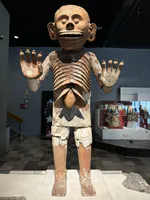 The Mexica conceived the cosmos as a system of opposing yet complementary forces—female and male, aquatic and fiery, earthly and celestial, cool and hot. These energies depended on one another, generating movement and sustaining the cycles of nature. Day overcame night only to yield again to darkness; the rainy season led to sowing, and the dry season to warfare. All beings contained these paired forces, which unfolded in an endless spiral.
The Templo Mayor stood at the center or navel of the world, the point where the four directions met and where a vertical axis linked the heavens, the earthly plane, and the underworld. This dual structure, embodied by the shrines of Tlaloc and Huitzilopochtli, organized the Mexica understanding of space, time, and cosmic balance.
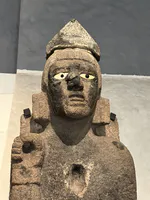
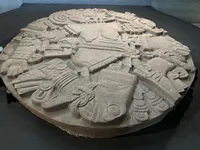
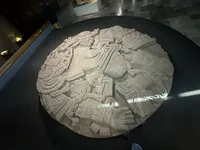
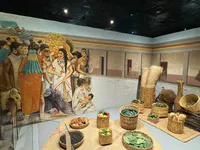
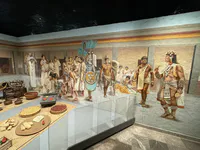
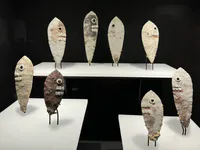 The Templo Mayor expressed cosmic duality in its architecture. The northern half, aligned with the wet season and summer solstice, belonged to Tlaloc, associated with rain, agriculture, vegetation, water, cold, and darkness. The southern half was dedicated to Huitzilopochtli, linked to warfare, the dry season, solar fire, heat, maturity, and the astral cycle of night.
This binary plan symbolized the balanced interplay of natural and supernatural forces. It reflected the Mexica vision of the world as a union of complementary powers whose interaction sustained life, order, and the sacred cycles governing time.
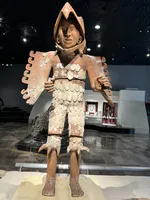
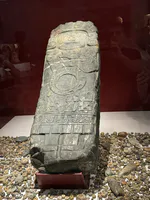
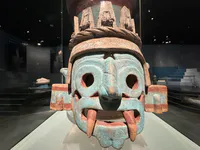 Duality was the organizing principle through which the Mexica understood and structured the cosmos. The Templo Mayor stood at the center or navel of the world, where the four directions and the vertical axis linking sky and underworld converged. Existence was shaped by opposing yet complementary forces—female and male, aquatic and fiery, terrestrial and celestial, cold and hot. Their interaction generated movement: day yielding to night, rains giving way to the dry season, and cycles of fertility alternating with periods of conflict. These paired forces infused all beings and unfolded in an unending spiral of transformation.
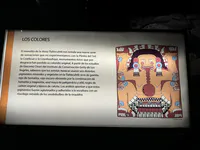
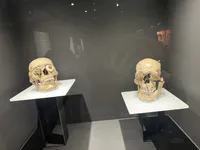
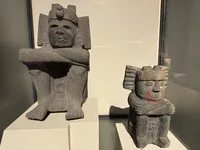
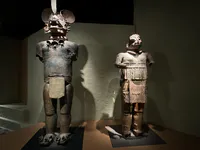 Spanish chroniclers called one of the best-known Mexica sacrificial rites the gladiatorial sacrifice, reserved for captives considered especially brave or high-status. In great cities, a large, round stone resembling a millstone stood near the Templo Mayor. Called a temalacatl, it served as the platform for the rite.
The captive stood on the stone with a small shield and short sword, while a rope threaded through a hole in the stone bound his ankle. A Mexica officer or warrior, armed with superior weapons, then fought him on the same platform. If the captive lost, he was taken to the main sacrificial altar, where his chest was opened and his heart removed. If he defeated that warrior and six more, tradition held that he would be spared and freed, and that everything taken from him in battle would be restored.
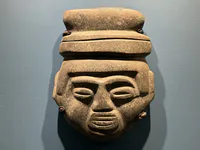
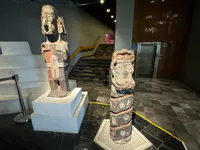
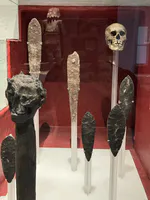
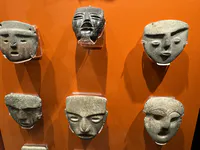 The southern half of the Templo Mayor was dedicated to Huitzilopochtli (Hummingbird on the Left), guardian god of the Mexica. He may have been a historical leader who was deified after his death. Mexica traditions describe him as a powerful being who, appearing as an eagle, guided his people to their destiny. He perched on a nopal cactus to mark the place where they should found their city.
As a solar and warrior god, Huitzilopochtli embodied the Mexica’s belief in conquest and expansion. They saw themselves as rightful heirs to earlier centres of power, including Teotihuacan and Tula. In 1430, armies of the Triple Alliance, led by Tenochtitlan, defeated the Tepanecs of Azcapotzalco, beginning an era of Mexica splendour and domination that ended with the arrival of Hernán Cortés and the Spanish conquerors on November 8, 1519.
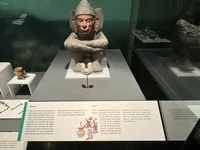
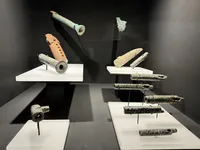
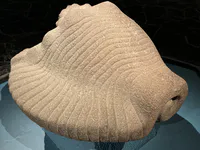 The northern half of the Templo Mayor was dedicated to Tlaloc, the rain god, one of the oldest and most venerated deities in Mesoamerica. Across the region he appeared under different names and forms, such as Chac among the Maya and Cocijo among the Zapotecs.
In the same way, the four galleries on the northern side of this museum are devoted either to Tlaloc himself or to themes closely connected to rain, such as agriculture, fertility, and the rich animal life that the Mexica knew and used both for subsistence and for ritual purposes.
According to Mexica traditions, when their people reached the Basin of Mexico after centuries of wandering, their patron god Huitzilopochtli was received and acknowledged by Tlaloc. This encounter signaled that the cult of the rain god already enjoyed deep antiquity and legitimacy in the region, even before the Mexica settled there.
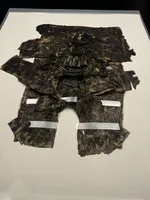
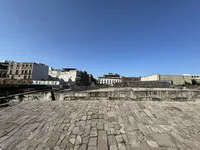
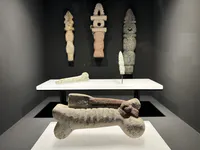
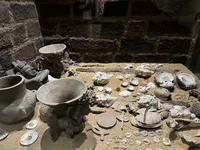 After the 1985 earthquake irreparably damaged two buildings in Mexico City’s historic center, the city government ordered their demolition. Archaeologists were eager to investigate the site, at the corner of Argentina and Guatemala streets, directly in front of the ruins of the Templo Mayor of Tenochtitlan. They hoped to find major sculptures at the pyramid’s base. Historical documents also indicated that the ashes of at least three Mexica rulers—Axayacatl, Tizoc, and Ahuítzotl—had been buried in the area. A rescue excavation by the Urban Archaeology Program confirmed the site’s importance: on October 2, 2006, archaeologists uncovered the largest Mexica monolith known to date, larger even than the Sun Stone and the Coyolxauhqui disk.
The monument measures about 4.17 × 3.62 × 0.38 m and weighs roughly 12 tons. It depicts the female aspect of Tlaltecuhtli (Lord or Lady of the Earth), a deity who appears in many myths as both a revered mother giving birth to all creatures and a monstrous being who devours them at death. In March 2007, the Templo Mayor Project began a new excavation season in the area, using advanced technology and careful scientific methods. A few months later, a long-arm crane lifted the monolith from the excavation pit and placed it temporarily on Argentina Street. A provisional laboratory was built there for its restoration and analysis, while archaeological work continued where the stone had originally lain.
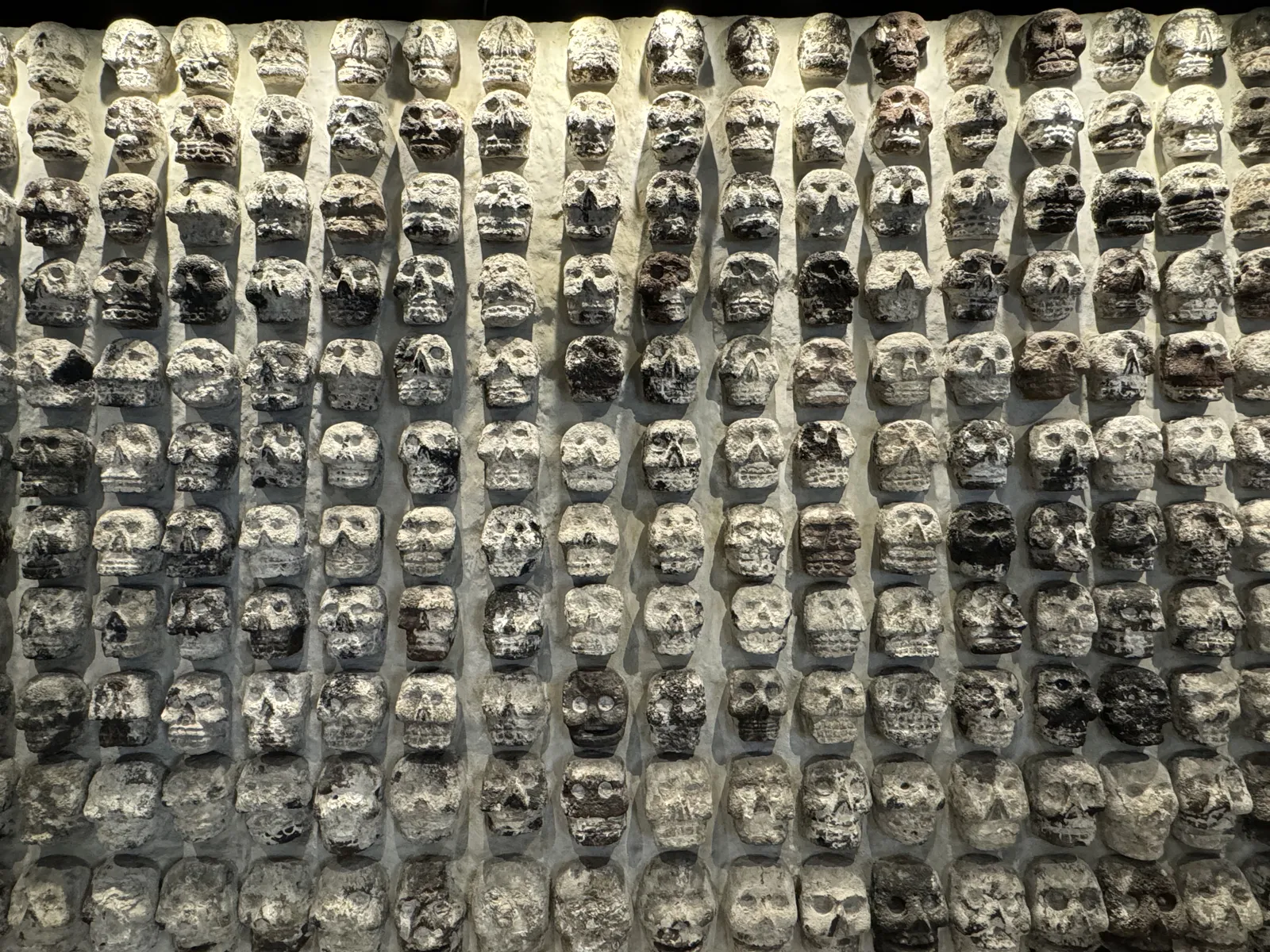
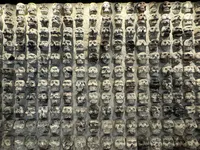
Aztec Skull Wall
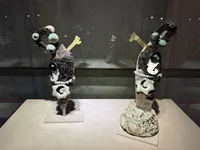
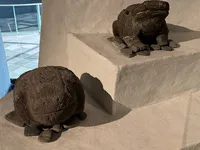
Original Aztec stone skulls (probably 15th–early 16th cc.) fill this modern display in the Templo Mayor museum, evoking a tzompantli, a wooden rack displaying the skulls of sacrificial victims. Excavated largely from the temple’s southern side, the carvings may once have decorated a skull altar. Such displays in Tenochtitlan’s sacred precinct expressed religious and military power. They also embodied the Mexica belief that offerings of blood and life sustained the gods, renewing the natural cycles on which human existence depended.
Explore by type and place