2024 © Maxim Tabachnik
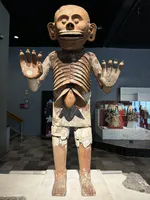
 The Mexica conceived the cosmos as a system of opposing yet complementary forces—female and male, aquatic and fiery, earthly and celestial, cool and hot. These energies depended on one another, generating movement and sustaining the cycles of nature. Day overcame night only to yield again to darkness; the rainy season led to sowing, and the dry season to warfare. All beings contained these paired forces, which unfolded in an endless spiral.
The Templo Mayor stood at the center or navel of the world, the point where the four directions met and where a vertical axis linked the heavens, the earthly plane, and the underworld. This dual structure, embodied by the shrines of Tlaloc and Huitzilopochtli, organized the Mexica understanding of space, time, and cosmic balance.
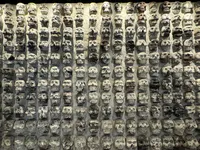
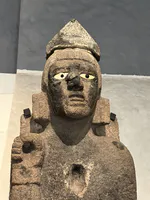
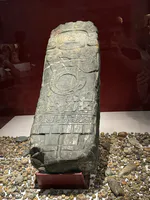
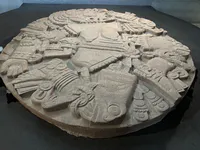 The Templo Mayor expressed cosmic duality in its architecture. The northern half, aligned with the wet season and summer solstice, belonged to Tlaloc, associated with rain, agriculture, vegetation, water, cold, and darkness. The southern half was dedicated to Huitzilopochtli, linked to warfare, the dry season, solar fire, heat, maturity, and the astral cycle of night.
This binary plan symbolized the balanced interplay of natural and supernatural forces. It reflected the Mexica vision of the world as a union of complementary powers whose interaction sustained life, order, and the sacred cycles governing time.
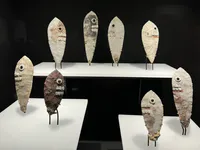
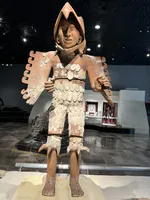
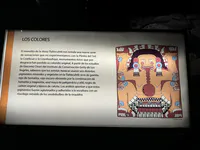 Duality was the organizing principle through which the Mexica understood and structured the cosmos. The Templo Mayor stood at the center or navel of the world, where the four directions and the vertical axis linking sky and underworld converged. Existence was shaped by opposing yet complementary forces—female and male, aquatic and fiery, terrestrial and celestial, cold and hot. Their interaction generated movement: day yielding to night, rains giving way to the dry season, and cycles of fertility alternating with periods of conflict. These paired forces infused all beings and unfolded in an unending spiral of transformation.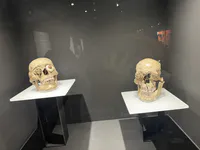
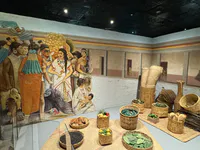
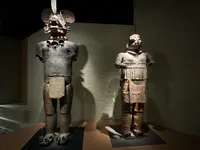
 One of the most renowned Mexica sacrificial rituals was what Spanish chroniclers called the gladiatorial sacrifice, reserved for particularly brave or high-status captives. Near the Templo Mayor in the great cities stood a large round stone, similar in shape to a millstone, known as the temalacatl.
The prisoner was placed on this stone, armed with a small shield and short sword, but his ankle was bound by a rope threaded through a hole in the stone. A Mexica officer or warrior, equipped with superior weapons, stepped forward to fight him on the same platform. If the captive was defeated, he was taken to the main sacrificial altar, where his chest was opened and his heart removed.
However, if the prisoner succeeded in overcoming that warrior and then six more, tradition held that he would be granted his life and freedom, and all that had been taken from him in battle would be restored (After Francisco Javier Clavijero.)
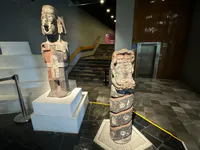
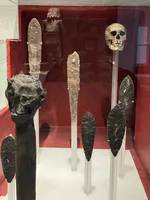
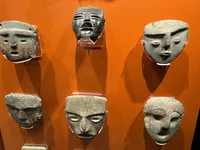 The southern half of the Templo Mayor belonged to Huitzilopochtli, Hummingbird on the Left, the tutelary god of the Mexica. He may originally have been a historic leader elevated to divine status after his death. In any case, the traditions describe him as a powerful being who, appearing in the form of an eagle, guided the Mexica to their destiny and perched on a nopal cactus to mark the place where they should found their city.
A solar and warrior god, Huitzilopochtli embodied the conquering, expansionist mystique of the Mexica, who saw themselves as rightful heirs to earlier centres of power such as Teotihuacan and Tula. From 1430 CE, when the Triple Alliance armies led by Tenochtitlan defeated the Tepanecs of Azcapotzalco, an era of splendour and domination began that lasted until 8 November 1519, with the arrival of Hernán Cortés and the Spanish conquerors.
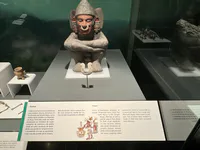
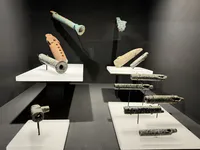
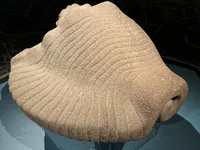
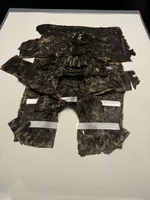 The northern half of the Templo Mayor was dedicated to Tlaloc, the rain god, one of the oldest and most venerated deities in Mesoamerica. Across the region he appeared under different names and forms, such as Chac among the Maya and Cocijo among the Zapotecs.
In the same way, the four galleries on the northern side of this museum are devoted either to Tlaloc himself or to themes closely connected to rain, such as agriculture, fertility, and the rich animal life that the Mexica knew and used both for subsistence and for ritual purposes.
According to Mexica traditions, when their people reached the Basin of Mexico after centuries of wandering, their patron god Huitzilopochtli was received and acknowledged by Tlaloc. This encounter signaled that the cult of the rain god already enjoyed deep antiquity and legitimacy in the region, even before the Mexica settled there.
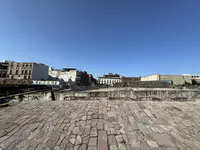
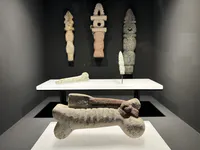
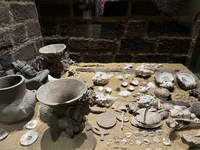
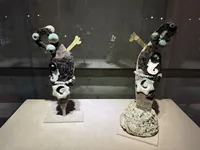 Some years ago, the government of Mexico City ordered the demolition of two buildings in the historic center that had been irreparably damaged by the 1985 earthquake. The decision drew intense interest from archaeologists, because these buildings stood at the corner of Argentina and Guatemala streets, directly in front of the ruins of the Templo Mayor of Tenochtitlan.
Beyond the hope of finding major sculptures at the base of the pyramid, historical documents indicated that the ashes of at least three Mexica rulers—Axayacatl, Tizoc, and Ahuítzotl—had been buried in this area. During a rescue excavation by the Urban Archaeology Program, the extraordinary importance of the corner was confirmed. On October 2, 2006, archaeologists uncovered here the largest Mexica monolith known to date, even larger than the Sun Stone and the Coyolxauhqui disk.
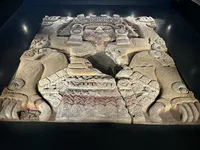
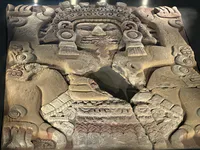
The monument is a massive sculpture measuring about 4.17 × 3.62 × 0.38 meters and weighing roughly 12 tons. It represents the female aspect of Tlaltecuhtli (Lord or Lady of the Earth), a deity who in many myths appears both as the revered mother who gives birth to all creatures and as the monstrous being who devours them at the moment of death.
In March 2007, a new season of the Templo Mayor Project began to explore this sector with advanced technology and extremely careful scientific methods. A few months later, the Tlaltecuhtli monolith was lifted from the excavation pit with a long-arm crane and placed temporarily on Argentina Street. There, a provisional laboratory was built for its restoration and analysis, while archaeological work continued in the exact spot where the stone had originally lain.
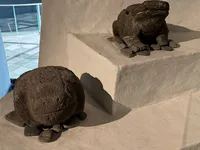

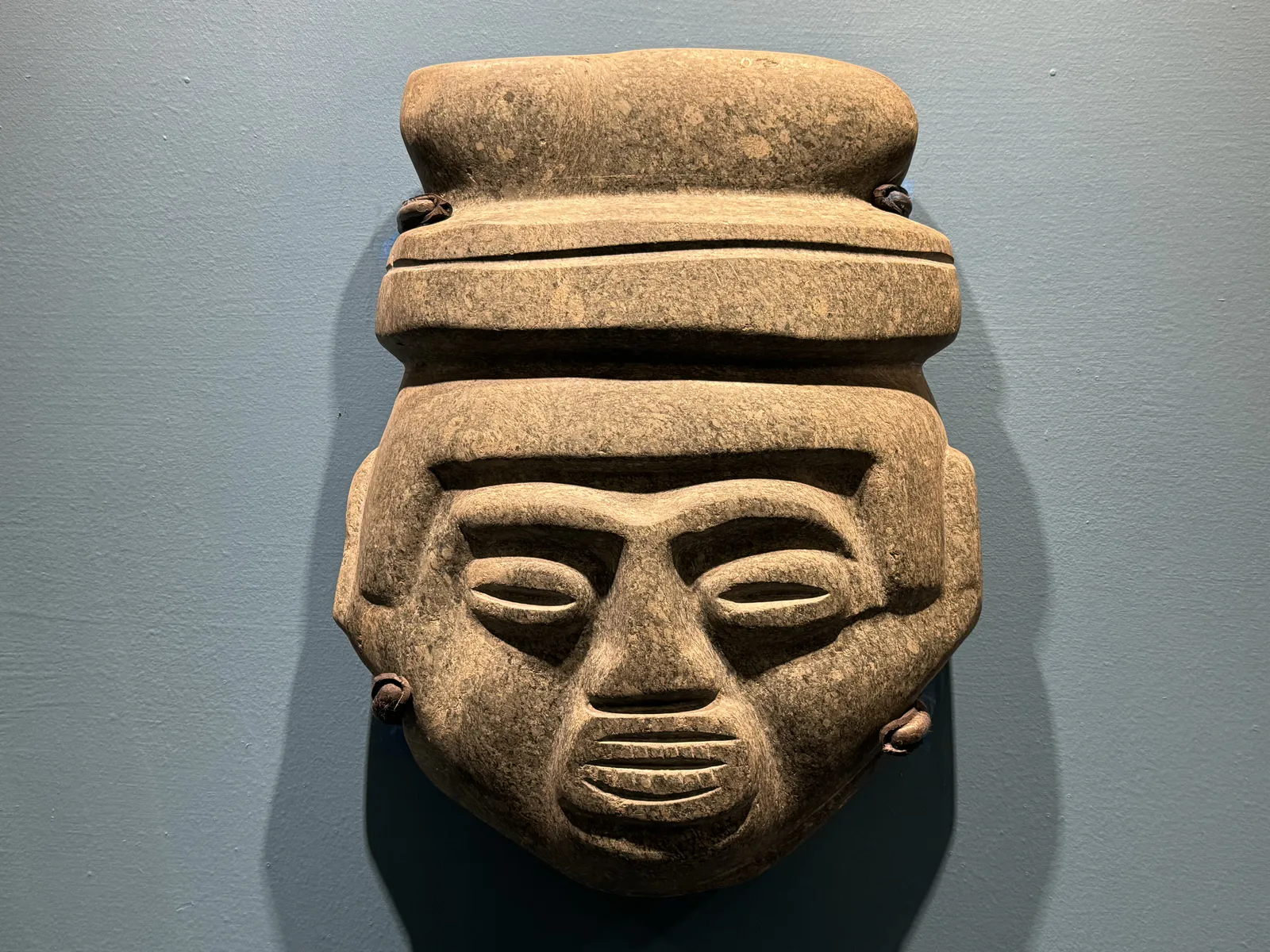
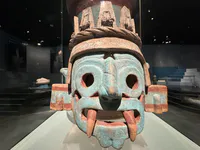
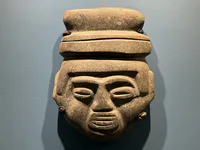
Mask of Tlaloc
This (15th c.) stone mask evokes the rain god Tlaloc, a central deity in Mexica religion. Stylized features—goggle-like eyes, upper lip fringe, and prominent mouth—echo the god’s ties to water and fertility. Such masks were likely used in offerings at the Templo Mayor to invoke rain and agricultural abundance through the god’s vital, tempestuous presence.
Explore by type and place