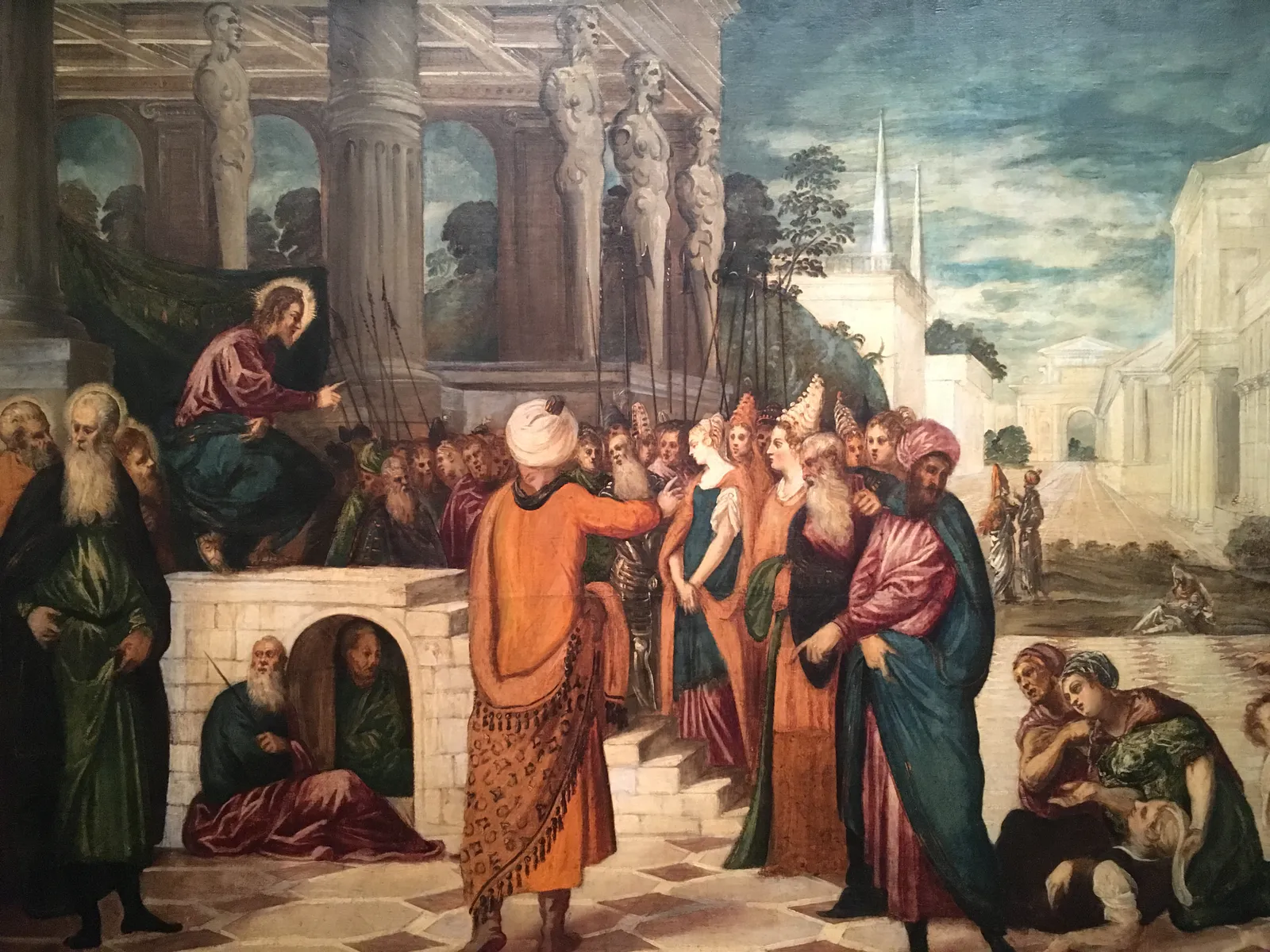
Christ and the Adulteress
Tintoretto
This scene (c. 1555) is from the Gospel of John: Jesus responds to scribes and Pharisees demanding judgment on an adulterous woman. His challenge—inviting the sinless to cast the first stone—teaches mercy over condemnation. Tintoretto’s dynamic style appears in the sharp contrasts of light and shadow, elongated figures, and oblique spatial arrangement that intensify the moral tension. Classical architectural elements frame the encounter, emphasizing the conflict between legalism and redemption.
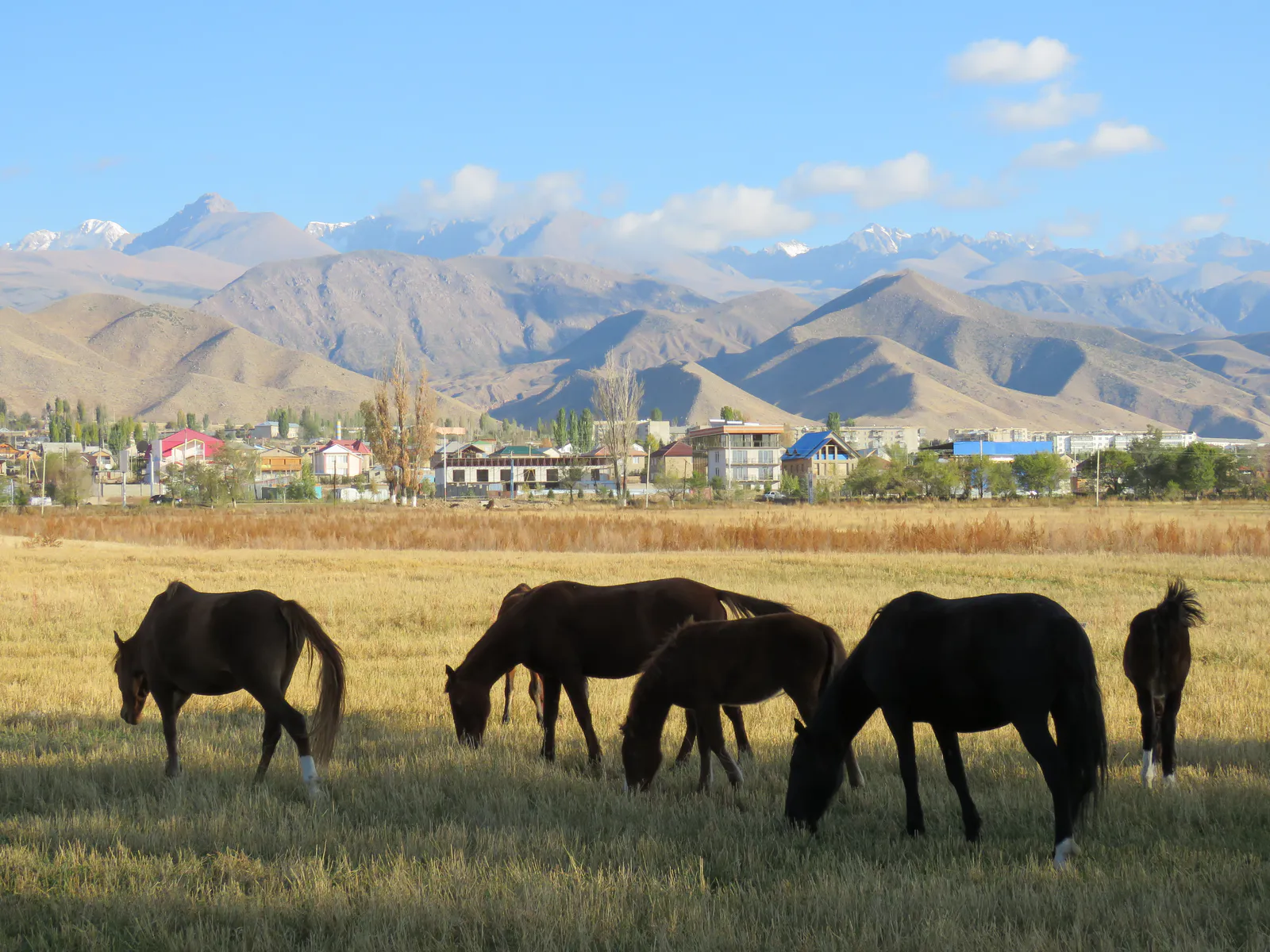
Horses and Mountains near Issyk-Kul
Framed by the towering Tian Shan range, this pastoral scene near Issyk-Kul captures horses grazing on open fields with a village in the background. In Kyrgyz tradition, horses are not just livestock—they are companions, warriors, and cultural emblems tied to centuries of nomadic life and mountain freedom.
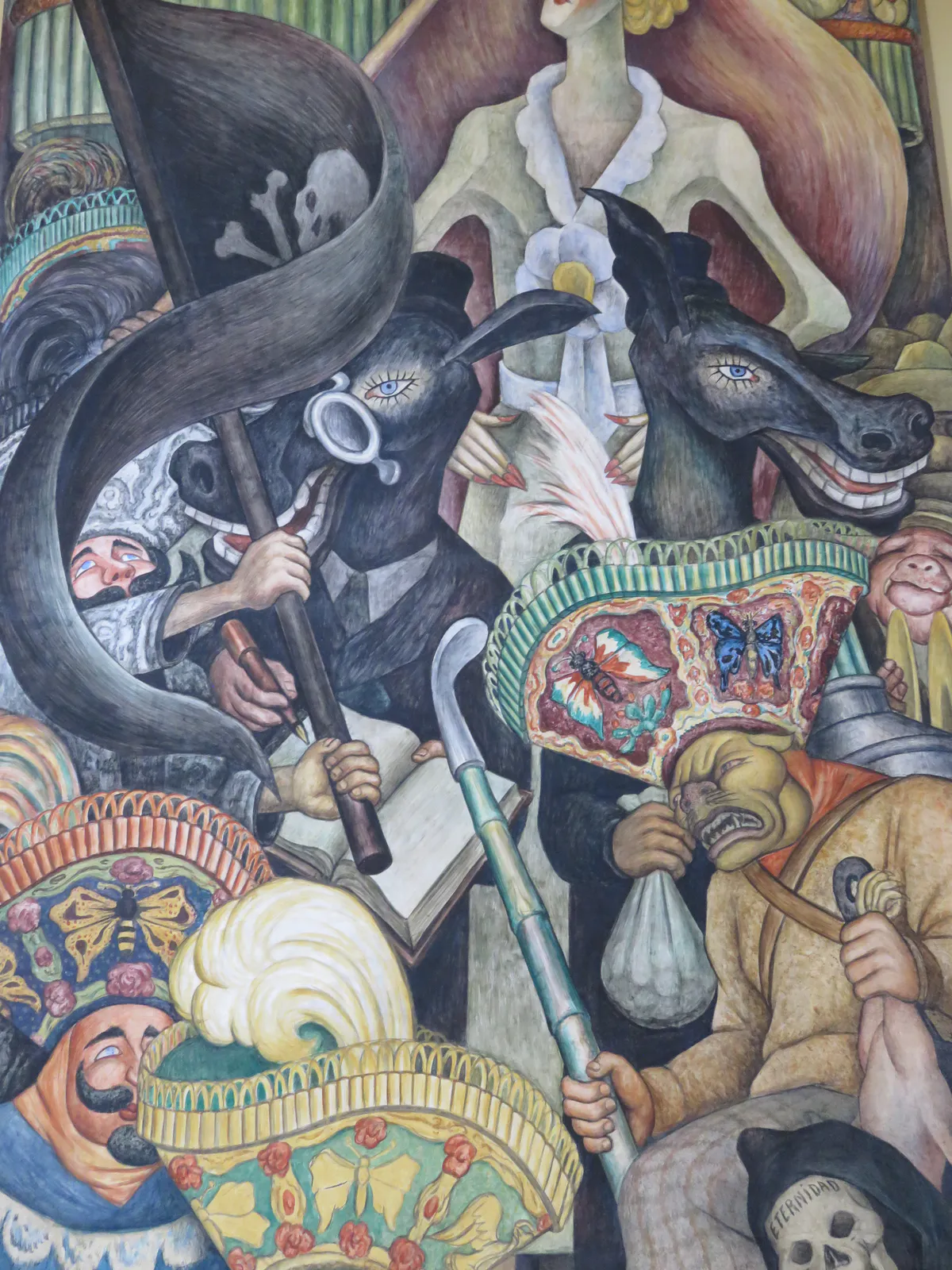
Carnival of Mexican Life (detail)
Diego Rivera
This scene from Carnival of Mexican Life (1936) mocks imperial and capitalist excess. Donkey-headed elites, masked peasants, and a skull-emblazoned flag form a surreal parade of corruption and resistance. Drawing on the Carnival of Huejotzingo, Rivera fuses satire, folk ritual, and political critique to expose social hypocrisy.

Horned God Panel, Gundestrup Cauldron
This iconic inner Gundestrup Cauldron panel (150 BC - 1 AD) depicts a horned god, often identified with the Celtic Cernunnos, seated cross-legged among animals. He holds a torque (a symbol of nobility) and a serpent, merging themes of power, fertility, and the natural world. The scene evokes shamanic authority and cosmic balance.
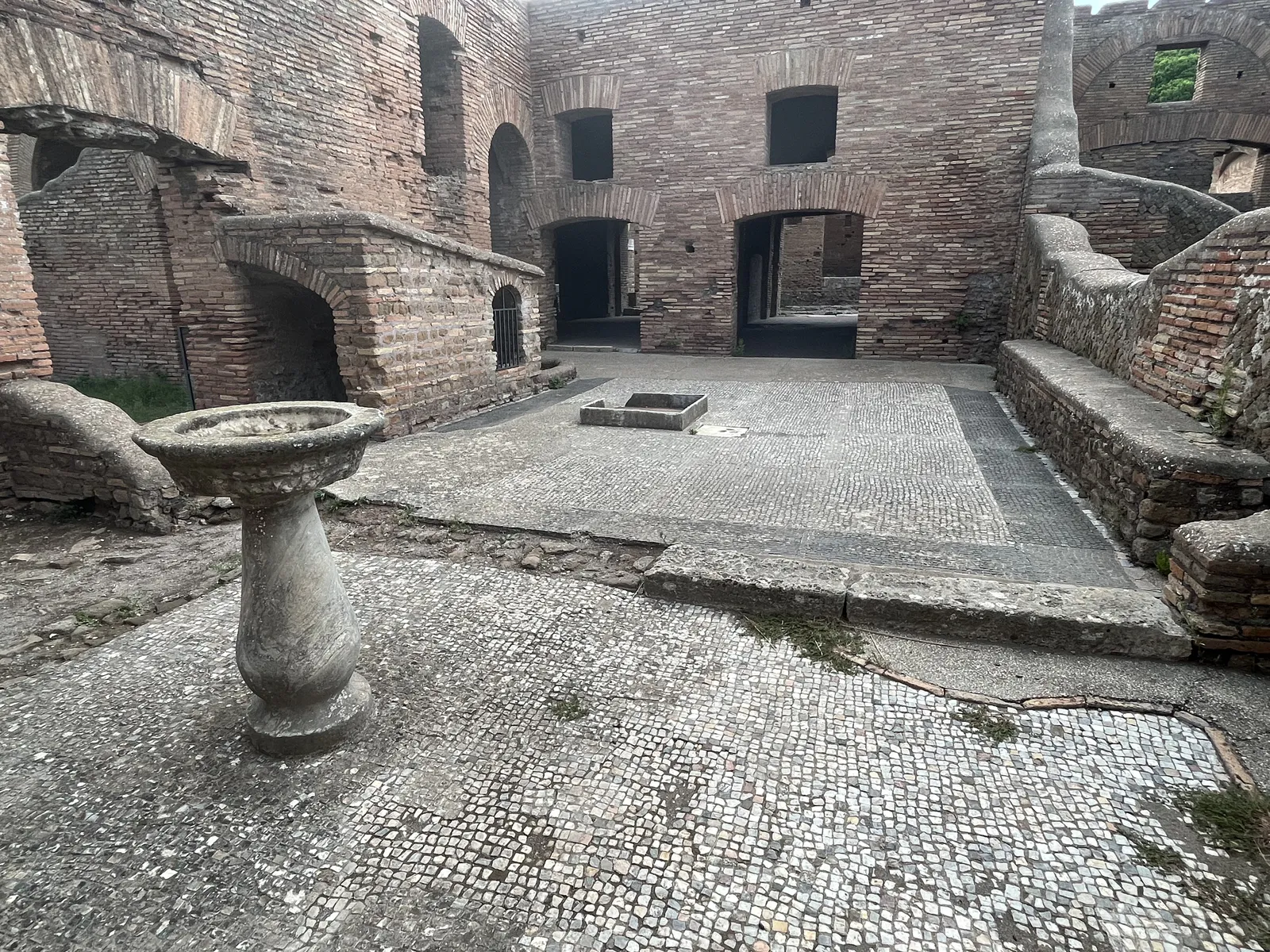
Courtyard of a Thermopolium with Wine Cellar
This courtyard (2nd–3rd cc.) formed part of a thermopolium—a Roman tavern serving hot food and wine—in Ostia. A mosaic floor, marble basin, and stone bench framed the dining area. On the left, the half-vaulted structure with a side window and descending steps served as a wine cellar, storing amphorae in cool air, while patrons enjoyed their drinks on benches outside.
Explore the world through my eyes: begin with the image below, the map, the dropdowns above, or the search button. Every photo includes a thoughtful caption.
Explore the world through my eyes: begin with the image below, the map, the dropdowns above, or the search button. Every photo includes a thoughtful caption.
When the path is beautiful, do not ask where it leads.
My travels have always been shaped by two intertwined forms of discovery. One is intellectual: learning why the world is the way it is. History became my guide, drawing me toward museums, old cities, architecture, and the layers of meaning carried by places. The other is emotional: the search for beauty, harmony, and moments of elevation, often found in nature, monasteries, and sacred spaces.
Together, these impulses shape how I travel, what I photograph, and how I interpret what I see. This site is my way of sharing that lifelong learning in visual form—one image at a time, with enough context to deepen curiosity and understanding. I hope these photographs leave you with a sense of wonder and a deeper feeling for the world.
Now let’s explore together.