Shaping Status: Cranial Deformation in the Andes
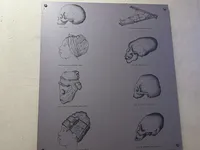
Colonial chroniclers noted deliberate cranial deformation practiced in regions such as Guane and Quimbaya. According to the chronicler Pedro Simón, when a child was born, its head was shaped in the desired way using boards placed on the forehead and back of the skull, tightened with bands. Sometimes the base board was inclined or additional side boards were added, so that as the cranial bones grew within these narrow moulds, they assumed the intended form.
Generally, the skull was flattened from front to back, almost suppressing the forehead and enlarging the posterior region; in other cases the back of the head was shortened or elongated in the form of a skullcap. These practices, begun in early infancy and continued for years, produced the striking head shapes seen in many Andean skeletal remains and were associated with status and collective identity.
Generally, the skull was flattened from front to back, almost suppressing the forehead and enlarging the posterior region; in other cases the back of the head was shortened or elongated in the form of a skullcap. These practices, begun in early infancy and continued for years, produced the striking head shapes seen in many Andean skeletal remains and were associated with status and collective identity.
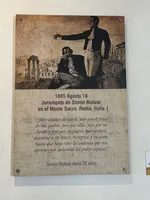
Simón Bolívar’s Oath for Independence
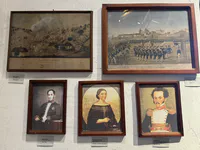
Leaders and Battles of Independence
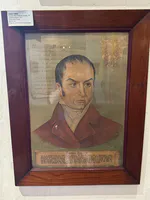
Portrait of Camilo Torres
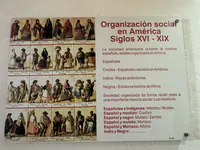
Casta System in Spanish Colonies
Heroes and Symbols of Independence
Stone Poporo
Pre-Columbian Mummy in Fetal Position
Plaque with Simón Bolívar’s Declaration
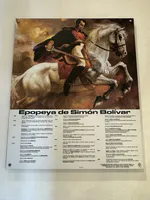
Chronicle of Simón Bolívar’s Revolutionary Career
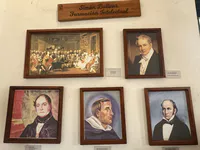
Simón Bolívar: Intellectual Formation
Simón Bolívar’s Epic Struggle for Spanish American Freedom
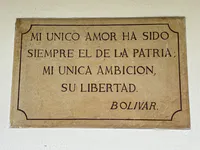
On 15 August 1805, on Rome’s Monte Sacro, Simón Bolívar swore before his teacher Simón Rodríguez that he would not rest until he had broken Spain’s chains in America. In July 1810 he left on a diplomatic mission to London to seek support for the independence cause. After the fall of the First Republic, he wrote the Manifiesto de Cartagena (26 May 1812), analysing its errors. In 1813 New Granada’s government appointed him commander of patriot forces; from Cúcuta he launched the Campaign of the Lower Magdalena, issued the Decree of War to the Death, and entered Caracas, where he was soon acclaimed as El Libertador, a title also bestowed by Mérida. Victories such as Los Horcones and Los Taguanes contrasted with defeats like La Puerta and the hardships of the Emigration of the East in 1814. Exiled in Jamaica in 1815, he sought British support before organising expeditions from Haiti (1816–1817), entering Angostura, founding El Correo del Orinoco, and securing Guayana as a strategic base.
On 15 February 1819 Bolívar convened the Congress of Angostura and delivered his famous speech, then launched the Liberating Campaign of New Granada, culminating in the patriot triumph at Boyacá on 7 August. That same year the Congress proclaimed the Republic of Colombia (Gran Colombia), and in 1820 Bolívar and Morillo signed a treaty to regularise warfare. Victory at Carabobo (24 June 1821) secured Venezuelan independence, while the Constitution of Cúcuta established Gran Colombia. Subsequent campaigns brought triumph at Pichincha (1822), the interview with San Martín in Guayaquil, and the liberation of Quito. In Peru, the battles of Junín (6 August 1824) and Ayacucho (9 December 1824) sealed Spanish defeat. Bolívar entered Lima, advanced to Upper Peru, and oversaw the creation of the Republic of Bolivia in 1825. His continental project reached its peak with the Congress of Panama in 1826, crowning a political and military epic that sought to unite Spanish America in freedom.
On 15 February 1819 Bolívar convened the Congress of Angostura and delivered his famous speech, then launched the Liberating Campaign of New Granada, culminating in the patriot triumph at Boyacá on 7 August. That same year the Congress proclaimed the Republic of Colombia (Gran Colombia), and in 1820 Bolívar and Morillo signed a treaty to regularise warfare. Victory at Carabobo (24 June 1821) secured Venezuelan independence, while the Constitution of Cúcuta established Gran Colombia. Subsequent campaigns brought triumph at Pichincha (1822), the interview with San Martín in Guayaquil, and the liberation of Quito. In Peru, the battles of Junín (6 August 1824) and Ayacucho (9 December 1824) sealed Spanish defeat. Bolívar entered Lima, advanced to Upper Peru, and oversaw the creation of the Republic of Bolivia in 1825. His continental project reached its peak with the Congress of Panama in 1826, crowning a political and military epic that sought to unite Spanish America in freedom.
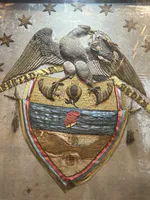
Embroidered Coat of Arms of the United States of Colombia
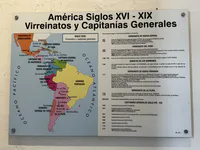
Viceroyalties and Captaincies in the Americas
The Guane People: Identity, Craft, and Cranial Deformation
The Guane occupied a wide region of what is now Colombia, bordered by Yariguíes, Chitareros, Laches, Poimas, and other Indigenous groups. Chroniclers such as Juan de Castellanos and Pedro Simón described them as distinct from other Amerindian populations. Archaeological evidence from sites like the Mesa de los Santos, together with scans and radiographs of Guane mummies, suggests cranial forms perceived as Caucasoid, often modified by deliberate skull deformation. From birth, infants’ heads were pressed between boards tied with bands, sometimes with additional side pieces, producing elongated or flattened crania that marked hierarchy and distinguished them from neighbouring peoples.
The Guane cultivated cotton, maize, beans, squash, many fruits, and relied heavily on fish, complemented by game such as deer. Women were especially skilled in spinning cotton and ceiba fibre, producing high-quality textiles dyed with indigo, cochineal, saffron, and other plant pigments, and decorated with roller pintaderas that gave their fabrics refined finishes. They also worked fique and cane for baskets and developed striking objects such as caps made from human hair. Their ceramics, often red-painted and adorned with applied or incised human and animal figures, preserve the geological memory of their territory. Burial practices included natural mummification in the dry climate, interments in ceramic vessels, and placements in rock fissures; red was the colour of mourning. Rock art, created with plant-based pigments on high canyon walls, likely expressed ritual or symbolic language. Musical traditions are attested by instruments such as flutes, ocarinas, panpipes, and maracas. After conquest, Guane and other groups were relocated to settlements like Moncora (today Guane, in Barichara), and their language survives only in a few place names.
The Guane cultivated cotton, maize, beans, squash, many fruits, and relied heavily on fish, complemented by game such as deer. Women were especially skilled in spinning cotton and ceiba fibre, producing high-quality textiles dyed with indigo, cochineal, saffron, and other plant pigments, and decorated with roller pintaderas that gave their fabrics refined finishes. They also worked fique and cane for baskets and developed striking objects such as caps made from human hair. Their ceramics, often red-painted and adorned with applied or incised human and animal figures, preserve the geological memory of their territory. Burial practices included natural mummification in the dry climate, interments in ceramic vessels, and placements in rock fissures; red was the colour of mourning. Rock art, created with plant-based pigments on high canyon walls, likely expressed ritual or symbolic language. Musical traditions are attested by instruments such as flutes, ocarinas, panpipes, and maracas. After conquest, Guane and other groups were relocated to settlements like Moncora (today Guane, in Barichara), and their language survives only in a few place names.
From Viceroyalties to Republics in Spanish America
From the 16th to the 19th c., Spain organised its American possessions into viceroyalties and captaincies general according to their strategic and economic importance. The Viceroyalty of New Spain arose after the fall of Tenochtitlán in 1521, with its capital in Mexico City, encompassing North and Central America, the Antilles, parts of the present-day United States, and the Philippines; it became the Republic of Mexico in 1821. After the conquest of Cuzco in 1534, the Viceroyalty of Peru was created with capital in Lima, covering much of South America. Its long decline ended with the battle of Ayacucho in 1824 and the fall of the last Spanish stronghold at Chiloé in 1826, while new republics such as Bolivia consolidated during the 1830s. In 1780–81, a revolt in Peru led by Creoles turned into a major Indigenous uprising under Túpac Amaru.
A new Bourbon dynasty took the Spanish throne in 1700 with Philip V, imposing political, economic, and administrative reforms in Spain and across its colonies. The Viceroyalty of New Granada was created in 1717 with capital at Santafé de Bogotá, suspended in 1723 and restored in 1739; it included Colombia, Panama, Venezuela, and Ecuador. Independence movements began in 1810, and in 1819 Gran Colombia was formed, later breaking apart in 1830 as Colombia, Venezuela, and Ecuador; Panama separated from Colombia in 1903, and in 1977 the Torrijos–Carter Treaty provided for the canal’s return to the Republic of Colombia. The Viceroyalty of the Río de la Plata, created in 1776 by Charles III, comprised territories now in Argentina, Bolivia, Uruguay, Paraguay, northern Chile, and southern Brazil. Throughout the 19th c., these viceroyalties gained independence. Between the 16th and 19th cc., Spain also created a network of captaincies general—Santo Domingo, Guatemala, Nueva Vizcaya, Yucatán, Florida, Puerto Rico, Chile, the Provincias Internas, and Venezuela, the latter declaring independence in 1811—reflecting the gradual fragmentation of imperial authority.
A new Bourbon dynasty took the Spanish throne in 1700 with Philip V, imposing political, economic, and administrative reforms in Spain and across its colonies. The Viceroyalty of New Granada was created in 1717 with capital at Santafé de Bogotá, suspended in 1723 and restored in 1739; it included Colombia, Panama, Venezuela, and Ecuador. Independence movements began in 1810, and in 1819 Gran Colombia was formed, later breaking apart in 1830 as Colombia, Venezuela, and Ecuador; Panama separated from Colombia in 1903, and in 1977 the Torrijos–Carter Treaty provided for the canal’s return to the Republic of Colombia. The Viceroyalty of the Río de la Plata, created in 1776 by Charles III, comprised territories now in Argentina, Bolivia, Uruguay, Paraguay, northern Chile, and southern Brazil. Throughout the 19th c., these viceroyalties gained independence. Between the 16th and 19th cc., Spain also created a network of captaincies general—Santo Domingo, Guatemala, Nueva Vizcaya, Yucatán, Florida, Puerto Rico, Chile, the Provincias Internas, and Venezuela, the latter declaring independence in 1811—reflecting the gradual fragmentation of imperial authority.
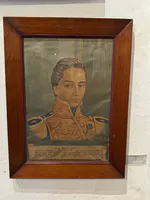
José María Córdova
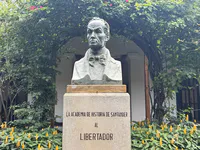
Simón Bolívar
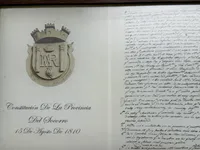
Constitution of the Province of El Socorro
Agriculture, Textiles, and Trade in Guane Daily Life
The Guane cultivated cotton, maize, beans, squash, and many fruits, supplemented by hunted animals such as deer and fara, though fish formed their primary food source. Women were skilled spinners of cotton and ceiba fibers using simple wooden spindles, producing textiles of notable sophistication. Indigo supplied blues, cochineal gave purple, saffron yellow, and trompeto a vermilion tone; a plant called barba de piedra produced a special red. Their textiles became an important trade good, exchanged for salt with the Muisca, pottery with Chitareros and Oibas, and shells with Caribbean peoples.
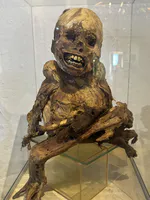
Mummified Infant with Preserved Dentition
Guane Rituals, Rock Art, Music, and Lost Language
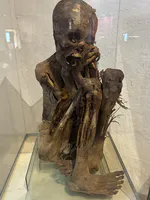
Guane mummification occurred naturally through climatic conditions rather than through deliberate ritual techniques. Other burials were placed in ceramic vessels or within geological fissures of the Chicamocha Canyon, where red was used as the mourning color. Rock art appears on high cliffs and sheltered walls in the Chicamocha Canyon and the Mesa de los Santos, created with plant-based pigments applied directly to the stone; these ideograms likely formed part of a ritual or symbolic language. The Guane also practiced music, using cane or bone flutes, ceramic ocarinas, zampoñas, and maracas—examples of which are preserved at the Museo Casa de Bolívar. Their language has been lost, surviving only in a handful of place names. The settlement of Moncora, today the corregimiento of Guane in Barichara, later became a relocation site for Guane and other groups placed in colonial resguardos.
Cranial Modification Practices
European Figures Who Shaped the World Bolívar Fought
Arrest of Governor Juan Bastus y Falla in Pamplona
Simón Bolívar's Formative Years
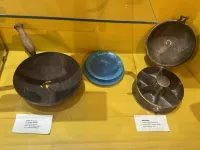
Domestic Kitchen Utensils
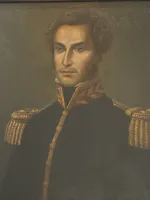
Daniel Florencio O’Leary
Textiles, Craftwork, and Tools of the Guane Artisans
Guane artisans excelled in textile production, creating finely woven fabrics with subtle stamped designs made using roller pintaderas. The Museo Casa de Bolívar in Bucaramanga preserves one of the most significant collections of these works, including a rare cap woven from human hair—an object unique among Indigenous groups in Colombia. They also crafted baskets and everyday objects from fique, castilla cane, and other local fibers. Alongside their textile mastery, the Guane developed notable skill in weapon-making, producing bows, arrows, slings, clubs, macana spears, and axes of sharpened siliceous stone. These tools supported both daily subsistence and community defense.
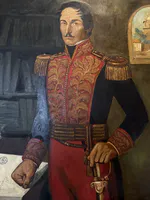
General Francisco de Paula Santander
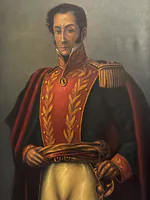
Simón Bolívar in Military Regalia
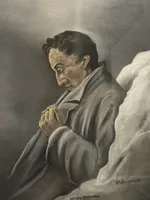
Simón Bolívar on His Deathbed
Bolívar HouseCasa de Bolívar
Bolívar House is a preserved colonial home associated with Simón Bolívar’s 1828 stay in Bucaramanga, when the independence campaigns were giving way to the uneasy experiment of Gran Colombia. Now a memorial museum, it treats the Liberator not only as a military hero but as a political idea—unity, authority, and the costs of founding a republic—while displays of Guane ceramics and textiles push the story deeper, reminding visitors that Santander’s identity reaches well beyond the 19th-c. nation.
Explore by type and place