Antioquia in Transition and Crisis, 1814–1819
In 1814, Governor José Miguel de la Calle signed the Law of Manumission of enslaved people, drafted by José Félix de Restrepo. Shortly afterward, Del Corral died of typhoid fever, leaving few capable leaders to stabilize the State. Local conflicts and internal weakness accelerated Antioquia’s collapse and its submission during the Spanish Pacification. In 1818 Sámano appointed Colonel Carlos Tolrá as political and military governor, who fled Santa Fe de Antioquia after the patriot triumph at Boyacá in 1819. That year, a royal decree confirmed the creation of the Diocese of Antioquia, and General José María Córdova, now military governor, ordered the execution of the Spaniard José María del Valle, former treasury officer.
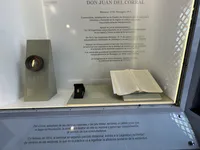
Portrait Medallion of Don Juan del Corral
From Royal Province to Republic: Antioquia’s Independence
In September 1810, the last royal governor of Antioquia, Francisco de Ayala, swore in as president of the Supreme Governing Junta, serving until early 1811. From January that year, Antioquia effectively had its own government, though still cloaked in the forms of the old regime, and sent delegates such as Juan Bautista del Corral and José Manuel Restrepo to the constituent congress in Bogotá. The province soon declared its sectional sovereignty as the Federal State of Antioquia, adopted a constitution in Rionegro in 1812, and organised its administration according to republican principles, while favouring a strong central authority.
In 1813 the Spanish brigadier Juan Sámano advanced from Popayán, threatening Antioquia and sharpening divisions between royalists and patriots. Amid a hesitant legislature, Del Corral rallied support for independence, placed the state on a war footing, and on 11 August 1813 proclaimed Antioquia’s separation from Spain. In 1814, under governor José Miguel de la Calle, the province approved a law of gradual manumission drafted by José Félix de Restrepo, but Del Corral died that same year, leaving few capable leaders. Local disputes and the lack of a unifying figure led to Antioquia’s relatively easy submission during the Spanish pacification. Sámano later appointed Carlos Tolrá as political and military governor, who fled after the patriot victory at Boyacá in 1819. That year, following independence triumphs, General José María Córdova, now military governor of Antioquia, ordered the execution of José María del Valle, a former royal treasury official—an episode that symbolised the final collapse of Spanish authority in the province.
In 1813 the Spanish brigadier Juan Sámano advanced from Popayán, threatening Antioquia and sharpening divisions between royalists and patriots. Amid a hesitant legislature, Del Corral rallied support for independence, placed the state on a war footing, and on 11 August 1813 proclaimed Antioquia’s separation from Spain. In 1814, under governor José Miguel de la Calle, the province approved a law of gradual manumission drafted by José Félix de Restrepo, but Del Corral died that same year, leaving few capable leaders. Local disputes and the lack of a unifying figure led to Antioquia’s relatively easy submission during the Spanish pacification. Sámano later appointed Carlos Tolrá as political and military governor, who fled after the patriot victory at Boyacá in 1819. That year, following independence triumphs, General José María Córdova, now military governor of Antioquia, ordered the execution of José María del Valle, a former royal treasury official—an episode that symbolised the final collapse of Spanish authority in the province.
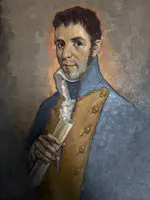
Don Juan del Corral
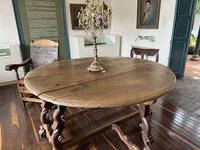
Table of Antioquia’s Independence
Juan del Corral MuseumMuseo Juan del Corral
Juan del Corral Museum, set in a whitewashed colonial house in Santa Fe de Antioquia, anchors the town to the moment when independence was argued not in capitals but around local tables. Here Juan del Corral (1778–1814) led Antioquia’s 1813 break with Spain and pushed early republican reforms, including the Freedom of the Wombs Law that began to unravel slavery. Portraits, manuscripts, and preserved rooms turn a regional episode into a human-scale record of sovereignty, law, and memory.
Explore by type and place