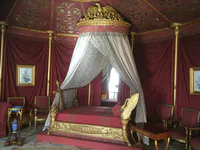
Joséphine’s Bed in the Tent Room
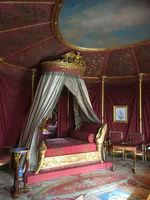
Empress Joséphine’s Bedchamber

Charles VII Ready to Fight the English
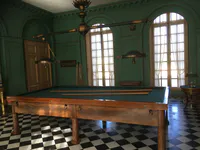
Napoleonic-Era Billiard Room

Magnolia Blossoms in the Rose Garden
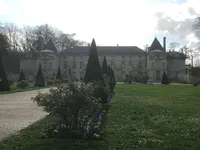
Garden Façade of Château de Malmaison
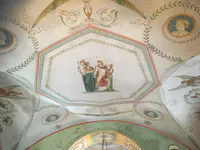
Wisdom and Strength
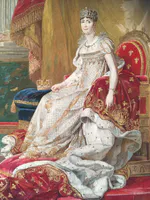
Empress Joséphine in Coronation Robes
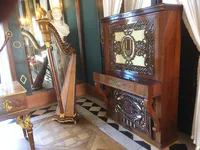
Empire-Era Musical Salon
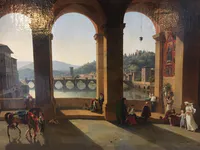
View of Ponte Vecchio from a Loggia
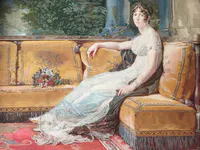
Joséphine de Beauharnais
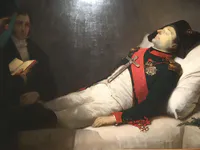
Napoleon on His Deathbed

Empress Joséphine
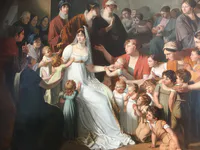
Joséphine with the Children

Bonaparte at Marengo
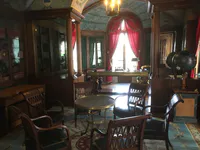
Napoleon’s Office at Malmaison
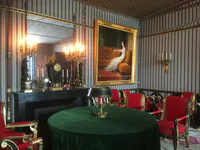
Portrait of Empress Joséphine

Napoleon Crowned by Time, Writing the Civil Code
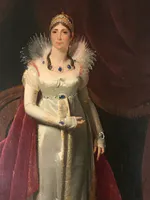
Joséphine in Coronation Dress
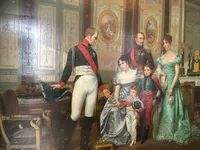
The Empress Receiving Tsar Alexander I

C’est fini…
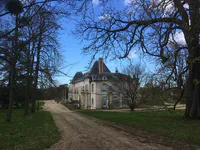
Rear Façade
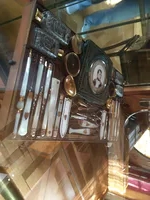
Napoleon Bonaparte's Travel Necessaire

Napoleon Bonaparte
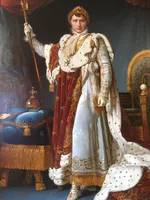
Napoleon in Coronation Robes
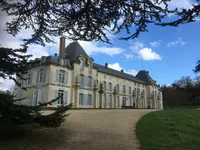
Château de Malmaison
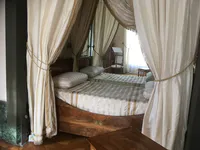
Napoleon’s Campaign Bed
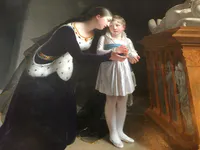
Jeanne de Navarre and Her Son
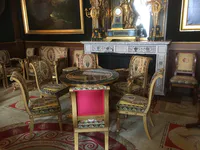
Empire Salon Chairs and Gaming Table

Black Swans in Malmaison Gardens

Apotheosis of French Heroes Fallen in the War of Liberty

Jacques de Molay Rejecting False Confessions
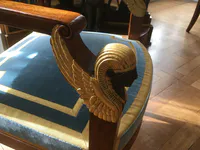
Armchair with Egyptian Motif
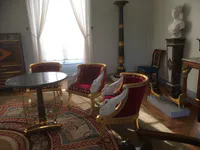
Chairs and Table from the Frieze Hall
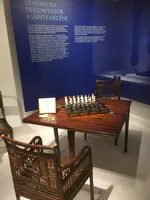
Furniture from St Helena
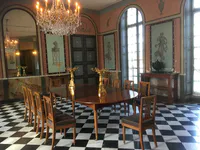
Dining Room Ensemble
Malmaison CastleChâteau de Malmaison
Malmaison Castle began as a 17th c. country house, but its meaning was remade when Joséphine Bonaparte bought it in 1799 and Napoleon used it as an intimate seat of power during the Consulate and early Empire. Here politics unfolded in salons rather than grand palaces, and the refined Empire interiors helped define the look of a new regime. After their 1809 divorce, Joséphine kept Malmaison until her death in 1814, when Tsar Alexander I came to pay his respects—an emblem of how private rooms could hold European history.
Explore by type and place