Slavery and Taíno Rebellion in Early Colonial Puerto Rico
Slavery and Taíno Rebellion in Puerto Rico
In 1510 the Spanish imposed a system that consigned Taínos to individual Spaniards to perform forced labor, triggering a major uprising in 1511. Led by Agueybaná the Brave, successor of Agueybaná I, and by Guarionex, the Taínos burned the settlement at the Guaurabo River (today the Añasco River), killing some 80 inhabitants, including Cristóbal de Sotomayor. A popular legend claims they first drowned a Spaniard named Salcedo to test whether Europeans were immortal, but historians have found no evidence for this story.
In March 1511, Ponce de León launched a night attack against several caciques, killing around 200 Taínos and enslaving many prisoners. Agueybaná pursued Ponce de León, but was killed by the arquebusier Juan de León at the battle of Yahueca, forcing the Taínos to retreat. This defeat did not end the conflict: further battles followed, after which Indigenous groups gradually withdrew eastward while Spanish control and enslavement expanded across the island.
In 1510 the Spanish imposed a system that consigned Taínos to individual Spaniards to perform forced labor, triggering a major uprising in 1511. Led by Agueybaná the Brave, successor of Agueybaná I, and by Guarionex, the Taínos burned the settlement at the Guaurabo River (today the Añasco River), killing some 80 inhabitants, including Cristóbal de Sotomayor. A popular legend claims they first drowned a Spaniard named Salcedo to test whether Europeans were immortal, but historians have found no evidence for this story.
In March 1511, Ponce de León launched a night attack against several caciques, killing around 200 Taínos and enslaving many prisoners. Agueybaná pursued Ponce de León, but was killed by the arquebusier Juan de León at the battle of Yahueca, forcing the Taínos to retreat. This defeat did not end the conflict: further battles followed, after which Indigenous groups gradually withdrew eastward while Spanish control and enslavement expanded across the island.
Colonial Divisions and the Rise of Slavery in Puerto Rico
Colonial Divisions and the Growth of Slavery in Puerto Rico
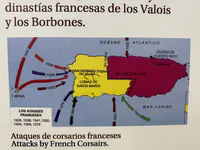
In 1514 the Spanish Crown divided Puerto Rico into two administrative districts: the San Germán Party in the west and the San Juan Party in the east, separated by a line from the Camuy River in the north to the Jacaguas River in the south. Over the following centuries San Germán was subdivided into numerous towns—including Aguada, Añasco, Mayagüez, San Sebastián, Ponce, Rincón, Cabo Rojo, Moca, Aguadilla, and others—some of which later merged, split, and eventually became separate municipalities, as in the case of Guánica.
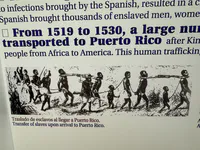
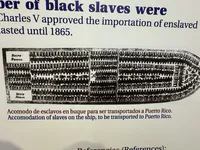
The first rural workforce consisted of enslaved Indigenous people, who died in great numbers, especially from infectious diseases. To replace this labor, Spaniards began bringing enslaved men, women, and children from Africa, making slavery a central institution in the island’s colonial economy
In 1514 the Spanish Crown divided Puerto Rico into two administrative districts: the San Germán Party in the west and the San Juan Party in the east, separated by a line from the Camuy River in the north to the Jacaguas River in the south. Over the following centuries San Germán was subdivided into numerous towns—including Aguada, Añasco, Mayagüez, San Sebastián, Ponce, Rincón, Cabo Rojo, Moca, Aguadilla, and others—some of which later merged, split, and eventually became separate municipalities, as in the case of Guánica.
The first rural workforce consisted of enslaved Indigenous people, who died in great numbers, especially from infectious diseases. To replace this labor, Spaniards began bringing enslaved men, women, and children from Africa, making slavery a central institution in the island’s colonial economy
Slavery and the Taíno Uprising of 1511 in Puerto Rico
Slavery and the Taíno Uprising of 1511
In 1510 the Spanish began assigning groups of Indigenous people to colonists to perform many types of labor. This exploitation helped trigger the Taíno rebellion of 1511, led by Agueybaná the Brave, successor to Agueybaná I, together with Guarionex. The rebels burned the settlement at the Guaurabo River (today the Añasco River) and killed about 80 inhabitants, including Cristóbal de Sotomayor.
According to a popular but undocumented legend, before the uprising the Taínos drowned a Spaniard named Salcedo in the Guaurabo River and watched his body for three days to prove that Europeans were mortal. In March 1511 Ponce de León launched a night attack against several caciques, killing around 200 Indigenous fighters and enslaving many prisoners. Agueybaná was killed by the arquebusier Juan de León at the battle of Yahueca, after which the Taínos retreated. Even so, this first defeat did not end the conflict, which continued through further battles before the Indigenous forces withdrew eastward.
In 1510 the Spanish began assigning groups of Indigenous people to colonists to perform many types of labor. This exploitation helped trigger the Taíno rebellion of 1511, led by Agueybaná the Brave, successor to Agueybaná I, together with Guarionex. The rebels burned the settlement at the Guaurabo River (today the Añasco River) and killed about 80 inhabitants, including Cristóbal de Sotomayor.
According to a popular but undocumented legend, before the uprising the Taínos drowned a Spaniard named Salcedo in the Guaurabo River and watched his body for three days to prove that Europeans were mortal. In March 1511 Ponce de León launched a night attack against several caciques, killing around 200 Indigenous fighters and enslaving many prisoners. Agueybaná was killed by the arquebusier Juan de León at the battle of Yahueca, after which the Taínos retreated. Even so, this first defeat did not end the conflict, which continued through further battles before the Indigenous forces withdrew eastward.
Colonial Division of Puerto Rico and the Rise of Enslaved Labor
Colonial Division of Puerto Rico and Early Enslaved Labor
In 1514 the Spanish Crown divided Puerto Rico into two administrative districts: the San Juan Party (Puerto Rico) in the east and the San Germán Party in the west, separated by a line from the Camuy River in the north to the Jacaguas River in the south (Ponce and Juana Díaz). Over the 18th and early 19th cc., San Germán was subdivided into numerous towns, including Aguada (1692), Añasco (1733), Mayagüez (1760), San Sebastián and Ponce (1752), Rincón (1770), Cabo Rojo (1771), Moca (1774), Aguadilla (1780), Peñuelas (1793), Camuy (1807), Sabana Grande (1814), Isabela (1819), Quebradillas (1823), Lares (1827), Guayanilla (1833), and later Las Marías, Maricao, Hormigueros, Guánica and Lajas in the late 19th c. Some of these communities later merged, split and eventually became separate municipalities, as in the case of Guánica, which reemerged as an independent municipality in 1914.
As Indigenous populations declined, largely due to epidemic diseases, Spaniards began bringing enslaved Africans—men, women and children—to work the land. Royal authorization under the Spanish Crown formalized this shift, making African slavery a central component of Puerto Rico’s colonial economy.
In 1514 the Spanish Crown divided Puerto Rico into two administrative districts: the San Juan Party (Puerto Rico) in the east and the San Germán Party in the west, separated by a line from the Camuy River in the north to the Jacaguas River in the south (Ponce and Juana Díaz). Over the 18th and early 19th cc., San Germán was subdivided into numerous towns, including Aguada (1692), Añasco (1733), Mayagüez (1760), San Sebastián and Ponce (1752), Rincón (1770), Cabo Rojo (1771), Moca (1774), Aguadilla (1780), Peñuelas (1793), Camuy (1807), Sabana Grande (1814), Isabela (1819), Quebradillas (1823), Lares (1827), Guayanilla (1833), and later Las Marías, Maricao, Hormigueros, Guánica and Lajas in the late 19th c. Some of these communities later merged, split and eventually became separate municipalities, as in the case of Guánica, which reemerged as an independent municipality in 1914.
As Indigenous populations declined, largely due to epidemic diseases, Spaniards began bringing enslaved Africans—men, women and children—to work the land. Royal authorization under the Spanish Crown formalized this shift, making African slavery a central component of Puerto Rico’s colonial economy.
From Coroso to Taíno: Early Cultures of the Antilles
Taíno Precursors in the Antilles
The Coroso tradition (c. 4000 BC–100 BC) was an archaic culture of hunter-gatherers organized in small bands, with recent evidence of some larger settlements. The Saladoid culture (c. 300 BC–600 AD) brought the first farming and pottery-making society from South America to Puerto Rico, with large, well-organized settlements and fine ceramics painted in white, orange, and red on dark red backgrounds.
From c. 600–1200, Ostionoid and Helenoid groups formed the first agricultural societies in Puerto Rico, settling near rivers, founding new ceremonial centers, producing dark ceramics painted in white, orange, or red, and making religious objects linked to cohoba. By c. 1200–1500, Taíno chiefdoms in Borinquen, La Española, and eastern Cuba developed complex leadership structures and highly elaborate ceremonial systems. The Hueca Complex, identified at the Hueca–Sorcé site in Vieques by Luis Chanlatte Baik and Yvonne Narganes Storde, represents a distinct cultural tradition that coexisted with other groups on the island.
The Coroso tradition (c. 4000 BC–100 BC) was an archaic culture of hunter-gatherers organized in small bands, with recent evidence of some larger settlements. The Saladoid culture (c. 300 BC–600 AD) brought the first farming and pottery-making society from South America to Puerto Rico, with large, well-organized settlements and fine ceramics painted in white, orange, and red on dark red backgrounds.
From c. 600–1200, Ostionoid and Helenoid groups formed the first agricultural societies in Puerto Rico, settling near rivers, founding new ceremonial centers, producing dark ceramics painted in white, orange, or red, and making religious objects linked to cohoba. By c. 1200–1500, Taíno chiefdoms in Borinquen, La Española, and eastern Cuba developed complex leadership structures and highly elaborate ceremonial systems. The Hueca Complex, identified at the Hueca–Sorcé site in Vieques by Luis Chanlatte Baik and Yvonne Narganes Storde, represents a distinct cultural tradition that coexisted with other groups on the island.

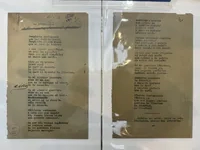
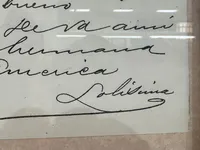
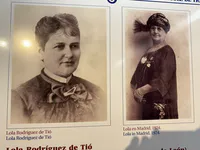
Photos of Lola Rodríguez de Tió

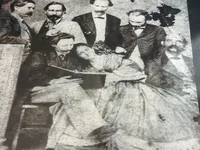
Lola Rodríguez de Tió with Friends
From Coroso to Taíno: Early Cultural Roots in the Antilles
Taíno Cultural Precursors in the Antilles
The deepest roots of Taíno culture lie in the archaic Coroso tradition (4000 BC–100 AD), formed by small bands of hunter-gatherers whose recently discovered larger settlements show a more complex use of the landscape. Around 300 BC, the Saladoid people—farmers and potters arriving from South America—founded large, well-organized villages and produced high-quality ceramics painted in white, orange and red over dark red backgrounds, establishing the first sustained agricultural and ceramic tradition in Puerto Rico. From 600 to 1200 AD, the Ostionoid and Elenoid cultures developed the first fully agricultural societies in the Antilles, with riverine settlements, new ceremonial centers, richly painted ceramics, and religious objects linked to cohoba rituals.
Between 1200 and 1500 AD, Taíno societies emerged as complex chiefdoms in Borinquen (Puerto Rico), Hispaniola and eastern Cuba, marked by elaborate ceremonial life and stratified leadership. Within this broader sequence, the Hueca Complex at Hueca-Sorcé in Vieques—identified by Luis Chanlatte Baik and Yvonne Narganes Storde—represents a distinct cultural tradition that coexisted with other island groups, adding further diversity to the mosaic of Taíno precursors
The deepest roots of Taíno culture lie in the archaic Coroso tradition (4000 BC–100 AD), formed by small bands of hunter-gatherers whose recently discovered larger settlements show a more complex use of the landscape. Around 300 BC, the Saladoid people—farmers and potters arriving from South America—founded large, well-organized villages and produced high-quality ceramics painted in white, orange and red over dark red backgrounds, establishing the first sustained agricultural and ceramic tradition in Puerto Rico. From 600 to 1200 AD, the Ostionoid and Elenoid cultures developed the first fully agricultural societies in the Antilles, with riverine settlements, new ceremonial centers, richly painted ceramics, and religious objects linked to cohoba rituals.
Between 1200 and 1500 AD, Taíno societies emerged as complex chiefdoms in Borinquen (Puerto Rico), Hispaniola and eastern Cuba, marked by elaborate ceremonial life and stratified leadership. Within this broader sequence, the Hueca Complex at Hueca-Sorcé in Vieques—identified by Luis Chanlatte Baik and Yvonne Narganes Storde—represents a distinct cultural tradition that coexisted with other island groups, adding further diversity to the mosaic of Taíno precursors
Museo de la Historia de San Germán
The Museo de la Historia de San Germán offers a concise yet vivid journey through the deep past of western Puerto Rico, from the earliest hunter-gatherer bands to complex Taíno chiefdoms. Archaeological displays trace cultures such as Coroso, Saladoid, Ostionoide and Hueco, highlighting their settlements, agriculture and finely decorated ceramics. Ceremonial and religious objects reveal a sophisticated spiritual world that flourished long before European contact.
Beyond pre-Columbian life, the museum examines the dramatic arrival of the Spanish, the 1511 Indigenous uprising, and the imposition of systems that led to slavery and forced labor. Panels on colonial administration explain how the island was divided into the San Germán and San Juan districts, and how many of today’s municipalities emerged from that early partition. Together, the exhibits place San Germán within the broader story of Puerto Rico’s cultural formation and resilience.
Popular categories
Advertising space