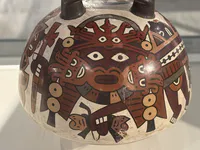
Nazca Double-Spout Bridge Vessel
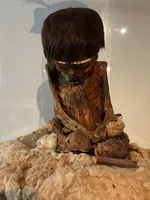
Nasca Child Burial Artifacts
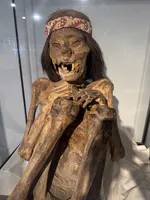
Nasca Mummy from Ullujalla
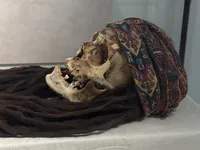
Pre-Columbian Hairstyles of Ancient Peru
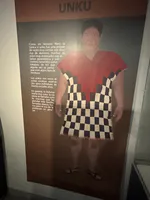
Wari-Style Tunic with Geometric Designs

Wari-Style Tunic with Geometric Designs
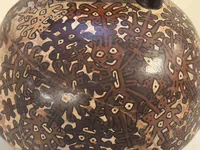
Nazca Stirrup-Spout Bottle
Nasca Culture: Ceramics, Geoglyphs, and Sacred Cities
The Nasca were the second major cultural formation of the region, known for their refined polychrome ceramics, the creation of thousands of geoglyphs, and an ingenious hydraulic system of subterranean aqueducts for agriculture and daily use. Their core territory lay in the Grande River basin—Nasca and Palpa—and extended into the valleys of Ica and Acari.
In the early phase, they built Cahuachi, the largest ceremonial urban center on the southern coast, constructed with alternating adobe and mud, featuring broad plazas for public gatherings and several pyramid-shaped buildings used for religious ceremonies by the ruling class. In the Chincha and Pisco valleys, local populations interacted with southern neighbors yet maintained distinctive artistic and architectural traditions.
In the early phase, they built Cahuachi, the largest ceremonial urban center on the southern coast, constructed with alternating adobe and mud, featuring broad plazas for public gatherings and several pyramid-shaped buildings used for religious ceremonies by the ruling class. In the Chincha and Pisco valleys, local populations interacted with southern neighbors yet maintained distinctive artistic and architectural traditions.
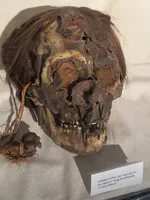
Nasca Trophy Head with Spines
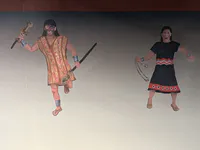
Wari Imperial Military Equipment
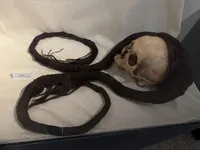
Head with Rolled Hair
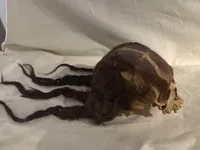
Head with Braids and Bangs
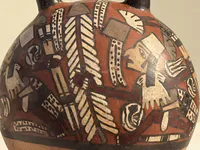
Nasca Warrior Ceramic Bottle
Inca Expansion and Control in the Ica–Nasca Region
The first Inca incursion into this region likely took place under the rule of Capac Yupanqui as a diplomatic visit rather than a conquest. Definitive annexation occurred around 1470, during the second great expansion of the Tahuantinsuyo led by the Inca Tupac Yupanqui. Ica was incorporated into the Chinchaysuyo, and administrative centers for control and tribute were established in all the valleys of the region.
Where strong local centers already existed, such as La Centinela in Chincha and the Tacaraca complex in the Ica valley, the Incas built their own structures atop earlier ones. Where no such centers existed, they constructed entirely new architectural complexes to oversee conquered populations. Among these new sites are Tambo Colorado in Pisco, Tambo de Huayurí and Pueblo Nuevo in Palpa, and Tambo del Collao and Paredones in Nasca.
Where strong local centers already existed, such as La Centinela in Chincha and the Tacaraca complex in the Ica valley, the Incas built their own structures atop earlier ones. Where no such centers existed, they constructed entirely new architectural complexes to oversee conquered populations. Among these new sites are Tambo Colorado in Pisco, Tambo de Huayurí and Pueblo Nuevo in Palpa, and Tambo del Collao and Paredones in Nasca.
Pre-Columbian Hairstyles and Social Identity in Peru
Pre-Columbian peoples of ancient Peru developed a wide variety of hairstyles, worn by both men and women: buns, fringes, braids, wigs, and more. These styles signaled social hierarchy and reveal the importance they placed on personal grooming. The implements used ranged from simple combs to elaborate hair ornaments, and the richest variety of documented hairstyles has been found in Paracas and Nasca burials.
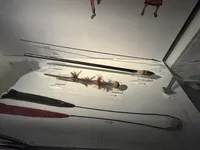
Wari Empire Military and Weaponry
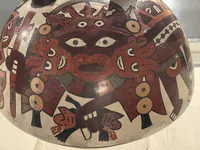
Nazca Bottle with Mythological Motif
Nasca Lines: Monumental Geoglyphs of Desert Art
Large geoglyphs began to appear on the desert slopes and plains around 800 BCE, during the early Paracas phase. With the rise of the Nasca culture, this practice became a major artistic tradition, reaching remarkable scale, quantity, and stylistic variety over more than six centuries. Nasca geoglyphs fall into two main groups: biomorphic figures of plants and animals, and geometric designs such as spirals, lines, trapezoids, and cleared fields.
Most biomorphic designs—like the hummingbird, spider, and monkey—were created in the Early or Monumental Nasca phase and reflect a more naturalistic style. Geometric forms became more common and larger during the Late Nasca period. These geoglyphs extend from the Chincha Valley in the north to the southern edge of the Rio Grande de Nasca basin, with the greatest concentration in Palpa and especially in the famed Pampa de Nasca. The UNESCO-listed zone covers more than 450 km², primarily across the pampas of Nasca and Palpa.
Most biomorphic designs—like the hummingbird, spider, and monkey—were created in the Early or Monumental Nasca phase and reflect a more naturalistic style. Geometric forms became more common and larger during the Late Nasca period. These geoglyphs extend from the Chincha Valley in the north to the southern edge of the Rio Grande de Nasca basin, with the greatest concentration in Palpa and especially in the famed Pampa de Nasca. The UNESCO-listed zone covers more than 450 km², primarily across the pampas of Nasca and Palpa.
Nasca Aqueducts: 1,500 Years of Ingenious Water Engineering
In the valleys south of the Nasca Plain, river flow is much lower than in the northern valleys, and surface water can disappear for long periods of the year. This scarcity led local populations to search for underground sources and to build an ingenious hydraulic system known as aqueducts in the valleys of Nasca, Taruga, and Las Trancas, capturing and channeling groundwater to the surface. A typical aqueduct has a subterranean section of covered canals that collect water and, at intervals, vertical shafts or eyes that allow access for cleaning and maintenance.
A second, open-air section carries the water to a reservoir or pond, where it is stored and then distributed to agricultural fields, and likely also used for domestic needs. Archaeological research has identified up to 42 aqueducts, most of them in the Nasca valleys, with around 20 still in use today. This sophisticated hydraulic technology has remained active for roughly 1,500 years. Worldwide, only one similar system is known: the ancient Mesopotamian qanats, which are about 3,000 years old.
A second, open-air section carries the water to a reservoir or pond, where it is stored and then distributed to agricultural fields, and likely also used for domestic needs. Archaeological research has identified up to 42 aqueducts, most of them in the Nasca valleys, with around 20 still in use today. This sophisticated hydraulic technology has remained active for roughly 1,500 years. Worldwide, only one similar system is known: the ancient Mesopotamian qanats, which are about 3,000 years old.
Ica–Chincha Culture and the Rise of Andean Lordships
Around 1100, the collapse of the Wari state led to the rise of multiple lordships and chiefdoms in the central Andes, each with its own cultural expressions and territories. In this region emerged what we call the Ica–Chincha culture, actually formed by three independent sociopolitical entities: the Chincha lordship, the Ica lordship, and the Poroma culture in the Rio Grande de Nasca basin. Although politically separate, they shared a common artistic and craft style. Chincha’s power center was La Centinela, while Ica’s was the Tacaraca complex. In the Rio Grande de Nasca basin, large urban concentrations also developed, including Huayuri and Pinchango Alto in Palpa and La Tiza in Nasca.
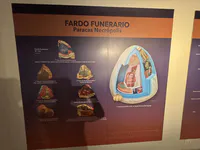
Nazca Funerary Bundle
Trophy Heads: Power, Ritual, and War in Ancient Nasca
Trophy heads were severed human heads used in war and ritual as offerings to the gods or as amulets, believed to transfer the power of the defeated enemy to the bearer. They were often buried at the base of ceremonial buildings. After decapitation, the neck was removed and the occipital opening enlarged to extract the brain; the eye sockets were emptied and filled with cloth, and the lips stitched shut with cactus spines. A hole was then drilled in the forehead to pass a cord, so the head could be carried by hand or hung from the waist, as shown in Nasca ceramic and textile imagery.
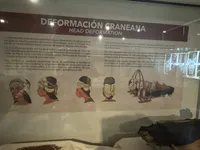
Artificial Cranial Deformation in Ancient Peru
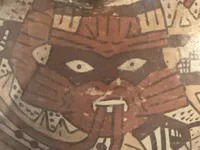
Nazca Vase with Mythical Being Design
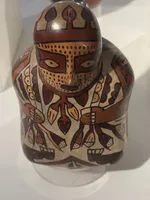
Nazca Polychrome Ceramic Vessel
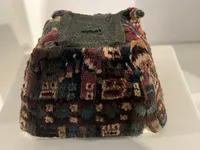
Four-Pointed Wari Hat
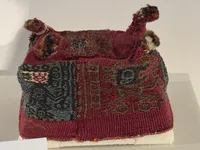
Four-Cornered Wari Hat
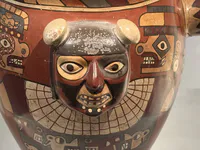
Wari Ceramic Artifact
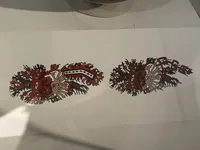
Nasca Mythical Anthropomorphic Figure
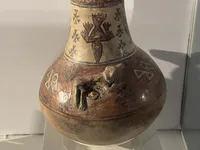
Ica-Chincha Ceramic Style Innovations
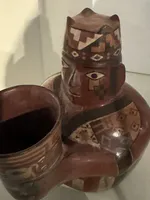
Sculptural Vessel Depicting a Priest
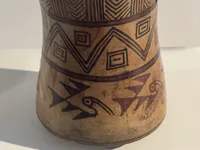
Vase with Geometric Designs and Stylized Birds
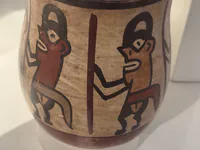
Nazca Vase with Warrior Design
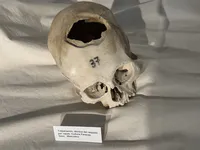
Paracas Trepanation Technique
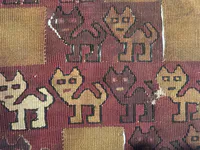
Textile with Stylized Feline Designs
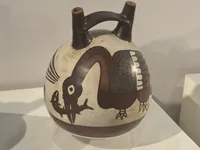
Nazca Double-Spout Vessel with Pelican Design
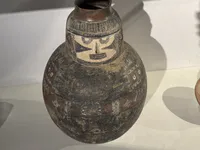
Nazca Anthropomorphic Cántaro
Inca Architecture: Courtyards, Adobe Walls, and Cusco Style
In this region, Inca settlements followed a standard plan: a large central courtyard surrounded by buildings with rooms along the perimeter. Another distinctive feature of this architecture was the trapezoidal shape of doors, windows, and niches. The main construction material was adobe, used to raise walls on stone foundations, and Paredones is the only site in the region with pillow-faced stone walls in the Cusco style.
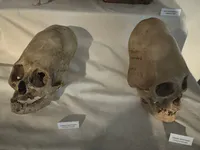
Deformed Skulls of the Paracas Culture
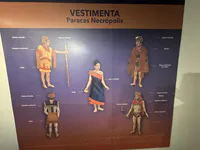
Paracas Necropolis Textiles
Cranial Trepanation: Ancient Surgery and Belief
Cranial trepanation was practiced by many ancient cultures, and in Peru it is especially associated with Paracas. It was a surgical operation carried out by healers using techniques such as scraping or sawing and instruments like stone knives and other simple tools, probably combined with herbal drinks such as coca infusions or chicha to reduce pain. The procedure aimed either to relieve pain caused by skull fractures, often from combat, or, according to certain beliefs, to expel harmful spirits thought to be causing illness in the body.
The Oculate Being: Primordial Deity of Paracas
Considered the primordial Paracas deity, the Ser Oculado first appeared around 800 BCE on ceramic vessels from Puerto Nuevo in the Bay of Paracas. Early images show an anthropomorphic figure that later disappeared under strong Chavín influence.
In the late Paracas phase, Chavín elements were abandoned and the Ser Oculado returned with new attributes: serrated appendages emerging from its body and frequent depictions as a decapitator of human heads. These innovations strengthened its mythical power. One of the most emblematic Paracas geoglyphs of this period is the Ser Oculado figure located on the Nasca pampa.
In the late Paracas phase, Chavín elements were abandoned and the Ser Oculado returned with new attributes: serrated appendages emerging from its body and frequent depictions as a decapitator of human heads. These innovations strengthened its mythical power. One of the most emblematic Paracas geoglyphs of this period is the Ser Oculado figure located on the Nasca pampa.
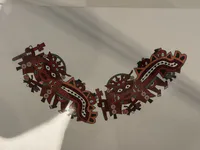
Nasca Anthropomorphic Mythical Being
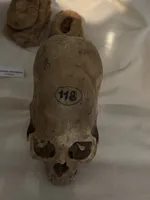
Deformed Skull
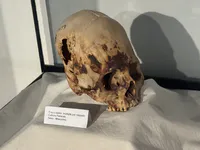
Paracas Trepanned Skull
Cranial Deformation and Identity in Ancient Peru
Cranial deformation was an ancient custom practiced in many parts of the world, but in ancient Peru the greatest variety of deformed skull types has been found. The most striking examples come from the Paracas culture, especially in funerary contexts at sites such as Chongos in the Pisco Valley, Cerro Colorado and Cabezas Largas on the Paracas Peninsula, and Callango and Ocucaje in the Ica Valley. This practice usually began soon after birth and continued during childhood, shaping the skull by compressing it with boards, bands, caps, pads, or a special cradle. The custom likely served both to mark ethnic identity and to fulfill aesthetic ideals.
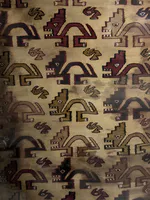
Textile with Stylized Felines and Birds
Paracas Culture: Three Phases of a First Great Ica Society
The Paracas culture was the first major complex society of the Ica region. Identified by Julio C. Tello at two sites on the Paracas Bay, it belongs to the Early Horizon period. Recent research suggests that its history unfolded in three main phases.
1. Paracas Early Phase
At the beginning of this phase, local communities adopted a ceramic style characterized by vessels decorated with incised lines filled with resin-based pigments applied after firing. Designs also included an anthropomorphic, probably mythical, figure. These are the earliest known manifestations of the Paracas tradition: local expressions that blended with elements from northern cultures such as Chavín and Cupisnique. In a subsequent stage, the region was drawn into the first cultural horizon of the Central Andes, associated with the Chavín cult, whose religious icons appeared in petroglyphs, geoglyphs, ceramics, textiles, and other artistic and craft expressions.
2. Paracas Middle Phase
During this phase, earlier foreign influences were gradually set aside. Communities in the region began to reclaim their original social and cultural roots, known as the Puerto Nuevo phase, consolidating distinctly local patterns in their organization and material culture.
3. Paracas Late Phase
This phase marks the period of greatest flourishing and prestige for Paracas society. The population increased and the number of settlements grew. Monumental ceremonial architecture appeared, the early mythical figure known as the Oculate Being re-emerged, and a highly refined ceramic style developed, building on the pottery of the early Paracas phase.
Evidence from this time shows strong interaction between Paracas and contemporary societies in northern Arequipa, Ayacucho, Huancavelica, the Central Coast, and the Mantaro valley, highlighting the prestige of this first great Ica-region culture.
In reality, Paracas was the first regional culture to integrate, both geographically and culturally, the entire territory from the valley of Chincha in the north to the valleys of Nasca and Palpa in the south. Later, the Nasca and Ica–Chincha cultures would develop in this same corridor.
1. Paracas Early Phase
At the beginning of this phase, local communities adopted a ceramic style characterized by vessels decorated with incised lines filled with resin-based pigments applied after firing. Designs also included an anthropomorphic, probably mythical, figure. These are the earliest known manifestations of the Paracas tradition: local expressions that blended with elements from northern cultures such as Chavín and Cupisnique. In a subsequent stage, the region was drawn into the first cultural horizon of the Central Andes, associated with the Chavín cult, whose religious icons appeared in petroglyphs, geoglyphs, ceramics, textiles, and other artistic and craft expressions.
2. Paracas Middle Phase
During this phase, earlier foreign influences were gradually set aside. Communities in the region began to reclaim their original social and cultural roots, known as the Puerto Nuevo phase, consolidating distinctly local patterns in their organization and material culture.
3. Paracas Late Phase
This phase marks the period of greatest flourishing and prestige for Paracas society. The population increased and the number of settlements grew. Monumental ceremonial architecture appeared, the early mythical figure known as the Oculate Being re-emerged, and a highly refined ceramic style developed, building on the pottery of the early Paracas phase.
Evidence from this time shows strong interaction between Paracas and contemporary societies in northern Arequipa, Ayacucho, Huancavelica, the Central Coast, and the Mantaro valley, highlighting the prestige of this first great Ica-region culture.
In reality, Paracas was the first regional culture to integrate, both geographically and culturally, the entire territory from the valley of Chincha in the north to the valleys of Nasca and Palpa in the south. Later, the Nasca and Ica–Chincha cultures would develop in this same corridor.
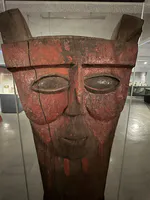
Chincha Culture Wooden Sculpture
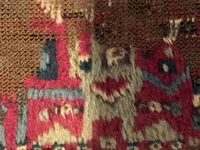
Wari Four-Pointed Hat Fragment
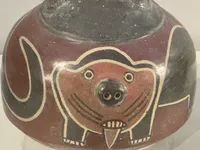
Early Nasca Bottle with Otter Design
Wari: Imperial Power Across the Central Andes
Around 600 BC, the city of Wari emerged as a major urban center in the Ayacucho region. Over time it became the power base of an imperial state that expanded across almost all the Central Andes, from Cajamarca in the north to Cusco in the south. Wari had its origins in local Huarpa populations, influenced by the religious traditions of Tiwanaku and the polychrome Nasca style in its pottery.
In the Ica region, Wari presence is evident at sites such as Maymi in the Pisco valley, a major ceramic-production center; Pinilla in Ocucaje, which defines a late Wari style; and Huaca del Loro in Nasca, with a small circular stone temple and a characteristic D-shaped ceremonial structure. Other settlements and cemeteries appear in the upper and middle valleys of the Río Grande de Nasca basin and nearby valleys. Wari was an imperial state whose rulers relied on a strong military apparatus to impose their authority, using weapons such as shields, spears, slings, bronze arms, and bows and arrows—these last unknown in earlier periods.
In the Ica region, Wari presence is evident at sites such as Maymi in the Pisco valley, a major ceramic-production center; Pinilla in Ocucaje, which defines a late Wari style; and Huaca del Loro in Nasca, with a small circular stone temple and a characteristic D-shaped ceremonial structure. Other settlements and cemeteries appear in the upper and middle valleys of the Río Grande de Nasca basin and nearby valleys. Wari was an imperial state whose rulers relied on a strong military apparatus to impose their authority, using weapons such as shields, spears, slings, bronze arms, and bows and arrows—these last unknown in earlier periods.
Wari Textiles: Brilliant Colors and Evolving Designs
Wari textiles were noted for their great beauty and brilliant colors. Artisans mastered techniques such as brocade, warp-pattern weaving, painted double-cloth, and other highly specialized methods, producing garments considered among the finest in the world, especially tunics or unkus. Scholars have proposed an evolution in Wari textile decoration based on its iconography: beginning with a more realistic, conventional style derived from geometric adaptation of Tiahuanaco motifs, and moving toward increasingly distorted ideological images, in which staff-bearers and winged beings became some of the most complex designs.
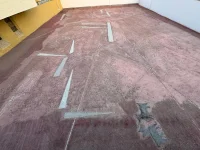
Nazca Lines Replica
Ica Regional MuseumMuseo Regional de Ica Adolfo Bermúdez Jenkins
Ica Regional Museum frames Ica’s desert as a cradle of invention, tracing south-coast cultures from Paracas communities (c. 800 BC) through Nasca, Wari and Chincha to the Inca. Ceramics and textiles map belief and rank, while trophy heads, cranial deformation and trepanation show how ritual could mark the body itself. In a region shaped by the Nasca Lines and ancient puquios (subterranean aqueducts), the museum links art, power and water management to the hard conditions that made life possible on Peru’s arid coast.
Explore by type and place