Fountain of Venus
Pauline Bonaparte as Venus VictrixTemple of Aesculapius, Villa BorgheseThe Rape of ProserpinaSunset Among the Stone PinesAdoration of the ChildDavidApollo and DaphneThe Council of the GodsSaint Jerome WritingAeneas, Anchises, and AscaniusThe EntombmentBronze Statue of King Umberto IShaded Promenade of Villa BorgheseYoung Sick BacchusDavid with the Head of GoliathApollo and Daphne with The Apotheosis of RomulusMadonna and Child with St AnneRoman Civilization and the Heroic Virtue of HonorBoy with a Basket of FruitSacred and Profane LoveMale Herm with Fruit BasketFountain of the SatyrsFountain of VenusProspettiva Wall, Parco dei DainiMonument to Francisco de Paula SantanderParterre with Statues and TulipsMonument to Alexander PushkinGrotesque Fountain MaskParterre and FountainThe Quiet FountainMax Amid Roman EchoesThe Apotheosis of RomulusTruth Unveiled by TimeBust of Cardinal Scipione BorgheseYoung Woman with a UnicornHistoric Gardens of Villa BorgheseAtlantes and DeitiesMax aming Berninis and CaravaggiosPope Paul V BorghesePope Paul VMax Contemplates Bernini’s Pluto and ProserpinaVenus Blindfolding CupidNikolai GogolFireplace
Fountain of VenusLeonardo Reti

1171
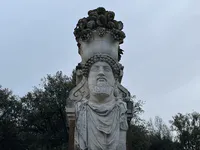
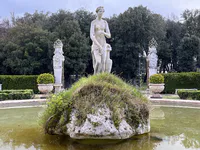
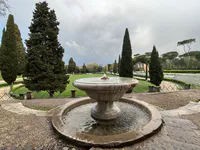
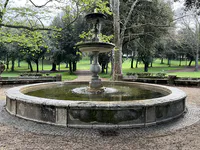
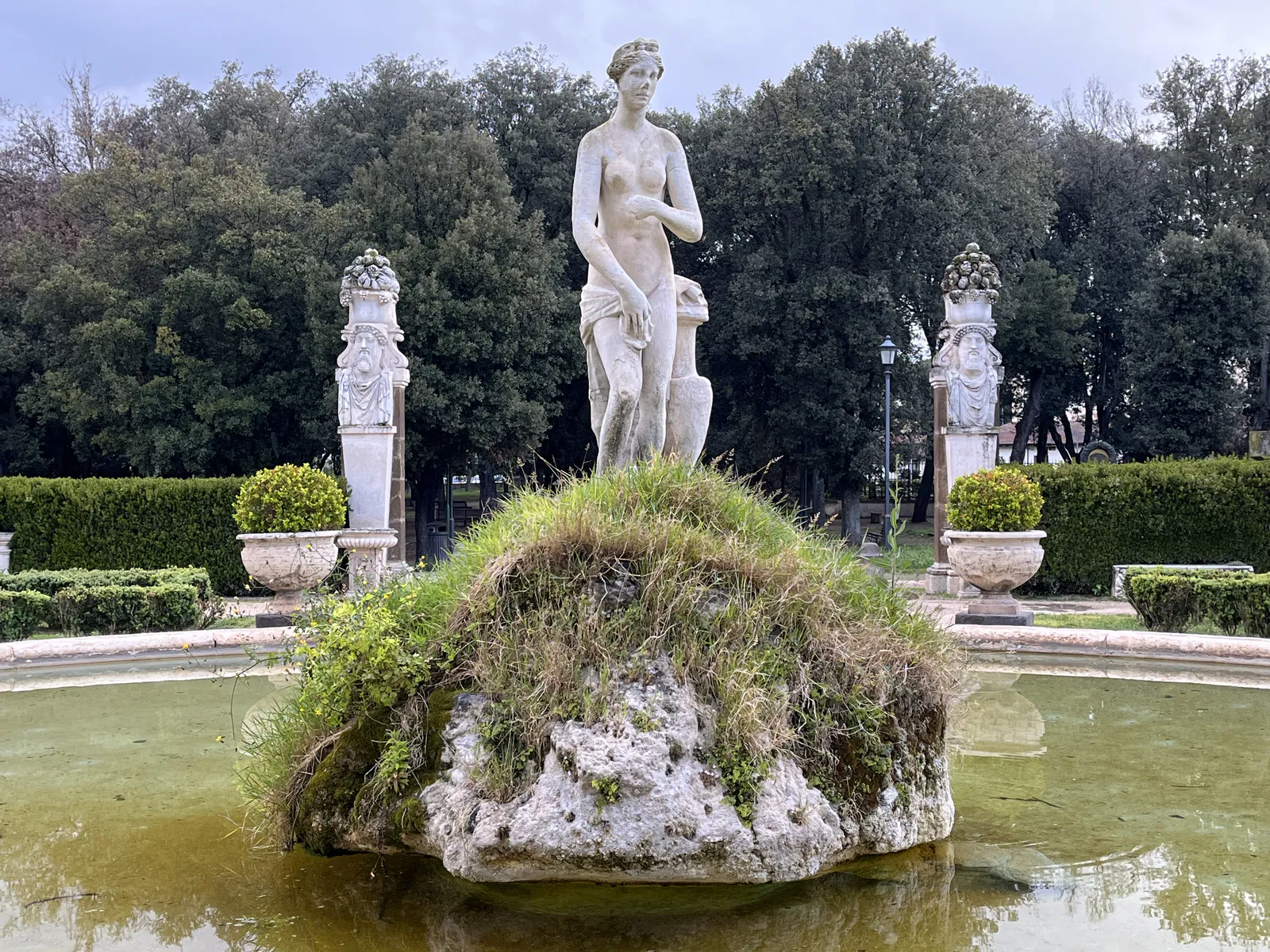
The Fountain of Venus (1671–73) epitomizes Baroque grandeur and its interest in classical mythology. Venus, the Roman goddess of love, symbolizes desire and prosperity. Flanking her are two male herms, or sculpted pillars used as boundary markers. This ensemble reflects the era's cultural appreciation for beauty and abundance, highlighting the enduring human fascination with myth and art.