2025 © Maxim Tabachnik
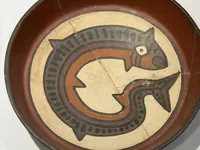
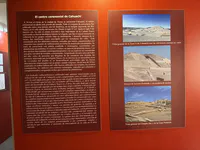
 The Nazca River valley, formed by the confluence of the Tierras Blancas and Aja rivers, was a major center of Nazca culture. Pre-agricultural remains from c. 5th millennium BC show early hunter-gatherers exploiting shellfish and wild plants. Later, Paracas groups—especially in their final phases—occupied sites such as La Puntilla, Cahuachi, Usaka, and Estaquería. After Cahuachi was abandoned (c. 400–450 AD), Estaquería became the principal ceremonial center in late Nazca times and during the Middle Horizon (c. 550–1000 AD).
The fertile fan of the Río Grande and its tributaries preserves a long, continuous sequence: late Paracas, the florescence of Nazca at Cahuachi and in the Aja, Tierras Blancas, Atarco, Taruga, Las Trancas, and Usaka valleys, followed by Wari occupation in the Middle Horizon. Later, the Ica–Chincha culture (c. 1000–1400 AD) established major settlements such as Pueblo Viejo and Los Colorados, with some evidence of Inca-period presence, though their impact on the south coast was brief.
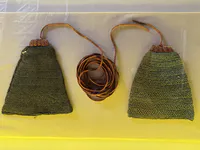
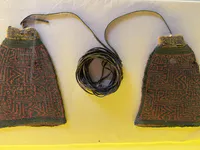
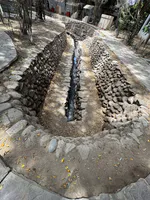
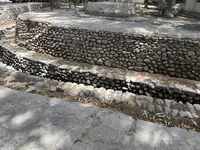
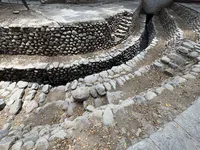
Cooking areas, ceramic kilns, and rubbish heaps clustered around houses. Middens rich in shell, camelid bones, and other remains reveal common consumption of marine foods even far from the coast and frequent boiling or roasting of meat. The absence of weapons, defensive structures, and trauma-related burials suggests a long period of peace in Early Nazca times, supported by an extensive aqueduct and canal system that distributed groundwater year-round across a wide territory.
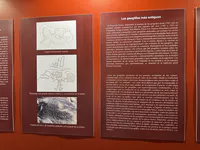
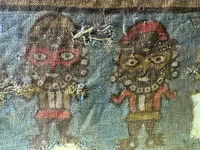
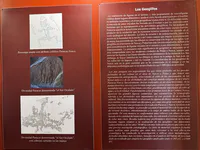
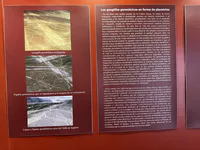
 Since 1982 the Nazca Project has analyzed geoglyphs alongside rock art at sites such as Chichitara, Pongo Grande, San Marcos, Pirca, Las Trancas, and Huayhua, comparing their motifs with Paracas and Nazca ceramics and textiles and studying superimpositions to establish a sequence. These investigations show that the oldest geoglyphs are the small, strongly weathered zoomorphic and anthropomorphic figures carved in low relief on hillsides north of the Ingenio River, especially around Palpa. Their forms, standing out against carefully cleared stone surfaces, appear closely related to Paracas Cavernas textile traditions.
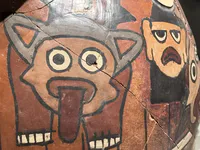
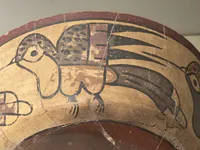
These hillside geoglyphs formed true cult areas where processions and ceremonies took place. Prominent figures include the big-eyed being and other images linked to late Paracas phases. Later bird figures show a shift from profile views with closed wings to birds in flight with open wings, mirroring changes in Nazca ceramic iconography. This geoglyph phase emphasizes major deities (feline, killer whale) and supernatural beings such as the hummingbird, spider, lizard, monkey, and certain plants. Ceramic and artifact associations, together with early radiocarbon dates and varnish analyses on the stones, place these designs roughly between 193 BC and AD 648, within Early Nazca times.
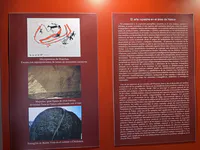
 Compared with Asian, European, or African rock art, American rock art forms a more homogeneous symbolic corpus, shaped with little external interference from the earliest human occupations onward. Simple and complex logos related to nature, myth, and ritual recur from North America to Tierra del Fuego, expressing local beliefs about ancestors, legendary heroes, and divinities on durable stone surfaces. In Nazca, rock art is part of a broad cultural process and must be studied together with textiles, ceramics, and other media to understand shared iconographic and mythological themes.
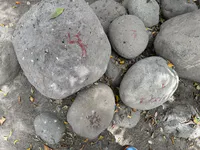
One aim of the Nazca Project was to compare geoglyphs, ceramics, and rock art. From 1982 onward, researchers interpreted the earliest hillside macro-incisions as large-scale rock art transforming valley slopes into sacred spaces. In the Palpa valleys, huge figures of mythical heroes and ancestors turn the ravines into ritual landscapes. Dense concentrations of petroglyphs at Chichitara represent one of the region’s most important rock-art complexes. Later studies at Majuelos documented large petroglyphs beneath ancient rock shelters, damaged in recent years by looters, and associated with small paintings and lines of cupules typical of strongly sacred places. Most drawings were carved into very hard rocks—porphyry, granite, diorite, and andesite—while sandstone was used only where no other suitable material existed, as at Pirca and Majuelos.
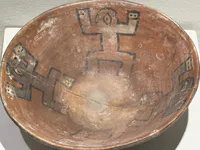
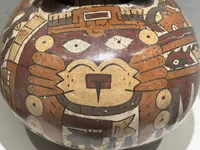
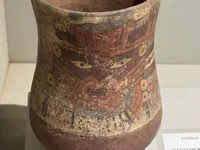 The Middle Horizon in the Nazca Valley
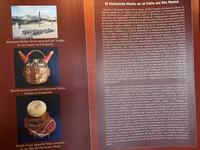
During the Middle Horizon, the Río Grande de Nazca basin underwent profound changes in religion, architecture, agriculture, and daily life. By the later 6th c., Nazca society showed signs of political fragmentation and failed economic reorganization, overtaken by the stronger Wari power from the Ayacucho highlands. Ancestral Nazca deities were replaced by Wari cosmology, and ways of eating, building, weaving, and making ceramics changed so drastically that the Nazca world was largely erased.
Estaquería became the main ceremonial center, with origins possibly in the earliest occupations of the valley. Nearby Preceramic contexts date back to the 4th millennium BC. Western Cahuachi was used over a long period, expanding on modified natural terraces in late Paracas and Early Nazca times with large temples, pyramids, and elite cemeteries. In the Middle Horizon the Temple of the Posts at Estaquería replaced Nazca ritual presence in the valley; its remaining forked posts still hint at its former scale. Housing continued on terraces but now used river cobbles and cane quincha walls coated on both sides. Rooms shrank, humans and animals lived more closely together, and health declined, with more caries and bone problems linked to diets richer in cereals and carbohydrates and poorer in animal protein.
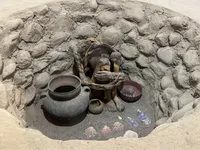
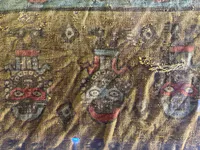
Adobe production changed to a grey clay with little kaolin, and large parallelepiped adobes became standard. Ceramics, textiles, and weaving methods all shifted, as did funerary practices: bodies were reoriented mainly westward, wrapped in cotton layers within collective tombs rather than individual burials. The aqueduct network likely expanded, increasing cultivated land and population density. Wari domination in the Nazca valleys was harsh, dismantling religious and social traditions, and only material culture traces clearly remain as evidence of this highland rule.
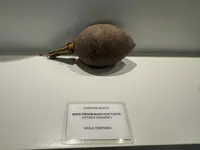
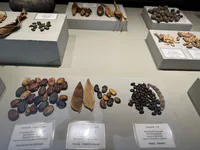
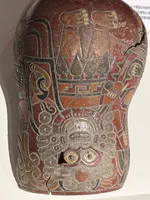
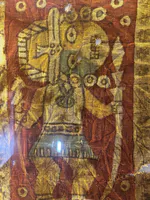
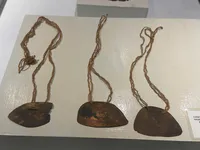
 Cahuachi’s religious prestige made it a pilgrimage destination for groups from across the Nazca sphere, where the dominant ideology bound communities in different valleys. Periodic journeys brought pilgrims to collective ceremonies and to deposit offerings for the gods and temple structures. Common gifts included ceremonial ceramics, textiles, wooden and stone objects, and animal and human bone remains. Small paired items—braids of human hair, tied sticks, textile fragments, and camelid phalanges—symbolized duality.
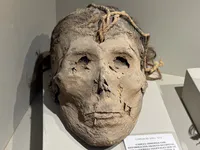
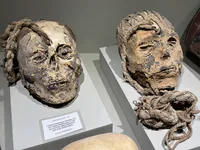
Excavations in 2003 on the Great Pyramid uncovered the sacrificed body of a child placed within a platform between two floors, an offering made before a new construction phase. In the Great Temple, several trophy or offering heads were found buried in pits inside the main platform and sealed with clay. Elsewhere, cut heads accompany architectural changes or large camelid sacrifices west of the main temples. Large offering pits in platform floors, coated with clay, contained materials such as a whale rib, probably a ceremonial gift. Another enigmatic class of offering consists of rodent heads placed inside lucuma pits or treated in the same way as human heads. Most frequent, however, were ceremonial ceramic objects intentionally broken at Cahuachi and then buried in massive fill deposits.
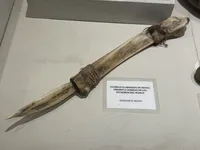
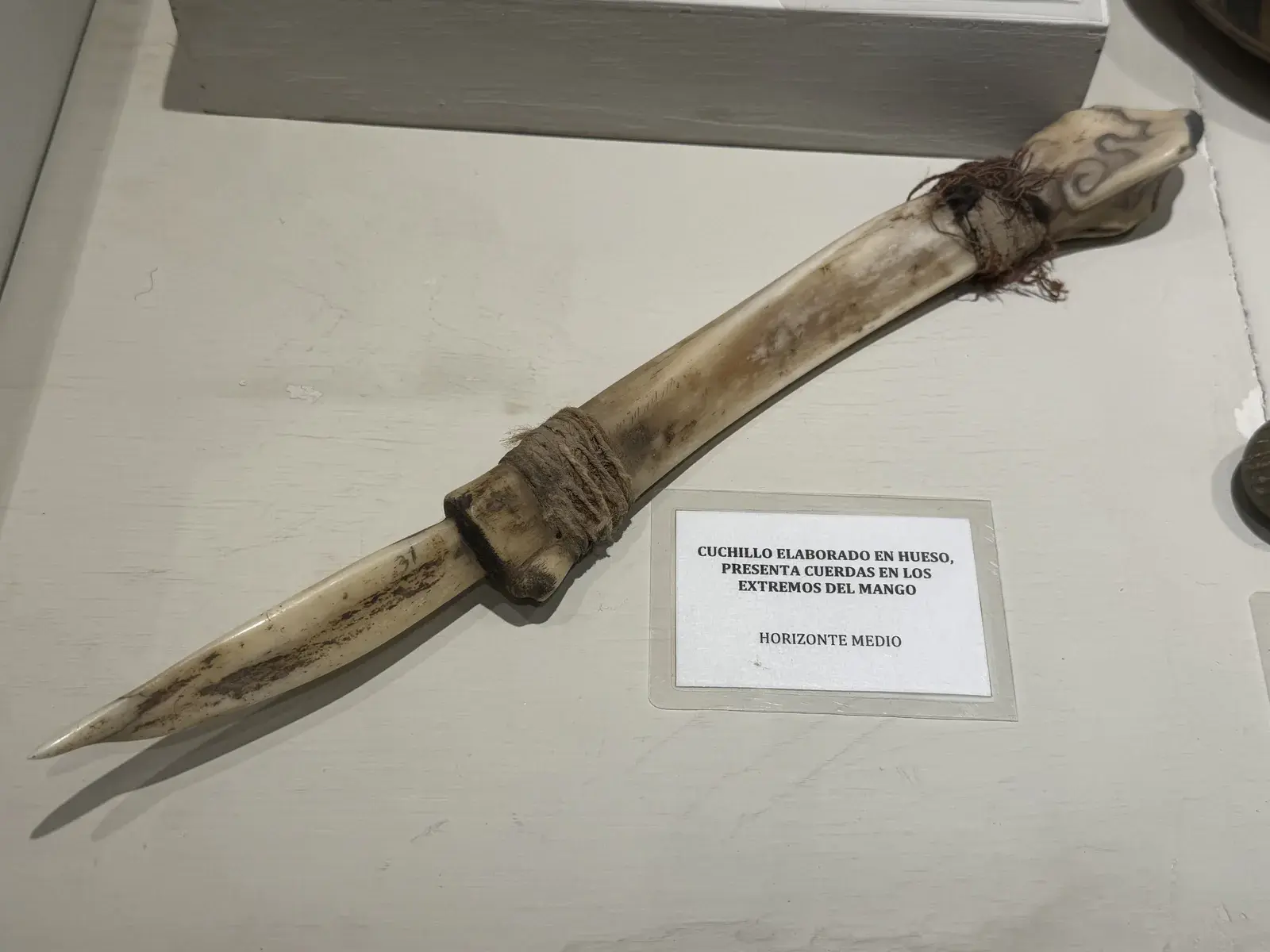
Bone Knife with Corded Handle
This bone knife from the Middle Horizon period (600–1000 AD) showcases ancient Andean craftsmanship. The handle features corded ends, serving both functional and decorative roles. Such knives were used in daily tasks or ceremonies, blending utility and artistry in pre-Columbian societies. The bone material underscores resourcefulness and a symbolic link to life and death in Andean cosmology.
Explore by type and place