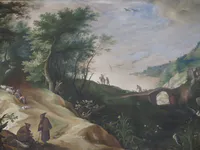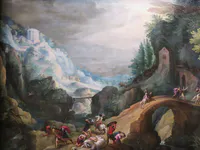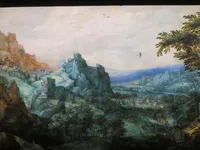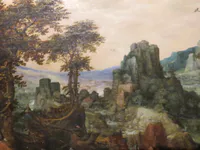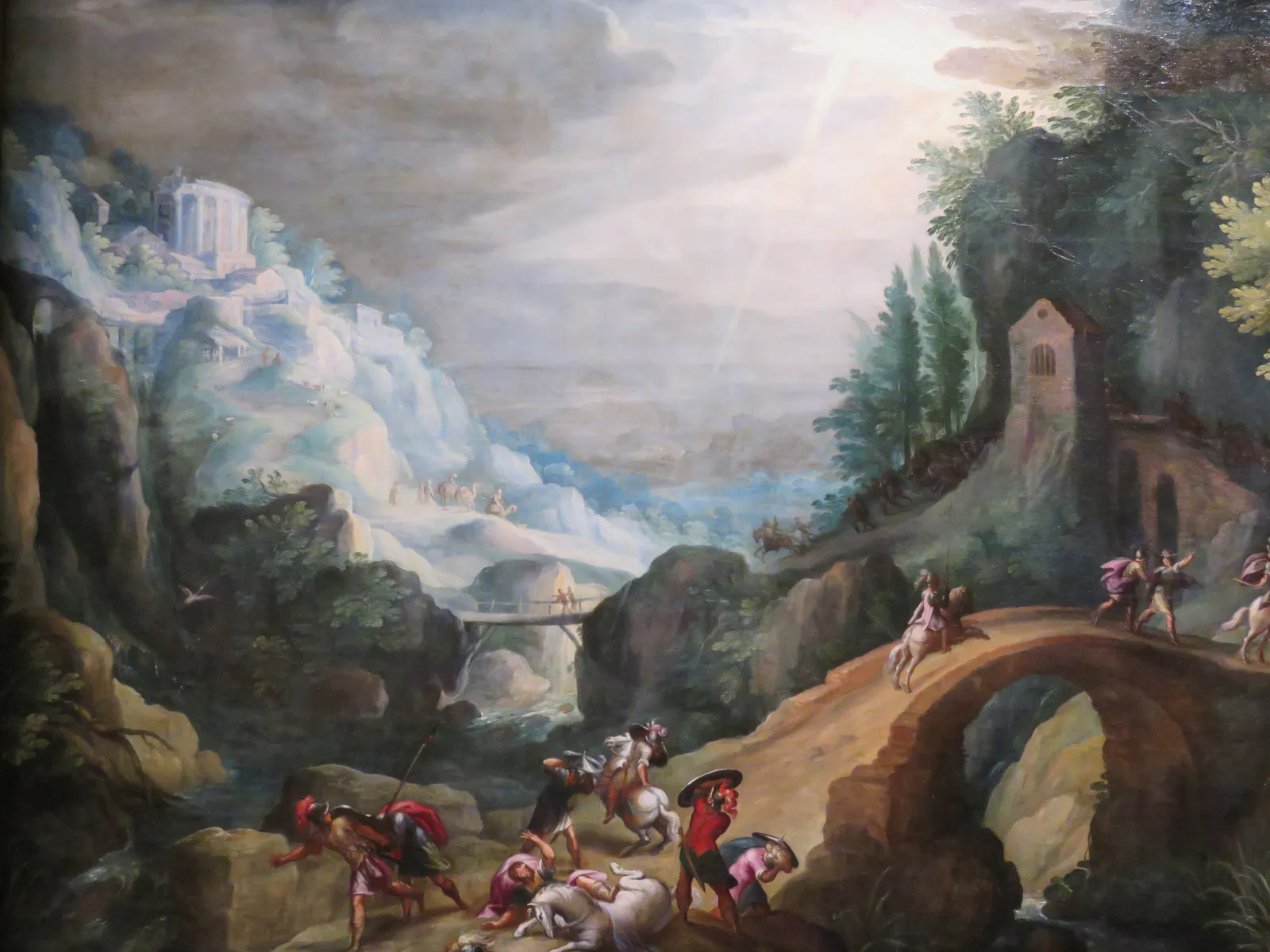
Landscape with the Conversion of St Paul
The Entombment of ChristThe Holy Family with Sts. Francis, Anthony, Magdalene, John and ElizabethSanta ConversazioneAdoration of the Christ ChildAdoration of the Christ ChildSaint Anthony the HermitMale PortraitMary MagdalenePortrait of a MusicianMadonna of the TowersChrist in the Storm on the Sea of GalileeThe Infant Jesus with a LambChrist the RedeemerChrist BlessingMachine for Polishing MirrorsSt John the BaptistMadonna del PadiglioneLandscape with HermitsRest on the Flight to EgyptCartoon for The School of AthensAdoration of the MagiHydraulic and Lifting DevicesGloria AngelicaBasket of FruitGeometric StudiesReliquary with Lucrezia Borgia’s HairStudies of Wings and Mechanical AnatomyLombard Lanpugnami DaggersMobile Assault RampMechanical Device with Gear SystemThe Allegory of FireWinter Landscape with CherubsNapoleon’s Waterloo GlovesEcce HomoChrist from The Last SupperThe Earthly Paradise with the Creation of EveMechanical StudiesVase of Flowers with Small InsectsMouse, Rose, and ButterflyThe Original Sin and the Expulsion from ParadiseForest with PondThe Allegory of WaterThe Archangel RaphaelForest LandscapeDaniel in the Lions’ DenMountainous Landscape with TravelersStudy of Mechanical ComponentsStudies on Optics and PerspectiveLandscape with the Conversion of St PaulStudies of Solids and GeometryMountain LandscapeStudies of Geometric PatternsCoronation with ThornsCoastal LandscapeNativitySaint Paul the Hermit in a LandscapeRocky LandscapeHermits in a Rocky LandscapeLandscape with St John the BaptistInterior of Antwerp Cathedral

Landscape with the Conversion of St PaulPaul Bril

713
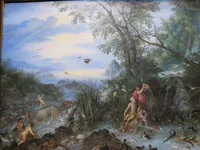
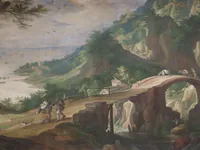
This oil painting (c. 1600) shows St Paul and his companions thrown from their horses on a rocky road, framed by steep cliffs, bridges, and distant buildings under a turbulent sky. The subject comes from the biblical account of Paul’s conversion on the road to Damascus. The strong contrast between dark terrain and concentrated light demonstrates how Counter-Reformation art used landscape to articulate divine intervention in human history.