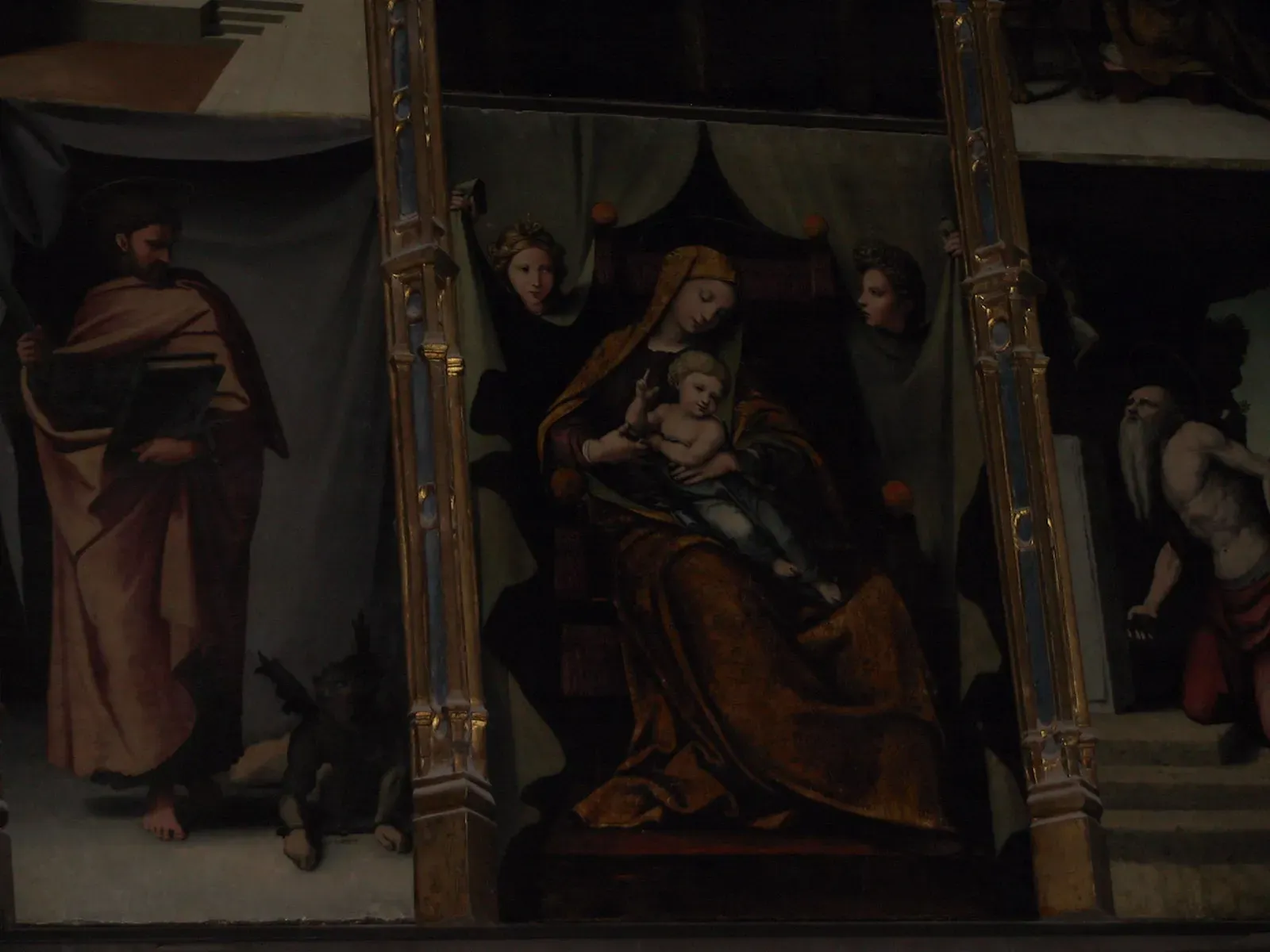
2003 © Maxim Tabachnik
Cagliari Cathedral
Cagliari (established as a Phoenician settlement in the 8th c. BC) is often seen as Sardinia’s most outward-facing city: administrative and maritime, layered in a way that feels lived-in rather than staged. Arrival is defined by its vertical logic, with neighborhoods climbing toward Castello, pale stone sharpening in Mediterranean light, and long sightlines that keep the sea present even when you turn inland. As the island’s regional capital it carries institutional weight, yet the mood stays intimate, with daily routines unfolding beside the residue of older powers.
In the historic center, churches and civic buildings register successive rulers through materials more than slogans, so history reads as texture in the streetscape. The Cathedral of Santa Maria, set high above the port, feels less like a single stylistic statement than an accumulation, where Romanesque clarity has been reshaped by later tastes. That outward orientation also surfaces in the city’s devotional art, in works such as the Renaissance altarpiece Retablo dei Beneficiati, whose mixed visual language hints at wider Mediterranean circuits. Today, public offices, the university, and a steady flow of visitors set the tempo, but Cagliari’s identity remains grounded in markets, local piety, and a practical coastal culture.
In the historic center, churches and civic buildings register successive rulers through materials more than slogans, so history reads as texture in the streetscape. The Cathedral of Santa Maria, set high above the port, feels less like a single stylistic statement than an accumulation, where Romanesque clarity has been reshaped by later tastes. That outward orientation also surfaces in the city’s devotional art, in works such as the Renaissance altarpiece Retablo dei Beneficiati, whose mixed visual language hints at wider Mediterranean circuits. Today, public offices, the university, and a steady flow of visitors set the tempo, but Cagliari’s identity remains grounded in markets, local piety, and a practical coastal culture.
Explore by type and place