2022 © Maxim Tabachnik
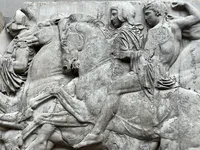
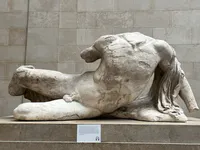
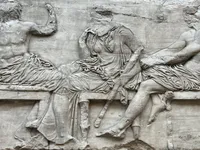
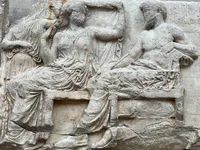
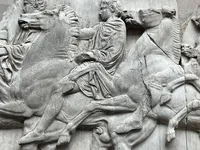
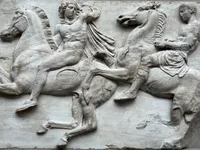
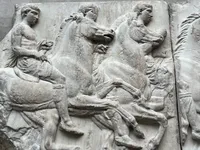
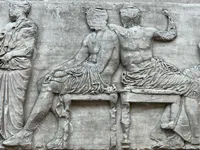
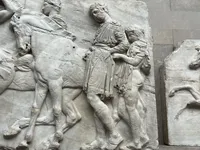
 The Acropolis still dominates the skyline of Athens, just as it did in antiquity. At its heart stands the Parthenon, a great temple that once housed a colossal gold-and-ivory statue of the goddess Athena. The exterior of the building was richly adorned with marble sculpture depicting scenes from Greek myth and idealised moments of Athenian life.
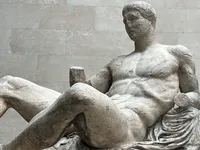
Although the cult statue of Athena is lost, much of the external sculpture survives. Now divided mainly between London and Athens, these images of the human form have come to embody an ideal of humanity itself. Their display in the British Museum from 1817 transformed the study of ancient art and inspired generations of artists, designers and architects.
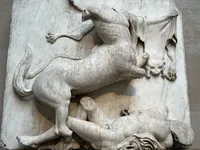
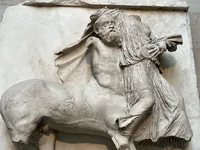
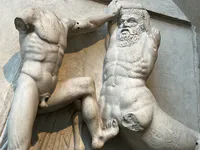
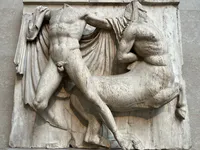
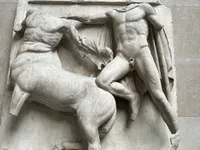
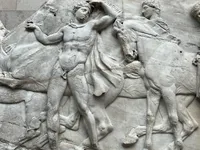
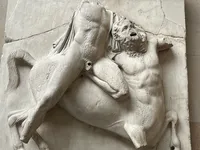
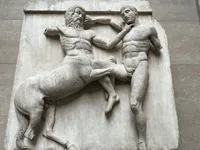
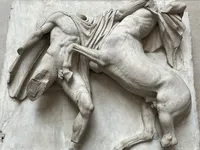
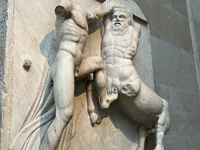
Above the outer colonnade, all four sides of the temple were decorated with metopes—panels carved in high relief with mythological battles. The west side showed Greeks fighting Amazons (legendary women warriors); the north, scenes from the sack of Troy; and the east, the struggle between the Olympian gods and the Giants. All the metopes now in the British Museum come from the south side and show a violent conflict between Lapiths and Centaurs.
This story probably refers to the wedding of Peirithoos, king of the Lapiths of northern Greece. Centaurs—creatures part-man, part-horse—were invited to the feast, but after drinking too much wine they tried to abduct the Lapith women. The savage battle that followed became a powerful image of the struggle between civilisation and brutality, carved here in stone high above the viewers’ heads.
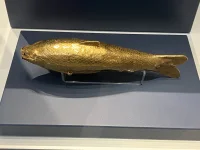
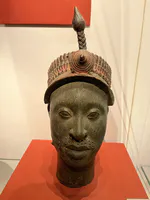
 Across Africa there are many traditions of casting metal, some using bronze (an alloy of copper and tin), others brass (copper and zinc). Although ancient bronze objects are found throughout the Lower Niger region, the earliest tradition known to have relied on local ore and technology is that of Igbo-Ukwu in southern Nigeria, dating to the 9th–10th centuries.
Brass was treated as a precious material. Its brilliance and durability made it ideal for royal regalia, and control over brass and its casting became a key element of royal power. The craft was closely linked to courts and hereditary guilds. The best-documented tradition is that of the Edo people of Benin, where, from at least the 14th century, brass insignia were distributed to court officials and vassal rulers, while craftsmen and foreign brassware were drawn back into the capital.
Brass itself was also an important trade commodity until the 19th century, when cheap European imports flooded local markets. Benin imported European brassware specifically to melt it down and recast it into objects for the royal court. Today, brasscasters in Benin still work for the palace but also serve a much broader clientele, and their cast objects circulate widely, including in international markets.
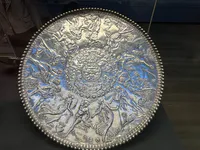
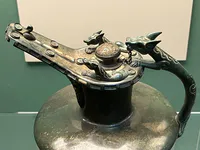
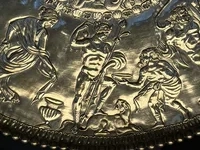
 In Iron Age Europe, feasting was a central social and political act. Hosting a grand feast allowed elites to display wealth and generosity, reinforcing their status and binding guests to them through ties of allegiance and loyalty. Large quantities of meat, bread, beer and mead were served in finely made metal cauldrons and flagons, such as the ornate flagons from Basse-Yutz in France. These gatherings were not just banquets but occasions of celebration, likely accompanied by music, singing and dancing, and often intertwined with ritual or religious ceremonies. Through such events, power, hospitality and sacred obligation were woven together around the shared table.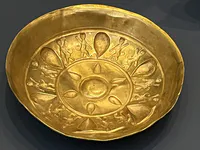
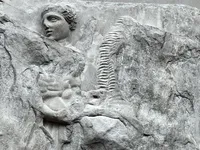
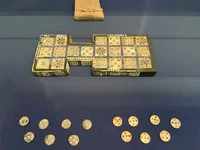
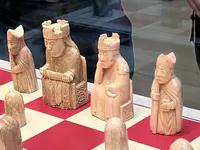
 Chess was conceived as a game of strategy and skill, and in the medieval period it was valued as a way to sharpen the tactical abilities of knights. It came to be seen as one of the seven accomplishments expected of an ideal knight. At first, the Church explicitly forbade clergy from playing chess, but by about 1200 this strict view had begun to soften. Men and women played together, and in medieval love poetry chess became linked with flirtation and the battle of the sexes.
The medieval European chess set mirrored the order of feudal society. Kings sit with swords across their laps, queens rest their chins thoughtfully in their hands, bishops appear in liturgical dress ready to say Mass, knights ride into play on horseback, and infantrymen—later called rooks—fight on foot. The queens’ dignified pose probably echoes contemporary images of the Virgin Mary as an ideal of noble femininity.
Some rooks, shown biting their shields, represent fierce mythical warriors known from Norse saga as Berserkers. While the game itself originated in India around AD 500 and reached Europe through the Islamic presence in southern Spain and Italy, the pawns often retain the abstract forms of the Islamic version. The whole set thus combines distant origins with distinctly European images of rank, piety and military power.
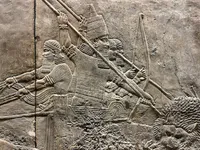
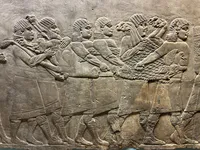
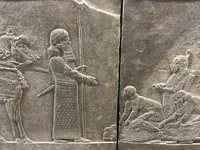
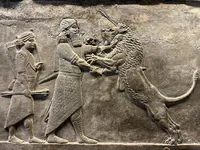
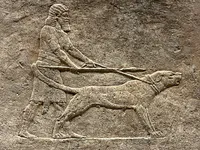
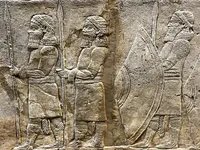
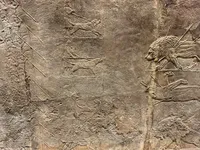
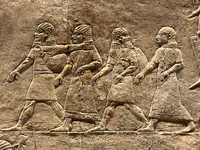
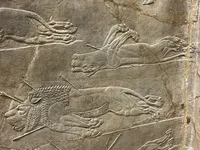
 Ashurbanipal (668–627 BC) built a new royal residence, the North Palace, on the citadel at Nineveh. Like earlier Assyrian palaces, its walls were lined with stone slabs carved in low relief and originally painted, illustrating the king’s achievements. Doorways still bore images of magical protective spirits, though the great winged bulls and lions of earlier reigns seem to have been absent.
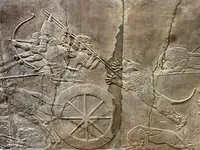
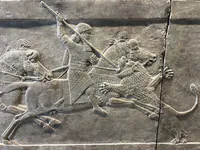
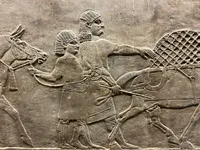
Ashurbanipal took exceptional pride in his prowess as a hunter and sportsman. Large-scale reliefs of lion hunts, and of processions to and from the hunt, decorated interior corridors, while smaller, related scenes adorned some of the most important rooms. Other reliefs in the throne room (Room M) showed campaigns in Egypt, Elam, Babylon and the mountains of Iran or Turkey, and additional rooms focused on individual campaigns such as one against the Arabs.
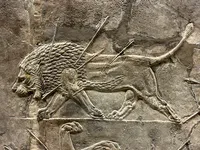
In Assyrian ideology, the king’s duty was to protect his people from all enemies, human and animal alike. This responsibility is symbolised in the royal seal, which shows the king confronting a lion and driving his sword into it. After a period of abundant rainfall in the mid-seventh century BC, lions became especially numerous. Royal inscriptions describe them attacking cattle and people, leaving human and animal corpses in heaps as if the plague had killed them, and plunging villages into mourning.
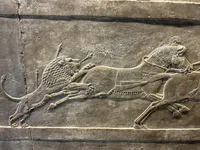
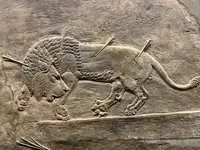
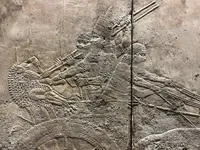
It was the king’s task to destroy such dangerous beasts. In practice, rather than seeking them in the wild, lions were captured and brought to an arena, surrounded by soldiers and huntsmen, where they were released one by one for the royal hunt. The famous lion-hunt reliefs from Ashurbanipal’s palace depict these staged encounters in vivid detail.
The narrative carving is as intricate as that of earlier reigns and often more finely drawn. Strikingly, the artists devote almost as much attention to the suffering of the enemy—particularly the dying lions—as to the calm triumph of the Assyrian king. While Ashurbanipal appears as the untroubled embodiment of divine justice, the lions are rendered with intense realism, their wounds, struggles and final collapse observed with extraordinary sympathy. These scenes glorify royal power while also acknowledging the terrible cost of that power for its victims.
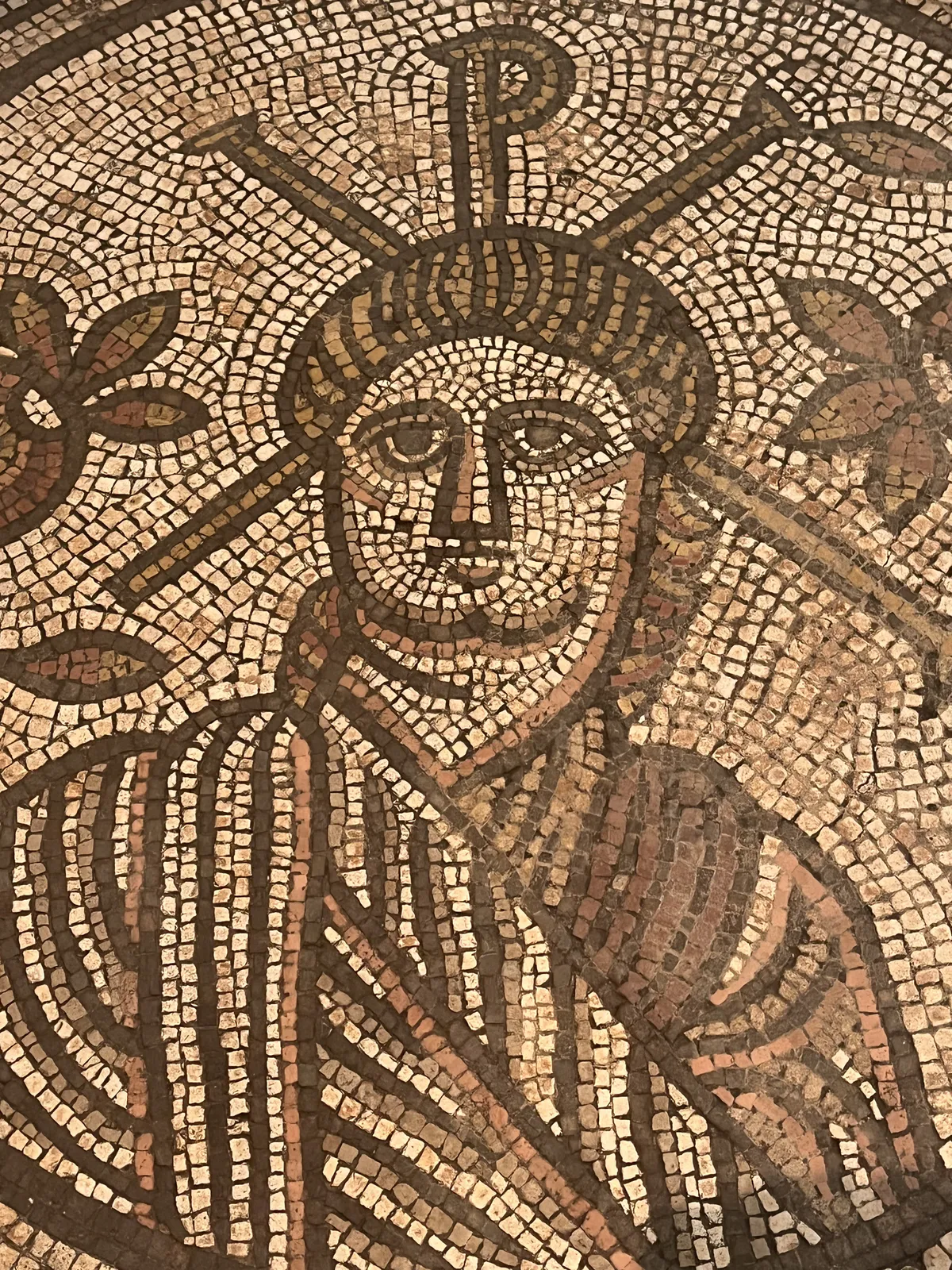
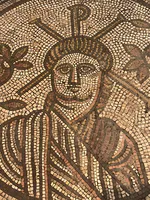
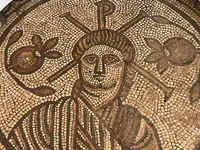
Hinton St Mary Christ Mosaic
This (4th c.) mosaic from Hinton St Mary, Dorset, may be the earliest known depiction of Christ in mosaic form. The central roundel shows Christ flanked by pomegranates, symbols of immortality, and adorned with the Greek letters chi and rho, an early Christian emblem. It marks a pivotal transition from pagan to Christian iconography in Roman Britain, reflecting the spread of Christianity and its integration into local artistic traditions.
Explore by type and place