2022 © Maxim Tabachnik
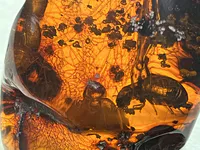
 When amber is rubbed with a woollen cloth, it acts as a conductor of electricity and attracts small, lightweight objects such as bits of paper. This simple experiment, already known to the ancient Greeks more than 2,000 years ago, was humanity’s first encounter with electricity of its own making.
The Greeks called amber elektron. Over time, this term was transferred to the phenomenon we now call electricity, and later adapted into the word electronic—which, in a sense, could be understood as pertaining to amber.
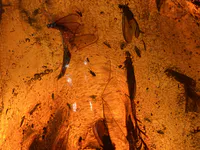
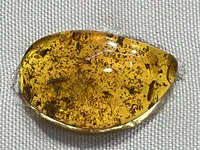 Ants have diverse ways of life and specialized roles within their colonies. Carpenter ants excavate long tunnels in decaying wood. Warrior ants hunt other insects, storing and transporting their remains when the colony moves. Dairy ants tend plant lice, leading them to feed and protecting them in exchange for sweet secretions. Harvester ants stockpile large quantities of seeds. Leaf-cutting ants chew leaves into a paste and use it to cultivate fungi, their primary food.
Other forms include thieves or beggars, which live underground in the nests of other species, and honey ants, which store sweet juices in the distended bodies of young workers. Slave-raiding ants capture the eggs and larvae of other species and raise them as workers. Doorkeeper or guard ants use their oversized heads as living plugs, sealing and disguising the nest entrance.
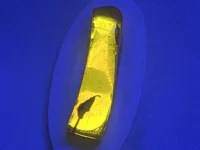
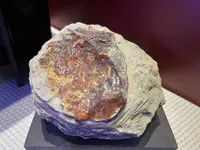 For ants, the basic unit of life is the colony. Like an organism, this collective body must be studied as a whole to understand the biology of colonial species. Dense ant communities offer the closest thing to a civilisation in the insect world, and in many respects their societies resemble our own. As with human groups, ant communities have specialised in three main strategies for obtaining food: gathering, hunting, and cultivation.
Ants are among the most highly evolved social insects, and social insects themselves form the largest and most complex insect groups. Their success rests on three traits: adults care for the young; two or more generations of adults coexist in the same nest; and colony members are divided into a reproductive royal caste and a sterile worker caste.
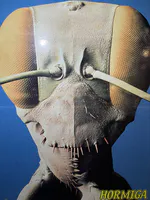
Entomologists define such tightly organised societies as eusocial (truly social). Four main insect groups qualify: ants, termites, certain bees, and some wasps. All ants are eusocial and belong to the Formicidae family in the order Hymenoptera. Around 9,500 species are currently known, though at least twice that number likely remain undescribed. Most live in tropical regions.
Specialists believe that ants’ rise as the dominant insect group is due to their highly developed colonial life, built on individual sacrifice for the common good. They have also found that each colony is governed by a Darwinian balance between collective survival and internal struggles for control. Polygynous colonies—with several fertile queens—can persist for very long periods, reaching enormous size and population.
 An ant nest provides shelter, protection from enemies, a stable microclimate, a safe place for reproduction, and storage for food. Some nests contain only a few galleries, while others form complex networks of chambers with flat floors and connecting tunnels. They may lie beneath stones, beside walls, inside wooden beams, under trees, or in earthen mounds across open fields and plains. Some extend for many metres and descend as deep as five metres, with chambers about a metre long and thirty centimetres high.
Conditions inside the nest are regulated to support life and the rearing of offspring. Forest ant mounds, for example, may have ventilation openings that can be opened or closed to keep temperature and humidity stable.
Ant societies are generally divided into three castes: queens, males, and workers. Queens are larger than the other castes and usually have wings, which they lose after mating. A young queen establishes a colony by digging a small chamber in the earth and laying her first eggs there. After founding the colony, her main role is to lay eggs. Winged males are much smaller and short-lived. They mate with queens during a single nuptial flight and soon die. Sterile, wingless female workers nurse offspring, clean and build the nest, defend it, and forage.
Small colonies may have only these three castes, while larger ones can include several worker sub-castes that differ in size, shape, and behavior. Some workers live up to seven years, and queens may live as long as fifteen. The record for a captive queen is a Lasius niger (European black ant) that lived 29 years in an artificial colony in Switzerland. Over their lifetimes, queens may produce a few hundred workers or, in the case of leaf-cutting ants in Central and South America, as many as 150 million.
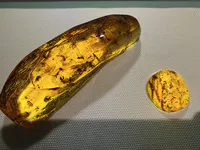
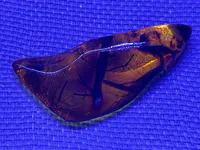
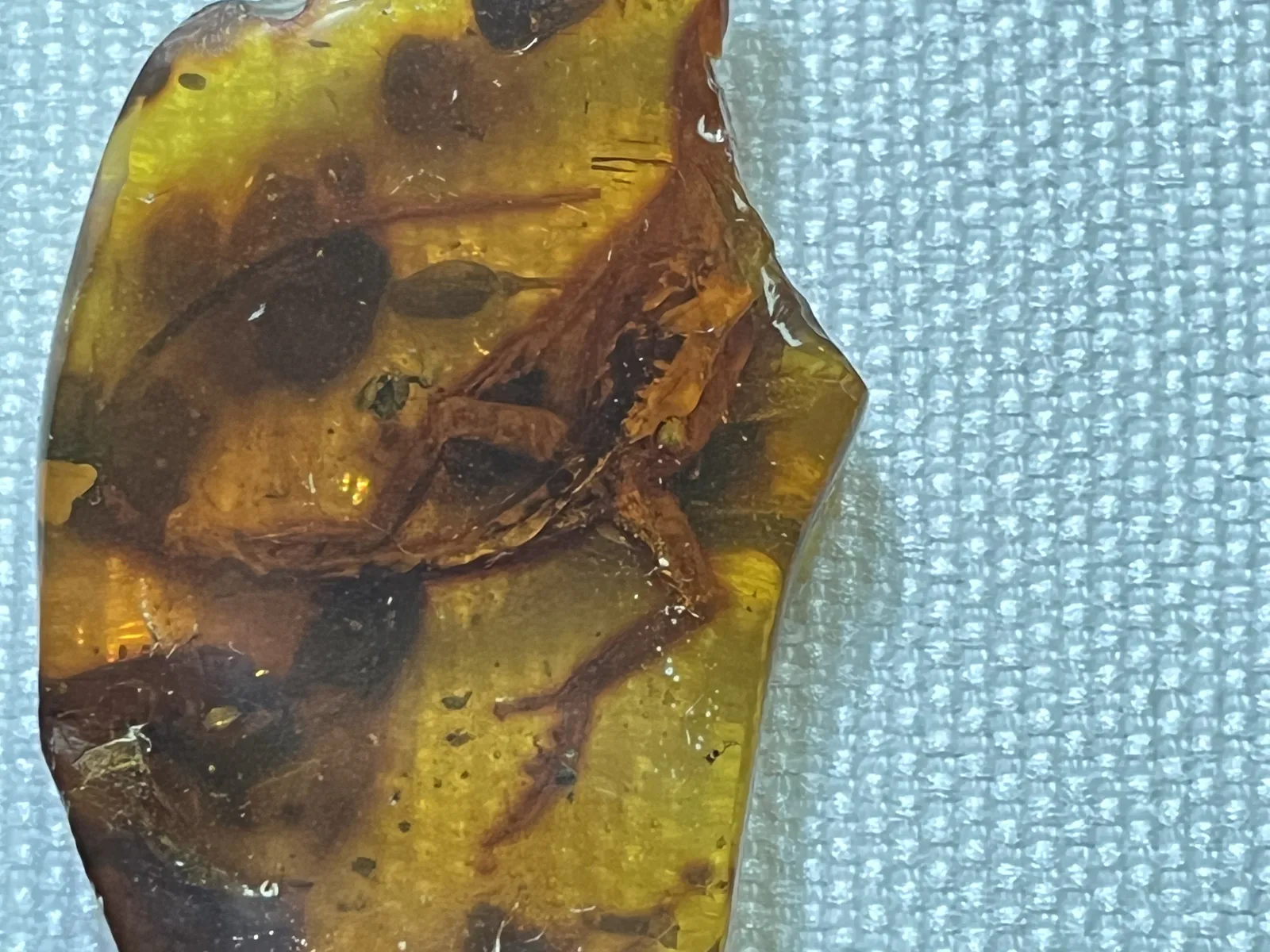
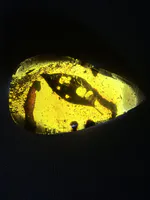
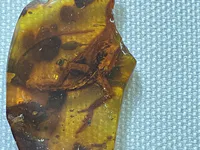
Fossilized Frog in Amber
This rare fossilized frog from early to mid-Cenozoic (30–40 million years ago) is preserved in Dominican amber, offering a glimpse into prehistoric tropical ecosystems. Such specimens are crucial for understanding ancient biodiversity, as the resin captured soft-bodied organisms rarely preserved in other fossil forms. It highlights the region’s paleontological richness.
Explore by type and place