2025 © Maxim Tabachnik
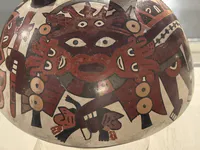
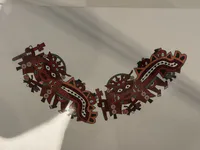
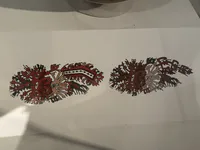
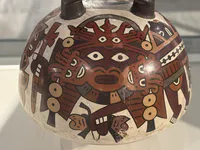
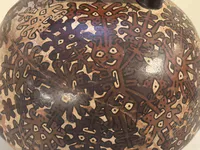
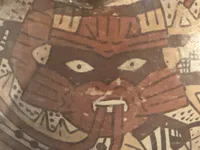
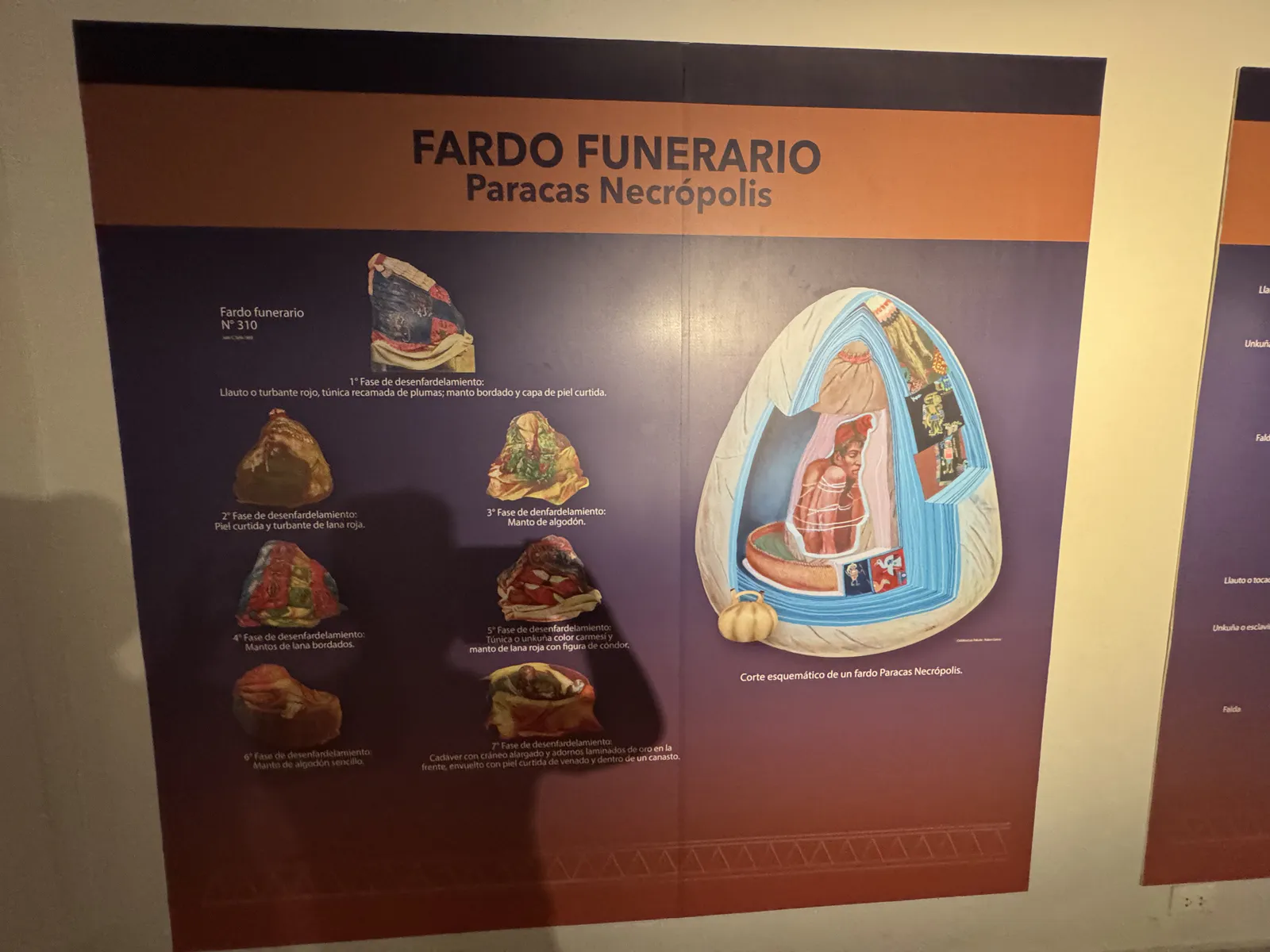
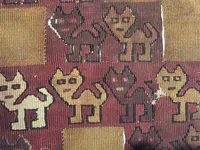
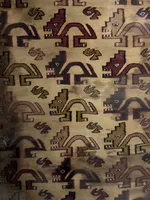
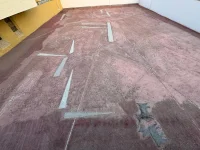
In the late Paracas phase, Chavín elements were abandoned and the Ser Oculado returned with new attributes: serrated appendages emerging from its body and frequent depictions as a decapitator of human heads. These innovations strengthened its mythical power. One of the most emblematic Paracas geoglyphs of this period is the Ser Oculado figure located on the Nazca pampa.
In the early phase, they built Cahuachi, the largest ceremonial urban center on the southern coast, constructed with alternating adobe and mud, featuring broad plazas for public gatherings and several pyramid-shaped buildings used for religious ceremonies by the ruling class. In the Chincha and Pisco valleys, local populations interacted with southern neighbors yet maintained distinctive artistic and architectural traditions.

Most biomorphic designs—like the hummingbird, spider, and monkey—were created in the Early or Monumental Nazca phase and reflect a more naturalistic style. Geometric forms became more common and larger during the Late Nazca period. These geoglyphs extend from the Chincha Valley in the north to the southern edge of the Rio Grande de Nazca basin, with the greatest concentration in Palpa and especially in the famed Pampa de Nazca. The UNESCO-listed zone covers more than 450 km², primarily across the pampas of Nazca and Palpa.
A second, open-air section carries the water to a reservoir or pond, where it is stored and then distributed to agricultural fields, and likely also used for domestic needs. Archaeological research has identified up to 42 aqueducts, most of them in the Nazca valleys, with around 20 still in use today. This sophisticated hydraulic technology has remained active for roughly 1,500 years. Worldwide, only one similar system is known: the ancient Mesopotamian qanats, which are about 3,000 years old.
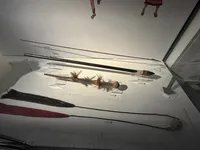
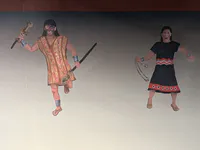
In the Ica region, Wari presence is evident at sites such as Maymi in the Pisco valley, a major ceramic-production center; Pinilla in Ocucaje, which defines a late Wari style; and Huaca del Loro in Nazca, with a small circular stone temple and a characteristic D-shaped ceremonial structure. Other settlements and cemeteries appear in the upper and middle valleys of the Río Grande de Nazca basin and nearby valleys. Wari was an imperial state whose rulers relied on a strong military apparatus to impose their authority, using weapons such as shields, spears, slings, bronze arms, and bows and arrows—these last unknown in earlier periods.
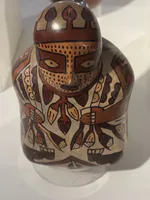 The first Inca incursion into this region likely took place under the rule of Capac Yupanqui as a diplomatic visit rather than a conquest. Definitive annexation occurred around 1470, during the second great expansion of the Tahuantinsuyo led by the Inca Tupac Yupanqui. Ica was incorporated into the Chinchaysuyo, and administrative centers for control and tribute were established in all the valleys of the region.
Where strong local centers already existed, such as La Centinela in Chincha and the Tacaraca complex in the Ica valley, the Incas built their own structures atop earlier ones. Where no such centers existed, they constructed entirely new architectural complexes to oversee conquered populations. Among these new sites are Tambo Colorado in Pisco, Tambo de Huayurí and Pueblo Nuevo in Palpa, and Tambo del Collao and Paredones in Nazca.
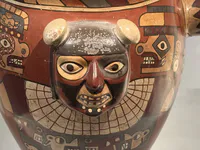 In this region, Inca settlements followed a standard plan: a large central courtyard surrounded by buildings with rooms along the perimeter. Another distinctive feature of this architecture was the trapezoidal shape of doors, windows, and niches. The main construction material was adobe, used to raise walls on stone foundations, and Paredones is the only site in the region with pillow-faced stone walls in the Cusco style.
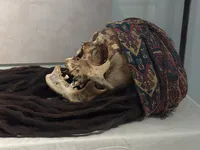
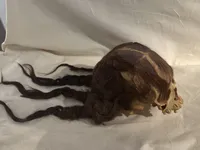
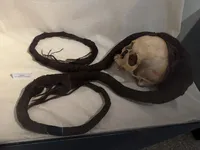
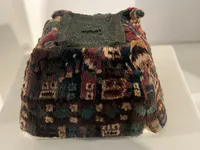
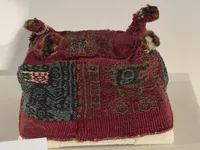
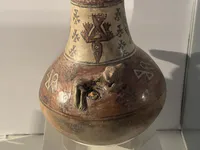 Pre-Columbian peoples of ancient Peru developed a wide variety of hairstyles, worn by both men and women: buns, fringes, braids, wigs, and more. These styles signaled social hierarchy and reveal the importance they placed on personal grooming. The implements used ranged from simple combs to elaborate hair ornaments, and the richest variety of documented hairstyles has been found in Paracas and Nazca burials.
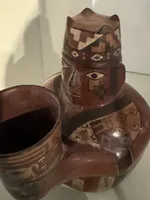
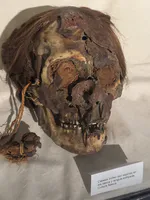
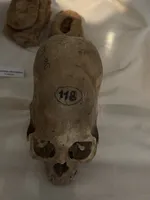
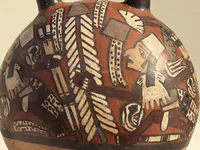
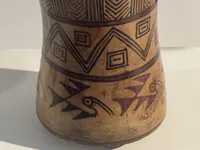 Trophy heads were severed human heads used in war and ritual as offerings to the gods or as amulets, believed to transfer the power of the defeated enemy to the bearer. They were often buried at the base of ceremonial buildings. After decapitation, the neck was removed and the occipital opening enlarged to extract the brain; the eye sockets were emptied and filled with cloth, and the lips stitched shut with cactus spines. A hole was then drilled in the forehead to pass a cord, so the head could be carried by hand or hung from the waist, as shown in Nazca ceramic and textile imagery.
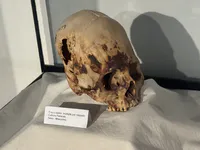
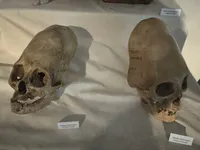
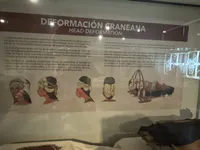
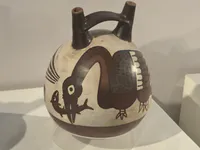 Cranial deformation was an ancient custom practiced in many parts of the world, but in ancient Peru the greatest variety of deformed skull types has been found. The most striking examples come from the Paracas culture, especially in funerary contexts at sites such as Chongos in the Pisco Valley, Cerro Colorado and Cabezas Largas on the Paracas Peninsula, and Callango and Ocucaje in the Ica Valley. This practice usually began soon after birth and continued during childhood, shaping the skull by compressing it with boards, bands, caps, pads, or a special cradle. The custom likely served both to mark ethnic identity and to fulfill aesthetic ideals.
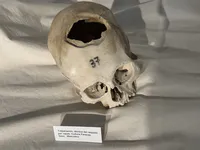
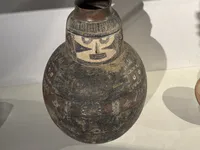 Cranial trepanation was practiced by many ancient cultures, and in Peru it is especially associated with Paracas. It was a surgical operation carried out by healers using techniques such as scraping or sawing and instruments like stone knives and other simple tools, probably combined with herbal drinks such as coca infusions or chicha to reduce pain. The procedure aimed either to relieve pain caused by skull fractures, often from combat, or, according to certain beliefs, to expel harmful spirits thought to be causing illness in the body.
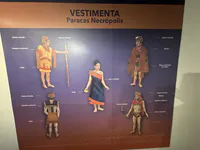
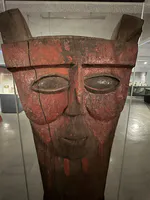 The Paracas culture was the first major complex society of the Ica region. Identified by Julio C. Tello at two sites on the Paracas Bay, it belongs to the Early Horizon period. Recent research suggests that its history unfolded in three main phases.
1. Paracas Early Phase
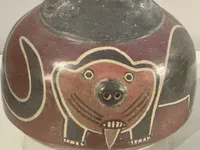
At the beginning of this phase, local communities adopted a ceramic style characterized by vessels decorated with incised lines filled with resin-based pigments applied after firing. Designs also included an anthropomorphic, probably mythical, figure. These are the earliest known manifestations of the Paracas tradition: local expressions that blended with elements from northern cultures such as Chavín and Cupisnique. In a subsequent stage, the region was drawn into the first cultural horizon of the Central Andes, associated with the Chavín cult, whose religious icons appeared in petroglyphs, geoglyphs, ceramics, textiles, and other artistic and craft expressions.
2. Paracas Middle Phase
During this phase, earlier foreign influences were gradually set aside. Communities in the region began to reclaim their original social and cultural roots, known as the Puerto Nuevo phase, consolidating distinctly local patterns in their organization and material culture.
3. Paracas Late Phase
This phase marks the period of greatest flourishing and prestige for Paracas society. The population increased and the number of settlements grew. Monumental ceremonial architecture appeared, the early mythical figure known as the Oculate Being re-emerged, and a highly refined ceramic style developed, building on the pottery of the early Paracas phase.
Evidence from this time shows strong interaction between Paracas and contemporary societies in northern Arequipa, Ayacucho, Huancavelica, the Central Coast, and the Mantaro valley, highlighting the prestige of this first great Ica-region culture. In reality, Paracas was the first regional culture to integrate, both geographically and culturally, the entire territory from the valley of Chincha in the north to the valleys of Nasca and Palpa in the south. Later, the Nasca and Ica–Chincha cultures would develop in this same corridor.
 Artificial skull deformation was practiced in many parts of the world from ancient times, but ancient Peru has yielded a wider variety of forms. The most notable examples are associated with the Paracas culture and were found mainly in funerary contexts at sites including Chongos in the Pisco Valley, Cerro Colorado and Cabezas Largas on the Paracas Peninsula, and Callango and Ocucaje in the Ica Valley. The practice usually began soon after birth and continued as children grew, using wooden sticks, cotton pads and cords, or a special cradle. Its purposes included ethnic distinction and aesthetics.
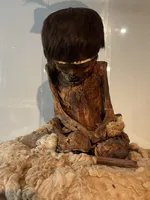
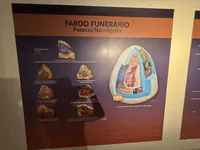
Nazca Funerary Bundle
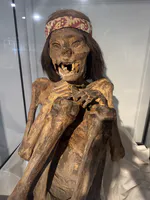
Paracas Necropolis funerary bundles (fardo funerario, probably 150 BC–250 AD) were built by placing the dead in a tightly flexed seated pose on a fiber basket and wrapping the body into a cone of cotton cloth, embroidered wool mantles, and cured hides. This diagram follows the unwrapping layers, from a red llauto (headband-turban) and a condor-decorated mantle to gold forehead ornaments at the core, turning burial textiles into a visible statement of care and status.
Explore by type and place