2024 © Maxim Tabachnik
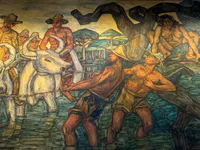
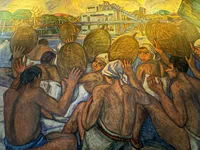
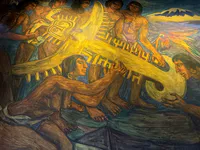
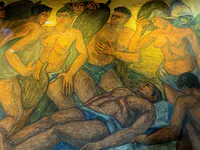 Fresco mural painting is one of the most demanding forms of art because of its technical complexity, monumental scale, and humanistic themes. Pigments are applied directly onto fresh plaster, requiring precise timing and planning, and turning the wall itself into the support for the image. Historically, frescoes have served as public narratives of decisive episodes in the life of societies, preserving their collective memory on a grand scale. A mural is never independent from the space it occupies: it accentuates, completes, and names the architecture that surrounds it. In this way, mural painting transforms corridors, plazas, and public buildings into places where history, identity, and daily life intersect.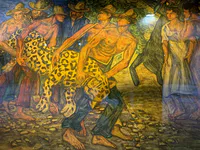
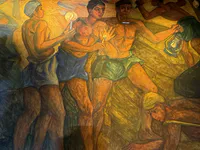
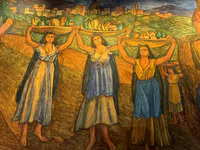
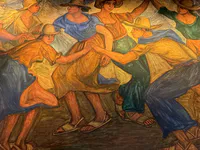
Toward Banco PopularPedro Nel Gómez
Nel Gómez's mural (1935–38) captures the industrious spirit of Colombian workers. Bare-chested workers carry baskets toward a bustling Banco Popular factory. This mural marks the shift from agrarian to industrial society in Antioquia, highlighting labor’s role in fueling economic growth—while also questioning who truly benefits from such progress. The crowd moves as one, but not all faces are at ease.
Explore by type and place