2024 © Maxim Tabachnik
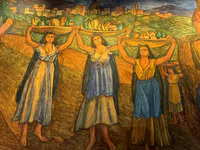
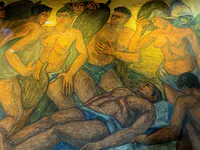 Fresco mural painting is one of the most demanding forms of art because of its technical complexity, monumental scale, and humanistic themes. Pigments are applied directly onto fresh plaster, requiring precise timing and planning, and turning the wall itself into the support for the image. Historically, frescoes have served as public narratives of decisive episodes in the life of societies, preserving their collective memory on a grand scale. A mural is never independent from the space it occupies: it accentuates, completes, and names the architecture that surrounds it. In this way, mural painting transforms corridors, plazas, and public buildings into places where history, identity, and daily life intersect.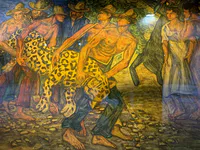
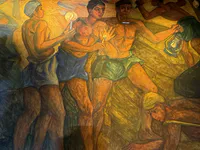
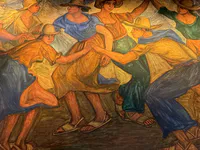
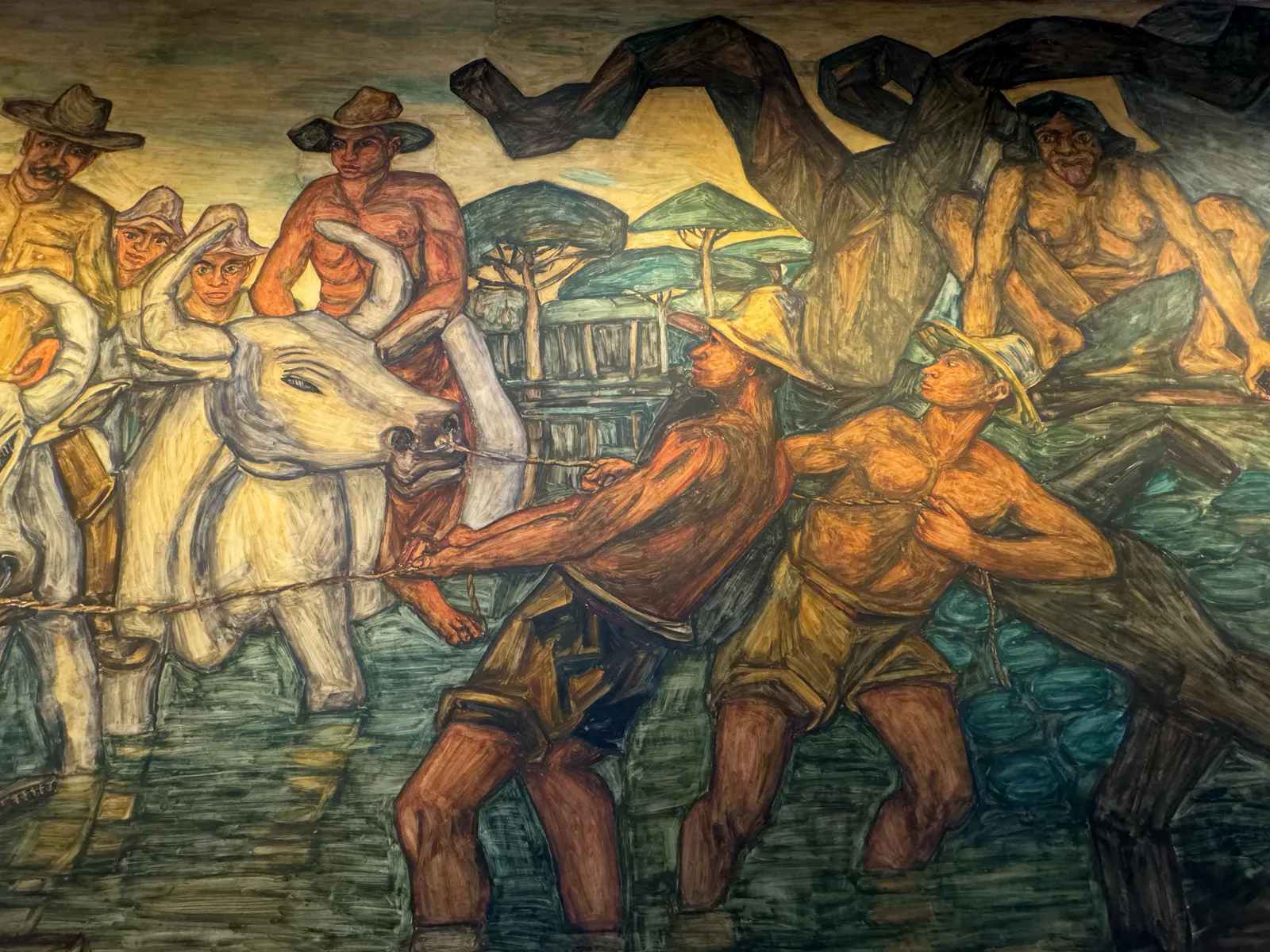
Struggle for the LandPedro Nel Gómez
This fresco (1935–38) shows peasants forcing oxen through flooded Antioquian fields, symbolizing the conquest of nature for agriculture. Their straining bodies embody toil and ambition. At right, La Llorona appears as mythic grief, evoking the spiritual and ecological costs of rural modernization. The scene captures Colombia’s tension between tradition and progress.
Explore by type and place