2004 © Maxim Tabachnik

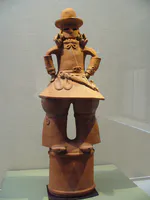
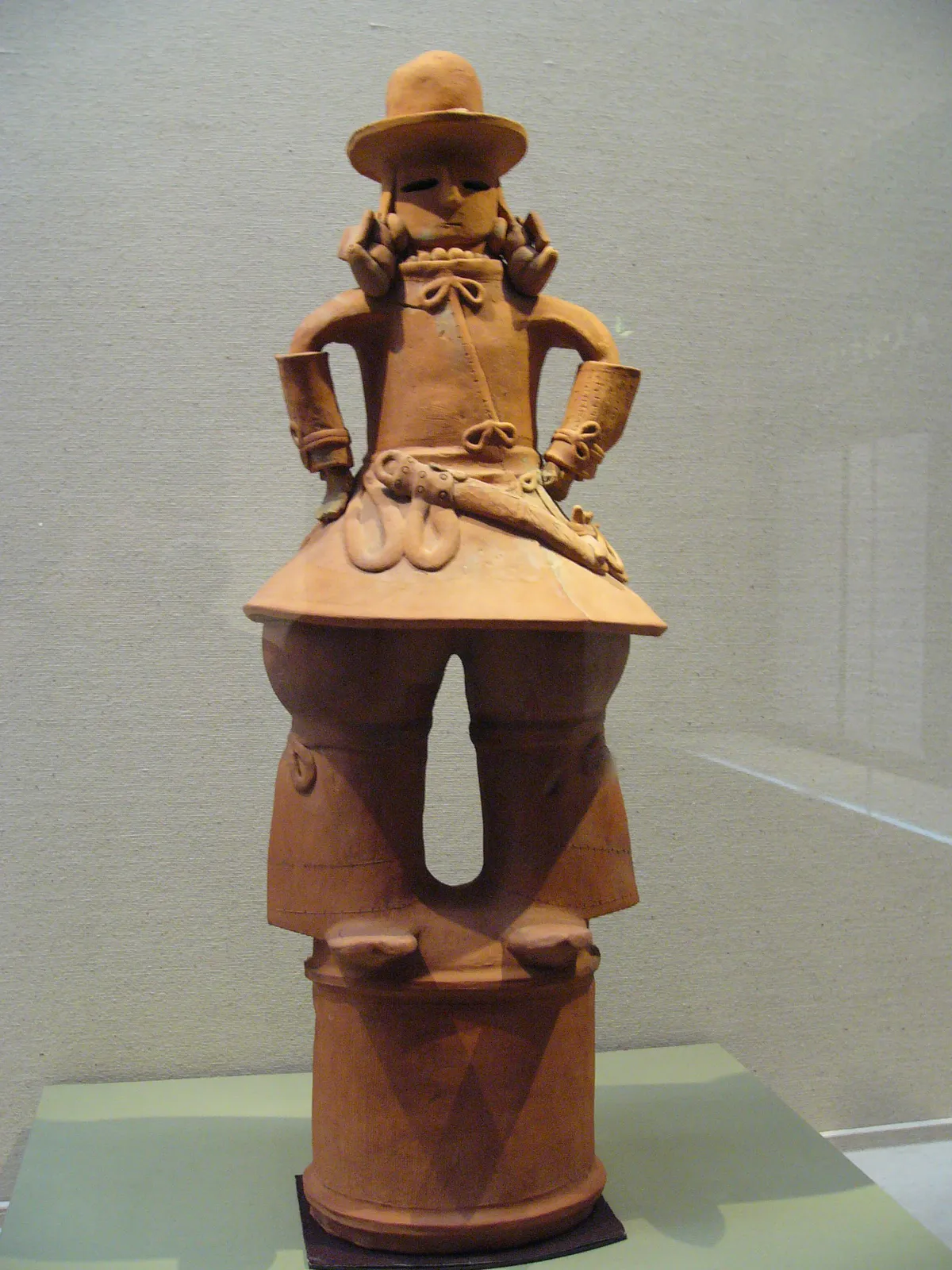
Haniwa Terracotta Clay Figure
This terracotta figure from Japan’s Kofun period (3rd–6th cc. AD) exemplifies the haniwa tradition. Initially simple cylinders, haniwa evolved into detailed representations of people, animals, and objects, crafted using the wazumi technique. Placed on tomb mounds, they possibly substituted for human sacrifices or served as dwellings for souls. Haniwa provide insights into the era’s clothing, architecture, and tools, with their production declining as Buddhism and cremation practices spread.
Explore by type and place