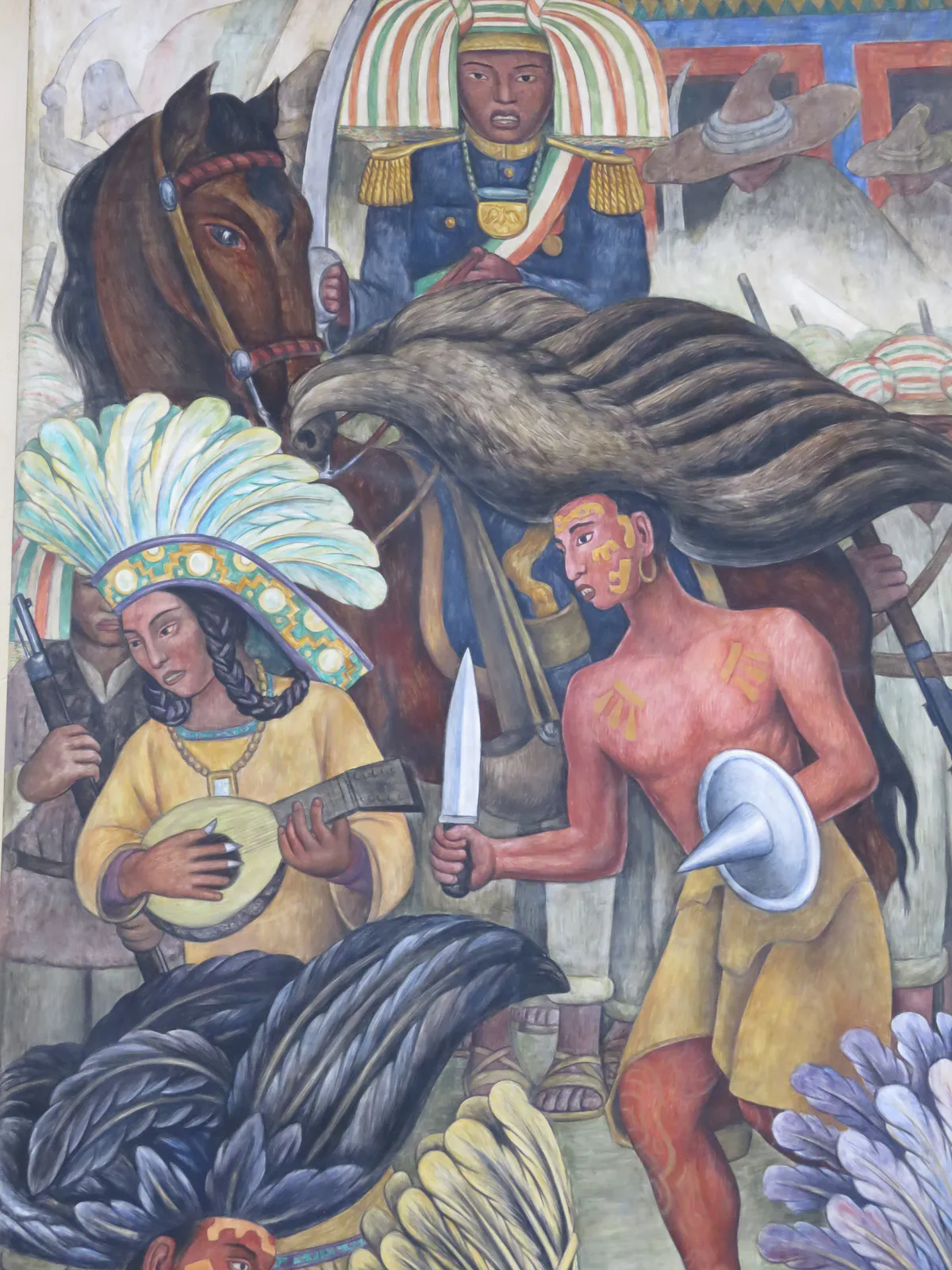
Huitzilopochtli and the Carnival Dancers
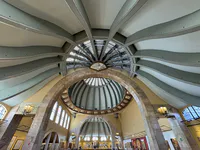
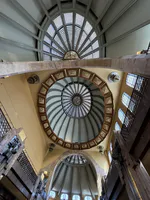
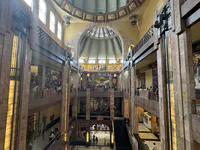
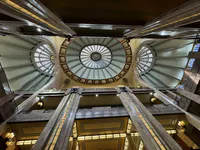
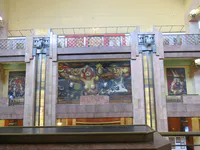
Domes of the Main HallRadial SkylightsMurals Around the AtriumGeometric Dome and Marble Arches
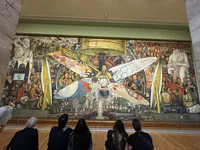
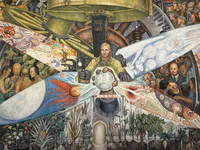
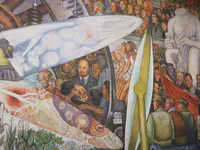
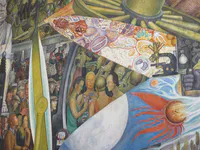
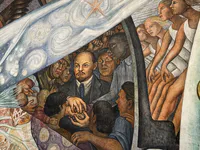
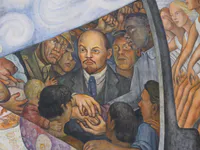
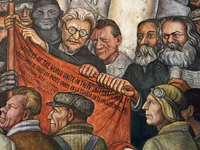
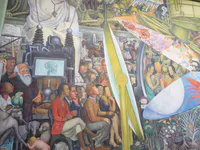
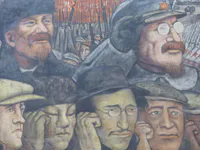
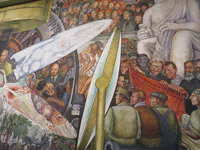
Man, Controller of the UniverseMan, Controller of the UniverseLenin Among the WorkersCapitalism Under the MicroscopeLenin Among Workers and AthletesLenin Unites Workers Beside Women AthletesThe Fourth InternationalCapitalist SocietyRussian RevolutionMarxism and Scientific Progress
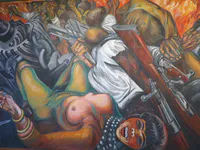
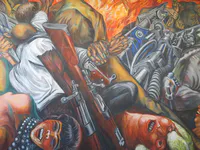
Woman Amid War MachineryRifles and Machinery
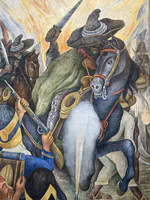
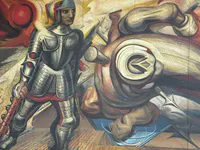
Agustín Lorenzo Leads the ChargeCarnival of Mexican LifeCuauhtémoc’s Victory Over the Centaur
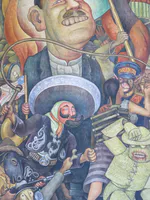
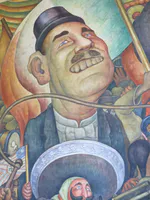
Masks of DictatorshipGrinning Dictator
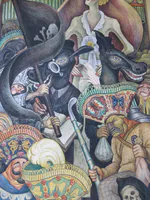
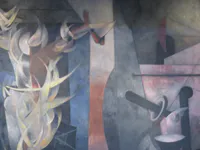
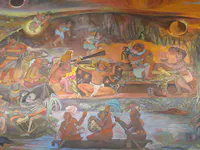
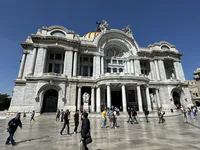
The Conquistador’s HorseNew DemocracyFlames of Modern MexicoHuitzilopochtli and the Carnival DancersXibalba, the Maya UnderworldPalace of Fine Arts Façade

Huitzilopochtli and the Carnival DancersDiego Rivera

950
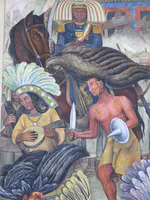
The feather-crowned figure wears a military uniform, while a musician and an armed dancer fill the foreground. Rivera depicts Huitzilopochtli, the Mexica (Aztec) god of war, in military dress to allude to the Spanish conquest. Dance of the Huichilobos (1936) is a panel inspired by the Carnival of Huejotzingo, a festival in Puebla. The stringed instrument and the dancer’s sword and shield set carnival performance against the violence the panel recalls.