2023 © Maxim Tabachnik
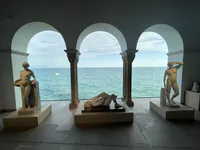
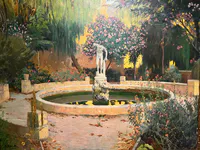
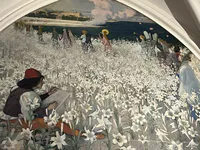
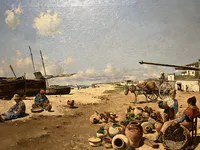
 The Luminist School was made up of a group of painters who settled in Sitges during the last quarter of the 19th century. They shared the idea of taking their easels out of the studio, ceasing to paint from memory, and seeking new forms of expression in landscapes and everyday life. These artists shared the ideas introduced several years earlier by the painters of the Barbizon School, near Paris, ideas that had spread to different parts of Europe, from the painters in southern Italy to those of Denmark’s Skagen School.
Sitges’ landscapes, streets, beaches, vines and its inhabitants became the protagonists of Luminism. Capturing atmospheric effects and, in particular, the effects of the lights of this seaside town, constituted its main challenges. Just like the painters of the Olot School, the Luminists were well received.
Their last major group exhibition was the Sitges Fine Arts Exhibition in 1892, the first of the five Modernist Festes organised by Santiago Rusiñol until 1899. The Luminist group, led by Joan Roig i Soler, Arcadi Mas i Fondevila, Antoni Almirall, Joaquim de Miró, Joan Soler i Casanovas, Joan Batlle i Amell and Candid Duran, was joined by artists such as Santiago Rusiñol, Ramon Casas and Eliseu Meifrèn.
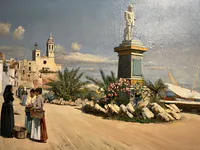
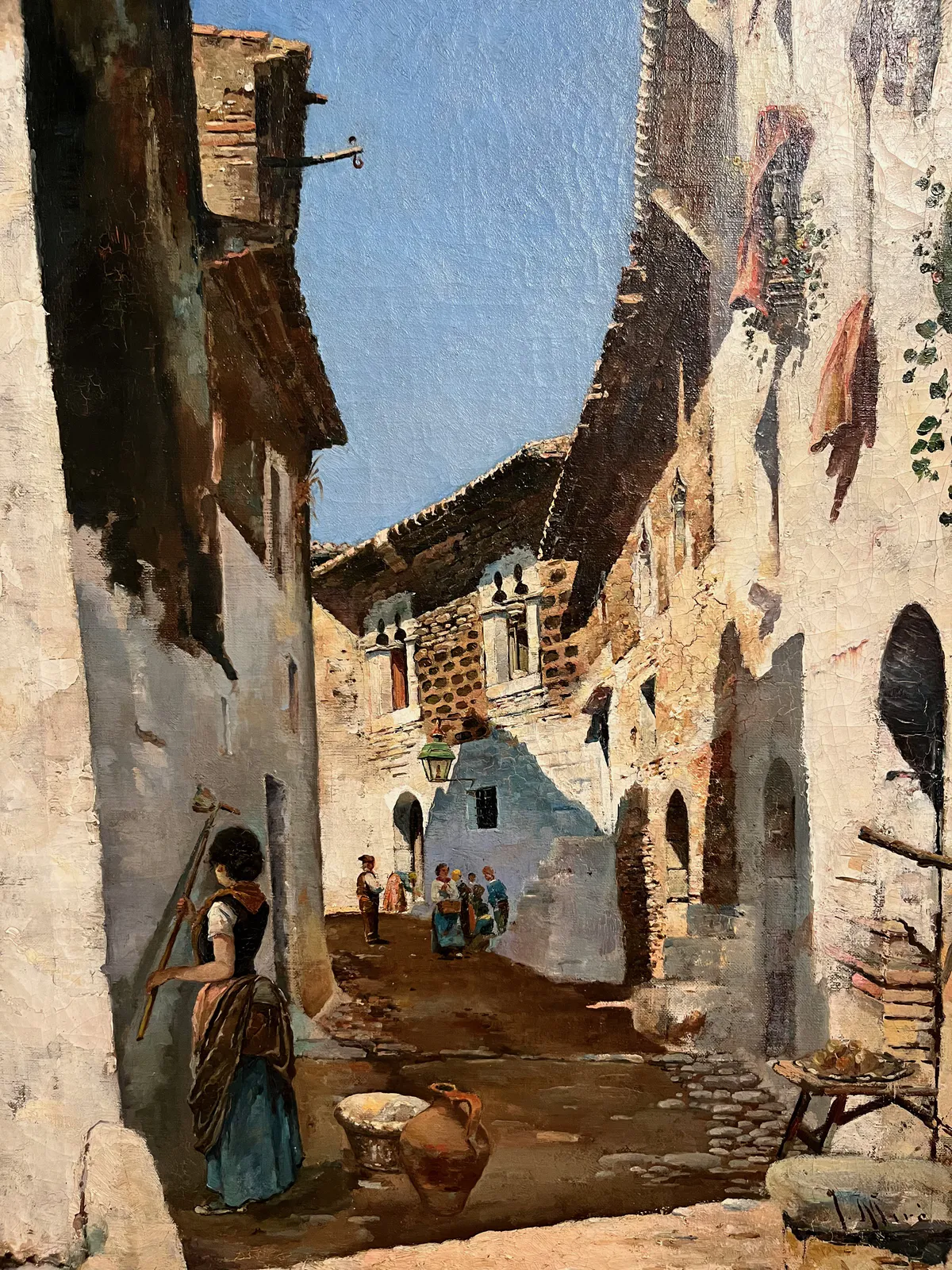
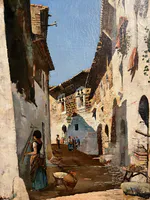
Bosch Street in SitgesPaintingJoaquim de Miró i Argenter
Joaquim de Miró i Argenter’s oil on canvas from around 1880 captures Bosch Street in Sitges, showcasing the town’s architectural charm and vibrant street life of the late 19th century. The painting offers a glimpse into Sitges’ historical ambiance, highlighting Miró i Argenter’s skill in portraying everyday scenes with vivid realism.
Explore by type and place