2024 © Maxim Tabachnik
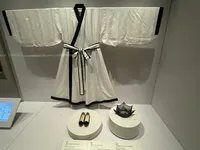 For Koreans, nature has long been both home and ideal. Efforts to resemble natural forms shaped their aesthetics: living spaces were filled with nature-inspired objects, and people dressed in white garments of natural fibers that evoked clouds resting on the ground. Gently curved white porcelain and colors drawn from changing seasons infused daily life, from household items to clothing. In this way, everyday practices expressed a desire to live in harmony with the natural world rather than apart from it.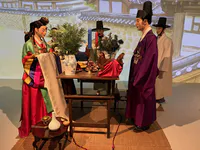

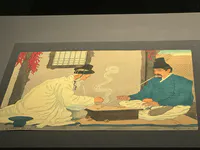
 During the Joseon Dynasty, Confucian ethics—especially the samgang goryun (three fundamental principles and five moral disciplines)—were promoted as the foundation of social order. The state rewarded filial sons and dutiful daughters, and widely disseminated illustrated manuals such as Samgang haengsildo (1434) to model proper conduct. Boys learned reading and writing in village schools (seodang), then studied Confucian classics and history in public schools (hyanggyo) or private academies (seowon) to prepare for state examinations. Women, taught hangeul at home, expanded their knowledge through letters and books translated into Korean.
Today, education is organized through kindergartens, elementary, middle and high schools, and is accessible regardless of social class or gender. After finishing secondary education or its equivalent, students take aptitude tests and evaluations to enter universities or join the workforce, reflecting a modern, more inclusive model of learning.
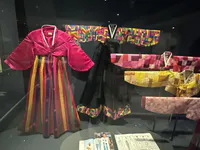
 In traditional Korean society, marriage was seen as a union between families, often arranged by senior relatives. The bride and groom wore brightly colored hanbok: the groom in a formal robe with a black samo hat, the bride in a red and green ensemble with her hair arranged and adorned with ornaments.
A low wooden table was laid with candles, a cooked chicken, fruits and other offerings, each symbolizing hopes for prosperity, fertility and harmony. Family members and attendants in formal dress participated in the ceremony, emphasizing that marriage was a collective, family-centered event rooted in ritual rather than an individual choice.
Stone Statues Guarding Tombs
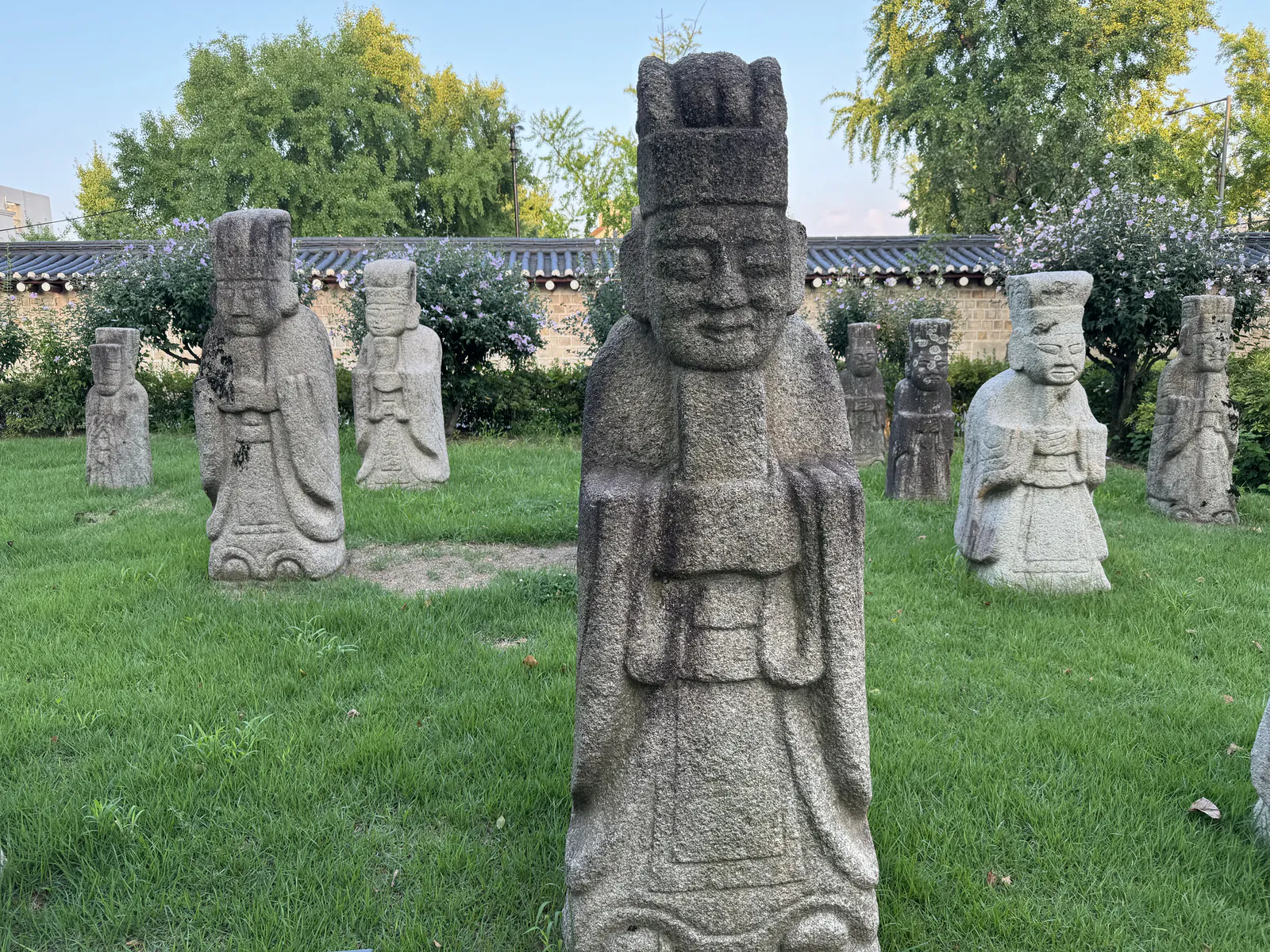
Stone statues of civil officials, called Muninseok, traditionally guarded the tombs of significant figures in Korean history. Dressed in formal attire and holding an official’s tablet, they symbolize protection and respect for the deceased. Accompanying them were statues of military officers in armor, memorial stones, and stone structures like incense burner stands and altar stones, all contributing to the sacred and ceremonial atmosphere of the burial sites.
Explore by type and place